


Zoom the image with the mouse
Crimson Kisses Weigela
SKU:
2121705
UPC:
014949427965
$19.99
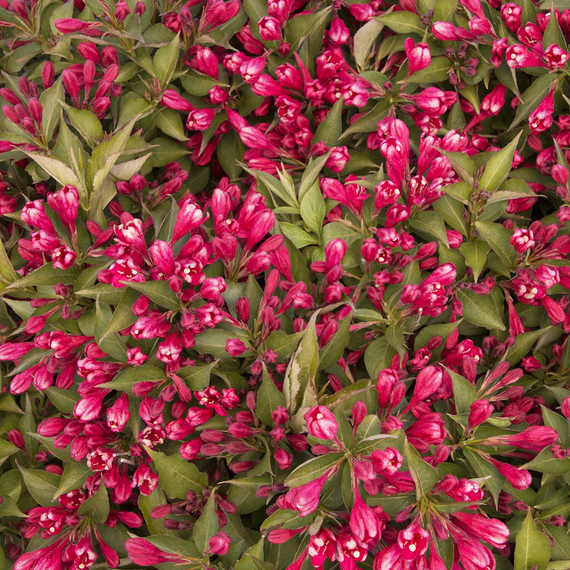
- Brilliant lipstick-red blooms adorned with a distinctive white eye rebloom reliably from late spring through fall, delivering season-long color in the landscape.
- Compact, tidy rounded form reaches just 3 to 4 feet tall and wide at maturity, making it a perfect fit for smaller gardens, mixed borders, and container displays.
- Exceptionally easy to grow with high resistance to powdery mildew and root rot, deer resistance, and tolerance for a wide range of soil types and climates.
- A powerful pollinator magnet that draws bees, butterflies, and hummingbirds, while remaining safe for pets and virtually maintenance-free all season long.
Crimson Kisses Weigela (Weigela x 'Slingco 1', PP#23,654) is a standout reblooming deciduous shrub that brings vivid, romantic color to the garden from late spring all the way through fall. Each trumpet-shaped flower is a rich, saturated lipstick red, each one uniquely kissed with a bright white eye at its center, creating a two-toned jewel-like effect against the shrub's dense, glossy green foliage. Unlike older weigela varieties that bloom only once in spring, Crimson Kisses delivers wave after wave of color throughout the entire growing season, with the heaviest flush in late spring and reliable rebloom continuing into summer and fall. Its naturally compact, rounded growth habit stays tidy without excessive pruning, maturing to a manageable 3 to 4 feet in both height and spread, making it ideal for today's smaller home landscapes, mixed shrub borders, foundation plantings, and patio containers. Adaptable and cold-hardy in USDA Zones 4 through 9, this versatile shrub tolerates a wide range of soil conditions and demonstrates impressive resistance to common fungal diseases including powdery mildew, as well as strong deer resistance. In autumn, the foliage transitions to warm shades of burgundy and crimson before dropping for winter, extending its seasonal interest well beyond the bloom period. Whether used as a colorful specimen, massed in a flowering hedge, or nestled into a pollinator garden, Crimson Kisses Weigela is a low-maintenance, high-impact shrub that rewards gardeners with extraordinary beauty for months on end.
Plant Description
Crimson Kisses Weigela is a compact, deciduous flowering shrub belonging to the Caprifoliaceae (honeysuckle) family. It was developed as a significant improvement over traditional weigela species, offering a notably more compact and tidy growth habit combined with an exceptional reblooming ability. The shrub produces an abundance of trumpet-shaped, single blooms in a vivid lipstick-red color, each flower distinctively marked with a bright white eye at the center. The flowers are held in dense clusters along the stems and emerge from deep red-pink buds, creating a layered, lush floral display. The foliage is glossy, medium to dark green throughout spring and summer, providing a rich backdrop that makes the crimson flowers pop. In autumn, the leaves shift to warm burgundy and crimson tones before the plant goes dormant for winter. The overall form is naturally rounded and full, with a dense, multi-stemmed structure that stays compact without constant shaping. Its botanical name is Weigela x 'Slingco 1' and it carries U.S. Plant Patent #23,654.
Mature Size
| Characteristic | Details |
|---|---|
| Mature Height | 3 to 4 feet |
| Mature Spread | 3 to 4 feet |
| Growth Habit | Compact, rounded, dense, multi-stemmed shrub |
| Growth Rate | Fast |
| Recommended Spacing | 3 feet on center |
Crimson Kisses is significantly more compact than many traditional weigela varieties, which can grow 6 to 10 feet tall. Its restrained size makes it well-suited for smaller residential landscapes, tight borders, and mixed foundation plantings without the need for aggressive annual pruning to keep it in bounds.
Hardiness Zones
Crimson Kisses Weigela is rated for USDA Hardiness Zones 4 through 9, making it one of the more cold-tolerant compact weigela cultivars available. It can withstand winter temperatures as low as -30 degrees F (-34 degrees C), which encompasses a very wide range of climates across the continental United States. This includes the cool winters of the Pacific Northwest, the cold winters of the Upper Midwest and New England, and the warmer winters of the Southeast and Southern California. It performs equally well in both cool northern and hot southern climates, demonstrating excellent heat tolerance in the summer months. Early trials also indicated potential cold hardiness extending into Zone 4, offering gardeners in colder regions added confidence in the plant's winter survival.
Sunlight Requirements
Crimson Kisses Weigela performs best and blooms most prolifically when planted in a location that receives full sun, defined as 6 or more hours of direct sunlight per day. In the Pacific Northwest and other regions with mild, overcast summers, a position in full sun is strongly recommended to maximize flowering. In hotter climates such as Southern Oregon and Northern California, some light afternoon shade can be beneficial during the hottest weeks of summer to reduce heat stress and extend individual bloom longevity, though overall flowering performance is best in full sun. Planting in too much shade will result in reduced flowering, a more open growth habit, and increased susceptibility to fungal issues such as powdery mildew. A south- or west-facing exposure is generally ideal for achieving the most vibrant and abundant bloom display.
Soil and pH Preferences
One of the great strengths of Crimson Kisses Weigela is its broad soil adaptability. It thrives in a wide range of soil types and is not particularly fussy, making it accessible to gardeners with less-than-ideal native soil. Key soil preferences include:
- Drainage: Well-drained soil is the most important factor. This shrub has high resistance to root rot but will not tolerate consistently waterlogged conditions.
- Soil texture: Adapts well to average, loamy, moist, or even clay soils as long as drainage is adequate.
- Soil pH: Performs well across a broad pH range, tolerating both acidic and alkaline soils. The ideal range is slightly acidic to neutral, approximately pH 6.0 to 7.0, though it adapts outside this range.
- Soil enrichment: Incorporating compost or aged organic matter into the planting site at the time of installation will improve drainage in clay soils and water retention in sandy soils while providing a gentle nutrient boost.
Watering Guide
Consistent moisture management is key to establishing and maintaining a healthy Crimson Kisses Weigela, especially during the critical first growing season. Follow these watering guidelines:
- Establishment period (Year 1): Water deeply and regularly, providing approximately 1 inch of water per week in the absence of rainfall. Deep, infrequent watering encourages the roots to grow deep into the soil for long-term drought resilience.
- Established plants: Once established, Crimson Kisses Weigela is considered drought tolerant and requires only occasional supplemental watering. A general guideline is roughly 1/2 inch of water every 7 to 10 days during dry periods.
- Summer heat: During prolonged hot, dry spells common in Southern Oregon and Northern California summers, supplemental irrigation will help maintain foliage quality and support continued reblooming.
- Avoid overwatering: Do not allow the root zone to remain constantly saturated. Allow the top inch of soil to dry slightly between waterings to prevent root issues.
- Mulching: A 2- to 3-inch layer of organic mulch around the base of the plant (kept a few inches away from the stems) significantly helps retain soil moisture, moderate soil temperature, and reduce watering frequency.
Fertilizing
Crimson Kisses Weigela is a low-demand feeder that does not require heavy or frequent fertilization. The following schedule will promote healthy growth and abundant blooming:
- Timing: Apply fertilizer once in early spring, just as new growth begins to emerge. A second light application can be made in early summer if growth appears sluggish.
- Product type: Use a balanced, slow-release granular fertilizer such as a 10-10-10 or similar all-purpose formula. A fertilizer designed for flowering shrubs is also suitable.
- Application method: Moisten the soil before applying. Broadcast granules in a ring around the plant, 12 to 24 inches from the base of the stems, to avoid direct contact with the crown and roots. Water thoroughly after application to help the granules break down and move into the root zone.
- Caution: Avoid late-season fertilization, particularly with high-nitrogen products, as this can encourage tender new growth that is vulnerable to frost damage heading into fall.
- Compost: An annual top-dressing of compost around the base of the plant in spring is an excellent organic alternative that slowly feeds the shrub while improving soil structure.
Pruning and Maintenance
Crimson Kisses Weigela requires minimal pruning to maintain its naturally attractive, rounded form. Because it rebloom on both old and new wood, timing your pruning correctly is important to avoid sacrificing the first flush of blooms.
- Best timing: Prune lightly immediately after the first spring bloom flush finishes. This removes spent flowering stems, encourages robust new growth, and sets the stage for stronger summer and fall rebloom. Avoid hard pruning in late summer or fall, as this can reduce the following year's spring bloom.
- Amount to remove: A light to moderate trim is recommended after the spring bloom. For renewal or rejuvenation, remove no more than one-third of the oldest, thickest stems by cutting them to the base of the plant in late winter or early spring.
- Deadwood removal: In early spring, before new growth begins, remove any branches that were killed back by winter cold by cutting them back to the nearest healthy wood or to the base.
- Shaping: The shrub's naturally tidy habit means little formal shaping is needed. If desired, lightly tip-prune after flowering to refine the silhouette.
- General care: Remove any broken, crossing, or diseased branches promptly throughout the season. Make clean cuts with sharp, sterilized pruning shears to reduce the risk of disease transmission.
Planting Instructions
Follow these steps for successful planting and establishment of Crimson Kisses Weigela in your garden:
- Choose the right site: Select a location with full sun (6+ hours daily) and well-drained soil. Avoid low-lying areas where water pools after rain.
- Timing: Plant in spring, summer, or fall. In Southern Oregon and Northern California, fall planting is an excellent choice, as the mild winters allow roots to establish before the demands of summer heat.
- Dig the hole: Dig a hole the same depth as the root ball and two to three times as wide. Breaking up the native soil around the planting hole encourages outward root growth.
- Amend if needed: If your soil is heavy clay or very sandy, incorporate compost into the backfill to improve drainage or moisture retention respectively.
- Position the plant: Set the plant in the hole so that the crown (where the stems meet the roots) sits slightly above the surrounding soil level. This slight mound promotes drainage away from the crown.
- Backfill and water: Fill the hole with native soil, tamping it gently in layers to eliminate large air pockets. Water deeply immediately after planting and tamp again to settle the soil.
- Mulch: Apply a 2- to 3-inch layer of organic mulch around the planting area, keeping it a few inches clear of the stems. Mulch conserves moisture and moderates soil temperature during establishment.
- Post-planting care: Water deeply once or twice per week during the first growing season, adjusting based on rainfall and temperature. Reduce frequency once the plant shows active new growth, indicating successful establishment.
Seasonal Interest
| Season | Landscape Interest |
|---|---|
| Spring | Prolific first flush of vivid lipstick-red flowers with white eyes emerges in late spring, often beginning in May; fresh, bright green foliage unfurls simultaneously. |
| Summer | Continuous rebloom through summer keeps color in the garden; dense, glossy green foliage provides a lush backdrop; attracts hummingbirds and butterflies throughout. |
| Fall | Additional bloom flush in early fall; foliage transitions to warm shades of burgundy, crimson, and red, adding a second tier of seasonal color before leaf drop. |
| Winter | Bare, attractive branching structure with smooth gray bark provides subtle winter interest; plant is fully dormant and cold-hardy to -30 degrees F. |
Landscape Uses
Crimson Kisses Weigela is a remarkably versatile shrub that suits a wide variety of landscape applications. Its compact size, long bloom season, and tidy habit make it adaptable to both formal and informal garden styles:
- Mixed shrub borders: Pairs beautifully with other flowering shrubs and perennials in a mixed planting, providing a bold vertical color anchor from late spring through fall.
- Foundation planting: Its compact scale and refined appearance make it an excellent choice for softening the lines of building foundations without overwhelming the space.
- Specimen or focal point: Plant it as a standalone specimen where its vivid blooms can command full attention in a lawn island, courtyard, or entry garden.
- Flowering hedge or mass planting: Spacing multiple plants 3 feet apart creates a colorful, low informal hedge or a bold mass of season-long color along pathways, fences, or property borders.
- Pollinator garden: A top-choice addition to any pollinator-focused planting, attracting bees, butterflies, and hummingbirds consistently from spring through fall.
- Container gardening: Suitable for large patio containers and decorative planters, allowing gardeners with limited ground space to enjoy its vibrant display on decks, patios, and balconies.
- Slope and erosion-prone areas: The dense root structure and adaptability to various soil types make it useful for stabilizing gently sloped ground in the landscape.
Companion Plants
Crimson Kisses Weigela combines beautifully with a variety of perennials, grasses, and shrubs that share similar cultural requirements and complement its bold red and white blooms, glossy green foliage, and compact rounded form. Consider these companion planting ideas:
- Salvia (Salvia nemorosa or perennial sage): Blue and purple salvia spikes create a striking color contrast with the red weigela blooms and share the same sun and drainage preferences.
- Coneflower (Echinacea spp.): Bold, daisy-like blooms in pink, white, or orange complement the weigela's form and extend the pollinator season alongside it.
- Russian Sage (Perovskia atriplicifolia): Airy silver-blue spikes provide an elegant textural contrast and thrive in the same sunny, well-drained conditions.
- Ornamental Grasses (e.g., Blue Oat Grass or Karl Foerster Feather Reed Grass): Offer textural contrast and movement, and their neutral tones allow the weigela's red flowers to remain the focal point.
- Bee Balm (Monarda spp.): Shares the same pollinator-attracting qualities, and its wildflower character blends naturally in an informal cottage-garden style planting.
- Knockout Roses or Drift Roses: Red or pink roses are natural color companions that echo the weigela's bloom color palette and provide continuous flowering through the season.
- Spirea (Spiraea spp.): Low-growing spirea varieties serve as a neat foreground edging plant in front of Crimson Kisses, with contrasting white or pink blooms that soften the red color statement.
- Dwarf conifers or evergreen boxwood: Provide year-round structure and a dark green background that makes the bright red weigela flowers stand out dramatically.
Pests and Diseases
Crimson Kisses Weigela is considered a low-maintenance, trouble-free shrub with notably strong resistance to several common diseases. Understanding potential issues helps you keep the plant looking its best:
Disease Resistance Highlights:
- Powdery mildew: High resistance. Unlike many weigela varieties, Crimson Kisses shows excellent tolerance to this common fungal issue.
- Root rot: High resistance. Performs well in average garden soils without succumbing to the root problems that affect less-adapted shrubs in occasionally moist conditions.
- Leaf scorch and leaf spot: Moderate resistance under normal growing conditions.
Occasional Pest Watch List:
- Aphids: May cluster on tender new growth in spring. A firm stream of water from a garden hose or an application of neem oil is usually sufficient for control.
- Spider mites: Can appear during hot, dry summer conditions. Increase irrigation and apply neem oil or insecticidal soap as needed.
- Scale insects: Occasionally attach to stems. Treat with horticultural oil applied in late winter or early spring before new growth emerges.
- Japanese beetles: May feed on foliage during summer. Hand-pick adults in the morning or use targeted beetle traps away from the planting area.
- Four-lined plant bugs: Can cause stippled, sunken spots on foliage. Damage is cosmetic and plants typically outgrow it; insecticidal soap can help with heavy infestations.
Maintaining good air circulation through proper spacing and selective pruning, along with avoiding overhead irrigation, are the most effective preventive measures against fungal disease on weigela.
Container Growing
Crimson Kisses Weigela adapts well to life in a container, making it an excellent choice for patios, decks, courtyards, and entryways where in-ground planting is not possible. Keep the following guidelines in mind for success in pots:
- Container size: Choose a large, sturdy container with a minimum diameter of 18 to 24 inches and adequate drainage holes. A larger pot volume reduces the frequency of watering needed and insulates roots from temperature extremes.
- Potting mix: Use a high-quality, well-draining potting mix formulated for shrubs or a general all-purpose mix amended with coarse perlite to improve drainage. Avoid using native garden soil in containers, as it compacts and drains poorly.
- Watering: Container-grown plants dry out more quickly than those in the ground, especially during warm weather. Check soil moisture regularly and water thoroughly when the top inch of the potting mix feels dry to the touch.
- Fertilizing: Because frequent watering leaches nutrients from the potting mix, container plants benefit from regular feeding. Use a slow-release granular fertilizer at the start of the season and supplement with a balanced liquid fertilizer every 4 to 6 weeks during the growing season.
- Winter care: In Zones 4 to 6, container-grown plants are more exposed to freezing temperatures than those planted in the ground. Move containers to a sheltered, unheated garage, shed, or against a south-facing wall for winter protection. In Zones 7 to 9, containers can typically remain outdoors year-round in a sheltered spot.
- Repotting: Repot into a slightly larger container every 2 to 3 years as the root system fills the pot, or refresh the top layer of potting mix annually to replenish depleted nutrients.
Wildlife Value
Crimson Kisses Weigela is a meaningful contributor to local wildlife ecosystems, particularly for pollinating insects and birds. Its tubular, nectar-rich red and white flowers are especially attractive to:
- Hummingbirds: The deep-red, trumpet-shaped flowers are perfectly shaped for hummingbird feeding and their vivid color is a powerful visual attractant. Planting Crimson Kisses near a patio or window provides excellent hummingbird viewing opportunities throughout the long bloom season.
- Bees: Both native bees and honey bees visit the flowers regularly for nectar and pollen, supporting healthy pollinator populations in the home garden ecosystem.
- Butterflies: Various butterfly species are attracted to the flowers, adding additional wildlife interest and beauty to the garden during the bloom period.
- Deer resistance: Crimson Kisses Weigela is well-regarded for its deer resistance, an important practical consideration for gardeners in rural and semi-rural areas of Southern Oregon and Northern California where deer browsing pressure can be heavy. While no plant is completely deer-proof under conditions of extreme hunger, this shrub is significantly less palatable to deer than many other flowering shrubs.
- Pet safety: Crimson Kisses Weigela is considered non-toxic and pet-friendly, making it a safe choice for gardens shared with dogs and cats.
- Brilliant lipstick-red blooms adorned with a distinctive white eye rebloom reliably from late spring through fall, delivering season-long color in the landscape.
- Compact, tidy rounded form reaches just 3 to 4 feet tall and wide at maturity, making it a perfect fit for smaller gardens, mixed borders, and container displays.
- Exceptionally easy to grow with high resistance to powdery mildew and root rot, deer resistance, and tolerance for a wide range of soil types and climates.
- A powerful pollinator magnet that draws bees, butterflies, and hummingbirds, while remaining safe for pets and virtually maintenance-free all season long.
Crimson Kisses Weigela (Weigela x 'Slingco 1', PP#23,654) is a standout reblooming deciduous shrub that brings vivid, romantic color to the garden from late spring all the way through fall. Each trumpet-shaped flower is a rich, saturated lipstick red, each one uniquely kissed with a bright white eye at its center, creating a two-toned jewel-like effect against the shrub's dense, glossy green foliage. Unlike older weigela varieties that bloom only once in spring, Crimson Kisses delivers wave after wave of color throughout the entire growing season, with the heaviest flush in late spring and reliable rebloom continuing into summer and fall. Its naturally compact, rounded growth habit stays tidy without excessive pruning, maturing to a manageable 3 to 4 feet in both height and spread, making it ideal for today's smaller home landscapes, mixed shrub borders, foundation plantings, and patio containers. Adaptable and cold-hardy in USDA Zones 4 through 9, this versatile shrub tolerates a wide range of soil conditions and demonstrates impressive resistance to common fungal diseases including powdery mildew, as well as strong deer resistance. In autumn, the foliage transitions to warm shades of burgundy and crimson before dropping for winter, extending its seasonal interest well beyond the bloom period. Whether used as a colorful specimen, massed in a flowering hedge, or nestled into a pollinator garden, Crimson Kisses Weigela is a low-maintenance, high-impact shrub that rewards gardeners with extraordinary beauty for months on end.
Plant Description
Crimson Kisses Weigela is a compact, deciduous flowering shrub belonging to the Caprifoliaceae (honeysuckle) family. It was developed as a significant improvement over traditional weigela species, offering a notably more compact and tidy growth habit combined with an exceptional reblooming ability. The shrub produces an abundance of trumpet-shaped, single blooms in a vivid lipstick-red color, each flower distinctively marked with a bright white eye at the center. The flowers are held in dense clusters along the stems and emerge from deep red-pink buds, creating a layered, lush floral display. The foliage is glossy, medium to dark green throughout spring and summer, providing a rich backdrop that makes the crimson flowers pop. In autumn, the leaves shift to warm burgundy and crimson tones before the plant goes dormant for winter. The overall form is naturally rounded and full, with a dense, multi-stemmed structure that stays compact without constant shaping. Its botanical name is Weigela x 'Slingco 1' and it carries U.S. Plant Patent #23,654.
Mature Size
| Characteristic | Details |
|---|---|
| Mature Height | 3 to 4 feet |
| Mature Spread | 3 to 4 feet |
| Growth Habit | Compact, rounded, dense, multi-stemmed shrub |
| Growth Rate | Fast |
| Recommended Spacing | 3 feet on center |
Crimson Kisses is significantly more compact than many traditional weigela varieties, which can grow 6 to 10 feet tall. Its restrained size makes it well-suited for smaller residential landscapes, tight borders, and mixed foundation plantings without the need for aggressive annual pruning to keep it in bounds.
Hardiness Zones
Crimson Kisses Weigela is rated for USDA Hardiness Zones 4 through 9, making it one of the more cold-tolerant compact weigela cultivars available. It can withstand winter temperatures as low as -30 degrees F (-34 degrees C), which encompasses a very wide range of climates across the continental United States. This includes the cool winters of the Pacific Northwest, the cold winters of the Upper Midwest and New England, and the warmer winters of the Southeast and Southern California. It performs equally well in both cool northern and hot southern climates, demonstrating excellent heat tolerance in the summer months. Early trials also indicated potential cold hardiness extending into Zone 4, offering gardeners in colder regions added confidence in the plant's winter survival.
Sunlight Requirements
Crimson Kisses Weigela performs best and blooms most prolifically when planted in a location that receives full sun, defined as 6 or more hours of direct sunlight per day. In the Pacific Northwest and other regions with mild, overcast summers, a position in full sun is strongly recommended to maximize flowering. In hotter climates such as Southern Oregon and Northern California, some light afternoon shade can be beneficial during the hottest weeks of summer to reduce heat stress and extend individual bloom longevity, though overall flowering performance is best in full sun. Planting in too much shade will result in reduced flowering, a more open growth habit, and increased susceptibility to fungal issues such as powdery mildew. A south- or west-facing exposure is generally ideal for achieving the most vibrant and abundant bloom display.
Soil and pH Preferences
One of the great strengths of Crimson Kisses Weigela is its broad soil adaptability. It thrives in a wide range of soil types and is not particularly fussy, making it accessible to gardeners with less-than-ideal native soil. Key soil preferences include:
- Drainage: Well-drained soil is the most important factor. This shrub has high resistance to root rot but will not tolerate consistently waterlogged conditions.
- Soil texture: Adapts well to average, loamy, moist, or even clay soils as long as drainage is adequate.
- Soil pH: Performs well across a broad pH range, tolerating both acidic and alkaline soils. The ideal range is slightly acidic to neutral, approximately pH 6.0 to 7.0, though it adapts outside this range.
- Soil enrichment: Incorporating compost or aged organic matter into the planting site at the time of installation will improve drainage in clay soils and water retention in sandy soils while providing a gentle nutrient boost.
Watering Guide
Consistent moisture management is key to establishing and maintaining a healthy Crimson Kisses Weigela, especially during the critical first growing season. Follow these watering guidelines:
- Establishment period (Year 1): Water deeply and regularly, providing approximately 1 inch of water per week in the absence of rainfall. Deep, infrequent watering encourages the roots to grow deep into the soil for long-term drought resilience.
- Established plants: Once established, Crimson Kisses Weigela is considered drought tolerant and requires only occasional supplemental watering. A general guideline is roughly 1/2 inch of water every 7 to 10 days during dry periods.
- Summer heat: During prolonged hot, dry spells common in Southern Oregon and Northern California summers, supplemental irrigation will help maintain foliage quality and support continued reblooming.
- Avoid overwatering: Do not allow the root zone to remain constantly saturated. Allow the top inch of soil to dry slightly between waterings to prevent root issues.
- Mulching: A 2- to 3-inch layer of organic mulch around the base of the plant (kept a few inches away from the stems) significantly helps retain soil moisture, moderate soil temperature, and reduce watering frequency.
Fertilizing
Crimson Kisses Weigela is a low-demand feeder that does not require heavy or frequent fertilization. The following schedule will promote healthy growth and abundant blooming:
- Timing: Apply fertilizer once in early spring, just as new growth begins to emerge. A second light application can be made in early summer if growth appears sluggish.
- Product type: Use a balanced, slow-release granular fertilizer such as a 10-10-10 or similar all-purpose formula. A fertilizer designed for flowering shrubs is also suitable.
- Application method: Moisten the soil before applying. Broadcast granules in a ring around the plant, 12 to 24 inches from the base of the stems, to avoid direct contact with the crown and roots. Water thoroughly after application to help the granules break down and move into the root zone.
- Caution: Avoid late-season fertilization, particularly with high-nitrogen products, as this can encourage tender new growth that is vulnerable to frost damage heading into fall.
- Compost: An annual top-dressing of compost around the base of the plant in spring is an excellent organic alternative that slowly feeds the shrub while improving soil structure.
Pruning and Maintenance
Crimson Kisses Weigela requires minimal pruning to maintain its naturally attractive, rounded form. Because it rebloom on both old and new wood, timing your pruning correctly is important to avoid sacrificing the first flush of blooms.
- Best timing: Prune lightly immediately after the first spring bloom flush finishes. This removes spent flowering stems, encourages robust new growth, and sets the stage for stronger summer and fall rebloom. Avoid hard pruning in late summer or fall, as this can reduce the following year's spring bloom.
- Amount to remove: A light to moderate trim is recommended after the spring bloom. For renewal or rejuvenation, remove no more than one-third of the oldest, thickest stems by cutting them to the base of the plant in late winter or early spring.
- Deadwood removal: In early spring, before new growth begins, remove any branches that were killed back by winter cold by cutting them back to the nearest healthy wood or to the base.
- Shaping: The shrub's naturally tidy habit means little formal shaping is needed. If desired, lightly tip-prune after flowering to refine the silhouette.
- General care: Remove any broken, crossing, or diseased branches promptly throughout the season. Make clean cuts with sharp, sterilized pruning shears to reduce the risk of disease transmission.
Planting Instructions
Follow these steps for successful planting and establishment of Crimson Kisses Weigela in your garden:
- Choose the right site: Select a location with full sun (6+ hours daily) and well-drained soil. Avoid low-lying areas where water pools after rain.
- Timing: Plant in spring, summer, or fall. In Southern Oregon and Northern California, fall planting is an excellent choice, as the mild winters allow roots to establish before the demands of summer heat.
- Dig the hole: Dig a hole the same depth as the root ball and two to three times as wide. Breaking up the native soil around the planting hole encourages outward root growth.
- Amend if needed: If your soil is heavy clay or very sandy, incorporate compost into the backfill to improve drainage or moisture retention respectively.
- Position the plant: Set the plant in the hole so that the crown (where the stems meet the roots) sits slightly above the surrounding soil level. This slight mound promotes drainage away from the crown.
- Backfill and water: Fill the hole with native soil, tamping it gently in layers to eliminate large air pockets. Water deeply immediately after planting and tamp again to settle the soil.
- Mulch: Apply a 2- to 3-inch layer of organic mulch around the planting area, keeping it a few inches clear of the stems. Mulch conserves moisture and moderates soil temperature during establishment.
- Post-planting care: Water deeply once or twice per week during the first growing season, adjusting based on rainfall and temperature. Reduce frequency once the plant shows active new growth, indicating successful establishment.
Seasonal Interest
| Season | Landscape Interest |
|---|---|
| Spring | Prolific first flush of vivid lipstick-red flowers with white eyes emerges in late spring, often beginning in May; fresh, bright green foliage unfurls simultaneously. |
| Summer | Continuous rebloom through summer keeps color in the garden; dense, glossy green foliage provides a lush backdrop; attracts hummingbirds and butterflies throughout. |
| Fall | Additional bloom flush in early fall; foliage transitions to warm shades of burgundy, crimson, and red, adding a second tier of seasonal color before leaf drop. |
| Winter | Bare, attractive branching structure with smooth gray bark provides subtle winter interest; plant is fully dormant and cold-hardy to -30 degrees F. |
Landscape Uses
Crimson Kisses Weigela is a remarkably versatile shrub that suits a wide variety of landscape applications. Its compact size, long bloom season, and tidy habit make it adaptable to both formal and informal garden styles:
- Mixed shrub borders: Pairs beautifully with other flowering shrubs and perennials in a mixed planting, providing a bold vertical color anchor from late spring through fall.
- Foundation planting: Its compact scale and refined appearance make it an excellent choice for softening the lines of building foundations without overwhelming the space.
- Specimen or focal point: Plant it as a standalone specimen where its vivid blooms can command full attention in a lawn island, courtyard, or entry garden.
- Flowering hedge or mass planting: Spacing multiple plants 3 feet apart creates a colorful, low informal hedge or a bold mass of season-long color along pathways, fences, or property borders.
- Pollinator garden: A top-choice addition to any pollinator-focused planting, attracting bees, butterflies, and hummingbirds consistently from spring through fall.
- Container gardening: Suitable for large patio containers and decorative planters, allowing gardeners with limited ground space to enjoy its vibrant display on decks, patios, and balconies.
- Slope and erosion-prone areas: The dense root structure and adaptability to various soil types make it useful for stabilizing gently sloped ground in the landscape.
Companion Plants
Crimson Kisses Weigela combines beautifully with a variety of perennials, grasses, and shrubs that share similar cultural requirements and complement its bold red and white blooms, glossy green foliage, and compact rounded form. Consider these companion planting ideas:
- Salvia (Salvia nemorosa or perennial sage): Blue and purple salvia spikes create a striking color contrast with the red weigela blooms and share the same sun and drainage preferences.
- Coneflower (Echinacea spp.): Bold, daisy-like blooms in pink, white, or orange complement the weigela's form and extend the pollinator season alongside it.
- Russian Sage (Perovskia atriplicifolia): Airy silver-blue spikes provide an elegant textural contrast and thrive in the same sunny, well-drained conditions.
- Ornamental Grasses (e.g., Blue Oat Grass or Karl Foerster Feather Reed Grass): Offer textural contrast and movement, and their neutral tones allow the weigela's red flowers to remain the focal point.
- Bee Balm (Monarda spp.): Shares the same pollinator-attracting qualities, and its wildflower character blends naturally in an informal cottage-garden style planting.
- Knockout Roses or Drift Roses: Red or pink roses are natural color companions that echo the weigela's bloom color palette and provide continuous flowering through the season.
- Spirea (Spiraea spp.): Low-growing spirea varieties serve as a neat foreground edging plant in front of Crimson Kisses, with contrasting white or pink blooms that soften the red color statement.
- Dwarf conifers or evergreen boxwood: Provide year-round structure and a dark green background that makes the bright red weigela flowers stand out dramatically.
Pests and Diseases
Crimson Kisses Weigela is considered a low-maintenance, trouble-free shrub with notably strong resistance to several common diseases. Understanding potential issues helps you keep the plant looking its best:
Disease Resistance Highlights:
- Powdery mildew: High resistance. Unlike many weigela varieties, Crimson Kisses shows excellent tolerance to this common fungal issue.
- Root rot: High resistance. Performs well in average garden soils without succumbing to the root problems that affect less-adapted shrubs in occasionally moist conditions.
- Leaf scorch and leaf spot: Moderate resistance under normal growing conditions.
Occasional Pest Watch List:
- Aphids: May cluster on tender new growth in spring. A firm stream of water from a garden hose or an application of neem oil is usually sufficient for control.
- Spider mites: Can appear during hot, dry summer conditions. Increase irrigation and apply neem oil or insecticidal soap as needed.
- Scale insects: Occasionally attach to stems. Treat with horticultural oil applied in late winter or early spring before new growth emerges.
- Japanese beetles: May feed on foliage during summer. Hand-pick adults in the morning or use targeted beetle traps away from the planting area.
- Four-lined plant bugs: Can cause stippled, sunken spots on foliage. Damage is cosmetic and plants typically outgrow it; insecticidal soap can help with heavy infestations.
Maintaining good air circulation through proper spacing and selective pruning, along with avoiding overhead irrigation, are the most effective preventive measures against fungal disease on weigela.
Container Growing
Crimson Kisses Weigela adapts well to life in a container, making it an excellent choice for patios, decks, courtyards, and entryways where in-ground planting is not possible. Keep the following guidelines in mind for success in pots:
- Container size: Choose a large, sturdy container with a minimum diameter of 18 to 24 inches and adequate drainage holes. A larger pot volume reduces the frequency of watering needed and insulates roots from temperature extremes.
- Potting mix: Use a high-quality, well-draining potting mix formulated for shrubs or a general all-purpose mix amended with coarse perlite to improve drainage. Avoid using native garden soil in containers, as it compacts and drains poorly.
- Watering: Container-grown plants dry out more quickly than those in the ground, especially during warm weather. Check soil moisture regularly and water thoroughly when the top inch of the potting mix feels dry to the touch.
- Fertilizing: Because frequent watering leaches nutrients from the potting mix, container plants benefit from regular feeding. Use a slow-release granular fertilizer at the start of the season and supplement with a balanced liquid fertilizer every 4 to 6 weeks during the growing season.
- Winter care: In Zones 4 to 6, container-grown plants are more exposed to freezing temperatures than those planted in the ground. Move containers to a sheltered, unheated garage, shed, or against a south-facing wall for winter protection. In Zones 7 to 9, containers can typically remain outdoors year-round in a sheltered spot.
- Repotting: Repot into a slightly larger container every 2 to 3 years as the root system fills the pot, or refresh the top layer of potting mix annually to replenish depleted nutrients.
Wildlife Value
Crimson Kisses Weigela is a meaningful contributor to local wildlife ecosystems, particularly for pollinating insects and birds. Its tubular, nectar-rich red and white flowers are especially attractive to:
- Hummingbirds: The deep-red, trumpet-shaped flowers are perfectly shaped for hummingbird feeding and their vivid color is a powerful visual attractant. Planting Crimson Kisses near a patio or window provides excellent hummingbird viewing opportunities throughout the long bloom season.
- Bees: Both native bees and honey bees visit the flowers regularly for nectar and pollen, supporting healthy pollinator populations in the home garden ecosystem.
- Butterflies: Various butterfly species are attracted to the flowers, adding additional wildlife interest and beauty to the garden during the bloom period.
- Deer resistance: Crimson Kisses Weigela is well-regarded for its deer resistance, an important practical consideration for gardeners in rural and semi-rural areas of Southern Oregon and Northern California where deer browsing pressure can be heavy. While no plant is completely deer-proof under conditions of extreme hunger, this shrub is significantly less palatable to deer than many other flowering shrubs.
- Pet safety: Crimson Kisses Weigela is considered non-toxic and pet-friendly, making it a safe choice for gardens shared with dogs and cats.
Related Products


