
Zoom the image with the mouse
Bountiful Baby Blueberry - 2 Gallon
SKU:
2232930
UPC:
014949491850
$41.99
- Ultra‑compact blueberry - just 2–3 ft. tall and wide - yet loaded with flavorful, early‑season berries.
- Glossy green foliage delivers a deep red fall display that can persist through winter in mild climates.
- Perfect for containers and edible borders; white spring blossoms add ornamental appeal.
- Performs in full sun across Zones 5–9; estimated chill requirement ~800 hours.
Bountiful Baby Blueberry (Vaccinium x ‘FC 13‑044’, PPAF) packs prolific crops into a patio‑friendly form, maturing to just 2–3 feet without sacrificing flavor or visual interest. Expect dainty white spring blooms, an early harvest of small, tasty berries, and foliage that shifts from glossy green to rich red as cooler weather arrives. Plant in rich, acidic, well‑drained soil; keep evenly moist (not soggy), and in hot, arid regions, offer brief afternoon relief from harsh, reflected sun. Prune after harvest to keep the rounded silhouette full and fruitful.
Plant Description
Extremely compact blueberry selected for abundant, early fruit on a small footprint. Glossy green leaves provide multi‑season interest, turning deep red in fall; in mild climates, plants can remain evergreen for winter structure.
Fruit & Flavor
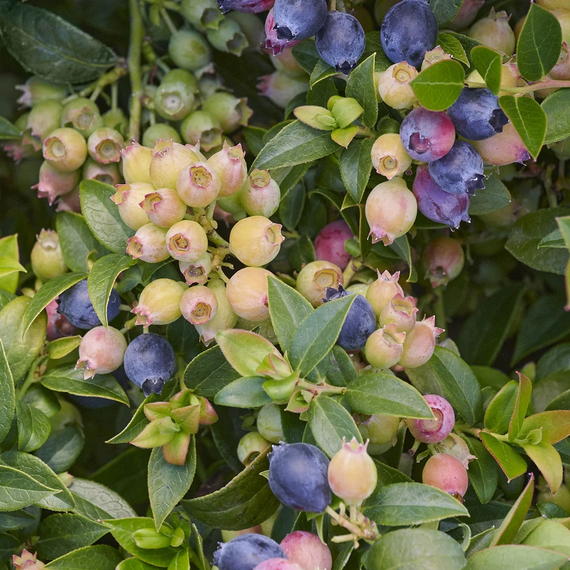
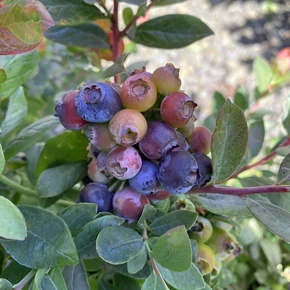
Early‑season producer of small, flavorful berries—excellent for fresh eating, baking, and freezing. Combine with mid‑ or late‑season blueberries to extend the picking window.
Habit & Size
Naturally rounded and dense; reaches about 2–3 ft. tall and 2–3 ft. wide—ideal for containers, kitchen gardens, and tight border spaces.
Chill Hours
Estimated chill requirement of ~800 hours; additional trials may refine lower‑chill performance in warmer regions.
Bloom & Pollinators
White, bell‑shaped flowers in spring attract pollinators. One plant can set fruit; pairing with another blueberry can improve yields and stagger harvests.
Sun & Exposure
Full sun is best for bloom and fruit set. In extremely hot, arid summers, provide brief afternoon protection from harsh, reflected sun to preserve foliage quality.
Water & Soil
Keep soil evenly moist but never waterlogged. Grow in rich, acidic, well‑drained soil (amend with organic matter; maintain an acidic pH typical for blueberries).
Hardiness
USDA Zones 5–9. Foliage can persist into winter in mild climates; expect deciduous behavior where winters are colder.
Pruning & Maintenance
Lightly prune after harvest to shape and maintain airflow. Over time, thin older, less productive stems to sustain vigor.
Landscape Uses
Edible containers, patio kitchen gardens, border edging, and small‑space edible landscaping where compact form, spring bloom, summer berries, and fall color provide four‑season value.
Planting Tips
Plant at or slightly above grade in well‑drained soil; water deeply and regularly during the first season to establish. Mulch with acidic organic materials to conserve moisture and moderate soil temperature.
Container Tips
Use an acidic, well‑draining potting mix; keep evenly moist. Provide full sun and rotate the container for even light and form.
- Ultra‑compact blueberry - just 2–3 ft. tall and wide - yet loaded with flavorful, early‑season berries.
- Glossy green foliage delivers a deep red fall display that can persist through winter in mild climates.
- Perfect for containers and edible borders; white spring blossoms add ornamental appeal.
- Performs in full sun across Zones 5–9; estimated chill requirement ~800 hours.
Bountiful Baby Blueberry (Vaccinium x ‘FC 13‑044’, PPAF) packs prolific crops into a patio‑friendly form, maturing to just 2–3 feet without sacrificing flavor or visual interest. Expect dainty white spring blooms, an early harvest of small, tasty berries, and foliage that shifts from glossy green to rich red as cooler weather arrives. Plant in rich, acidic, well‑drained soil; keep evenly moist (not soggy), and in hot, arid regions, offer brief afternoon relief from harsh, reflected sun. Prune after harvest to keep the rounded silhouette full and fruitful.
Plant Description
Extremely compact blueberry selected for abundant, early fruit on a small footprint. Glossy green leaves provide multi‑season interest, turning deep red in fall; in mild climates, plants can remain evergreen for winter structure.
Fruit & Flavor
Early‑season producer of small, flavorful berries—excellent for fresh eating, baking, and freezing. Combine with mid‑ or late‑season blueberries to extend the picking window.
Habit & Size
Naturally rounded and dense; reaches about 2–3 ft. tall and 2–3 ft. wide—ideal for containers, kitchen gardens, and tight border spaces.
Chill Hours
Estimated chill requirement of ~800 hours; additional trials may refine lower‑chill performance in warmer regions.
Bloom & Pollinators
White, bell‑shaped flowers in spring attract pollinators. One plant can set fruit; pairing with another blueberry can improve yields and stagger harvests.
Sun & Exposure
Full sun is best for bloom and fruit set. In extremely hot, arid summers, provide brief afternoon protection from harsh, reflected sun to preserve foliage quality.
Water & Soil
Keep soil evenly moist but never waterlogged. Grow in rich, acidic, well‑drained soil (amend with organic matter; maintain an acidic pH typical for blueberries).
Hardiness
USDA Zones 5–9. Foliage can persist into winter in mild climates; expect deciduous behavior where winters are colder.
Pruning & Maintenance
Lightly prune after harvest to shape and maintain airflow. Over time, thin older, less productive stems to sustain vigor.
Landscape Uses
Edible containers, patio kitchen gardens, border edging, and small‑space edible landscaping where compact form, spring bloom, summer berries, and fall color provide four‑season value.
Planting Tips
Plant at or slightly above grade in well‑drained soil; water deeply and regularly during the first season to establish. Mulch with acidic organic materials to conserve moisture and moderate soil temperature.
Container Tips
Use an acidic, well‑draining potting mix; keep evenly moist. Provide full sun and rotate the container for even light and form.