null Skip to main content
Zoom the image with the mouse

Berry Poppins Winterberry

SKU: 1848425
UPC: 014949372906
$39.99
  • Prolific dwarf winterberry with bright red berries that light up the winter landscape
  • Compact, easy-care shrub that fits beautifully in small spaces and foundation beds
  • Provides a valuable cold-season food source for birds and strong winter interest
  • For best berry production, plant a compatible male pollinator nearby (such as Mr. Poppins)

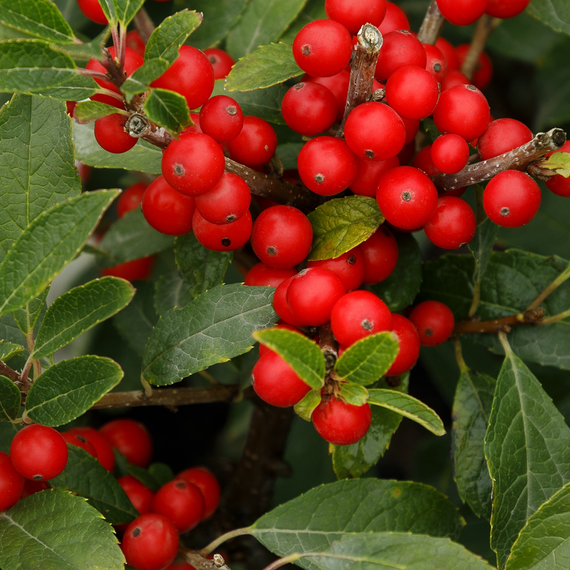
Berry Poppins Winterberry (Ilex verticillata ‘FarrowBPop’) is a compact deciduous holly prized for its heavy display of bright red berries that persist into the winter season, creating bold color when much of the garden is asleep. This prolific dwarf variety is ideal for smaller landscapes, mixed borders, and wildlife-friendly plantings where you want dependable winter interest and a natural food source for birds. Plant it in full sun to partial sun with consistently moist to wet soil for best performance. To ensure an abundant berry set, include a compatible male winterberry nearby—then enjoy cut branches for seasonal arrangements and a landscape that stays vibrant well beyond fall.


Overview

A compact, berry-loaded winterberry holly that delivers standout winter color and bird-friendly benefits.

  • Plant type: Deciduous shrub
  • Top feature: Bright red ornamental berries for winter impact
  • Growth rate: Moderate
Blooms & Fragrance

Small white flowers lead to the show—once pollinated, they develop into the vivid red berries that persist into winter.

  • Flower color: White
  • Berry display: Bright red berries that highlight fall and winter
  • Pollination note: Plant a male such as Mr. Poppins for berry set
Plant Size

A true dwarf winterberry that keeps its tidy footprint while still producing a generous berry display.

  • Mature size: 3–4 ft. tall and 3–4 ft. wide
  • Form: Compact and well-suited to smaller landscapes
Sunlight

Produces the best growth and berry potential with plenty of sun.

  • Light: Full sun to partial sun
Water

Winterberry naturally thrives where moisture is consistent—perfect for damp areas and rain-garden style plantings.

  • Water needs: Keep soil moist to wet
  • Establishment: Water regularly the first growing season to develop deep roots
Soil & Drainage

Adaptable, but performs best where soil stays consistently moist—especially in acidic conditions.

  • Soil preference: Moist, acidic soils
  • Best results: Consistent moisture supports strong growth and berry production
Cold Hardiness

A reliable cold-season performer that adds long-lasting interest across a wide range of climates.

  • USDA zones: 3–9
  • Deciduous: Yes (berries stand out after leaf drop)
Where to Plant

Place it where winter color can shine and where birds can easily find the berry display.

  • Specimen plantings where bright red berries won’t compete with other colors
  • Corners of fences and along property lines for seasonal impact
  • Near woodland gardens and in all-native or wildlife-focused landscapes
  • Moist areas where many shrubs struggle
Design Tips

Winterberry is all about the berries—plan the planting so the fruit is front and center when the garden is quiet.

  • Pair with evergreens or dark backdrops to make red berries pop
  • Plant in drifts for bigger winter impact and stronger bird appeal
  • Remember: berries require a pollinator—include a male nearby for best results
Maintenance

Easy care with a few simple steps helps keep plants healthy and productive year after year.

  • Apply a slow-release fertilizer before new growth begins in spring
  • Prune annually to shape
  • Maintain consistent moisture, especially during establishment
Wildlife & Resistance

A wildlife-friendly shrub with excellent seasonal value and practical landscape durability.

  • Benefits: Winter food source for birds
  • Resistance: Deer resistant; rabbit resistant
  • Site tolerance: Very wet areas; road salt tolerant
Pairs Well With

Winterberries need a compatible pollinator nearby to produce their signature berry show.

  • Pollinator pairing: Plant a male winterberry such as Mr. Poppins for berry set
  • Design pairing: Use with evergreen backdrops to highlight red berries in winter
 
  • Prolific dwarf winterberry with bright red berries that light up the winter landscape
  • Compact, easy-care shrub that fits beautifully in small spaces and foundation beds
  • Provides a valuable cold-season food source for birds and strong winter interest
  • For best berry production, plant a compatible male pollinator nearby (such as Mr. Poppins)

Berry Poppins Winterberry (Ilex verticillata ‘FarrowBPop’) is a compact deciduous holly prized for its heavy display of bright red berries that persist into the winter season, creating bold color when much of the garden is asleep. This prolific dwarf variety is ideal for smaller landscapes, mixed borders, and wildlife-friendly plantings where you want dependable winter interest and a natural food source for birds. Plant it in full sun to partial sun with consistently moist to wet soil for best performance. To ensure an abundant berry set, include a compatible male winterberry nearby—then enjoy cut branches for seasonal arrangements and a landscape that stays vibrant well beyond fall.


Overview

A compact, berry-loaded winterberry holly that delivers standout winter color and bird-friendly benefits.

  • Plant type: Deciduous shrub
  • Top feature: Bright red ornamental berries for winter impact
  • Growth rate: Moderate
Blooms & Fragrance

Small white flowers lead to the show—once pollinated, they develop into the vivid red berries that persist into winter.

  • Flower color: White
  • Berry display: Bright red berries that highlight fall and winter
  • Pollination note: Plant a male such as Mr. Poppins for berry set
Plant Size

A true dwarf winterberry that keeps its tidy footprint while still producing a generous berry display.

  • Mature size: 3–4 ft. tall and 3–4 ft. wide
  • Form: Compact and well-suited to smaller landscapes
Sunlight

Produces the best growth and berry potential with plenty of sun.

  • Light: Full sun to partial sun
Water

Winterberry naturally thrives where moisture is consistent—perfect for damp areas and rain-garden style plantings.

  • Water needs: Keep soil moist to wet
  • Establishment: Water regularly the first growing season to develop deep roots
Soil & Drainage

Adaptable, but performs best where soil stays consistently moist—especially in acidic conditions.

  • Soil preference: Moist, acidic soils
  • Best results: Consistent moisture supports strong growth and berry production
Cold Hardiness

A reliable cold-season performer that adds long-lasting interest across a wide range of climates.

  • USDA zones: 3–9
  • Deciduous: Yes (berries stand out after leaf drop)
Where to Plant

Place it where winter color can shine and where birds can easily find the berry display.

  • Specimen plantings where bright red berries won’t compete with other colors
  • Corners of fences and along property lines for seasonal impact
  • Near woodland gardens and in all-native or wildlife-focused landscapes
  • Moist areas where many shrubs struggle
Design Tips

Winterberry is all about the berries—plan the planting so the fruit is front and center when the garden is quiet.

  • Pair with evergreens or dark backdrops to make red berries pop
  • Plant in drifts for bigger winter impact and stronger bird appeal
  • Remember: berries require a pollinator—include a male nearby for best results
Maintenance

Easy care with a few simple steps helps keep plants healthy and productive year after year.

  • Apply a slow-release fertilizer before new growth begins in spring
  • Prune annually to shape
  • Maintain consistent moisture, especially during establishment
Wildlife & Resistance

A wildlife-friendly shrub with excellent seasonal value and practical landscape durability.

  • Benefits: Winter food source for birds
  • Resistance: Deer resistant; rabbit resistant
  • Site tolerance: Very wet areas; road salt tolerant
Pairs Well With

Winterberries need a compatible pollinator nearby to produce their signature berry show.

  • Pollinator pairing: Plant a male winterberry such as Mr. Poppins for berry set
  • Design pairing: Use with evergreen backdrops to highlight red berries in winter