

Zoom the image with the mouse
Balboa Sunset Trumpet Vine
SKU:
217037-P
UPC:
014949227138
$21.99 - $74.99
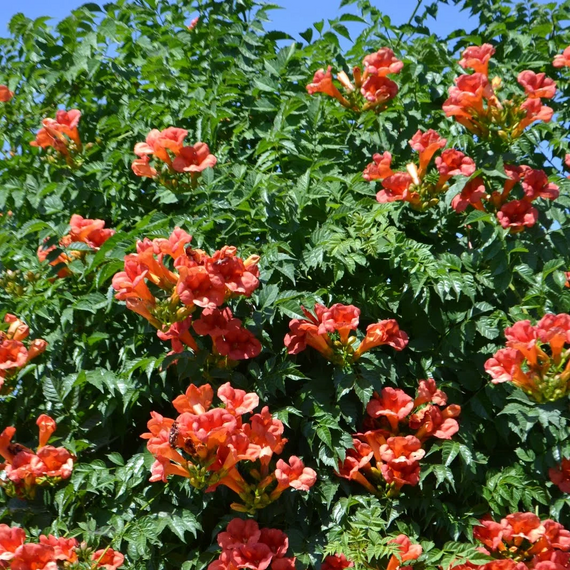
- Show‑stopping clusters of deep reddish‑orange, trumpet‑shaped blooms from late spring through fall.
- Vigorous, self‑clinging climber; quickly reaches ~30 ft. or more with support for fast coverage.
- Easy‑care and waterwise once established; thrives in full sun and lean, well‑drained soils.
- Hummingbird‑magnet; great for arbors, fences, lattices, screening, and even sprawling as a groundcover.
Balboa Sunset Trumpet Vine (Campsis radicans ‘Monbal’) delivers a bold, long‑season display of richly colored, tubular blossoms that draw hummingbirds and attention alike. This fast, self‑clinging climber quickly blankets trellises, fences, and walls with lush green foliage, thriving in full sun and lean, well‑drained soil. Once established, it’s notably waterwise and low‑maintenance—ideal for creating vibrant, wildlife‑friendly vertical interest or a dramatic groundcover where quick coverage is the goal.
Botanical Name
Campsis radicans ‘Monbal’ — Balboa Sunset® Trumpet Vine (family Bignoniaceae).
Plant Type & Growth Habit
Deciduous, woody vine with fast, clinging stems and a strong climbing habit; self‑adheres to many surfaces.
Mature Size
Vines typically and quickly reach about 30 ft. or longer with support; spread varies by training and structure.
Hardiness
USDA Zones 4–11.
Light & Exposure
Full sun is best for abundant flowering; heat‑loving and well suited to warm exposures.
Soil & Water
Grows easily in lean, well‑drained soils. Water deeply and regularly the first season to establish; once established, water deeply only occasionally.
Flowers & Bloom Season
Large clusters of deep reddish‑orange (red‑toned) trumpets bloom from late spring through fall for a dramatic, extended display.
Pollinators & Wildlife
Highly attractive to hummingbirds and other pollinators, adding movement and biodiversity to the garden.
Uses & Landscape Ideas
- Screening & privacy on fences, lattices, and pergolas.
- Arbors, walls, and trellises for bold vertical color.
- Groundcover on large, sunny slopes or to mask unsightly areas.
- Can be trained as an espalier; suitable for large containers with a stout support.
Training & Support
Provide a sturdy structure (trellis, arbor, fence, or masonry). Guide young shoots to supports; once established, vines self‑cling and rapidly cover surfaces.
Pruning & Maintenance
Prune annually after the main bloom to manage size and encourage new flowering growth. In nutrient‑rich soils, feed sparingly and avoid high‑nitrogen fertilizers to prioritize blooms over leaves.
Toughness & Problem Solving
Waterwise once established; useful for erosion control, tolerates urban pollution and coastal conditions, and is generally rabbit resistant.
Planting & Spacing
Plant at the same depth as the nursery container near your support. Space plants based on structure width and desired density; ensure good air circulation and access for pruning.
Regional Notes & Cautions
A vigorous climber—monitor spread and remove unwanted shoots to prevent encroachment. Sap may irritate skin; wear gloves when pruning.
Companion Ideas
Pairs beautifully with Coneflower (Echinacea), Butterfly Bush (Buddleja), Milkweed (Asclepias), Bee Balm (Monarda), and Salvia for a pollinator‑rich, summer‑into‑fall display.
- Show‑stopping clusters of deep reddish‑orange, trumpet‑shaped blooms from late spring through fall.
- Vigorous, self‑clinging climber; quickly reaches ~30 ft. or more with support for fast coverage.
- Easy‑care and waterwise once established; thrives in full sun and lean, well‑drained soils.
- Hummingbird‑magnet; great for arbors, fences, lattices, screening, and even sprawling as a groundcover.
Balboa Sunset Trumpet Vine (Campsis radicans ‘Monbal’) delivers a bold, long‑season display of richly colored, tubular blossoms that draw hummingbirds and attention alike. This fast, self‑clinging climber quickly blankets trellises, fences, and walls with lush green foliage, thriving in full sun and lean, well‑drained soil. Once established, it’s notably waterwise and low‑maintenance—ideal for creating vibrant, wildlife‑friendly vertical interest or a dramatic groundcover where quick coverage is the goal.
Botanical Name
Campsis radicans ‘Monbal’ — Balboa Sunset® Trumpet Vine (family Bignoniaceae).
Plant Type & Growth Habit
Deciduous, woody vine with fast, clinging stems and a strong climbing habit; self‑adheres to many surfaces.
Mature Size
Vines typically and quickly reach about 30 ft. or longer with support; spread varies by training and structure.
Hardiness
USDA Zones 4–11.
Light & Exposure
Full sun is best for abundant flowering; heat‑loving and well suited to warm exposures.
Soil & Water
Grows easily in lean, well‑drained soils. Water deeply and regularly the first season to establish; once established, water deeply only occasionally.
Flowers & Bloom Season
Large clusters of deep reddish‑orange (red‑toned) trumpets bloom from late spring through fall for a dramatic, extended display.
Pollinators & Wildlife
Highly attractive to hummingbirds and other pollinators, adding movement and biodiversity to the garden.
Uses & Landscape Ideas
- Screening & privacy on fences, lattices, and pergolas.
- Arbors, walls, and trellises for bold vertical color.
- Groundcover on large, sunny slopes or to mask unsightly areas.
- Can be trained as an espalier; suitable for large containers with a stout support.
Training & Support
Provide a sturdy structure (trellis, arbor, fence, or masonry). Guide young shoots to supports; once established, vines self‑cling and rapidly cover surfaces.
Pruning & Maintenance
Prune annually after the main bloom to manage size and encourage new flowering growth. In nutrient‑rich soils, feed sparingly and avoid high‑nitrogen fertilizers to prioritize blooms over leaves.
Toughness & Problem Solving
Waterwise once established; useful for erosion control, tolerates urban pollution and coastal conditions, and is generally rabbit resistant.
Planting & Spacing
Plant at the same depth as the nursery container near your support. Space plants based on structure width and desired density; ensure good air circulation and access for pruning.
Regional Notes & Cautions
A vigorous climber—monitor spread and remove unwanted shoots to prevent encroachment. Sap may irritate skin; wear gloves when pruning.
Companion Ideas
Pairs beautifully with Coneflower (Echinacea), Butterfly Bush (Buddleja), Milkweed (Asclepias), Bee Balm (Monarda), and Salvia for a pollinator‑rich, summer‑into‑fall display.
Related Products