


Zoom the image with the mouse
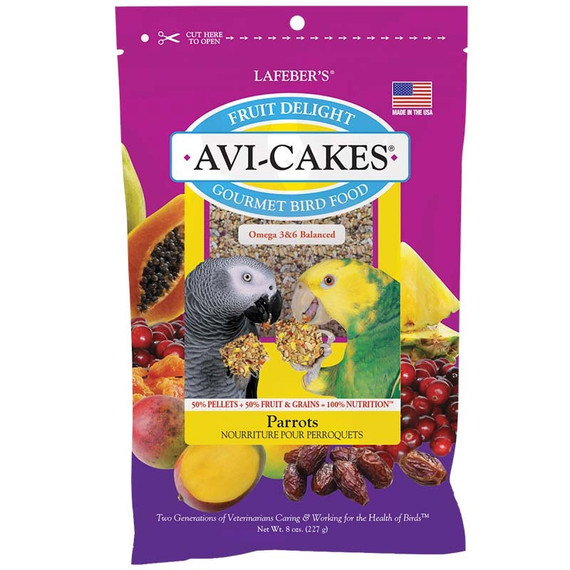
Lafeber Fruit Delight Avi-Cakes for Parrots - 8 oz
SKU:
1494480
UPC:
041054862305
$10.99
- A nutritionally complete blend of 50% pellets with grains, seeds and fruit works as a daily meal or snack.
- Real cranberry, date, mango, papaya and pineapple pieces add sweet flavor and the varied texture parrots enjoy.
- The compact cake shape invites pulling, twisting and tearing, so every meal becomes natural foraging enrichment.
- Non-GMO, human-grade ingredients with no artificial colors, flavors or preservatives, and every batch is lab-tested.
Lafeber Fruit Delight Avi-Cakes for Parrots, in an 8 oz bag, is a nutritionally complete parrot food that gives birds balanced nutrition and something to work at in the same bite. Each cake is half pellets, and the other half is grains, seeds and dried fruit, including cranberries, dates, mango, papaya and pineapple. Avian veterinarians, nutritionists and behavioral specialists helped develop the formula. It can be served as a main meal, offered as a snack or used as a foraging reward. The cakes hold together, so a parrot has to grab, twist and pull each one apart with its beak and tongue instead of just picking out favorites from a loose mix. That makes them a good fit for Amazons, African greys and other parrots that like to handle their food. They also help seed-loving birds get used to pellets, because the familiar seeds and fruit make the pellet portion easier to accept. The ingredients are non-GMO and human-grade, and the fatty acids are balanced to support skin, feathers and immune health. Each batch is made in small runs on the Lafeber family farm in rural Illinois. For owners who want complete nutrition, real fruit and daily enrichment from a single food, these fruit cakes are a strong choice.
Ingredients & Fruit Blend
Every cake combines three kinds of ingredients. Pellets make up half the formula and provide the nutritional base. Grains and seeds such as corn, red and white proso millet, canary grass seed and safflower give the familiar taste and crunch parrots look for. Pieces of dried papaya, mango, pineapple, dates and cranberries add sweetness and color.
Wheat flour, soybean meal, hydrolyzed soy protein, peanuts, corn syrup, sucrose, glycerin and vegetable oils hold the cake together and keep it pleasantly chewy. The blend is fortified with vitamins, minerals, choline and methionine. It is naturally preserved with citric acid and mixed tocopherols, and it contains no artificial colors, flavors or preservatives.
Guaranteed Analysis
| Nutrient | Amount |
|---|---|
| Crude Protein | 11.00% minimum |
| Crude Fat | 5.00% minimum |
| Crude Fiber | 6.50% maximum |
| Moisture | 14.00% maximum |
| Omega-3 Fatty Acids | 0.18% minimum |
| Omega-6 Fatty Acids | 3.64% minimum |
The omega-3 and omega-6 fatty acids are balanced to help support immune function and healthy skin and feathers.
Feeding Guide
How much to serve depends on how you plan to use the cakes.
- As a treat or reward: Offer two or three cakes at a time.
- As the main diet: Put out roughly the amount your bird will eat without a lot of waste, and refill the dish when it empties.
- Fresh foods: Fresh fruits and vegetables should make up about 20% of the total daily diet.
Keep clean, fresh water available at all times. Start with smaller amounts while you learn your bird's appetite, then adjust from there.
Switching From Seeds
Many parrots raised on seed are suspicious of plain pellets. These cakes help close that gap because the pellets are mixed with seeds, grains and fruit the bird already recognizes.
To make the change, start by offering two or three cakes alongside the usual seed mix. Over the following days and weeks, gradually add more cakes and reduce the seed. Some birds take to the cakes right away, and others need more patience. Watch that your parrot is actually eating during the switch, and slow down if needed. Every bird moves at its own pace, and not every parrot will go on to accept straight pellets afterward.
Foraging & Enrichment
In the wild, parrots spend a large part of the day finding and working for food. A loose bowl of pellets gets eaten in minutes, while a cake has to be held, turned, picked at and pulled apart. That gives a busy beak something to do, and it can help a bird that gets bored between activities.
Clever, hands-on species like Amazons and African greys especially enjoy picking apart their food this way. You can hand cakes out as training rewards, tuck them into foraging spots around the cage, or simply serve them in the bowl so mealtime becomes an activity rather than a quick snack.
Quality & Freshness
Fruit Delight Avi-Cakes are made in small batches on the Lafeber family farm in rural Illinois. Seeds and grains are hand-inspected, and each production batch is laboratory-tested before it ships.
To keep the cakes fresh and chewy after opening, reseal the bag tightly each time. Store it somewhere cool and dry, away from direct sunlight. A Best Before date is stamped on the back of the bag so you always know how fresh your supply is.
Specifications
| Specification | Detail |
|---|---|
| Brand | Lafeber |
| Model Number | 86230 |
| Net Weight | 8 oz (227 g) |
| Food Format | Cakes of pellets, grains, seeds and dried fruit |
| Pellet Content | 50% |
| Fruits | Cranberry, date, mango, papaya, pineapple |
| Suitable For | Parrots, including Amazons and African greys |
| Package Dimensions | 10.5 x 6.5 x 1 in |
| Made In | Rural Illinois, USA |
| Contents | One bag of Fruit Delight Avi-Cakes |
Common Questions
Can these cakes be a parrot's main food?
They can. The formula is nutritionally complete, so it works as a main meal as well as a snack, ideally alongside fresh fruits and vegetables.
Do they contain any common allergens?
The ingredients include peanuts, soybean ingredients and wheat flour. Keep that in mind if your bird has known sensitivities.
What keeps them fresh without artificial preservatives?
Citric acid and mixed tocopherols, a natural source of vitamin E, preserve the cakes. No artificial preservatives are used.
Are the cakes suitable for smaller birds?
The formula is made and labeled for parrots, and medium and larger species that like to handle their food tend to get the most out of the cake format.


