

Zoom the image with the mouse
Ruffled Red Echeveria - 1 Gallon
SKU:
1876620
UPC:
014949383148
$17.99
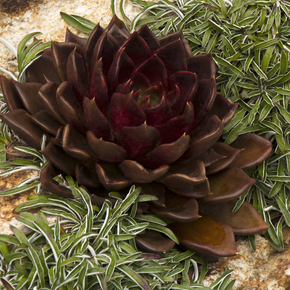
- Dramatically ruffled, gray-green rosettes edged in vivid red create an eye-catching sculptural presence in any garden or container display.
- Exceptionally drought tolerant and low maintenance, making it a perfect choice for water-wise landscapes, rock gardens, and sunny dry borders.
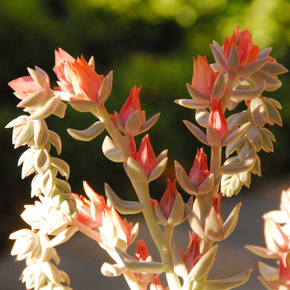
- Produces tall, elegant flower stalks topped with red-orange blooms in late summer, adding seasonal flair to its year-round evergreen appeal.
- Thrives in containers indoors or out, and grows beautifully alongside other succulents for stunning, texture-rich arrangements.
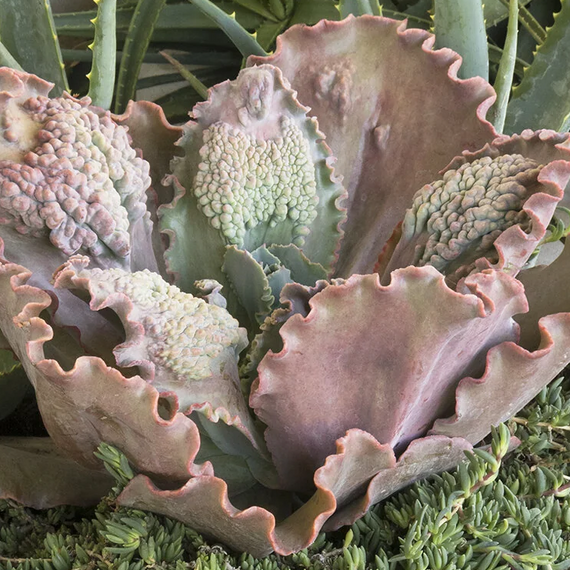
Echeveria 'Ruffled Red' is a showstopping hybrid succulent in the Crassulaceae family, prized for its large, open rosettes of thick, fleshy leaves that ruffle and wave dramatically at the edges like the petals of an exotic flower. The foliage presents a captivating two-tone palette, with soft gray-green centers that deepen to rich burgundy-red along the heavily textured, bumpy margins, intensifying in color with more sun exposure. As a slow-growing but fast-to-impress evergreen, it reaches a tidy 12 inches tall and wide at maturity, making it an ideal focal point or mass planting accent in rock gardens, succulent borders, coastal gardens, and xeric landscapes across USDA Zones 9-10. Come late summer, tall arching flower stalks rise above the rosette bearing clusters of tubular red-orange blooms, attracting hummingbirds and pollinators. Highly tolerant of drought, heat, and lean soils once established, Echeveria 'Ruffled Red' is equally at home in a decorative container on a sunny patio, a bright indoor windowsill, or nestled among boulders in a dry garden. With minimal watering needs, excellent heat tolerance, and bold year-round color, this exceptional succulent delivers maximum visual impact for minimum effort.
Plant Description
Echeveria 'Ruffled Red' is a hybrid evergreen succulent belonging to the family Crassulaceae. It forms striking, open rosettes of large, fleshy leaves that dramatically ruffle and curl outward at the edges, giving the plant a frilly, coral-like appearance reminiscent of a giant exotic flower. The leaf surfaces are heavily textured and bumpy, widening toward their wavy tips. The foliage displays a beautiful gradient of soft gray-green at the center blending to powder blue and warm pink tones, with vivid red to burgundy coloring concentrated along the ruffled margins. This red edging becomes even more pronounced and vibrant when the plant receives ample direct sunlight, a phenomenon known as "stress coloring." In late summer, tall, arching flower stalks emerge from the rosette center bearing clusters of tubular red-orange blossoms that are as ornamental as the foliage itself.
Mature Size
| Characteristic | Measurement |
|---|---|
| Mature Height | 10 to 12 inches |
| Mature Width | 10 to 12 inches |
| Growth Rate | Slow to moderate |
| Plant Form | Rosette-forming succulent |
| Flower Stalk Height | Rises well above the rosette in late summer |
Hardiness Zones
Echeveria 'Ruffled Red' is best suited to USDA Hardiness Zones 9-10, tolerating minimum temperatures down to approximately 28-30 degrees F. It is frost-tender and should be protected from hard freezes. In colder climates outside its hardy range, it excels as a container plant that can be moved indoors before temperatures drop below 50 degrees F in fall. Outdoors in Southern Oregon and Northern California, it performs best in the warmer, frost-free or nearly frost-free microclimates of the region. In areas with occasional light frosts, situate plants in a sheltered, south-facing spot or use frost cloth for protection during cold snaps.
Sunlight Requirements
For the most compact rosette shape and the most intense red coloring along the leaf margins, Echeveria 'Ruffled Red' thrives in full sun to partial shade, requiring a minimum of 4 to 6 hours of direct sunlight per day. Outdoors, a position in full morning sun with light afternoon shade is ideal in hot inland climates to prevent leaf scorch, while coastal or cooler locations can support full-day sun exposure. Indoors, place the plant in a south- or west-facing window to provide the brightest possible light. Insufficient light causes the rosette to stretch and become leggy (a condition called etiolation), and the vivid red marginal coloring will fade to plain green. If growing indoors in low-light conditions, supplement with a grow light positioned 6 to 12 inches above the plant for 12 to 16 hours per day.
Watering Guide
As a succulent, Echeveria 'Ruffled Red' stores water in its thick, fleshy leaves and is highly adapted to dry conditions. Follow the "soak and dry" method: water deeply and thoroughly until water drains freely from the pot's drainage holes, then allow the soil to dry out completely before watering again. During the active growing season in spring and summer, watering every 7 to 14 days is typically sufficient, depending on heat and sun exposure. In fall and especially through winter, reduce watering significantly, as the plant enters a rest period and excess moisture during cool dormancy is the leading cause of root rot and plant death. Never allow the plant to sit in standing water or a saucer full of water. When watering, direct water at the soil surface and avoid wetting the center of the rosette or the leaves themselves to prevent rot and fungal issues.
Soil and pH Preferences
Echeveria 'Ruffled Red' demands fast-draining, porous soil above all else. Waterlogged or heavy clay soils will cause root rot quickly. The ideal planting medium is a quality cactus and succulent potting mix. For even better drainage and aeration, amend the mix with up to 50% coarse perlite, pumice, or chicken grit. A simple homemade blend of 1 part potting soil, 1 part perlite, and 1 part coarse sand also works very well. For in-ground planting, work coarse sand or fine gravel into the native soil to improve drainage, or create raised beds in areas prone to wet conditions. This plant is tolerant of lean, nutrient-poor soils and does not require rich amendments. A slightly acidic to neutral soil pH of 6.0 to 7.0 is preferred, though it is reasonably adaptable. Unglazed terracotta containers are an excellent choice as they allow moisture to evaporate through the pot walls, helping prevent overwatering.
Fertilizing
Echeveria 'Ruffled Red' is adapted to nutrient-poor soils and has modest fertilizer needs. Over-fertilizing can cause weak, stretched growth and may burn the roots and leaves. During the active growing season in spring and summer, apply a balanced liquid cactus or succulent fertilizer diluted to one-quarter or one-half of the recommended strength every 2 to 4 weeks, or use a slow-release granular formula once at the beginning of the growing season. Avoid getting fertilizer directly on the leaves or in the rosette center. Do not fertilize during fall or winter when the plant is resting, as feeding during dormancy encourages soft, vulnerable growth susceptible to cold damage and rot.
Pruning and Maintenance
Echeveria 'Ruffled Red' requires very little pruning and is one of the most low-maintenance succulents available. Routine care involves removing any dead or dried outer leaves at the base of the rosette as they naturally shed. After blooming, spent flower stalks can be cut back cleanly at their base using a clean, sharp pair of scissors or pruning snips. Avoid touching or rubbing the leaves unnecessarily, as the natural powdery coating (called epicuticular wax or farina) on the leaf surface can be permanently damaged by fingerprints and handling, diminishing the plant's ornamental appearance. If an offset or pup begins to crowd the parent rosette in a container, it can be removed and replanted as a new plant.
Planting Instructions
- Select a planting site with at least 4 to 6 hours of direct sunlight and excellent soil drainage.
- Dig a hole slightly wider than the root ball but no deeper than the existing soil level in the pot.
- If planting in native garden soil, amend generously with coarse sand, pumice, or perlite to improve drainage. In heavy clay soils, consider building a raised bed.
- Remove the plant gently from its nursery container, handling the root ball rather than the leaves to avoid damaging the farina.
- Place the plant so the base of the rosette sits at or just slightly above the surrounding soil grade to encourage drainage away from the crown.
- Backfill with the amended soil mix and firm gently around the roots. Do not bury the rosette base.
- Top-dress around the plant with a layer of coarse gravel or pebble mulch to keep moisture away from the crown, suppress weeds, and reflect heat.
- Water thoroughly after planting and allow the soil to dry completely before the next watering.
- For container planting, choose a pot with ample drainage holes that is only slightly larger than the root ball, and fill with a quality cactus and succulent potting mix.
Seasonal Interest
Echeveria 'Ruffled Red' provides standout ornamental interest throughout the entire year. In spring and fall, as temperatures are moderate and light levels are favorable, the rosette is at its most lush, with leaves displaying their full gray-green to powder-blue and pink coloring. In summer, intense sunlight triggers the most vivid red-to-burgundy stress coloring along the leaf margins, maximizing the plant's dramatic two-tone appearance. Tall flower stalks emerge in mid to late summer, bearing clusters of tubular red-orange blooms that create an elegant vertical accent above the broad rosette. In winter, the plant remains evergreen and structurally attractive even as it enters a period of slower growth. The combination of distinctive leaf texture, bold foliage color, and seasonal blooming ensures this succulent remains a focal point in the garden or on a patio no matter the season.
Landscape Uses
- Rock gardens and dry stone walls, where its rosette form and drought tolerance shine
- Xeric and water-wise landscape designs, including fire-wise plantings in Southern Oregon and Northern California
- Coastal gardens, where it tolerates salt air and sandy soils well
- Container gardens and patio pots, either as a standalone specimen or combined with other succulents
- Succulent collector gardens and curated arrangements
- Dry borders and garden edges, providing low-growing, weed-suppressing ground coverage
- Indoor houseplant for bright, sunny windowsills
- Mass plantings for bold textural impact in low-water garden beds
Container Growing
Echeveria 'Ruffled Red' is an outstanding container plant and one of the most rewarding succulents to grow in pots. Select an unglazed terracotta pot or any container with multiple drainage holes; the pot should be only slightly larger than the plant's root ball, as excess soil volume retains moisture too long. Fill with a quality cactus and succulent potting mix, optionally amended with extra perlite or pumice for enhanced drainage. Place the container in the brightest spot available, ideally outdoors on a sunny patio or balcony during the growing season. Containers allow the plant to be moved indoors easily when frost threatens in fall and winter. Repot every 2 to 3 years in spring as the plant outgrows its container or the soil loses its drainage properties. When repotting, allow the plant to sit out of soil for a day or two to allow any disturbed roots to callous before replanting in fresh mix.
Propagation
Echeveria 'Ruffled Red' can be propagated easily by three methods:
- Offsets (Pups): Mature plants often produce small rosette offsets at their base. When pups are 2 to 3 inches tall, they can be detached with a clean, sharp knife, allowed to dry and callous for 2 to 3 days, then planted in fresh, well-draining succulent mix. This is the fastest and most reliable method.
- Leaf Cuttings: Select a healthy, plump outer leaf and gently twist it free from the stem with a clean sideways motion, ensuring the entire leaf base is intact. Lay the leaf on top of barely moist cactus mix in a bright, indirect-light location. Roots and a tiny new rosette will emerge from the base of the leaf within several weeks. The parent leaf will eventually dry up and can be removed once the new plantlet is established.
- Seeds: Echeveria seeds can be sown on the surface of a fine, well-draining seed-starting mix and kept lightly moist at temperatures of 73 to 80 degrees F. Germination takes 3 to 6 weeks. Seed-grown plants are slow to mature and may not come true to the parent cultivar, so offset or leaf propagation is generally preferred.
Pests and Diseases
Echeveria 'Ruffled Red' is generally quite resilient, but a few pests and cultural issues may arise:
- Mealybugs: The most common succulent pest, appearing as white cottony masses in leaf axils and at the rosette center. Treat by dabbing with a cotton swab dipped in 70% isopropyl alcohol, or spray with a diluted alcohol solution.
- Aphids: Small soft-bodied insects that cluster on new growth and flower stalks. Remove by hand or treat with insecticidal soap or a diluted alcohol spray.
- Spider Mites: May appear in hot, dry conditions, causing stippled or silvery leaf discoloration. Increase air circulation and treat with insecticidal soap if necessary.
- Snails and Slugs: Can damage fleshy leaves overnight. Use physical barriers, iron phosphate-based slug bait, or hand removal.
- Root Rot: The most serious and common problem, caused by overwatering or poorly draining soil. Symptoms include soft, mushy, discolored leaves and a darkened, foul-smelling root system. Prevention through proper watering habits and well-draining soil is essential. If caught early, remove the plant from wet soil, allow it to dry out, trim affected roots, and replant in fresh dry mix.
- Sunburn: Overly intense direct sun exposure, particularly when a plant is moved suddenly from shade to full sun, can cause bleached or brown patches on leaves. Acclimate plants gradually to higher light levels.
- Etiolation (Stretching): Caused by insufficient light. The rosette becomes elongated and loses its compact, tidy form. Move the plant to a brighter location as soon as possible.
Companion Plants
Echeveria 'Ruffled Red' pairs beautifully with other drought-tolerant succulents and Mediterranean-climate plants that share its preference for well-drained soils and bright sunlight. Consider these complementary companions:
- Other Echeveria varieties (such as Echeveria 'Afterglow' or Echeveria 'Perle von Nurnberg') for a diverse, textural succulent tapestry with varying foliage colors
- Sedum and Sempervivum for similar rosette forms in a range of sizes and hues
- Agave and Aloe as bold architectural accents that complement the ruffled texture of the rosette
- Dymondia margaretae (Silver Carpet) as a low groundcover in dry garden beds
- Portulacaria afra (Elephant Bush) for a cascading or shrubby backdrop
- Aeonium varieties for contrasting rosette form and dark foliage tones
- Festuca glauca (Blue Fescue) for a soft textural contrast alongside the bold succulent rosette
Wildlife Value
While Echeveria 'Ruffled Red' is not a primary wildlife habitat plant, it does offer some meaningful value to local fauna. The tall flower stalks and tubular red-orange blooms produced in late summer are particularly attractive to hummingbirds, which are frequent visitors seeking nectar. Butterflies and native bees may also visit the blooms as a nectar source. As a dense, low-growing rosette, the plant can provide ground-level shelter for small beneficial insects. Echeveria is generally considered non-toxic to humans and animals, making it a safer choice for households with pets and children compared to many other ornamental plants, though it is always advisable to discourage pets from chewing on any garden plant.
- Dramatically ruffled, gray-green rosettes edged in vivid red create an eye-catching sculptural presence in any garden or container display.
- Exceptionally drought tolerant and low maintenance, making it a perfect choice for water-wise landscapes, rock gardens, and sunny dry borders.
- Produces tall, elegant flower stalks topped with red-orange blooms in late summer, adding seasonal flair to its year-round evergreen appeal.
- Thrives in containers indoors or out, and grows beautifully alongside other succulents for stunning, texture-rich arrangements.
Echeveria 'Ruffled Red' is a showstopping hybrid succulent in the Crassulaceae family, prized for its large, open rosettes of thick, fleshy leaves that ruffle and wave dramatically at the edges like the petals of an exotic flower. The foliage presents a captivating two-tone palette, with soft gray-green centers that deepen to rich burgundy-red along the heavily textured, bumpy margins, intensifying in color with more sun exposure. As a slow-growing but fast-to-impress evergreen, it reaches a tidy 12 inches tall and wide at maturity, making it an ideal focal point or mass planting accent in rock gardens, succulent borders, coastal gardens, and xeric landscapes across USDA Zones 9-10. Come late summer, tall arching flower stalks rise above the rosette bearing clusters of tubular red-orange blooms, attracting hummingbirds and pollinators. Highly tolerant of drought, heat, and lean soils once established, Echeveria 'Ruffled Red' is equally at home in a decorative container on a sunny patio, a bright indoor windowsill, or nestled among boulders in a dry garden. With minimal watering needs, excellent heat tolerance, and bold year-round color, this exceptional succulent delivers maximum visual impact for minimum effort.
Plant Description
Echeveria 'Ruffled Red' is a hybrid evergreen succulent belonging to the family Crassulaceae. It forms striking, open rosettes of large, fleshy leaves that dramatically ruffle and curl outward at the edges, giving the plant a frilly, coral-like appearance reminiscent of a giant exotic flower. The leaf surfaces are heavily textured and bumpy, widening toward their wavy tips. The foliage displays a beautiful gradient of soft gray-green at the center blending to powder blue and warm pink tones, with vivid red to burgundy coloring concentrated along the ruffled margins. This red edging becomes even more pronounced and vibrant when the plant receives ample direct sunlight, a phenomenon known as "stress coloring." In late summer, tall, arching flower stalks emerge from the rosette center bearing clusters of tubular red-orange blossoms that are as ornamental as the foliage itself.
Mature Size
| Characteristic | Measurement |
|---|---|
| Mature Height | 10 to 12 inches |
| Mature Width | 10 to 12 inches |
| Growth Rate | Slow to moderate |
| Plant Form | Rosette-forming succulent |
| Flower Stalk Height | Rises well above the rosette in late summer |
Hardiness Zones
Echeveria 'Ruffled Red' is best suited to USDA Hardiness Zones 9-10, tolerating minimum temperatures down to approximately 28-30 degrees F. It is frost-tender and should be protected from hard freezes. In colder climates outside its hardy range, it excels as a container plant that can be moved indoors before temperatures drop below 50 degrees F in fall. Outdoors in Southern Oregon and Northern California, it performs best in the warmer, frost-free or nearly frost-free microclimates of the region. In areas with occasional light frosts, situate plants in a sheltered, south-facing spot or use frost cloth for protection during cold snaps.
Sunlight Requirements
For the most compact rosette shape and the most intense red coloring along the leaf margins, Echeveria 'Ruffled Red' thrives in full sun to partial shade, requiring a minimum of 4 to 6 hours of direct sunlight per day. Outdoors, a position in full morning sun with light afternoon shade is ideal in hot inland climates to prevent leaf scorch, while coastal or cooler locations can support full-day sun exposure. Indoors, place the plant in a south- or west-facing window to provide the brightest possible light. Insufficient light causes the rosette to stretch and become leggy (a condition called etiolation), and the vivid red marginal coloring will fade to plain green. If growing indoors in low-light conditions, supplement with a grow light positioned 6 to 12 inches above the plant for 12 to 16 hours per day.
Watering Guide
As a succulent, Echeveria 'Ruffled Red' stores water in its thick, fleshy leaves and is highly adapted to dry conditions. Follow the "soak and dry" method: water deeply and thoroughly until water drains freely from the pot's drainage holes, then allow the soil to dry out completely before watering again. During the active growing season in spring and summer, watering every 7 to 14 days is typically sufficient, depending on heat and sun exposure. In fall and especially through winter, reduce watering significantly, as the plant enters a rest period and excess moisture during cool dormancy is the leading cause of root rot and plant death. Never allow the plant to sit in standing water or a saucer full of water. When watering, direct water at the soil surface and avoid wetting the center of the rosette or the leaves themselves to prevent rot and fungal issues.
Soil and pH Preferences
Echeveria 'Ruffled Red' demands fast-draining, porous soil above all else. Waterlogged or heavy clay soils will cause root rot quickly. The ideal planting medium is a quality cactus and succulent potting mix. For even better drainage and aeration, amend the mix with up to 50% coarse perlite, pumice, or chicken grit. A simple homemade blend of 1 part potting soil, 1 part perlite, and 1 part coarse sand also works very well. For in-ground planting, work coarse sand or fine gravel into the native soil to improve drainage, or create raised beds in areas prone to wet conditions. This plant is tolerant of lean, nutrient-poor soils and does not require rich amendments. A slightly acidic to neutral soil pH of 6.0 to 7.0 is preferred, though it is reasonably adaptable. Unglazed terracotta containers are an excellent choice as they allow moisture to evaporate through the pot walls, helping prevent overwatering.
Fertilizing
Echeveria 'Ruffled Red' is adapted to nutrient-poor soils and has modest fertilizer needs. Over-fertilizing can cause weak, stretched growth and may burn the roots and leaves. During the active growing season in spring and summer, apply a balanced liquid cactus or succulent fertilizer diluted to one-quarter or one-half of the recommended strength every 2 to 4 weeks, or use a slow-release granular formula once at the beginning of the growing season. Avoid getting fertilizer directly on the leaves or in the rosette center. Do not fertilize during fall or winter when the plant is resting, as feeding during dormancy encourages soft, vulnerable growth susceptible to cold damage and rot.
Pruning and Maintenance
Echeveria 'Ruffled Red' requires very little pruning and is one of the most low-maintenance succulents available. Routine care involves removing any dead or dried outer leaves at the base of the rosette as they naturally shed. After blooming, spent flower stalks can be cut back cleanly at their base using a clean, sharp pair of scissors or pruning snips. Avoid touching or rubbing the leaves unnecessarily, as the natural powdery coating (called epicuticular wax or farina) on the leaf surface can be permanently damaged by fingerprints and handling, diminishing the plant's ornamental appearance. If an offset or pup begins to crowd the parent rosette in a container, it can be removed and replanted as a new plant.
Planting Instructions
- Select a planting site with at least 4 to 6 hours of direct sunlight and excellent soil drainage.
- Dig a hole slightly wider than the root ball but no deeper than the existing soil level in the pot.
- If planting in native garden soil, amend generously with coarse sand, pumice, or perlite to improve drainage. In heavy clay soils, consider building a raised bed.
- Remove the plant gently from its nursery container, handling the root ball rather than the leaves to avoid damaging the farina.
- Place the plant so the base of the rosette sits at or just slightly above the surrounding soil grade to encourage drainage away from the crown.
- Backfill with the amended soil mix and firm gently around the roots. Do not bury the rosette base.
- Top-dress around the plant with a layer of coarse gravel or pebble mulch to keep moisture away from the crown, suppress weeds, and reflect heat.
- Water thoroughly after planting and allow the soil to dry completely before the next watering.
- For container planting, choose a pot with ample drainage holes that is only slightly larger than the root ball, and fill with a quality cactus and succulent potting mix.
Seasonal Interest
Echeveria 'Ruffled Red' provides standout ornamental interest throughout the entire year. In spring and fall, as temperatures are moderate and light levels are favorable, the rosette is at its most lush, with leaves displaying their full gray-green to powder-blue and pink coloring. In summer, intense sunlight triggers the most vivid red-to-burgundy stress coloring along the leaf margins, maximizing the plant's dramatic two-tone appearance. Tall flower stalks emerge in mid to late summer, bearing clusters of tubular red-orange blooms that create an elegant vertical accent above the broad rosette. In winter, the plant remains evergreen and structurally attractive even as it enters a period of slower growth. The combination of distinctive leaf texture, bold foliage color, and seasonal blooming ensures this succulent remains a focal point in the garden or on a patio no matter the season.
Landscape Uses
- Rock gardens and dry stone walls, where its rosette form and drought tolerance shine
- Xeric and water-wise landscape designs, including fire-wise plantings in Southern Oregon and Northern California
- Coastal gardens, where it tolerates salt air and sandy soils well
- Container gardens and patio pots, either as a standalone specimen or combined with other succulents
- Succulent collector gardens and curated arrangements
- Dry borders and garden edges, providing low-growing, weed-suppressing ground coverage
- Indoor houseplant for bright, sunny windowsills
- Mass plantings for bold textural impact in low-water garden beds
Container Growing
Echeveria 'Ruffled Red' is an outstanding container plant and one of the most rewarding succulents to grow in pots. Select an unglazed terracotta pot or any container with multiple drainage holes; the pot should be only slightly larger than the plant's root ball, as excess soil volume retains moisture too long. Fill with a quality cactus and succulent potting mix, optionally amended with extra perlite or pumice for enhanced drainage. Place the container in the brightest spot available, ideally outdoors on a sunny patio or balcony during the growing season. Containers allow the plant to be moved indoors easily when frost threatens in fall and winter. Repot every 2 to 3 years in spring as the plant outgrows its container or the soil loses its drainage properties. When repotting, allow the plant to sit out of soil for a day or two to allow any disturbed roots to callous before replanting in fresh mix.
Propagation
Echeveria 'Ruffled Red' can be propagated easily by three methods:
- Offsets (Pups): Mature plants often produce small rosette offsets at their base. When pups are 2 to 3 inches tall, they can be detached with a clean, sharp knife, allowed to dry and callous for 2 to 3 days, then planted in fresh, well-draining succulent mix. This is the fastest and most reliable method.
- Leaf Cuttings: Select a healthy, plump outer leaf and gently twist it free from the stem with a clean sideways motion, ensuring the entire leaf base is intact. Lay the leaf on top of barely moist cactus mix in a bright, indirect-light location. Roots and a tiny new rosette will emerge from the base of the leaf within several weeks. The parent leaf will eventually dry up and can be removed once the new plantlet is established.
- Seeds: Echeveria seeds can be sown on the surface of a fine, well-draining seed-starting mix and kept lightly moist at temperatures of 73 to 80 degrees F. Germination takes 3 to 6 weeks. Seed-grown plants are slow to mature and may not come true to the parent cultivar, so offset or leaf propagation is generally preferred.
Pests and Diseases
Echeveria 'Ruffled Red' is generally quite resilient, but a few pests and cultural issues may arise:
- Mealybugs: The most common succulent pest, appearing as white cottony masses in leaf axils and at the rosette center. Treat by dabbing with a cotton swab dipped in 70% isopropyl alcohol, or spray with a diluted alcohol solution.
- Aphids: Small soft-bodied insects that cluster on new growth and flower stalks. Remove by hand or treat with insecticidal soap or a diluted alcohol spray.
- Spider Mites: May appear in hot, dry conditions, causing stippled or silvery leaf discoloration. Increase air circulation and treat with insecticidal soap if necessary.
- Snails and Slugs: Can damage fleshy leaves overnight. Use physical barriers, iron phosphate-based slug bait, or hand removal.
- Root Rot: The most serious and common problem, caused by overwatering or poorly draining soil. Symptoms include soft, mushy, discolored leaves and a darkened, foul-smelling root system. Prevention through proper watering habits and well-draining soil is essential. If caught early, remove the plant from wet soil, allow it to dry out, trim affected roots, and replant in fresh dry mix.
- Sunburn: Overly intense direct sun exposure, particularly when a plant is moved suddenly from shade to full sun, can cause bleached or brown patches on leaves. Acclimate plants gradually to higher light levels.
- Etiolation (Stretching): Caused by insufficient light. The rosette becomes elongated and loses its compact, tidy form. Move the plant to a brighter location as soon as possible.
Companion Plants
Echeveria 'Ruffled Red' pairs beautifully with other drought-tolerant succulents and Mediterranean-climate plants that share its preference for well-drained soils and bright sunlight. Consider these complementary companions:
- Other Echeveria varieties (such as Echeveria 'Afterglow' or Echeveria 'Perle von Nurnberg') for a diverse, textural succulent tapestry with varying foliage colors
- Sedum and Sempervivum for similar rosette forms in a range of sizes and hues
- Agave and Aloe as bold architectural accents that complement the ruffled texture of the rosette
- Dymondia margaretae (Silver Carpet) as a low groundcover in dry garden beds
- Portulacaria afra (Elephant Bush) for a cascading or shrubby backdrop
- Aeonium varieties for contrasting rosette form and dark foliage tones
- Festuca glauca (Blue Fescue) for a soft textural contrast alongside the bold succulent rosette
Wildlife Value
While Echeveria 'Ruffled Red' is not a primary wildlife habitat plant, it does offer some meaningful value to local fauna. The tall flower stalks and tubular red-orange blooms produced in late summer are particularly attractive to hummingbirds, which are frequent visitors seeking nectar. Butterflies and native bees may also visit the blooms as a nectar source. As a dense, low-growing rosette, the plant can provide ground-level shelter for small beneficial insects. Echeveria is generally considered non-toxic to humans and animals, making it a safer choice for households with pets and children compared to many other ornamental plants, though it is always advisable to discourage pets from chewing on any garden plant.
Related Products