

Zoom the image with the mouse
Young's Weeping Birch - 5 Gallon
SKU:
2094525
UPC:
014949124154
$129.99
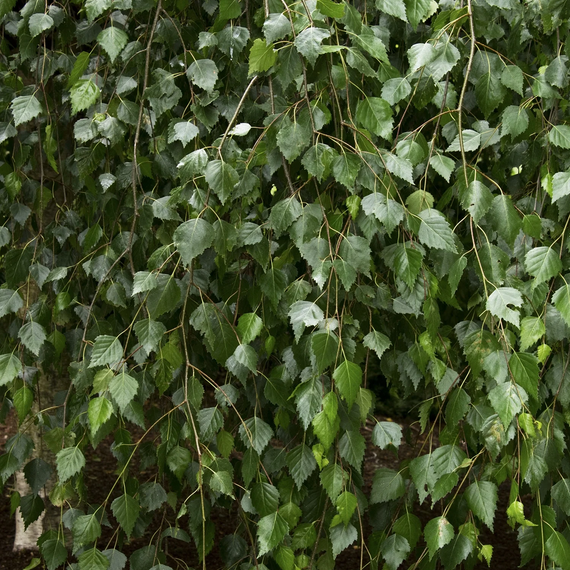
- Graceful, dome‑forming weeper with slender, cascading branches and a picturesque mounding silhouette.
- Compact footprint for small gardens: typically ~8–10 ft. tall × ~15 ft. wide at maturity.
- Four‑season appeal—delicate spring catkins, shimmering green foliage that turns yellow in fall, and attractive birch bark for winter interest.
- Thrives in full sun with evenly moist, loamy, well‑drained soils; excellent near water features and in consistently irrigated beds.
Young’s Weeping Birch (Betula pendula ‘Youngii’) brings sculptural movement and classic birch character to compact spaces. Its naturally pendulous branches spill from a low crown to form an elegant green fountain, punctuated by spring catkins, golden fall color, and handsome bark as the tree matures. Sized right for entry courts, lawn islands, and waterside plantings, this dome‑shaped specimen performs best in full sun and evenly moist, fertile soil—rewarding light, seasonal care with standout, year‑round beauty.
Plant Description
Small, deciduous birch selected for its dramatic, weeping habit. The crown forms a rounded mound with long, cascading branchlets; spring brings small catkins, summer a fine‑textured green canopy, and autumn a bright yellow show before leaf drop.
Habit & Size
Moderate growth; typically to about 8–10 ft. tall and ~15 ft. wide at maturity, creating a low, domed silhouette ideal for intimate gardens and focal placements.
Sun Requirements
Full sun for best density and form; tolerates light shade where summers are hot if soils remain evenly moist.
Watering Needs
Keep soil consistently moist, especially during the first few growing seasons. Water deeply and regularly to establish; do not allow the root zone to dry completely between soakings.
Soil Requirements
Prefers deep, loamy, moist but well‑drained soil; amending heavy soils with sand or fine gravel improves aeration and drainage. Maintain a 2–3 in. mulch ring (kept off the trunk) to moderate temperature and conserve moisture.
Hardiness
USDA Zones 2–7.
Flowers & Seasonal Interest
Produces small spring catkins; summer foliage is bright green, turning yellow in fall. Bark becomes increasingly showy with age, adding winter interest.
Bark & Winter Interest
As stems mature, bark lightens and contrasts with dark fissures, highlighting the plant’s elegant framework after leaf‑drop.
Training & Form
Often grafted on a standard to create an umbrella‑like crown. Proper early training yields a pleasing dome with “curtains” of twigs; staking is rarely needed once the framework is set.
Care & Pruning
Fertilize in early spring if needed. Prune only to remove dead or crossing wood and to maintain ground clearance; avoid heavy late‑winter/early‑spring cuts on birches, which can bleed—light corrective pruning is best after leaves have fully expanded.
Landscape Uses
Signature specimen for small lawns, courtyards, and water‑adjacent beds; combines beautifully with moisture‑loving perennials and shrubs; effective as a low, architectural accent in naturalistic designs.
Companion Planting
Pairs well with red‑twig dogwood, chokeberry, sweet flag, turtlehead, elderberry, and shade‑tolerant groundcovers to extend color and texture through the seasons.
Wildlife & Garden Benefits
Provides seasonal cover and interest for birds; fine foliage texture and moving branchlets add dynamic motion to planting compositions.
- Graceful, dome‑forming weeper with slender, cascading branches and a picturesque mounding silhouette.
- Compact footprint for small gardens: typically ~8–10 ft. tall × ~15 ft. wide at maturity.
- Four‑season appeal—delicate spring catkins, shimmering green foliage that turns yellow in fall, and attractive birch bark for winter interest.
- Thrives in full sun with evenly moist, loamy, well‑drained soils; excellent near water features and in consistently irrigated beds.
Young’s Weeping Birch (Betula pendula ‘Youngii’) brings sculptural movement and classic birch character to compact spaces. Its naturally pendulous branches spill from a low crown to form an elegant green fountain, punctuated by spring catkins, golden fall color, and handsome bark as the tree matures. Sized right for entry courts, lawn islands, and waterside plantings, this dome‑shaped specimen performs best in full sun and evenly moist, fertile soil—rewarding light, seasonal care with standout, year‑round beauty.
Plant Description
Small, deciduous birch selected for its dramatic, weeping habit. The crown forms a rounded mound with long, cascading branchlets; spring brings small catkins, summer a fine‑textured green canopy, and autumn a bright yellow show before leaf drop.
Habit & Size
Moderate growth; typically to about 8–10 ft. tall and ~15 ft. wide at maturity, creating a low, domed silhouette ideal for intimate gardens and focal placements.
Sun Requirements
Full sun for best density and form; tolerates light shade where summers are hot if soils remain evenly moist.
Watering Needs
Keep soil consistently moist, especially during the first few growing seasons. Water deeply and regularly to establish; do not allow the root zone to dry completely between soakings.
Soil Requirements
Prefers deep, loamy, moist but well‑drained soil; amending heavy soils with sand or fine gravel improves aeration and drainage. Maintain a 2–3 in. mulch ring (kept off the trunk) to moderate temperature and conserve moisture.
Hardiness
USDA Zones 2–7.
Flowers & Seasonal Interest
Produces small spring catkins; summer foliage is bright green, turning yellow in fall. Bark becomes increasingly showy with age, adding winter interest.
Bark & Winter Interest
As stems mature, bark lightens and contrasts with dark fissures, highlighting the plant’s elegant framework after leaf‑drop.
Training & Form
Often grafted on a standard to create an umbrella‑like crown. Proper early training yields a pleasing dome with “curtains” of twigs; staking is rarely needed once the framework is set.
Care & Pruning
Fertilize in early spring if needed. Prune only to remove dead or crossing wood and to maintain ground clearance; avoid heavy late‑winter/early‑spring cuts on birches, which can bleed—light corrective pruning is best after leaves have fully expanded.
Landscape Uses
Signature specimen for small lawns, courtyards, and water‑adjacent beds; combines beautifully with moisture‑loving perennials and shrubs; effective as a low, architectural accent in naturalistic designs.
Companion Planting
Pairs well with red‑twig dogwood, chokeberry, sweet flag, turtlehead, elderberry, and shade‑tolerant groundcovers to extend color and texture through the seasons.
Wildlife & Garden Benefits
Provides seasonal cover and interest for birds; fine foliage texture and moving branchlets add dynamic motion to planting compositions.
Related Products