

Zoom the image with the mouse
Winter Gem Boxwood (Cone form) - 5 Gallon
SKU:
2036820
UPC:
014949043516
$99.99
- Classic evergreen boxwood with rich green foliage that acquires a golden bronze hue in cold winters, returning to vibrant green among the first in spring
- Among the hardiest small-leaved boxwoods available, growing to 4 to 6 feet tall and wide as a rounded hedge or trained into elegant cone and topiary forms
- Deer resistant, rabbit resistant, and suited to formal gardens, parterres, hedges, topiary, and privacy screens across USDA Zones 5 through 9
- A classic, adaptable evergreen for formal and informal landscapes that provides year-round structure, privacy, and timeless garden appeal
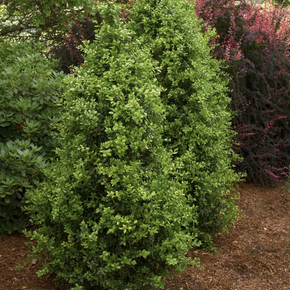
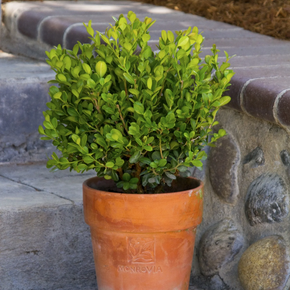
Winter Gem Boxwood (Buxus microphylla var. japonica 'Winter Gem') is an excellent, adaptable evergreen shrub for small hedges and formal garden use, prized among the hardiest small-leaved boxwoods for its ability to maintain rich green foliage through cold weather — often acquiring an attractive golden-bronze tint in the coldest winter zones — before rebounding among the first boxwoods to re-green in spring. Growing to 4 to 6 feet tall and wide at a moderate rate, it provides year-round evergreen structure and privacy screening, and responds superbly to shearing into formal hedge forms, cone shapes, and topiary. Deer resistant and rabbit resistant, it is an outstanding choice for traditional formal garden designs, parterres, and knot gardens, as well as contemporary landscapes seeking reliable, low-maintenance evergreen structure across USDA Zones 5 through 9. The cone form offered in this container has been trained to an elegant conical topiary shape for immediate formal impact in the landscape or on the patio.
Plant Details
| Attribute | Details |
|---|---|
| Botanical Name | Buxus microphylla var. japonica 'Winter Gem' |
| Plant Type | Evergreen Shrub (Cone/Topiary form) |
| Foliage Color | Rich green (golden-bronze tint in cold winters) |
| Bloom Time | Inconspicuous; prized for foliage |
| Growth Rate | Moderate |
| Growth Habit | Rounded (trained to cone form in this container) |
| Mature Size | 4-6 ft. tall and wide |
| USDA Zones | 5 - 9 |
| Light | Full sun to partial sun |
| Water | When top 3 in. of soil is dry; mulch to retain moisture |
| Special Features | Easy Care, Hardy, Cold Tolerant, Topiary Suitable |
| Landscape Use | Border, Container, Hedge, Privacy Screen, Topiary |
| Deer Resistant | Yes |
| Rabbit Resistant | Yes |
The Cone Topiary Form
This container contains a Winter Gem Boxwood that has been trained and sheared into an elegant cone (conical) topiary shape — one of the most classical and timeless formal garden plant forms. The cone shape has been used in European garden design for centuries as a formal accent, sentinel plant, and defining element in parterres, entryways, and symmetrical garden compositions. Maintaining a cone topiary requires periodic shearing to preserve the precise geometric form — typically two to three shearing sessions per growing season. Use hand shears for precision shaping, working from the tip down to ensure a consistently even taper from the narrow apex to the wider base.
Winter Color and Cold Hardiness
One of Winter Gem Boxwood's most distinctive characteristics is its winter foliage performance. Rather than simply maintaining green foliage through winter, 'Winter Gem' acquires an attractive golden-bronze tint in the coldest winter conditions, providing an ornamental winter color display that most boxwood varieties cannot match. This bronzing is a natural protective response and the plant rebounds quickly in spring — indeed, it is typically one of the earliest boxwoods to return to vibrant green as temperatures warm. This winter tinting and rapid spring greening are among the characteristics that make 'Winter Gem' one of the most reliably attractive boxwoods through all four seasons.
Sunlight, Watering, and Soil
Winter Gem Boxwood performs well in full sun to partial sun. Water when the top 3 inches of soil feel dry. Apply and maintain a 2 to 3 inch layer of organic mulch over the root zone to retain moisture, keep roots cool, and prevent the drought stress that can increase susceptibility to disease. Thrive in enriched, well-drained, neutral to slightly acidic soil. Avoid waterlogged conditions. Water deeply and regularly during the first few growing seasons to establish an extensive root system; reduce frequency once established.
Care and Maintenance
- Topiary shearing: Shear the cone form 2 to 3 times during the growing season to maintain precise geometric shape; use hand shears for best control and finish.
- Mulching: Maintain a 2-3 inch organic mulch layer; keep mulch away from direct contact with stems to prevent crown rot.
- Fertilizing: Apply balanced fertilizer formulated for evergreen shrubs in early spring before new growth begins.
- Disease monitoring: Monitor for boxwood blight, particularly in humid climates; ensure good air circulation around plants.
- Winter protection: In Zone 5, consider an anti-desiccant spray in late fall to protect foliage from winter desiccation in exposed, windy locations.
Landscape Uses
Winter Gem Boxwood's dense, evergreen growth makes it perfect for shearing into small, formal hedges that provide year-round structure and privacy in the garden. The cone topiary form is ideal for formal landscape design — use matching pairs to flank entryways, gates, and garden paths for elegant symmetry. Plant in containers as formal patio accents that can be moved seasonally. Use in parterres and formal knot gardens as evergreen anchor elements. The cone form particularly excels as an architectural focal point in minimalist contemporary garden designs where its geometric precision creates a strong visual statement. It keeps its color over winter, maintaining garden interest through the coldest months.
Companion Plants
| Plant | Why It Works |
|---|---|
| Spirea (Spiraea) | Colorful deciduous flowering shrub provides seasonal color contrast beside the year-round evergreen boxwood structure |
| Lilac (Syringa) | Fragrant spring blooms create a beautiful seasonal complement to the formal evergreen boxwood accent |
| Weigela (Weigela) | Bold spring-to-summer flowering shrub provides seasonal color alongside the structured evergreen form |
| Coneflower (Echinacea) | Bold summer perennial blooms provide warm seasonal color contrast in mixed borders anchored by boxwood structure |
| Gayfeather (Liatris) | Upright purple flower spikes provide light, vertical contrast to the dense, geometric boxwood form |
USDA Hardiness Zones
Winter Gem Boxwood is rated for USDA Zones 5 through 9. In Zone 5, it is among the hardiest small-leaved boxwood varieties available, reliably surviving winter lows to approximately -20 degrees Fahrenheit. This cold hardiness, combined with its early spring recovery after winter bronzing, makes it significantly more dependable in cold climates than many other boxwood varieties. In warmer zones through Zone 9, it provides reliable year-round performance as a formal hedging and topiary plant. Its species name — microphylla japonica — reflects its Japanese origins, which contribute to its impressive cold hardiness compared to English boxwood (B. sempervirens) varieties.
History and Background
Buxus microphylla var. japonica, commonly known as Japanese boxwood, is native to Japan and is closely related to the Chinese boxwood (B. microphylla var. sinica). Unlike the English boxwood (B. sempervirens), which is native to Europe and western Asia, the small-leaved Japanese boxwood species are generally considered more heat-tolerant and adaptable to a wider range of growing conditions. 'Winter Gem' is a cultivar selected specifically for its exceptional cold hardiness and distinctive winter color behavior. The word "boxwood" derives from the hard, dense wood of boxwood species, which has been prized for small-box making (hence "box") and woodworking applications since ancient times. Boxwood cultivation dates back at least 4,000 years to Egyptian gardens, and the plant remains a foundational element of formal garden design worldwide.
- Classic evergreen boxwood with rich green foliage that acquires a golden bronze hue in cold winters, returning to vibrant green among the first in spring
- Among the hardiest small-leaved boxwoods available, growing to 4 to 6 feet tall and wide as a rounded hedge or trained into elegant cone and topiary forms
- Deer resistant, rabbit resistant, and suited to formal gardens, parterres, hedges, topiary, and privacy screens across USDA Zones 5 through 9
- A classic, adaptable evergreen for formal and informal landscapes that provides year-round structure, privacy, and timeless garden appeal
Winter Gem Boxwood (Buxus microphylla var. japonica 'Winter Gem') is an excellent, adaptable evergreen shrub for small hedges and formal garden use, prized among the hardiest small-leaved boxwoods for its ability to maintain rich green foliage through cold weather — often acquiring an attractive golden-bronze tint in the coldest winter zones — before rebounding among the first boxwoods to re-green in spring. Growing to 4 to 6 feet tall and wide at a moderate rate, it provides year-round evergreen structure and privacy screening, and responds superbly to shearing into formal hedge forms, cone shapes, and topiary. Deer resistant and rabbit resistant, it is an outstanding choice for traditional formal garden designs, parterres, and knot gardens, as well as contemporary landscapes seeking reliable, low-maintenance evergreen structure across USDA Zones 5 through 9. The cone form offered in this container has been trained to an elegant conical topiary shape for immediate formal impact in the landscape or on the patio.
Plant Details
| Attribute | Details |
|---|---|
| Botanical Name | Buxus microphylla var. japonica 'Winter Gem' |
| Plant Type | Evergreen Shrub (Cone/Topiary form) |
| Foliage Color | Rich green (golden-bronze tint in cold winters) |
| Bloom Time | Inconspicuous; prized for foliage |
| Growth Rate | Moderate |
| Growth Habit | Rounded (trained to cone form in this container) |
| Mature Size | 4-6 ft. tall and wide |
| USDA Zones | 5 - 9 |
| Light | Full sun to partial sun |
| Water | When top 3 in. of soil is dry; mulch to retain moisture |
| Special Features | Easy Care, Hardy, Cold Tolerant, Topiary Suitable |
| Landscape Use | Border, Container, Hedge, Privacy Screen, Topiary |
| Deer Resistant | Yes |
| Rabbit Resistant | Yes |
The Cone Topiary Form
This container contains a Winter Gem Boxwood that has been trained and sheared into an elegant cone (conical) topiary shape — one of the most classical and timeless formal garden plant forms. The cone shape has been used in European garden design for centuries as a formal accent, sentinel plant, and defining element in parterres, entryways, and symmetrical garden compositions. Maintaining a cone topiary requires periodic shearing to preserve the precise geometric form — typically two to three shearing sessions per growing season. Use hand shears for precision shaping, working from the tip down to ensure a consistently even taper from the narrow apex to the wider base.
Winter Color and Cold Hardiness
One of Winter Gem Boxwood's most distinctive characteristics is its winter foliage performance. Rather than simply maintaining green foliage through winter, 'Winter Gem' acquires an attractive golden-bronze tint in the coldest winter conditions, providing an ornamental winter color display that most boxwood varieties cannot match. This bronzing is a natural protective response and the plant rebounds quickly in spring — indeed, it is typically one of the earliest boxwoods to return to vibrant green as temperatures warm. This winter tinting and rapid spring greening are among the characteristics that make 'Winter Gem' one of the most reliably attractive boxwoods through all four seasons.
Sunlight, Watering, and Soil
Winter Gem Boxwood performs well in full sun to partial sun. Water when the top 3 inches of soil feel dry. Apply and maintain a 2 to 3 inch layer of organic mulch over the root zone to retain moisture, keep roots cool, and prevent the drought stress that can increase susceptibility to disease. Thrive in enriched, well-drained, neutral to slightly acidic soil. Avoid waterlogged conditions. Water deeply and regularly during the first few growing seasons to establish an extensive root system; reduce frequency once established.
Care and Maintenance
- Topiary shearing: Shear the cone form 2 to 3 times during the growing season to maintain precise geometric shape; use hand shears for best control and finish.
- Mulching: Maintain a 2-3 inch organic mulch layer; keep mulch away from direct contact with stems to prevent crown rot.
- Fertilizing: Apply balanced fertilizer formulated for evergreen shrubs in early spring before new growth begins.
- Disease monitoring: Monitor for boxwood blight, particularly in humid climates; ensure good air circulation around plants.
- Winter protection: In Zone 5, consider an anti-desiccant spray in late fall to protect foliage from winter desiccation in exposed, windy locations.
Landscape Uses
Winter Gem Boxwood's dense, evergreen growth makes it perfect for shearing into small, formal hedges that provide year-round structure and privacy in the garden. The cone topiary form is ideal for formal landscape design — use matching pairs to flank entryways, gates, and garden paths for elegant symmetry. Plant in containers as formal patio accents that can be moved seasonally. Use in parterres and formal knot gardens as evergreen anchor elements. The cone form particularly excels as an architectural focal point in minimalist contemporary garden designs where its geometric precision creates a strong visual statement. It keeps its color over winter, maintaining garden interest through the coldest months.
Companion Plants
| Plant | Why It Works |
|---|---|
| Spirea (Spiraea) | Colorful deciduous flowering shrub provides seasonal color contrast beside the year-round evergreen boxwood structure |
| Lilac (Syringa) | Fragrant spring blooms create a beautiful seasonal complement to the formal evergreen boxwood accent |
| Weigela (Weigela) | Bold spring-to-summer flowering shrub provides seasonal color alongside the structured evergreen form |
| Coneflower (Echinacea) | Bold summer perennial blooms provide warm seasonal color contrast in mixed borders anchored by boxwood structure |
| Gayfeather (Liatris) | Upright purple flower spikes provide light, vertical contrast to the dense, geometric boxwood form |
USDA Hardiness Zones
Winter Gem Boxwood is rated for USDA Zones 5 through 9. In Zone 5, it is among the hardiest small-leaved boxwood varieties available, reliably surviving winter lows to approximately -20 degrees Fahrenheit. This cold hardiness, combined with its early spring recovery after winter bronzing, makes it significantly more dependable in cold climates than many other boxwood varieties. In warmer zones through Zone 9, it provides reliable year-round performance as a formal hedging and topiary plant. Its species name — microphylla japonica — reflects its Japanese origins, which contribute to its impressive cold hardiness compared to English boxwood (B. sempervirens) varieties.
History and Background
Buxus microphylla var. japonica, commonly known as Japanese boxwood, is native to Japan and is closely related to the Chinese boxwood (B. microphylla var. sinica). Unlike the English boxwood (B. sempervirens), which is native to Europe and western Asia, the small-leaved Japanese boxwood species are generally considered more heat-tolerant and adaptable to a wider range of growing conditions. 'Winter Gem' is a cultivar selected specifically for its exceptional cold hardiness and distinctive winter color behavior. The word "boxwood" derives from the hard, dense wood of boxwood species, which has been prized for small-box making (hence "box") and woodworking applications since ancient times. Boxwood cultivation dates back at least 4,000 years to Egyptian gardens, and the plant remains a foundational element of formal garden design worldwide.
Related Products