

Zoom the image with the mouse
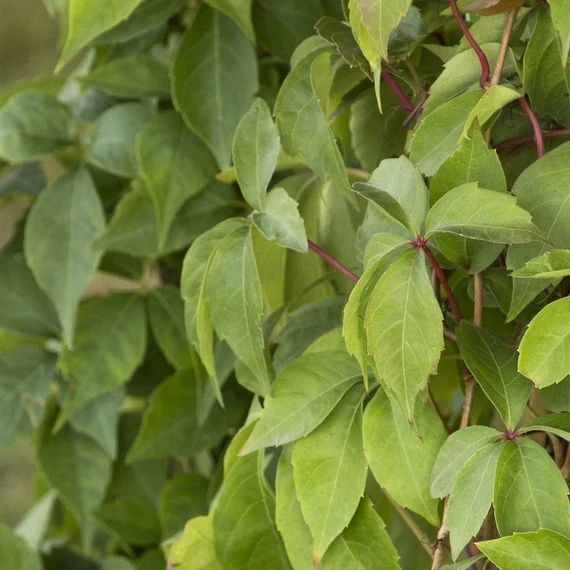
Virginia Creeper - 1 Gallon
SKU:
105305
UPC:
014949024515
$24.99
- Fast-growing native vine with self-clinging tendrils; quickly covers fences, walls, or slopes.
- Glossy green, five‑leaflet foliage turns brilliant red to orange‑red for standout fall color.
- Reliable and adaptable in sun or part shade; hardy across a wide range of climates.
- Bird-friendly: small blue‑black berries provide valuable winter food (berries are not for human consumption).
Virginia Creeper (Parthenocissus quinquefolia) is a vigorous, self‑clinging North American native prized for its lush five‑leaflet foliage and blazing autumn color. Ideal for rapid screening or erosion control, it climbs with adhesive tendrils and also makes a durable ground cover. Plant in average, well‑drained soil and sun to part shade; give it room and prune annually to keep growth in bounds. A wildlife favorite, its berries feed birds through winter.
Botanical & Identity
Botanical name: Parthenocissus quinquefolia (Virginia Creeper). Deciduous vine with palmately compound leaves typically in groups of five.
Size & Growth Habit
Fast-growing, self-clinging stems typically climb 30–50 ft (or more) when support is available; also spreads as a ground cover on open soil.
Light Requirements
Performs in full sun to partial shade; the most vivid fall color generally develops with ample sun exposure.
Water & Soil
Adaptable to most average, well‑drained soils. Water regularly the first season to establish deep roots; once established, water deeply but less frequently.
Hardiness & Seasonality
USDA Zones: widely hardy (cold to upper Midwest and into the South). Deciduous; foliage emerges in spring, turns brilliant red to orange‑red in fall, then drops.
Foliage & Fall Color
Five‑leaflet leaves are deep green in summer and transform to crimson to orange‑red in autumn for a dramatic seasonal display.
Wildlife & Berries
Inconspicuous summer flowers develop into clusters of blue‑black berries that persist and provide winter food for birds.
Landscape Uses
Excellent for screening, groundcover on banks for erosion control, and for cloaking sturdy fences or masonry. Also useful to quickly green unsightly areas.
Training & Support
Clings with adhesive tendrils (holdfasts), so no ties are needed on rough masonry or bark. For precise coverage, guide new shoots and redirect as needed.
Pruning & Control
Prune annually to keep within bounds—late winter for structure, with light trims in season to redirect or thin. Remove encroaching stems from gutters, windows, and wiring.
Placement & Surface Caution
Holdfasts can be difficult to remove and may mar painted or soft wood surfaces. Favor masonry, metal trellis, or dedicate a stand‑off support if aesthetics of a wall finish are a concern.
Safety & Toxicity
Berries are toxic if ingested; keep away from children and pets. Sap may irritate sensitive skin—wear gloves when pruning.
Companion Plants
Pairs well with tough, sun‑loving shrubs and evergreens such as Physocarpus (ninebark), Juniperus (juniper), Philadelphus (mock orange), and Potentilla for four‑season structure below the vine.
- Fast-growing native vine with self-clinging tendrils; quickly covers fences, walls, or slopes.
- Glossy green, five‑leaflet foliage turns brilliant red to orange‑red for standout fall color.
- Reliable and adaptable in sun or part shade; hardy across a wide range of climates.
- Bird-friendly: small blue‑black berries provide valuable winter food (berries are not for human consumption).
Virginia Creeper (Parthenocissus quinquefolia) is a vigorous, self‑clinging North American native prized for its lush five‑leaflet foliage and blazing autumn color. Ideal for rapid screening or erosion control, it climbs with adhesive tendrils and also makes a durable ground cover. Plant in average, well‑drained soil and sun to part shade; give it room and prune annually to keep growth in bounds. A wildlife favorite, its berries feed birds through winter.
Botanical & Identity
Botanical name: Parthenocissus quinquefolia (Virginia Creeper). Deciduous vine with palmately compound leaves typically in groups of five.
Size & Growth Habit
Fast-growing, self-clinging stems typically climb 30–50 ft (or more) when support is available; also spreads as a ground cover on open soil.
Light Requirements
Performs in full sun to partial shade; the most vivid fall color generally develops with ample sun exposure.
Water & Soil
Adaptable to most average, well‑drained soils. Water regularly the first season to establish deep roots; once established, water deeply but less frequently.
Hardiness & Seasonality
USDA Zones: widely hardy (cold to upper Midwest and into the South). Deciduous; foliage emerges in spring, turns brilliant red to orange‑red in fall, then drops.
Foliage & Fall Color
Five‑leaflet leaves are deep green in summer and transform to crimson to orange‑red in autumn for a dramatic seasonal display.
Wildlife & Berries
Inconspicuous summer flowers develop into clusters of blue‑black berries that persist and provide winter food for birds.
Landscape Uses
Excellent for screening, groundcover on banks for erosion control, and for cloaking sturdy fences or masonry. Also useful to quickly green unsightly areas.
Training & Support
Clings with adhesive tendrils (holdfasts), so no ties are needed on rough masonry or bark. For precise coverage, guide new shoots and redirect as needed.
Pruning & Control
Prune annually to keep within bounds—late winter for structure, with light trims in season to redirect or thin. Remove encroaching stems from gutters, windows, and wiring.
Placement & Surface Caution
Holdfasts can be difficult to remove and may mar painted or soft wood surfaces. Favor masonry, metal trellis, or dedicate a stand‑off support if aesthetics of a wall finish are a concern.
Safety & Toxicity
Berries are toxic if ingested; keep away from children and pets. Sap may irritate sensitive skin—wear gloves when pruning.
Companion Plants
Pairs well with tough, sun‑loving shrubs and evergreens such as Physocarpus (ninebark), Juniperus (juniper), Philadelphus (mock orange), and Potentilla for four‑season structure below the vine.
Related Products