
Zoom the image with the mouse
Tropicanna Black Canna - 1 Gallon
SKU:
2153155
UPC:
014949198797
$21.99
- Dramatic deep bronze to chocolate-colored tropical foliage creates bold, lush contrast in any garden setting or container arrangement
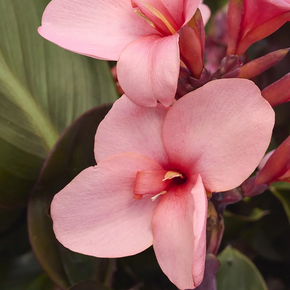
- Showy flowers emerge red and transition to vibrant orange, providing a striking two-tone color display throughout summer
- Fast-growing and impressively tall, with foliage reaching 5 to 6 feet and flower spikes rising an additional foot above
- Non-toxic to cats and dogs, and tolerates even wet, poorly drained soils making it exceptionally versatile and low-maintenance
Tropicanna Black Canna (Canna indica 'Lon01') is a bold, eye-catching tropical perennial celebrated for its deep bronze to chocolate-colored foliage and flamboyant summer blooms that open red and gradually shift to a warm orange. Growing vigorously to 5 to 6 feet tall with flower spikes rising yet another foot above the canopy, this fast-growing plant commands attention as a specimen, mass planting, or container centerpiece. Hardy in USDA Zones 7 through 11, it performs as a reliable herbaceous perennial in warmer climates and as a spectacular tropical annual in cooler regions. Its tolerance for wet and poorly drained soils, combined with its non-toxicity to pets and ease of care, makes Tropicanna Black Canna a standout choice for poolside plantings, borders, and patio containers where dramatic, long-lasting tropical color is desired. A true descendant of the rich Crozy hybrid lineage, this variety represents the best of modern canna breeding with its extraordinary dark foliage and vivid flower contrast.
Plant Details
- Botanical Name: Canna indica 'Lon01'
- Plant Type: Herbaceous Perennial (tropical annual in zones below 7)
- Flower Color: Red, transitioning to orange
- Foliage Color: Deep bronze to chocolate
- Bloom Time: Summer
- Growth Rate: Moderate to fast
- Special Features: Dramatic foliage color, easy care, non-toxic to cats and dogs, fast growing
Size
Tropicanna Black Canna is an impressively large perennial, with lush foliage reaching 5 to 6 feet in height. Flower spikes rise an additional foot above the foliage canopy, bringing the total display height to as much as 7 feet. The plant spreads moderately, making it a commanding focal point in borders and container groupings alike. Its vertical presence adds architectural drama to any planting scheme.
Sunlight Requirements
Tropicanna Black Canna thrives in full sun to partial sun. For the most vibrant foliage color and prolific flowering, a location with at least 4 to 6 hours of direct sunlight per day is recommended. In regions with intense afternoon heat, some light afternoon shade can help prevent foliage scorch while still maintaining strong plant performance and color saturation.
Watering
Keep the soil consistently moist for best results. Tropicanna Black Canna is a moisture-loving plant and performs well near water features, rain gardens, and in low-lying areas where water tends to collect. It is notably tolerant of wet, poorly drained soils once established, making it one of the more adaptable large perennials for challenging wet spots in the landscape. Avoid allowing the soil to dry out completely during the growing season, as this can stress the plant and diminish flowering.
Soil Requirements
This canna thrives in loose, nutrient-rich, evenly moist soils but demonstrates impressive adaptability once established. Unlike many perennials, it tolerates wet and poorly drained soils with ease, making it an excellent solution for boggy or frequently saturated areas of the garden. Amending planting beds with compost will enrich soil fertility and support the plant's vigorous growth habit. A neutral soil pH is generally ideal.
Care and Maintenance
Tropicanna Black Canna is remarkably easy to care for. In mild winter regions (Zone 7 and above), leave the rhizomes in the ground after the growing season and prune the foliage to the ground in fall; the plant will re-emerge vigorously in spring. In regions below Zone 7, carefully dig up the rhizomes after the first frost and store them in a cool, dry location over winter, replanting them after all danger of frost has passed. Deadhead spent flowers to encourage continued blooming and maintain a tidy appearance throughout the summer season.
Landscape Uses
The bold, dark foliage of Tropicanna Black Canna lends a dramatic tropical flair to the garden, even in climates that experience frost. It excels as a statement specimen in mixed borders, planted in masses for a lush living column effect, or as a dramatic anchor in large container groupings on porches, patios, terraces, and balconies. It is a natural fit beside pools, ponds, and water gardens, where its moisture tolerance and tropical aesthetic are both practical and visually stunning. Use it to add lasting foliage contrast, form, and texture to beds throughout the growing season.
Companion Plants
Tropicanna Black Canna pairs beautifully with plants that either echo its tropical boldness or provide striking contrast to its deep, dark foliage. Excellent companions include Verbena (Verbena) for cascading color at its feet, Lavender (Lavandula) for fragrant textural contrast, and Montbretia (Crocosmia) for complementary fiery tones. Lantana (Lantana) and Agapanthus (Agapanthus) add layers of summer color, while Cut-Leaf Philodendron (Philodendron) and New Zealand Flax (Phormium) amplify the bold, architectural tropical theme.
USDA Hardiness Zones
Tropicanna Black Canna is rated for USDA Hardiness Zones 7 through 11. In these zones, it functions as a returning herbaceous perennial, dying back to the ground in winter and resprouting vigorously each spring. In colder climates (Zone 6 and below), it is best treated as a spectacular tropical annual, or the rhizomes can be dug, stored indoors over winter, and replanted the following season to preserve the plant year after year.
History and Background
The Canna genus encompasses over fifty species, with a rich horticultural history spanning centuries. During the Victorian era, there was widespread fascination with exotic canna species, particularly Canna iridiflora and Canna glauca, which fueled a breeding craze in pursuit of ever more dramatic flowers. Most modern cultivars, including this variety, trace their lineage to the Crozy or French Hybrids developed during that era. After falling out of fashion for several decades, cannas have experienced a powerful resurgence as contemporary garden designers have embraced the genus for its extraordinary foliage color, tropical character, and bold ornamental impact.
- Dramatic deep bronze to chocolate-colored tropical foliage creates bold, lush contrast in any garden setting or container arrangement
- Showy flowers emerge red and transition to vibrant orange, providing a striking two-tone color display throughout summer
- Fast-growing and impressively tall, with foliage reaching 5 to 6 feet and flower spikes rising an additional foot above
- Non-toxic to cats and dogs, and tolerates even wet, poorly drained soils making it exceptionally versatile and low-maintenance
Tropicanna Black Canna (Canna indica 'Lon01') is a bold, eye-catching tropical perennial celebrated for its deep bronze to chocolate-colored foliage and flamboyant summer blooms that open red and gradually shift to a warm orange. Growing vigorously to 5 to 6 feet tall with flower spikes rising yet another foot above the canopy, this fast-growing plant commands attention as a specimen, mass planting, or container centerpiece. Hardy in USDA Zones 7 through 11, it performs as a reliable herbaceous perennial in warmer climates and as a spectacular tropical annual in cooler regions. Its tolerance for wet and poorly drained soils, combined with its non-toxicity to pets and ease of care, makes Tropicanna Black Canna a standout choice for poolside plantings, borders, and patio containers where dramatic, long-lasting tropical color is desired. A true descendant of the rich Crozy hybrid lineage, this variety represents the best of modern canna breeding with its extraordinary dark foliage and vivid flower contrast.
Plant Details
- Botanical Name: Canna indica 'Lon01'
- Plant Type: Herbaceous Perennial (tropical annual in zones below 7)
- Flower Color: Red, transitioning to orange
- Foliage Color: Deep bronze to chocolate
- Bloom Time: Summer
- Growth Rate: Moderate to fast
- Special Features: Dramatic foliage color, easy care, non-toxic to cats and dogs, fast growing
Size
Tropicanna Black Canna is an impressively large perennial, with lush foliage reaching 5 to 6 feet in height. Flower spikes rise an additional foot above the foliage canopy, bringing the total display height to as much as 7 feet. The plant spreads moderately, making it a commanding focal point in borders and container groupings alike. Its vertical presence adds architectural drama to any planting scheme.
Sunlight Requirements
Tropicanna Black Canna thrives in full sun to partial sun. For the most vibrant foliage color and prolific flowering, a location with at least 4 to 6 hours of direct sunlight per day is recommended. In regions with intense afternoon heat, some light afternoon shade can help prevent foliage scorch while still maintaining strong plant performance and color saturation.
Watering
Keep the soil consistently moist for best results. Tropicanna Black Canna is a moisture-loving plant and performs well near water features, rain gardens, and in low-lying areas where water tends to collect. It is notably tolerant of wet, poorly drained soils once established, making it one of the more adaptable large perennials for challenging wet spots in the landscape. Avoid allowing the soil to dry out completely during the growing season, as this can stress the plant and diminish flowering.
Soil Requirements
This canna thrives in loose, nutrient-rich, evenly moist soils but demonstrates impressive adaptability once established. Unlike many perennials, it tolerates wet and poorly drained soils with ease, making it an excellent solution for boggy or frequently saturated areas of the garden. Amending planting beds with compost will enrich soil fertility and support the plant's vigorous growth habit. A neutral soil pH is generally ideal.
Care and Maintenance
Tropicanna Black Canna is remarkably easy to care for. In mild winter regions (Zone 7 and above), leave the rhizomes in the ground after the growing season and prune the foliage to the ground in fall; the plant will re-emerge vigorously in spring. In regions below Zone 7, carefully dig up the rhizomes after the first frost and store them in a cool, dry location over winter, replanting them after all danger of frost has passed. Deadhead spent flowers to encourage continued blooming and maintain a tidy appearance throughout the summer season.
Landscape Uses
The bold, dark foliage of Tropicanna Black Canna lends a dramatic tropical flair to the garden, even in climates that experience frost. It excels as a statement specimen in mixed borders, planted in masses for a lush living column effect, or as a dramatic anchor in large container groupings on porches, patios, terraces, and balconies. It is a natural fit beside pools, ponds, and water gardens, where its moisture tolerance and tropical aesthetic are both practical and visually stunning. Use it to add lasting foliage contrast, form, and texture to beds throughout the growing season.
Companion Plants
Tropicanna Black Canna pairs beautifully with plants that either echo its tropical boldness or provide striking contrast to its deep, dark foliage. Excellent companions include Verbena (Verbena) for cascading color at its feet, Lavender (Lavandula) for fragrant textural contrast, and Montbretia (Crocosmia) for complementary fiery tones. Lantana (Lantana) and Agapanthus (Agapanthus) add layers of summer color, while Cut-Leaf Philodendron (Philodendron) and New Zealand Flax (Phormium) amplify the bold, architectural tropical theme.
USDA Hardiness Zones
Tropicanna Black Canna is rated for USDA Hardiness Zones 7 through 11. In these zones, it functions as a returning herbaceous perennial, dying back to the ground in winter and resprouting vigorously each spring. In colder climates (Zone 6 and below), it is best treated as a spectacular tropical annual, or the rhizomes can be dug, stored indoors over winter, and replanted the following season to preserve the plant year after year.
History and Background
The Canna genus encompasses over fifty species, with a rich horticultural history spanning centuries. During the Victorian era, there was widespread fascination with exotic canna species, particularly Canna iridiflora and Canna glauca, which fueled a breeding craze in pursuit of ever more dramatic flowers. Most modern cultivars, including this variety, trace their lineage to the Crozy or French Hybrids developed during that era. After falling out of fashion for several decades, cannas have experienced a powerful resurgence as contemporary garden designers have embraced the genus for its extraordinary foliage color, tropical character, and bold ornamental impact.
Related Products