


Zoom the image with the mouse
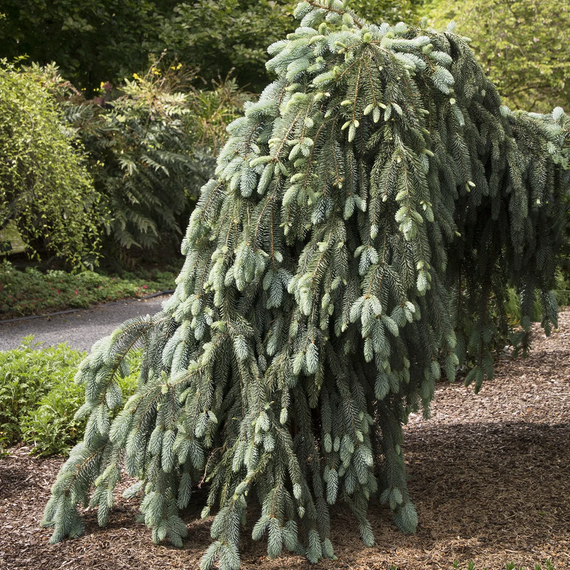
The Blues Blue Spruce - 5 Gallon
SKU:
1979900
UPC:
014949016589
$89.99
- Striking, strongly weeping blue spruce with bright silver‑blue needles—no two plants have the same sculptural form.
- Compact natural size (about 5–6 ft. tall and wide); train or stake for custom height, cascades, or to flow along walls and fences.
- Cold‑hardy (USDA 2–8) and low‑maintenance; deer/rabbit resistant and tolerant of urban conditions and road salt.
- Thrives in full sun and well‑drained soil; prefers cool summers and consistent moisture after establishment.
The Blues Blue Spruce (Picea pungens ‘The Blues’) is a dwarf, weeping Colorado blue spruce prized for its intensely silver‑blue needles and dramatic, cascading habit. Left natural, it forms a compact, low mound with irregular, drooping branches; when staked, it becomes a living sculpture—spilling over boulders, along fences, or across retaining walls. Tough, cold‑hardy, and easy to care for, it’s an unforgettable focal conifer for sunny borders, rock gardens, and water‑wise landscapes.
Plant Description
A small, evergreen conifer with strongly weeping branches and a drooping, irregular top. Dense, silver‑blue needles create a luminous “waterfall” effect in all seasons.
Habit & Form
Naturally compact (≈5–6 ft. tall × 5–6 ft. wide) with a spreading, cascading habit. Plants can be trained or staked to set the leader height and then allowed to ramble or spill over hardscape.
Color & Texture
Bright silver‑blue to blue‑green needles on drooping branchlets offer strong, year‑round color and texture that contrasts beautifully with golds, pinks, and deep greens.
Sun Requirements
Full sun (6+ hours/day) for best color and dense growth. Most effective as a sun‑lit specimen or front‑of‑border focal plant.
Watering Needs
Water deeply and regularly during the first few seasons to establish; afterward, maintain consistent moisture and water when the top ~2 inches of soil begin to dry. Avoid waterlogging.
Soil Requirements
Performs in a wide range of well‑drained soils; slightly acidic, evenly moist substrates are ideal. Prefers cool‑summer climates; provide airflow and drainage in hotter regions.
Growth & Size
Slow growing; expect roughly 6–12 inches of extension in a season under good conditions when actively trained, with long‑term size shaped by culture and staking.
Hardiness
USDA Zones 2–8; excellent cold tolerance and suitable for northern and high‑elevation gardens.
Special Features
Deer and rabbit resistant; tolerant of urban pollution and road salt once established. Low maintenance; minimal pruning beyond training the leader.
Landscape Uses
Signature specimen for rock gardens and sunny borders; dramatic spill over walls, boulders, and terraces; trains beautifully along fences, railings, and stonework.
Training & Staking
Stake the central leader to your desired height, then release to cascade naturally. Tie in gently with soft, wide ties; remove or adjust supports as the framework sets.
Care Instructions
Apply a general‑purpose, spring fertilizer if needed. Mulch to moderate soil temperature and conserve moisture (keep mulch off the crown). Inspect periodically for common spruce pests (adelgids, aphids, red spider mite) and address promptly.
Spacing & Placement
Allow at least 6–8 ft. of open space for a natural, ground‑hugging specimen; provide additional run if you plan to train it along a wall or fence.
Origin & History
A dwarf, strongly weeping sport of Colorado blue spruce (‘Glauca Pendula’), discovered by Larry Stanley (Stanley & Sons Nursery, Oregon) and recognized by conifer enthusiasts for its exceptional color and form.
- Striking, strongly weeping blue spruce with bright silver‑blue needles—no two plants have the same sculptural form.
- Compact natural size (about 5–6 ft. tall and wide); train or stake for custom height, cascades, or to flow along walls and fences.
- Cold‑hardy (USDA 2–8) and low‑maintenance; deer/rabbit resistant and tolerant of urban conditions and road salt.
- Thrives in full sun and well‑drained soil; prefers cool summers and consistent moisture after establishment.
The Blues Blue Spruce (Picea pungens ‘The Blues’) is a dwarf, weeping Colorado blue spruce prized for its intensely silver‑blue needles and dramatic, cascading habit. Left natural, it forms a compact, low mound with irregular, drooping branches; when staked, it becomes a living sculpture—spilling over boulders, along fences, or across retaining walls. Tough, cold‑hardy, and easy to care for, it’s an unforgettable focal conifer for sunny borders, rock gardens, and water‑wise landscapes.
Plant Description
A small, evergreen conifer with strongly weeping branches and a drooping, irregular top. Dense, silver‑blue needles create a luminous “waterfall” effect in all seasons.
Habit & Form
Naturally compact (≈5–6 ft. tall × 5–6 ft. wide) with a spreading, cascading habit. Plants can be trained or staked to set the leader height and then allowed to ramble or spill over hardscape.
Color & Texture
Bright silver‑blue to blue‑green needles on drooping branchlets offer strong, year‑round color and texture that contrasts beautifully with golds, pinks, and deep greens.
Sun Requirements
Full sun (6+ hours/day) for best color and dense growth. Most effective as a sun‑lit specimen or front‑of‑border focal plant.
Watering Needs
Water deeply and regularly during the first few seasons to establish; afterward, maintain consistent moisture and water when the top ~2 inches of soil begin to dry. Avoid waterlogging.
Soil Requirements
Performs in a wide range of well‑drained soils; slightly acidic, evenly moist substrates are ideal. Prefers cool‑summer climates; provide airflow and drainage in hotter regions.
Growth & Size
Slow growing; expect roughly 6–12 inches of extension in a season under good conditions when actively trained, with long‑term size shaped by culture and staking.
Hardiness
USDA Zones 2–8; excellent cold tolerance and suitable for northern and high‑elevation gardens.
Special Features
Deer and rabbit resistant; tolerant of urban pollution and road salt once established. Low maintenance; minimal pruning beyond training the leader.
Landscape Uses
Signature specimen for rock gardens and sunny borders; dramatic spill over walls, boulders, and terraces; trains beautifully along fences, railings, and stonework.
Training & Staking
Stake the central leader to your desired height, then release to cascade naturally. Tie in gently with soft, wide ties; remove or adjust supports as the framework sets.
Care Instructions
Apply a general‑purpose, spring fertilizer if needed. Mulch to moderate soil temperature and conserve moisture (keep mulch off the crown). Inspect periodically for common spruce pests (adelgids, aphids, red spider mite) and address promptly.
Spacing & Placement
Allow at least 6–8 ft. of open space for a natural, ground‑hugging specimen; provide additional run if you plan to train it along a wall or fence.
Origin & History
A dwarf, strongly weeping sport of Colorado blue spruce (‘Glauca Pendula’), discovered by Larry Stanley (Stanley & Sons Nursery, Oregon) and recognized by conifer enthusiasts for its exceptional color and form.
Related Products


