
Zoom the image with the mouse
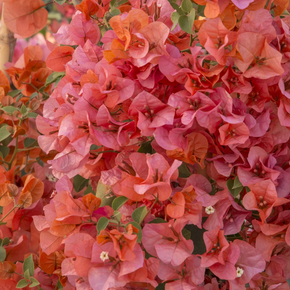
Texas Dawn Bougainvillea - 1 Gallon
SKU:
1739785
UPC:
014949134511
$17.99
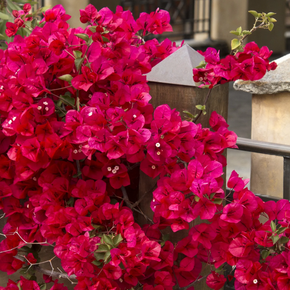
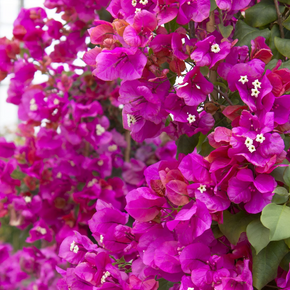
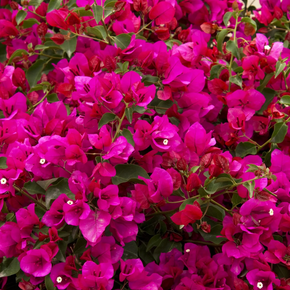
- Long, arching branches hold graceful sprays of delicate rose-pink bracts that provide a beautiful, almost year-round show in frost-free climates
- Vigorous stems quickly climb 20 to 30 feet with support, also spectacular on trellises, walls, fences, and in hanging baskets and patio containers
- Easy care and waterwise with drought tolerance, coastal exposure tolerance, and urban pollution resistance; an outstanding choice for dry gardens in hot landscapes
- Evergreen perennial in frost-free USDA Zones 10 through 11; a beautiful tropical annual or container accent in cooler northern climates
Texas Dawn Bougainvillea (Bougainvillea 'Monas') is a vigorous and graceful bougainvillea variety with long, arching branches that hold sprays of delicate rose-pink flower-like bracts, providing a beautiful, romantic floral display nearly year-round in frost-free climates. Reliable, floriferous, and vigorous, this variety grows fast enough to cover arbors, trellises, walls, and fences with lush foliage and spectacular bloom, and drapes beautifully when grown without support as a cascading accent on patios or down slopes. Easy care and waterwise with exceptional drought tolerance, coastal exposure resistance, and urban pollution tolerance, Texas Dawn is an outstanding choice for hot, dry garden landscapes where maximum color with minimal water is the goal. Evergreen and reliably blooming in frost-free USDA Zones 10 and 11, it performs as an exuberant and colorful summer annual or container plant in cooler northern climates.
Plant Details
| Attribute | Details |
|---|---|
| Botanical Name | Bougainvillea 'Monas' |
| Plant Type | Evergreen Vine / Tropical Shrub |
| Bract Color | Rose pink (delicate, sprays) |
| True Flower Color | Small white tubular flowers within the bracts |
| Foliage Color | Green |
| Bloom Time | Summer; near year-round in frost-free areas |
| Growth Rate | Fast |
| Growth Habit | Climbing / Arching |
| Mature Size | 20-30 ft. tall with support |
| USDA Zones | 10-11 (perennial); all zones as warm-season annual |
| Light | Full sun |
| Water | Deeply when soil is dry; drought tolerant once established |
| Special Features | Easy Care, Waterwise, Fast Growing, Long Bloom Season |
| Landscape Use | Barrier, Espalier, Privacy Screen, Ground Cover, Hanging Basket |
Delicate Rose-Pink Bracts
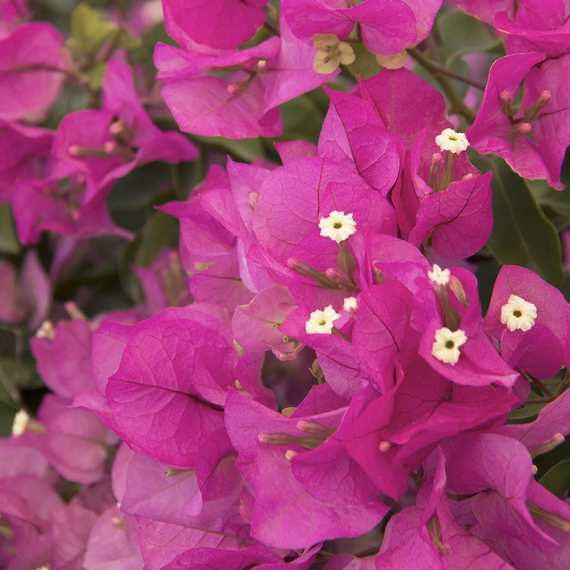
Texas Dawn Bougainvillea's rose-pink bracts have a more delicate, soft quality compared to the intense magenta or deep purple of other popular varieties. The warm, feminine rose-pink coloration creates a romantic, cottage-garden quality that is particularly appealing in Mediterranean-style garden designs and against light-colored architectural elements. The bracts are held in characteristic sprays on long, arching branches, creating a graceful, cascading display rather than the dense, solid color wall produced by some other varieties. This variety is both reliable and vigorous, growing tall enough to shroud arbors in shade-giving foliage and flowers and to create impressive coverage on walls and structures in a relatively short season.
Sunlight, Watering, and Soil
Texas Dawn Bougainvillea requires full sun — at least 6 to 8 hours of direct sunlight per day — for the best bract production and the most vibrant rose-pink color. It is a superb choice for the hottest, driest spots in warm-climate landscapes where maximum sun and heat are available. Water deeply only when the soil is completely dry; drought stress between deep waterings encourages the most prolific bract display. Provide average to lean, fast-draining soil; excellent drainage is critical and waterlogged soil is fatal to this plant. Always handle root balls with extreme caution during planting, as bougainvillea roots are uniquely fragile and must not be disturbed.
Care and Maintenance
- Root caution: Never disturb the root ball when planting; damaged bougainvillea roots cause severe, potentially fatal transplant shock.
- Pruning: Prune lightly after each bloom cycle to encourage vigorous new growth for subsequent flowering.
- Fertilizing: Apply balanced fertilizer in spring; avoid high-nitrogen products that favor leafy growth over bracts.
- Support: Provide a sturdy trellis, arbor, or fence structure adequate for the plant's mature size and weight.
- Gloves: Always wear thick gloves; stems have sharp, curved thorns.
- Overwintering: In zones below 10, bring containers indoors before frost; place near the sunniest window available.
Landscape Uses
Texas Dawn is both reliable and vigorous, growing tall enough to shroud arbors in shade-giving foliage and flowers. Train it onto walls, fences, and pergolas for a romantic rose-pink floral display. Spiral the stems up posts and columns. Allow to cascade down banks and over retaining walls as a colorful, erosion-controlling groundcover. Grow in hanging baskets for graceful, cascading color on covered patios. Its superb drought tolerance makes it an outstanding choice for hot, dry gardens in Mediterranean, desert, and xeriscape-style landscape designs. The rose-pink provides exceptional contrast against red tile roofs and warm stucco walls typical of southwestern architecture.
Companion Plants
| Plant | Why It Works |
|---|---|
| Lantana (Lantana) | Heat-tolerant, drought-adapted companion with warm-toned blooms that share the same demanding conditions |
| Princess Flower (Tibouchina) | Rich purple flowers provide a beautiful cool-warm contrast with the delicate rose-pink bougainvillea |
| Hibiscus (Hibiscus) | Bold tropical flowers in complementary warm tones create a lush, resort-style garden combination |
| Jatropha (Jatropha) | Tropical shrub with coral-red flower clusters and bold foliage complements the delicate pink bougainvillea |
| Purple Fountain Grass (Pennisetum) | Dark burgundy-purple foliage and feathery plumes provide dramatic color and textural contrast below the climbing vine |
USDA Hardiness Zones
Texas Dawn Bougainvillea is rated for USDA Zones 10 through 11 as a reliable frost-tender evergreen perennial. In frost-free zones, the nearly year-round bloom period provides exceptional sustained color throughout the year. In cooler zones, it performs as a spectacular warm-season annual that can be grown in containers and overwintered indoors near a bright, sunny window. Its vigorous growth rate ensures impressive coverage and abundant bloom in even a single warm season, making it one of the most rewarding bougainvillea choices for gardeners in all climate zones.
History and Background
Texas Dawn Bougainvillea, like all members of this spectacular genus, traces its ancestry to South American species discovered during Louis-Antoine de Bougainville's circumnavigation voyage of 1766 to 1769. Virtually all garden bougainvillea cultivars descend from crosses of three species — B. spectabilis, B. glabra, and B. peruviana — that grow natively as large, woody vines on the sun-drenched hillsides of South America. The brilliantly colored "petals" are actually bracts — modified leaves — that evolved to attract pollinators to the small, white, tubular true flowers nestled within each cluster. The intense color of these papery bracts is often mistaken for the flowers themselves, making bougainvillea one of nature's most effective and beautiful botanical deceptions.
- Long, arching branches hold graceful sprays of delicate rose-pink bracts that provide a beautiful, almost year-round show in frost-free climates
- Vigorous stems quickly climb 20 to 30 feet with support, also spectacular on trellises, walls, fences, and in hanging baskets and patio containers
- Easy care and waterwise with drought tolerance, coastal exposure tolerance, and urban pollution resistance; an outstanding choice for dry gardens in hot landscapes
- Evergreen perennial in frost-free USDA Zones 10 through 11; a beautiful tropical annual or container accent in cooler northern climates
Texas Dawn Bougainvillea (Bougainvillea 'Monas') is a vigorous and graceful bougainvillea variety with long, arching branches that hold sprays of delicate rose-pink flower-like bracts, providing a beautiful, romantic floral display nearly year-round in frost-free climates. Reliable, floriferous, and vigorous, this variety grows fast enough to cover arbors, trellises, walls, and fences with lush foliage and spectacular bloom, and drapes beautifully when grown without support as a cascading accent on patios or down slopes. Easy care and waterwise with exceptional drought tolerance, coastal exposure resistance, and urban pollution tolerance, Texas Dawn is an outstanding choice for hot, dry garden landscapes where maximum color with minimal water is the goal. Evergreen and reliably blooming in frost-free USDA Zones 10 and 11, it performs as an exuberant and colorful summer annual or container plant in cooler northern climates.
Plant Details
| Attribute | Details |
|---|---|
| Botanical Name | Bougainvillea 'Monas' |
| Plant Type | Evergreen Vine / Tropical Shrub |
| Bract Color | Rose pink (delicate, sprays) |
| True Flower Color | Small white tubular flowers within the bracts |
| Foliage Color | Green |
| Bloom Time | Summer; near year-round in frost-free areas |
| Growth Rate | Fast |
| Growth Habit | Climbing / Arching |
| Mature Size | 20-30 ft. tall with support |
| USDA Zones | 10-11 (perennial); all zones as warm-season annual |
| Light | Full sun |
| Water | Deeply when soil is dry; drought tolerant once established |
| Special Features | Easy Care, Waterwise, Fast Growing, Long Bloom Season |
| Landscape Use | Barrier, Espalier, Privacy Screen, Ground Cover, Hanging Basket |
Delicate Rose-Pink Bracts
Texas Dawn Bougainvillea's rose-pink bracts have a more delicate, soft quality compared to the intense magenta or deep purple of other popular varieties. The warm, feminine rose-pink coloration creates a romantic, cottage-garden quality that is particularly appealing in Mediterranean-style garden designs and against light-colored architectural elements. The bracts are held in characteristic sprays on long, arching branches, creating a graceful, cascading display rather than the dense, solid color wall produced by some other varieties. This variety is both reliable and vigorous, growing tall enough to shroud arbors in shade-giving foliage and flowers and to create impressive coverage on walls and structures in a relatively short season.
Sunlight, Watering, and Soil
Texas Dawn Bougainvillea requires full sun — at least 6 to 8 hours of direct sunlight per day — for the best bract production and the most vibrant rose-pink color. It is a superb choice for the hottest, driest spots in warm-climate landscapes where maximum sun and heat are available. Water deeply only when the soil is completely dry; drought stress between deep waterings encourages the most prolific bract display. Provide average to lean, fast-draining soil; excellent drainage is critical and waterlogged soil is fatal to this plant. Always handle root balls with extreme caution during planting, as bougainvillea roots are uniquely fragile and must not be disturbed.
Care and Maintenance
- Root caution: Never disturb the root ball when planting; damaged bougainvillea roots cause severe, potentially fatal transplant shock.
- Pruning: Prune lightly after each bloom cycle to encourage vigorous new growth for subsequent flowering.
- Fertilizing: Apply balanced fertilizer in spring; avoid high-nitrogen products that favor leafy growth over bracts.
- Support: Provide a sturdy trellis, arbor, or fence structure adequate for the plant's mature size and weight.
- Gloves: Always wear thick gloves; stems have sharp, curved thorns.
- Overwintering: In zones below 10, bring containers indoors before frost; place near the sunniest window available.
Landscape Uses
Texas Dawn is both reliable and vigorous, growing tall enough to shroud arbors in shade-giving foliage and flowers. Train it onto walls, fences, and pergolas for a romantic rose-pink floral display. Spiral the stems up posts and columns. Allow to cascade down banks and over retaining walls as a colorful, erosion-controlling groundcover. Grow in hanging baskets for graceful, cascading color on covered patios. Its superb drought tolerance makes it an outstanding choice for hot, dry gardens in Mediterranean, desert, and xeriscape-style landscape designs. The rose-pink provides exceptional contrast against red tile roofs and warm stucco walls typical of southwestern architecture.
Companion Plants
| Plant | Why It Works |
|---|---|
| Lantana (Lantana) | Heat-tolerant, drought-adapted companion with warm-toned blooms that share the same demanding conditions |
| Princess Flower (Tibouchina) | Rich purple flowers provide a beautiful cool-warm contrast with the delicate rose-pink bougainvillea |
| Hibiscus (Hibiscus) | Bold tropical flowers in complementary warm tones create a lush, resort-style garden combination |
| Jatropha (Jatropha) | Tropical shrub with coral-red flower clusters and bold foliage complements the delicate pink bougainvillea |
| Purple Fountain Grass (Pennisetum) | Dark burgundy-purple foliage and feathery plumes provide dramatic color and textural contrast below the climbing vine |
USDA Hardiness Zones
Texas Dawn Bougainvillea is rated for USDA Zones 10 through 11 as a reliable frost-tender evergreen perennial. In frost-free zones, the nearly year-round bloom period provides exceptional sustained color throughout the year. In cooler zones, it performs as a spectacular warm-season annual that can be grown in containers and overwintered indoors near a bright, sunny window. Its vigorous growth rate ensures impressive coverage and abundant bloom in even a single warm season, making it one of the most rewarding bougainvillea choices for gardeners in all climate zones.
History and Background
Texas Dawn Bougainvillea, like all members of this spectacular genus, traces its ancestry to South American species discovered during Louis-Antoine de Bougainville's circumnavigation voyage of 1766 to 1769. Virtually all garden bougainvillea cultivars descend from crosses of three species — B. spectabilis, B. glabra, and B. peruviana — that grow natively as large, woody vines on the sun-drenched hillsides of South America. The brilliantly colored "petals" are actually bracts — modified leaves — that evolved to attract pollinators to the small, white, tubular true flowers nestled within each cluster. The intense color of these papery bracts is often mistaken for the flowers themselves, making bougainvillea one of nature's most effective and beautiful botanical deceptions.