


Sweet Bubba Desert Willow (Chilopsis linearis ‘Sweet Bubba’, PP33,091) is a standout, seedless desert willow that packs months of color into a durable, water‑wise form. Expect abundant, sweetly fragrant, magenta‑to‑burgundy trumpets from spring through fall on a small, deciduous tree built for heat and drought. With a broad yet compact canopy, cleaner habit (no long pods), and high pollinator appeal, it’s an effortless focal point for modern xeriscapes, curb strips, and patio‑side shade in full sun and well‑drained soils.
Upright, small deciduous tree with glossy, willow‑like leaves and a rounded, shade‑giving canopy. Bred for bigger blooms and a tidier, seedless habit that suits high‑use outdoor spaces.
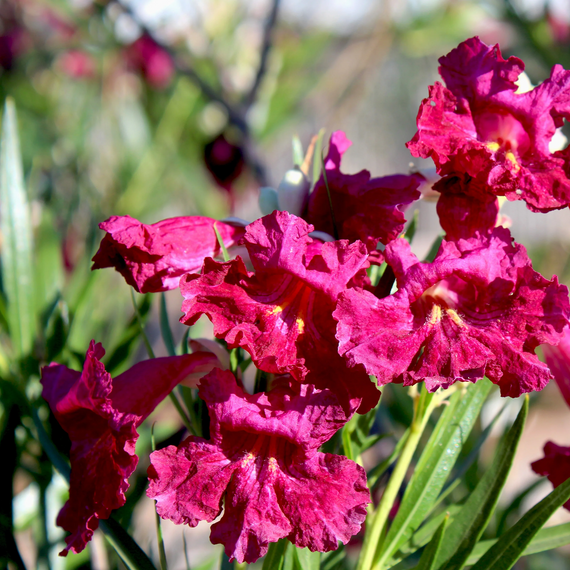
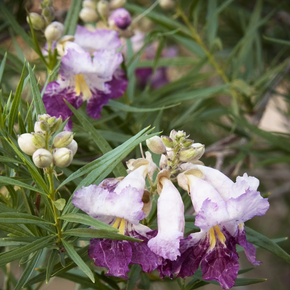
Large, orchid‑like trumpets in rich magenta/burgundy with a sweet fragrance; showier and larger than many desert willow types and excellent for cut boughs or close‑up enjoyment.
Extended season—typically from spring into fall—keeping color in the landscape long after many trees have finished flowering.
Full sun (6+ hours/day) is essential for best flowering, dense foliage, and strong structure; choose a warm, open exposure.
Water regularly the first season to establish deep roots; once established, water only during prolonged dry spells—this tree prefers dry, well‑drained conditions over frequent irrigation.
Performs best in well‑drained soils (sandy or loamy). Avoid poorly drained or chronically wet locations; desert willows dislike “wet feet.”
Typically reaches about 15–20 ft. tall and 12–18 ft. wide, forming a broad, airy canopy that casts useful dappled shade without overpowering smaller yards.
USDA Zones 7–11.
Seedless (no long pods), fragrant blooms, waterwise once established, generally deer resistant, and low maintenance—ideal for xeric and high‑heat sites.
A magnet for hummingbirds, bees, and other pollinators throughout its long bloom window; supports seasonal backyard biodiversity.
Focal accent, patio‑side shade, streetscapes, curb strips, and low‑water designs; excellent near gravel mulches, boulders, and drought‑tolerant perennials and grasses.
Prune lightly after peak bloom to refine structure and remove crossing/dead wood. Fertilize sparingly in early spring if growth is lacking. Mulch 2–3 in. deep, keeping mulch off the trunk.
Allow 12–18 ft. of lateral space for mature spread. Site in full sun with reflected heat tolerated; ensure good air flow and drainage for best performance.
Pair with desert natives and dry‑garden standouts—such as salvia, penstemon, muhly or blue grama grasses—to echo the airy canopy and prolong seasonal color with minimal water.
U.S. Plant Patent 33,091. Bred for seedless performance, larger flowers, and improved landscape cleanliness compared to seed‑forming forms.
Sweet Bubba Desert Willow (Chilopsis linearis ‘Sweet Bubba’, PP33,091) is a standout, seedless desert willow that packs months of color into a durable, water‑wise form. Expect abundant, sweetly fragrant, magenta‑to‑burgundy trumpets from spring through fall on a small, deciduous tree built for heat and drought. With a broad yet compact canopy, cleaner habit (no long pods), and high pollinator appeal, it’s an effortless focal point for modern xeriscapes, curb strips, and patio‑side shade in full sun and well‑drained soils.
Upright, small deciduous tree with glossy, willow‑like leaves and a rounded, shade‑giving canopy. Bred for bigger blooms and a tidier, seedless habit that suits high‑use outdoor spaces.
Large, orchid‑like trumpets in rich magenta/burgundy with a sweet fragrance; showier and larger than many desert willow types and excellent for cut boughs or close‑up enjoyment.
Extended season—typically from spring into fall—keeping color in the landscape long after many trees have finished flowering.
Full sun (6+ hours/day) is essential for best flowering, dense foliage, and strong structure; choose a warm, open exposure.
Water regularly the first season to establish deep roots; once established, water only during prolonged dry spells—this tree prefers dry, well‑drained conditions over frequent irrigation.
Performs best in well‑drained soils (sandy or loamy). Avoid poorly drained or chronically wet locations; desert willows dislike “wet feet.”
Typically reaches about 15–20 ft. tall and 12–18 ft. wide, forming a broad, airy canopy that casts useful dappled shade without overpowering smaller yards.
USDA Zones 7–11.
Seedless (no long pods), fragrant blooms, waterwise once established, generally deer resistant, and low maintenance—ideal for xeric and high‑heat sites.
A magnet for hummingbirds, bees, and other pollinators throughout its long bloom window; supports seasonal backyard biodiversity.
Focal accent, patio‑side shade, streetscapes, curb strips, and low‑water designs; excellent near gravel mulches, boulders, and drought‑tolerant perennials and grasses.
Prune lightly after peak bloom to refine structure and remove crossing/dead wood. Fertilize sparingly in early spring if growth is lacking. Mulch 2–3 in. deep, keeping mulch off the trunk.
Allow 12–18 ft. of lateral space for mature spread. Site in full sun with reflected heat tolerated; ensure good air flow and drainage for best performance.
Pair with desert natives and dry‑garden standouts—such as salvia, penstemon, muhly or blue grama grasses—to echo the airy canopy and prolong seasonal color with minimal water.
U.S. Plant Patent 33,091. Bred for seedless performance, larger flowers, and improved landscape cleanliness compared to seed‑forming forms.


