


Zoom the image with the mouse
Springshine Forsythia
SKU:
1979855-P
UPC:
014949473726
$15.99 - $39.99
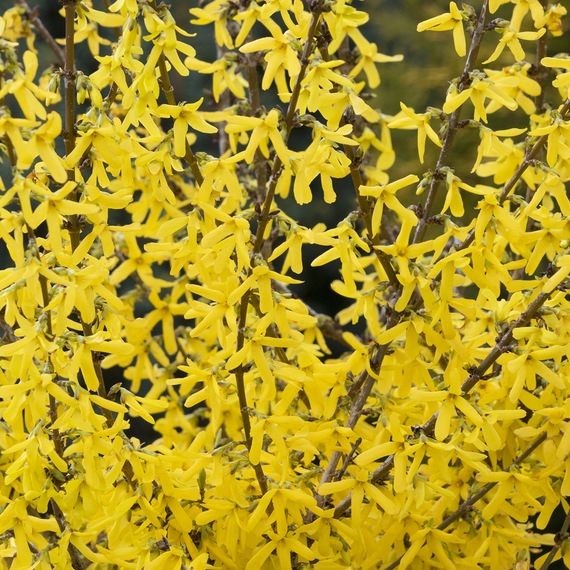
- A compact, mounded deciduous shrub that erupts in a spectacular blaze of bright golden-yellow bell-shaped blooms from bottom to top of every stem in early spring — one of the first shrubs to flower each season.
- Patent-protected interspecific hybrid (PP #31,531) with a tidy, rounded form reaching just 3 feet tall and 4 feet wide — ideal for small gardens, foundation plantings, and low informal hedges without the need for heavy pruning.
- Exceptionally tough and adaptable — tolerant of urban pollution, environmental salt, a wide range of soil types and pH levels, and deer resistant for low-maintenance, high-reward performance.
- Versatile in the landscape and in containers, with showy cut flowers perfect for forcing indoors in late winter to bring a cheerful burst of yellow color inside before spring arrives.
Springshine Forsythia (Forsythia x intermedia 'SMFXGP', PP #31,531) is a cheerful, compact deciduous shrub that stands as one of the most reliable early-spring performers in the landscape. Each year, before a single leaf appears, its dense, rounded branches are smothered from base to tip in luminous golden-yellow, bell-shaped blooms that signal the end of winter with unmistakable brilliance. Growing to a manageable 3 feet tall and 4 feet wide, this patent-protected hybrid maintains a naturally neat, mounded shape that fits beautifully into foundation plantings, mixed shrub borders, and low informal hedgerows without demanding constant pruning. After the spring flower show fades, small, glossy emerald-green leaves emerge and clothe the attractive brick-red stems through the summer, providing a lush, clean backdrop for surrounding plantings. Springshine Forsythia is a notably tough and adaptable shrub — tolerant of a wide range of soil types and pH levels, environmental salt, urban pollution, dry or moist conditions, and generally ignored by deer. It is hardy in USDA Zones 4 through 8, making it a superb choice for gardens across Southern Oregon and Northern California. Whether massed for a sweeping spring color display, grown solo as a focal-point accent, or planted in an outdoor container as a stunning spring thriller, Springshine Forsythia delivers season after season with minimal care.
Plant Description
Springshine Forsythia is a patented interspecific hybrid deciduous shrub bred for a compact, rounded habit and extraordinary floral density. Its most defining feature is the profusion of bright golden-yellow, four-petaled bell-shaped flowers that completely sheathe every stem from the base to the very tip in early spring, well before any foliage emerges. The flowers are excellent for cutting and can also be forced indoors in late winter for early color. Once blooming concludes, small, glossy, lance-shaped to oval leaves with slightly serrated edges emerge in a rich emerald green, persisting through the season without significant fall color change. The stems have an attractive brick-red coloration that adds subtle winter interest. The overall plant habit is dense, multi-stemmed, and mounded, filling in right to the ground for a full, tidy appearance without requiring facer plants in front. It is also known by the common names Border Forsythia and Goldenbells. This variety was developed and introduced under the cultivar name 'SMFXGP' and is protected under Plant Patent #31,531.
Mature Size
| Characteristic | Detail |
|---|---|
| Mature Height | Approximately 3 feet |
| Mature Spread | Approximately 4 feet |
| Growth Rate | Medium |
| Growth Habit | Dense, mounded, multi-stemmed |
| Expected Lifespan | Approximately 30 years under ideal conditions |
Unlike many older forsythia varieties that can become large, sprawling, and difficult to manage, Springshine stays naturally compact and well-behaved. Its wider spread relative to its height gives it an attractive, low-mounded profile that works well in proportion to the home foundation, at the front of shrub borders, and along pathways or garden edges.
Hardiness Zones and Climate
Springshine Forsythia is rated for USDA Hardiness Zones 4 through 8, making it an excellent fit for the climates of Southern Oregon and Northern California. It is reliably cold-hardy into Zone 4 (minimum temperatures around -30 degrees F), yet also performs well in the warmer conditions of Zone 8. The plant is notably tolerant of urban environmental stressors including air pollution and road salt, and it adapts well to a range of microclimates. In regions prone to late spring frosts, the flower buds can occasionally be damaged by a hard freeze after a warm spell; choosing a planting site with some protection from direct northerly winds can help minimize this risk. Because forsythia blooms on the previous season's wood, unusually severe winters that kill back branches may reduce the following spring's flower display in the coldest parts of its range.
Sunlight Requirements
Springshine Forsythia performs best in full sun to partial shade. For the most prolific and densely packed bloom display, a site receiving at least 6 hours of direct sunlight per day is strongly recommended. In partial shade (3 to 6 hours of sun), the plant will still grow well and produce flowers, but bloom density may be somewhat reduced. Deep shade conditions are not suitable and will result in sparse flowering, open and leggy growth, and diminished overall vigor. In the warmer inland valleys of Southern Oregon and Northern California, a location that receives morning sun and some afternoon shade can help protect the early flowers from frost damage and reduce heat stress on the foliage in peak summer.
Soil and pH Preferences
One of Springshine Forsythia's greatest strengths is its adaptability to a wide range of soil conditions. It is not particular about soil type and will grow in chalk, clay, loam, or sandy soils, provided drainage is adequate. Waterlogged soils should be avoided, as overly wet roots can lead to root rot and fungal problems. For best results, plant in rich, loose, well-drained soil amended with compost or organic matter. Regarding soil pH, Springshine Forsythia is highly adaptable and will thrive in acidic, neutral, or moderately alkaline soils. It is also notably tolerant of environmental salt, making it suitable for planting near driveways, sidewalks, or coastal-influenced areas. If planting in heavy clay, incorporate organic matter into the backfill to improve drainage and soil structure around the root zone.
Watering Guide
During the establishment period (the first one to two growing seasons), water Springshine Forsythia regularly to keep the root zone evenly moist but never waterlogged. Deep, infrequent watering is preferable to frequent shallow watering, as it encourages the development of a deeper, more resilient root system. Once established, this shrub is quite adaptable to both dry and moist conditions and is considered somewhat drought tolerant, making it well suited to the dry summers typical of Southern Oregon and Northern California. During prolonged heat or drought spells, supplemental watering will help maintain vigorous growth and foliage health. Avoid overhead watering in spring if possible, as wet foliage can increase the risk of fungal diseases such as twig blight. Applying a 2 to 3 inch layer of mulch around the base of the plant (kept away from the crown) helps retain soil moisture between watering intervals.
Fertilizing
Springshine Forsythia is a relatively light feeder and generally requires little to no supplemental fertilization in garden soil that has been enriched with organic matter. If desired, apply a slow-release fertilizer formulated for trees and shrubs in late winter or very early spring, just before new growth begins. Avoid over-fertilizing with high-nitrogen products, as this can promote excessive leafy green growth at the expense of flower bud production and result in a less impressive spring bloom. A light top-dressing of compost around the base of the plant in early spring serves dual purposes — adding nutrients gradually while also helping to suppress weeds and conserve moisture. Do not fertilize late in the growing season, as this can stimulate tender new growth that may be susceptible to frost damage heading into fall and winter.
Pruning and Maintenance
Springshine Forsythia blooms on old wood — meaning the flower buds for next spring's display are set during the current growing season. This makes pruning timing critical. Always prune immediately after flowering in spring, while the plant still has the entire growing season ahead to develop next year's flower buds. Pruning in summer, fall, or winter will remove the buds and result in little or no bloom the following year. Because of its naturally compact, mounded habit, Springshine requires minimal pruning compared to older, larger forsythia varieties. Routine maintenance consists of removing any dead, damaged, or crossing branches as needed. For plants that have become dense or overgrown over many years, rejuvenation pruning can be performed every 4 to 6 years by cutting a few of the oldest, woodiest stems to the ground to encourage vigorous new flowering wood. Always sterilize pruning tools between cuts, especially if any diseased wood has been encountered.
Planting Instructions
- Select a planting site with full sun to partial shade and well-drained soil. Allow adequate space for the mature spread of approximately 4 feet.
- Dig a planting hole twice as wide as the root ball and just as deep — the top of the root ball should sit at or very slightly above the surrounding soil level to prevent crown rot.
- Loosen the sides and bottom of the hole to encourage outward root growth. If planting in heavy clay soil, amend the backfill with compost or aged bark to improve drainage.
- Remove the plant from its container and gently loosen any circling or compacted roots before placing it in the hole.
- Backfill the hole with native soil (amended if needed), tamping gently in layers to eliminate large air pockets.
- Water thoroughly after planting to settle the soil around the roots.
- Apply a 2 to 3 inch layer of mulch in a ring around the base of the plant, keeping mulch several inches away from the main stems to prevent rot and pest issues.
- Water consistently during the first growing season to establish a strong root system. Space multiple plants approximately 4 feet apart for a dense informal hedge effect.
Seasonal Interest
Springshine Forsythia's peak moment of glory arrives in early spring, when every branch is blanketed in vivid golden-yellow bell-shaped flowers before a single leaf has emerged — creating a stunning, all-yellow display that is visible from a great distance. This early bloom is one of the most eagerly anticipated signs of the season's change in the garden. Following the flowers, small emerald-green leaves emerge and the plant transitions into a tidy, dense green mound that provides a clean, neutral backdrop for surrounding summer- and fall-blooming plants. The glossy foliage holds well through the growing season without significant fall color development. In winter, the attractive brick-red stems provide subtle structural interest in the bare garden. For those who want to enjoy the flowers even earlier, branches cut in late winter can be brought indoors and forced to bloom in a vase of water, making Springshine a favorite choice for early indoor floral arrangements.
Landscape Uses
- Foundation Planting: The compact, rounded form and manageable size make it an ideal match for planting along home foundations, where it brightens the landscape each spring without outgrowing its space.
- Low Informal Hedge: Mass several plants together, spaced 3 to 4 feet apart, to create a stunning, low flowering hedge that is particularly spectacular in early spring bloom.
- Mixed Shrub Border: Use as a spring anchor plant in a mixed border alongside shrubs and perennials that offer summer and fall interest, allowing the forsythia's neutral green summer foliage to serve as a backdrop.
- Specimen or Accent Plant: Plant as a single specimen in a lawn or garden bed where its compact mounded form and brilliant spring color will draw the eye.
- Mass Planting: Planted en masse on slopes or large open areas, Springshine creates a breathtaking wave of yellow in spring while helping to stabilize soil.
- Container Planting: Works beautifully as the centerpiece "thriller" element in large outdoor containers, paired with trailing and mounding companion plants for a dynamic spring display.
- Cut Flower Garden: Grow near the cutting garden to enjoy forced or freshly cut branches in early spring arrangements.
Container Growing
Springshine Forsythia adapts well to container culture and makes an impressive focal-point specimen in a large decorative pot. Because of its upright, mounded height, it is best used as the central "thriller" element in a container combination, surrounded by lower-growing fillers and trailing spillers that complement its spring flower color. Choose a container with adequate drainage holes and fill with a high-quality, well-draining all-purpose potting mix. Container-grown forsythia will typically require more frequent watering than in-ground plants, as pots dry out more quickly — check the soil moisture regularly and water when the top inch or two feels dry. In Southern Oregon and Northern California, containers can generally remain outdoors year-round through Zone 7 and 8 winters; in colder microclimates, move containers to a protected location or unheated garage during the coldest weeks. Fertilize container-grown specimens with a balanced, slow-release shrub fertilizer in early spring. Note that performance in containers may vary slightly from in-ground plants due to the more restricted root environment.
Companion Plants
Springshine Forsythia pairs beautifully with other early spring bloomers and plants that extend interest through the seasons. For a layered spring border, combine it with:
- Spring bulbs such as daffodils, tulips, and grape hyacinths, whose blues and purples contrast brilliantly with the yellow forsythia blooms.
- Flowering cherry or plum trees for a pink-and-yellow spring color combination overhead.
- Lilac (Syringa) for a fragrant continuation of bloom just as forsythia finishes flowering.
- Spirea (Spiraea) for continued white or pink blooms in late spring and summer.
- Ornamental grasses that add texture and movement as a summer and fall counterpoint to the forsythia's mounded form.
- Hellebores planted at the forsythia's feet for overlapping early-spring blooms in shaded spots beneath the canopy edges.
- Dogwood (Cornus) for colorful winter stems and spring flowers that complement the yellow forsythia display.
- Weeping cherry for a multi-layer spring floral display combining pendulous pink blossoms above the golden forsythia hedge.
Pests and Diseases
Springshine Forsythia is generally a robust, low-maintenance shrub with good resistance to most common pests and diseases. However, gardeners should be aware of the following potential issues:
- Aphids: Small, pear-shaped insects that cluster on new growth and suck plant sap, causing curled or distorted leaves and leaving behind sticky honeydew. Treat with insecticidal soap, neem oil, or encourage natural predators such as ladybugs and lacewings.
- Spider Mites: Tiny mites that cause stippled, bronzed foliage and fine webbing, particularly during hot, dry conditions. Treat with horticultural oil or insecticidal soap and improve air circulation.
- Four-Lined Plant Bug: Creates small, round, sunken spots on leaves. Hand removal and neem oil sprays on nymphs are effective management strategies.
- Galls (Phomopsis Gall / Crown Gall): Knobby or tumor-like growths along branches or at the base of the plant. Prune out infected branches well below the affected area and sterilize tools thoroughly between cuts. Remove severely affected plants.
- Twig Blight (Sclerotinia): Causes dieback of branch tips, particularly on lower branches near the soil. Avoid overhead watering, prune infected branches, and ensure good air circulation throughout the shrub. A fungicide application in spring may help protect plants.
- Leaf Spot Diseases: Fungal spots on foliage are largely cosmetic but can be managed by removing affected leaves, improving airflow, and avoiding wetting foliage when watering.
The best prevention strategy is maintaining good cultural practices: proper spacing for air circulation, avoiding overhead watering, cleaning up fallen leaves, and sterilizing pruning tools. Deer generally leave forsythia alone, though light browsing may occur when food is scarce.
Wildlife Value
Springshine Forsythia offers meaningful early-season value to pollinators at a time of year when very few other flowering plants are available. The bright yellow blooms, which appear before the leaves, serve as an early nectar source for bees — including honeybees and native bees — that are emerging from winter dormancy and in need of food. The flowers' ultraviolet markings act as a visual guide for early pollinators, making them highly attractive even from a distance. In terms of bird and small mammal value, the dense, twiggy branching structure of forsythia can provide nesting sites and shelter, though it is not considered a significant food source for local wildlife. Forsythia is deer resistant, meaning it is typically left undisturbed in landscapes where deer browsing pressure is a concern — a notable advantage compared to many other spring-flowering shrubs. It is not listed as an invasive species but can spread slowly from rooting branches that contact the ground, so monitoring the perimeter of established plants is a good practice.
- A compact, mounded deciduous shrub that erupts in a spectacular blaze of bright golden-yellow bell-shaped blooms from bottom to top of every stem in early spring — one of the first shrubs to flower each season.
- Patent-protected interspecific hybrid (PP #31,531) with a tidy, rounded form reaching just 3 feet tall and 4 feet wide — ideal for small gardens, foundation plantings, and low informal hedges without the need for heavy pruning.
- Exceptionally tough and adaptable — tolerant of urban pollution, environmental salt, a wide range of soil types and pH levels, and deer resistant for low-maintenance, high-reward performance.
- Versatile in the landscape and in containers, with showy cut flowers perfect for forcing indoors in late winter to bring a cheerful burst of yellow color inside before spring arrives.
Springshine Forsythia (Forsythia x intermedia 'SMFXGP', PP #31,531) is a cheerful, compact deciduous shrub that stands as one of the most reliable early-spring performers in the landscape. Each year, before a single leaf appears, its dense, rounded branches are smothered from base to tip in luminous golden-yellow, bell-shaped blooms that signal the end of winter with unmistakable brilliance. Growing to a manageable 3 feet tall and 4 feet wide, this patent-protected hybrid maintains a naturally neat, mounded shape that fits beautifully into foundation plantings, mixed shrub borders, and low informal hedgerows without demanding constant pruning. After the spring flower show fades, small, glossy emerald-green leaves emerge and clothe the attractive brick-red stems through the summer, providing a lush, clean backdrop for surrounding plantings. Springshine Forsythia is a notably tough and adaptable shrub — tolerant of a wide range of soil types and pH levels, environmental salt, urban pollution, dry or moist conditions, and generally ignored by deer. It is hardy in USDA Zones 4 through 8, making it a superb choice for gardens across Southern Oregon and Northern California. Whether massed for a sweeping spring color display, grown solo as a focal-point accent, or planted in an outdoor container as a stunning spring thriller, Springshine Forsythia delivers season after season with minimal care.
Plant Description
Springshine Forsythia is a patented interspecific hybrid deciduous shrub bred for a compact, rounded habit and extraordinary floral density. Its most defining feature is the profusion of bright golden-yellow, four-petaled bell-shaped flowers that completely sheathe every stem from the base to the very tip in early spring, well before any foliage emerges. The flowers are excellent for cutting and can also be forced indoors in late winter for early color. Once blooming concludes, small, glossy, lance-shaped to oval leaves with slightly serrated edges emerge in a rich emerald green, persisting through the season without significant fall color change. The stems have an attractive brick-red coloration that adds subtle winter interest. The overall plant habit is dense, multi-stemmed, and mounded, filling in right to the ground for a full, tidy appearance without requiring facer plants in front. It is also known by the common names Border Forsythia and Goldenbells. This variety was developed and introduced under the cultivar name 'SMFXGP' and is protected under Plant Patent #31,531.
Mature Size
| Characteristic | Detail |
|---|---|
| Mature Height | Approximately 3 feet |
| Mature Spread | Approximately 4 feet |
| Growth Rate | Medium |
| Growth Habit | Dense, mounded, multi-stemmed |
| Expected Lifespan | Approximately 30 years under ideal conditions |
Unlike many older forsythia varieties that can become large, sprawling, and difficult to manage, Springshine stays naturally compact and well-behaved. Its wider spread relative to its height gives it an attractive, low-mounded profile that works well in proportion to the home foundation, at the front of shrub borders, and along pathways or garden edges.
Hardiness Zones and Climate
Springshine Forsythia is rated for USDA Hardiness Zones 4 through 8, making it an excellent fit for the climates of Southern Oregon and Northern California. It is reliably cold-hardy into Zone 4 (minimum temperatures around -30 degrees F), yet also performs well in the warmer conditions of Zone 8. The plant is notably tolerant of urban environmental stressors including air pollution and road salt, and it adapts well to a range of microclimates. In regions prone to late spring frosts, the flower buds can occasionally be damaged by a hard freeze after a warm spell; choosing a planting site with some protection from direct northerly winds can help minimize this risk. Because forsythia blooms on the previous season's wood, unusually severe winters that kill back branches may reduce the following spring's flower display in the coldest parts of its range.
Sunlight Requirements
Springshine Forsythia performs best in full sun to partial shade. For the most prolific and densely packed bloom display, a site receiving at least 6 hours of direct sunlight per day is strongly recommended. In partial shade (3 to 6 hours of sun), the plant will still grow well and produce flowers, but bloom density may be somewhat reduced. Deep shade conditions are not suitable and will result in sparse flowering, open and leggy growth, and diminished overall vigor. In the warmer inland valleys of Southern Oregon and Northern California, a location that receives morning sun and some afternoon shade can help protect the early flowers from frost damage and reduce heat stress on the foliage in peak summer.
Soil and pH Preferences
One of Springshine Forsythia's greatest strengths is its adaptability to a wide range of soil conditions. It is not particular about soil type and will grow in chalk, clay, loam, or sandy soils, provided drainage is adequate. Waterlogged soils should be avoided, as overly wet roots can lead to root rot and fungal problems. For best results, plant in rich, loose, well-drained soil amended with compost or organic matter. Regarding soil pH, Springshine Forsythia is highly adaptable and will thrive in acidic, neutral, or moderately alkaline soils. It is also notably tolerant of environmental salt, making it suitable for planting near driveways, sidewalks, or coastal-influenced areas. If planting in heavy clay, incorporate organic matter into the backfill to improve drainage and soil structure around the root zone.
Watering Guide
During the establishment period (the first one to two growing seasons), water Springshine Forsythia regularly to keep the root zone evenly moist but never waterlogged. Deep, infrequent watering is preferable to frequent shallow watering, as it encourages the development of a deeper, more resilient root system. Once established, this shrub is quite adaptable to both dry and moist conditions and is considered somewhat drought tolerant, making it well suited to the dry summers typical of Southern Oregon and Northern California. During prolonged heat or drought spells, supplemental watering will help maintain vigorous growth and foliage health. Avoid overhead watering in spring if possible, as wet foliage can increase the risk of fungal diseases such as twig blight. Applying a 2 to 3 inch layer of mulch around the base of the plant (kept away from the crown) helps retain soil moisture between watering intervals.
Fertilizing
Springshine Forsythia is a relatively light feeder and generally requires little to no supplemental fertilization in garden soil that has been enriched with organic matter. If desired, apply a slow-release fertilizer formulated for trees and shrubs in late winter or very early spring, just before new growth begins. Avoid over-fertilizing with high-nitrogen products, as this can promote excessive leafy green growth at the expense of flower bud production and result in a less impressive spring bloom. A light top-dressing of compost around the base of the plant in early spring serves dual purposes — adding nutrients gradually while also helping to suppress weeds and conserve moisture. Do not fertilize late in the growing season, as this can stimulate tender new growth that may be susceptible to frost damage heading into fall and winter.
Pruning and Maintenance
Springshine Forsythia blooms on old wood — meaning the flower buds for next spring's display are set during the current growing season. This makes pruning timing critical. Always prune immediately after flowering in spring, while the plant still has the entire growing season ahead to develop next year's flower buds. Pruning in summer, fall, or winter will remove the buds and result in little or no bloom the following year. Because of its naturally compact, mounded habit, Springshine requires minimal pruning compared to older, larger forsythia varieties. Routine maintenance consists of removing any dead, damaged, or crossing branches as needed. For plants that have become dense or overgrown over many years, rejuvenation pruning can be performed every 4 to 6 years by cutting a few of the oldest, woodiest stems to the ground to encourage vigorous new flowering wood. Always sterilize pruning tools between cuts, especially if any diseased wood has been encountered.
Planting Instructions
- Select a planting site with full sun to partial shade and well-drained soil. Allow adequate space for the mature spread of approximately 4 feet.
- Dig a planting hole twice as wide as the root ball and just as deep — the top of the root ball should sit at or very slightly above the surrounding soil level to prevent crown rot.
- Loosen the sides and bottom of the hole to encourage outward root growth. If planting in heavy clay soil, amend the backfill with compost or aged bark to improve drainage.
- Remove the plant from its container and gently loosen any circling or compacted roots before placing it in the hole.
- Backfill the hole with native soil (amended if needed), tamping gently in layers to eliminate large air pockets.
- Water thoroughly after planting to settle the soil around the roots.
- Apply a 2 to 3 inch layer of mulch in a ring around the base of the plant, keeping mulch several inches away from the main stems to prevent rot and pest issues.
- Water consistently during the first growing season to establish a strong root system. Space multiple plants approximately 4 feet apart for a dense informal hedge effect.
Seasonal Interest
Springshine Forsythia's peak moment of glory arrives in early spring, when every branch is blanketed in vivid golden-yellow bell-shaped flowers before a single leaf has emerged — creating a stunning, all-yellow display that is visible from a great distance. This early bloom is one of the most eagerly anticipated signs of the season's change in the garden. Following the flowers, small emerald-green leaves emerge and the plant transitions into a tidy, dense green mound that provides a clean, neutral backdrop for surrounding summer- and fall-blooming plants. The glossy foliage holds well through the growing season without significant fall color development. In winter, the attractive brick-red stems provide subtle structural interest in the bare garden. For those who want to enjoy the flowers even earlier, branches cut in late winter can be brought indoors and forced to bloom in a vase of water, making Springshine a favorite choice for early indoor floral arrangements.
Landscape Uses
- Foundation Planting: The compact, rounded form and manageable size make it an ideal match for planting along home foundations, where it brightens the landscape each spring without outgrowing its space.
- Low Informal Hedge: Mass several plants together, spaced 3 to 4 feet apart, to create a stunning, low flowering hedge that is particularly spectacular in early spring bloom.
- Mixed Shrub Border: Use as a spring anchor plant in a mixed border alongside shrubs and perennials that offer summer and fall interest, allowing the forsythia's neutral green summer foliage to serve as a backdrop.
- Specimen or Accent Plant: Plant as a single specimen in a lawn or garden bed where its compact mounded form and brilliant spring color will draw the eye.
- Mass Planting: Planted en masse on slopes or large open areas, Springshine creates a breathtaking wave of yellow in spring while helping to stabilize soil.
- Container Planting: Works beautifully as the centerpiece "thriller" element in large outdoor containers, paired with trailing and mounding companion plants for a dynamic spring display.
- Cut Flower Garden: Grow near the cutting garden to enjoy forced or freshly cut branches in early spring arrangements.
Container Growing
Springshine Forsythia adapts well to container culture and makes an impressive focal-point specimen in a large decorative pot. Because of its upright, mounded height, it is best used as the central "thriller" element in a container combination, surrounded by lower-growing fillers and trailing spillers that complement its spring flower color. Choose a container with adequate drainage holes and fill with a high-quality, well-draining all-purpose potting mix. Container-grown forsythia will typically require more frequent watering than in-ground plants, as pots dry out more quickly — check the soil moisture regularly and water when the top inch or two feels dry. In Southern Oregon and Northern California, containers can generally remain outdoors year-round through Zone 7 and 8 winters; in colder microclimates, move containers to a protected location or unheated garage during the coldest weeks. Fertilize container-grown specimens with a balanced, slow-release shrub fertilizer in early spring. Note that performance in containers may vary slightly from in-ground plants due to the more restricted root environment.
Companion Plants
Springshine Forsythia pairs beautifully with other early spring bloomers and plants that extend interest through the seasons. For a layered spring border, combine it with:
- Spring bulbs such as daffodils, tulips, and grape hyacinths, whose blues and purples contrast brilliantly with the yellow forsythia blooms.
- Flowering cherry or plum trees for a pink-and-yellow spring color combination overhead.
- Lilac (Syringa) for a fragrant continuation of bloom just as forsythia finishes flowering.
- Spirea (Spiraea) for continued white or pink blooms in late spring and summer.
- Ornamental grasses that add texture and movement as a summer and fall counterpoint to the forsythia's mounded form.
- Hellebores planted at the forsythia's feet for overlapping early-spring blooms in shaded spots beneath the canopy edges.
- Dogwood (Cornus) for colorful winter stems and spring flowers that complement the yellow forsythia display.
- Weeping cherry for a multi-layer spring floral display combining pendulous pink blossoms above the golden forsythia hedge.
Pests and Diseases
Springshine Forsythia is generally a robust, low-maintenance shrub with good resistance to most common pests and diseases. However, gardeners should be aware of the following potential issues:
- Aphids: Small, pear-shaped insects that cluster on new growth and suck plant sap, causing curled or distorted leaves and leaving behind sticky honeydew. Treat with insecticidal soap, neem oil, or encourage natural predators such as ladybugs and lacewings.
- Spider Mites: Tiny mites that cause stippled, bronzed foliage and fine webbing, particularly during hot, dry conditions. Treat with horticultural oil or insecticidal soap and improve air circulation.
- Four-Lined Plant Bug: Creates small, round, sunken spots on leaves. Hand removal and neem oil sprays on nymphs are effective management strategies.
- Galls (Phomopsis Gall / Crown Gall): Knobby or tumor-like growths along branches or at the base of the plant. Prune out infected branches well below the affected area and sterilize tools thoroughly between cuts. Remove severely affected plants.
- Twig Blight (Sclerotinia): Causes dieback of branch tips, particularly on lower branches near the soil. Avoid overhead watering, prune infected branches, and ensure good air circulation throughout the shrub. A fungicide application in spring may help protect plants.
- Leaf Spot Diseases: Fungal spots on foliage are largely cosmetic but can be managed by removing affected leaves, improving airflow, and avoiding wetting foliage when watering.
The best prevention strategy is maintaining good cultural practices: proper spacing for air circulation, avoiding overhead watering, cleaning up fallen leaves, and sterilizing pruning tools. Deer generally leave forsythia alone, though light browsing may occur when food is scarce.
Wildlife Value
Springshine Forsythia offers meaningful early-season value to pollinators at a time of year when very few other flowering plants are available. The bright yellow blooms, which appear before the leaves, serve as an early nectar source for bees — including honeybees and native bees — that are emerging from winter dormancy and in need of food. The flowers' ultraviolet markings act as a visual guide for early pollinators, making them highly attractive even from a distance. In terms of bird and small mammal value, the dense, twiggy branching structure of forsythia can provide nesting sites and shelter, though it is not considered a significant food source for local wildlife. Forsythia is deer resistant, meaning it is typically left undisturbed in landscapes where deer browsing pressure is a concern — a notable advantage compared to many other spring-flowering shrubs. It is not listed as an invasive species but can spread slowly from rooting branches that contact the ground, so monitoring the perimeter of established plants is a good practice.
Related Products