

Spartan Juniper (Juniperus chinensis ‘Spartan’) is a landscape workhorse with designer polish—its naturally symmetrical, pyramidal column delivers year‑round structure, privacy, and wind protection without constant shearing. A favorite for topiary and as a hardy alternative to Italian cypress, ‘Spartan’ excels in full sun and well‑drained soils, establishing quickly and then asking little more than occasional deep watering to stay sleek, dense, and dark green in a wide range of climates.
Upright, densely branched evergreen conifer with a strong central leader and a naturally symmetrical, pyramidal-to-columnar silhouette—ideal where height is needed without excessive width.
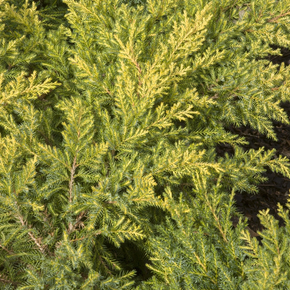
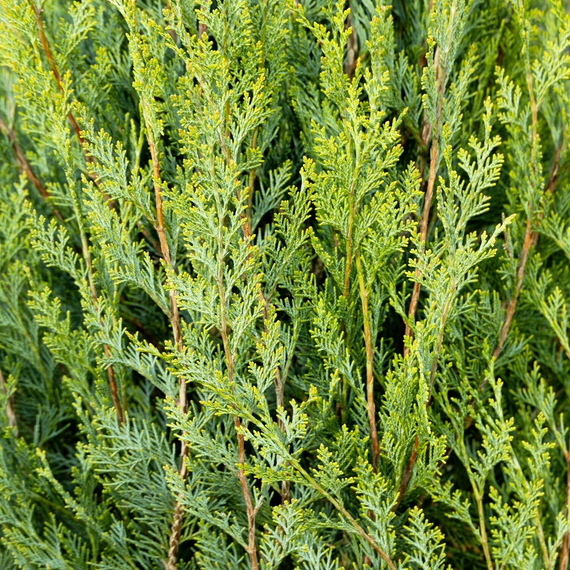
Fine-textured, dark-green sprays provide an elegant, architectural look and dependable four-season color for formal and modern designs alike.
Full sun (6+ hours/day) for tightest form, best density, and strongest leader; plants grown in shade may open up or thin.
Water deeply and regularly the first season to build roots; afterward, water when the top ~2 inches of soil become dry and avoid chronically wet conditions.
Highly adaptable in most well‑drained soils (including clay and alkaline), but intolerant of prolonged sogginess. Mulch to conserve moisture and moderate soil temperature.
Typically grows to about 15 ft. tall and 5 ft. wide in natural form, maintaining a slender footprint suitable for hedges, avenues, and side yards.
USDA Zones 4–9; handles heat, cold, and typical urban stresses with ease when drainage is adequate.
Waterwise once established; deer and rabbit resistant; tolerant of coastal exposure, road salt, and urban pollution; excellent shearing response for spirals and other topiary forms.
Narrow privacy screen, windbreak, formal entry flanker, container topiary, or a cypress‑like vertical in Mediterranean‑inspired designs.
Feed with a slow‑release fertilizer in early spring. Prune annually only as needed to shape (spiral/topiary or light face‑trimming); avoid heavy cuts into old wood. Keep root zone mulched and free‑draining.
For a quick, tight screen, plant 3–5 ft. on center depending on desired density; align rows to prevailing winds where windbreak performance is a priority.
Pair with roses, Russian sage, maiden grass, or barberry to contrast the crisp vertical line and dark-green color; repeat at regular intervals for a rhythmic, formal composition.
Spartan Juniper (Juniperus chinensis ‘Spartan’) is a landscape workhorse with designer polish—its naturally symmetrical, pyramidal column delivers year‑round structure, privacy, and wind protection without constant shearing. A favorite for topiary and as a hardy alternative to Italian cypress, ‘Spartan’ excels in full sun and well‑drained soils, establishing quickly and then asking little more than occasional deep watering to stay sleek, dense, and dark green in a wide range of climates.
Upright, densely branched evergreen conifer with a strong central leader and a naturally symmetrical, pyramidal-to-columnar silhouette—ideal where height is needed without excessive width.
Fine-textured, dark-green sprays provide an elegant, architectural look and dependable four-season color for formal and modern designs alike.
Full sun (6+ hours/day) for tightest form, best density, and strongest leader; plants grown in shade may open up or thin.
Water deeply and regularly the first season to build roots; afterward, water when the top ~2 inches of soil become dry and avoid chronically wet conditions.
Highly adaptable in most well‑drained soils (including clay and alkaline), but intolerant of prolonged sogginess. Mulch to conserve moisture and moderate soil temperature.
Typically grows to about 15 ft. tall and 5 ft. wide in natural form, maintaining a slender footprint suitable for hedges, avenues, and side yards.
USDA Zones 4–9; handles heat, cold, and typical urban stresses with ease when drainage is adequate.
Waterwise once established; deer and rabbit resistant; tolerant of coastal exposure, road salt, and urban pollution; excellent shearing response for spirals and other topiary forms.
Narrow privacy screen, windbreak, formal entry flanker, container topiary, or a cypress‑like vertical in Mediterranean‑inspired designs.
Feed with a slow‑release fertilizer in early spring. Prune annually only as needed to shape (spiral/topiary or light face‑trimming); avoid heavy cuts into old wood. Keep root zone mulched and free‑draining.
For a quick, tight screen, plant 3–5 ft. on center depending on desired density; align rows to prevailing winds where windbreak performance is a priority.
Pair with roses, Russian sage, maiden grass, or barberry to contrast the crisp vertical line and dark-green color; repeat at regular intervals for a rhythmic, formal composition.