

Zoom the image with the mouse
Singleleaf Pinyon - 10 Gallon
SKU:
2071695
UPC:
014949041352
$229.99
- Distinctive single needles and rugged gray‑green color suited to high‑desert and mountain landscapes.
- Edible pine nuts may develop on mature trees; drought‑tolerant and waterwise once established.
- Slow grower: ~8–15 ft. tall by 8–10 ft. wide in 10 years; up to ~30 ft. at maturity.
- Thrives in full sun and deep, well‑drained, low‑moisture soils; resents heavy, wet ground.
Singleleaf Pinyon (Pinus monophylla) brings authentic Southwestern character to water‑wise designs with thick, evergreen single needles and a compact, pyramidal presence. Exceptionally adapted to arid sites, it prefers full sun and freely draining sandy or rocky soils, rewarding patient growers with a long‑lived, sculpture‑like form and, with age, occasional crops of edible pine nuts. A hardy, low‑maintenance native evergreen that pairs naturally with dry‑garden grasses, oaks, and modern minimalist plantings.
Plant Description
A slow‑growing, North American native conifer valued for its thick, one‑per‑fascicle needles (unique among pines), gray‑green coloration, and tidy, pyramidal to rounded outline—ideal for dry, open sites or as a rugged specimen in xeriscapes.
Foliage & Habit
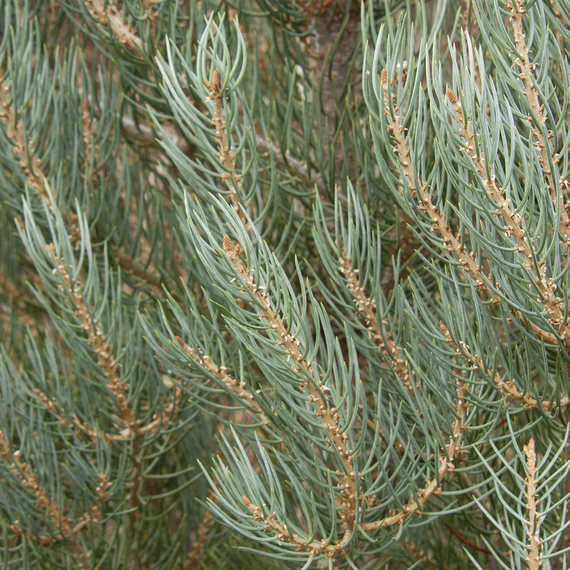
Evergreen, single needles create a bold, textured look and hold color through winter. Young trees are dense and pyramidal; older specimens can broaden and develop character with age.
Cones & Edibility
Mature trees can set heavy, thick‑scaled cones that yield edible pine nuts; crops typically begin on older plants and may be periodic. Leave space to access cones if you plan to harvest.
Sun Requirements
Full sun (6+ hours/day) for best structure, drought performance, and cone production.
Watering Needs
Water deeply and regularly during the first few seasons to establish a deep root system; once established, shift to infrequent, deep soakings. Avoid frequent, shallow watering.
Soil Requirements
Requires deep, well‑drained, low‑moisture soils (sandy loam, rocky, or gravelly). Do not plant in heavy, wet, or compacted soils; prolonged saturation can cause decline.
Growth & Size
Slow growth; expect about 8–15 ft. tall by 8–10 ft. wide in 10 years, ultimately to ~30 ft. with age given favorable conditions.
Hardiness
USDA Zones 5–10; highly heat‑ and drought‑adapted once established.
Special Features
Waterwise; deer and rabbit resistant; native to the Great Basin and adjacent ranges; supports birds with cover and seasonal seed.
Landscape Uses
Dry slopes, native and Mediterranean gardens, modern minimal plantings, windbreaks, and habitat plantings; effective with switch grass, ginkgo, oaks, and other drought‑tolerant companions.
Care Instructions
After planting, water deeply to settle soil and eliminate air pockets. During establishment, allow the top several inches of soil to dry between soakings. Prune in early spring only to correct structure or remove dead wood; avoid heavy shearing.
Spacing & Placement
Allow at least 10–12 ft. of lateral space in designed plantings for 10‑year growth; more in open sites if you plan to let the tree reach mature size or to facilitate pine‑nut harvest.
Design Tips
Highlight the tree’s sculptural form with boulders and gravel mulch; underplant with drought‑tolerant grasses and pollinator‑friendly perennials to soften the base and echo the high‑desert palette.
- Distinctive single needles and rugged gray‑green color suited to high‑desert and mountain landscapes.
- Edible pine nuts may develop on mature trees; drought‑tolerant and waterwise once established.
- Slow grower: ~8–15 ft. tall by 8–10 ft. wide in 10 years; up to ~30 ft. at maturity.
- Thrives in full sun and deep, well‑drained, low‑moisture soils; resents heavy, wet ground.
Singleleaf Pinyon (Pinus monophylla) brings authentic Southwestern character to water‑wise designs with thick, evergreen single needles and a compact, pyramidal presence. Exceptionally adapted to arid sites, it prefers full sun and freely draining sandy or rocky soils, rewarding patient growers with a long‑lived, sculpture‑like form and, with age, occasional crops of edible pine nuts. A hardy, low‑maintenance native evergreen that pairs naturally with dry‑garden grasses, oaks, and modern minimalist plantings.
Plant Description
A slow‑growing, North American native conifer valued for its thick, one‑per‑fascicle needles (unique among pines), gray‑green coloration, and tidy, pyramidal to rounded outline—ideal for dry, open sites or as a rugged specimen in xeriscapes.
Foliage & Habit
Evergreen, single needles create a bold, textured look and hold color through winter. Young trees are dense and pyramidal; older specimens can broaden and develop character with age.
Cones & Edibility
Mature trees can set heavy, thick‑scaled cones that yield edible pine nuts; crops typically begin on older plants and may be periodic. Leave space to access cones if you plan to harvest.
Sun Requirements
Full sun (6+ hours/day) for best structure, drought performance, and cone production.
Watering Needs
Water deeply and regularly during the first few seasons to establish a deep root system; once established, shift to infrequent, deep soakings. Avoid frequent, shallow watering.
Soil Requirements
Requires deep, well‑drained, low‑moisture soils (sandy loam, rocky, or gravelly). Do not plant in heavy, wet, or compacted soils; prolonged saturation can cause decline.
Growth & Size
Slow growth; expect about 8–15 ft. tall by 8–10 ft. wide in 10 years, ultimately to ~30 ft. with age given favorable conditions.
Hardiness
USDA Zones 5–10; highly heat‑ and drought‑adapted once established.
Special Features
Waterwise; deer and rabbit resistant; native to the Great Basin and adjacent ranges; supports birds with cover and seasonal seed.
Landscape Uses
Dry slopes, native and Mediterranean gardens, modern minimal plantings, windbreaks, and habitat plantings; effective with switch grass, ginkgo, oaks, and other drought‑tolerant companions.
Care Instructions
After planting, water deeply to settle soil and eliminate air pockets. During establishment, allow the top several inches of soil to dry between soakings. Prune in early spring only to correct structure or remove dead wood; avoid heavy shearing.
Spacing & Placement
Allow at least 10–12 ft. of lateral space in designed plantings for 10‑year growth; more in open sites if you plan to let the tree reach mature size or to facilitate pine‑nut harvest.
Design Tips
Highlight the tree’s sculptural form with boulders and gravel mulch; underplant with drought‑tolerant grasses and pollinator‑friendly perennials to soften the base and echo the high‑desert palette.