Zoom the image with the mouse
Silver Moon Variegated Agapanthus - 1 Gallon
SKU:
2055925
UPC:
014949442111
$15.99
- Eye-catching variegation: shimmering silvery-white and green strap-like leaves.
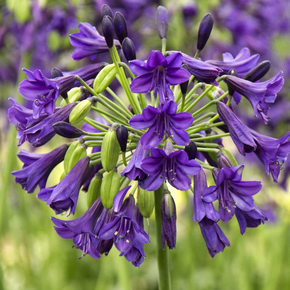
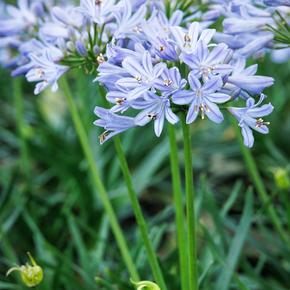
- Abundant lavender‑blue flower clusters on tall, upright stems from midsummer into fall.
- Compact, clump‑forming habit perfect for borders and containers—about 18–24 in. tall × 16–20 in. wide.
- Evergreen in warm zones; easy‑care and waterwise once established; thrives in full to partial sun.
Silver Moon Variegated Agapanthus (Agapanthus hybrid ‘Notfred’) lights up sunny beds and patio pots with bold, silvery‑striped foliage and generous lavender‑blue bloom spheres. This compact, evergreen selection forms neat clumps that perform in full to partial sun and well‑drained soil, establishing quickly with deep watering and then tolerating brief dry spells. Use it as a luminous edging, a container centerpiece, or massed for a polished ribbon of color along paths and poolside plantings.
Plant Description
Evergreen, clump‑forming perennial with narrow, strap‑like leaves boldly variegated in silvery white and green. Tall, upright stems carry rounded clusters of lavender‑blue, trumpet‑shaped flowers above the foliage.
Variegated Foliage
Silvery white and green variegation offers season‑long brightness and contrast, even when plants are not in bloom; excellent for lightening up mixed borders and containers.
Flowers & Bloom Time
Midsummer into fall. Rounded lavender‑blue umbels create a clean architectural look and make excellent cut flowers for indoor arrangements.
Habit & Size
Moderate growth to about 18–24 in. tall and 16–20 in. wide; clumping habit keeps plantings neat and easy to maintain.
Sun Requirements
Full sun to partial sun. In hotter inland sites, light afternoon shade helps preserve foliage quality and extend bloom.
Water & Soil
Provide average, well‑drained soil. Water deeply and regularly during the first growing season to establish; once established, reduce frequency—tolerates mild drought between soakings.
Hardiness
USDA Zones 7–11. Evergreen where winter temperatures are mild; in colder regions, grow in containers and move to frost‑free shelter for winter.
Special Features
Dramatic foliage color; attracts pollinators and hummingbirds; coastal‑tolerant; easy‑care and waterwise once established.
Landscape Uses
Border edging, containers, poolside accents, mass plantings for a uniform variegated ribbon, and contemporary compositions where clean lines are desired.
Care & Feeding
Feed before new growth in spring and again after flowering. Plants bloom best when undisturbed; divide only when clumps become overcrowded. Deadhead spent stems to tidy.
Spacing & Planting
Space 16–24 in. on center for a continuous band. Set crowns level with the soil surface; water to settle and mulch to conserve moisture and moderate soil temperature.
Container Tips
Use a high‑quality, well‑drained potting mix in a 12–14 in. wide container. Provide full to partial sun; water when the top 2–3 in. of mix are dry.
Design Notes
Pair with coneflower, pittosporum, coral bells, iris, shasta daisy, or dianthus to echo color and contrast textures; repeat clumps for a cohesive, high‑impact edge.
- Eye-catching variegation: shimmering silvery-white and green strap-like leaves.
- Abundant lavender‑blue flower clusters on tall, upright stems from midsummer into fall.
- Compact, clump‑forming habit perfect for borders and containers—about 18–24 in. tall × 16–20 in. wide.
- Evergreen in warm zones; easy‑care and waterwise once established; thrives in full to partial sun.
Silver Moon Variegated Agapanthus (Agapanthus hybrid ‘Notfred’) lights up sunny beds and patio pots with bold, silvery‑striped foliage and generous lavender‑blue bloom spheres. This compact, evergreen selection forms neat clumps that perform in full to partial sun and well‑drained soil, establishing quickly with deep watering and then tolerating brief dry spells. Use it as a luminous edging, a container centerpiece, or massed for a polished ribbon of color along paths and poolside plantings.
Plant Description
Evergreen, clump‑forming perennial with narrow, strap‑like leaves boldly variegated in silvery white and green. Tall, upright stems carry rounded clusters of lavender‑blue, trumpet‑shaped flowers above the foliage.
Variegated Foliage
Silvery white and green variegation offers season‑long brightness and contrast, even when plants are not in bloom; excellent for lightening up mixed borders and containers.
Flowers & Bloom Time
Midsummer into fall. Rounded lavender‑blue umbels create a clean architectural look and make excellent cut flowers for indoor arrangements.
Habit & Size
Moderate growth to about 18–24 in. tall and 16–20 in. wide; clumping habit keeps plantings neat and easy to maintain.
Sun Requirements
Full sun to partial sun. In hotter inland sites, light afternoon shade helps preserve foliage quality and extend bloom.
Water & Soil
Provide average, well‑drained soil. Water deeply and regularly during the first growing season to establish; once established, reduce frequency—tolerates mild drought between soakings.
Hardiness
USDA Zones 7–11. Evergreen where winter temperatures are mild; in colder regions, grow in containers and move to frost‑free shelter for winter.
Special Features
Dramatic foliage color; attracts pollinators and hummingbirds; coastal‑tolerant; easy‑care and waterwise once established.
Landscape Uses
Border edging, containers, poolside accents, mass plantings for a uniform variegated ribbon, and contemporary compositions where clean lines are desired.
Care & Feeding
Feed before new growth in spring and again after flowering. Plants bloom best when undisturbed; divide only when clumps become overcrowded. Deadhead spent stems to tidy.
Spacing & Planting
Space 16–24 in. on center for a continuous band. Set crowns level with the soil surface; water to settle and mulch to conserve moisture and moderate soil temperature.
Container Tips
Use a high‑quality, well‑drained potting mix in a 12–14 in. wide container. Provide full to partial sun; water when the top 2–3 in. of mix are dry.
Design Notes
Pair with coneflower, pittosporum, coral bells, iris, shasta daisy, or dianthus to echo color and contrast textures; repeat clumps for a cohesive, high‑impact edge.