
Zoom the image with the mouse
Purple Queen Bougainvillea
SKU:
1878965-P
UPC:
014949130551
$21.99 - $109.99
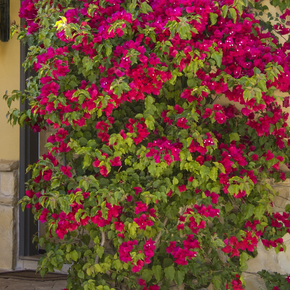
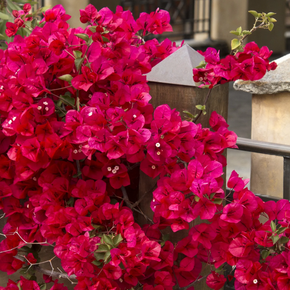
- Rich, deep purple petal-like bracts displayed against handsome dark green foliage in a compact, upright, and spreading form unlike typical vigorous bougainvilleas
- Versatile size climbing 15 feet tall with support, or spreading 8 feet wide as a cascading groundcover, container specimen, or hanging basket plant
- Waterwise and easy care with drought tolerance, coastal exposure tolerance, and urban pollution resistance across frost-free USDA Zones 10 through 11
- Long season of bloom through summer and beyond in frost-free regions; grown as a stunning tropical annual or container accent in cooler northern climates
Purple Queen Bougainvillea (Bougainvillea 'Moneth') stands apart from its vigorous climbing cousins with a uniquely compact, upright, and spreading form that makes it exceptionally versatile in garden design. Its rich, deep purple bracts are displayed magnificently against handsome, deep green foliage on stems that can climb 15 feet with support or spread to 8 feet wide as a cascading groundcover or trailing container plant. Unlike the typical 20 to 30 foot climbers of the bougainvillea world, Purple Queen's more moderate size and spreading habit open up a wider range of practical applications — from planter boxes and fences to arbors, retaining walls, and hanging baskets. Easy care and waterwise with drought tolerance and coastal exposure resistance, it provides a regal, long-lasting bloom display throughout summer in frost-free USDA Zones 10 and 11, and performs as a spectacular warm-season annual in cooler climates where containers can be overwintered indoors.
Plant Details
| Attribute | Details |
|---|---|
| Botanical Name | Bougainvillea 'Moneth' |
| Plant Type | Evergreen Vine / Tropical Shrub |
| Bract Color | Rich deep purple |
| True Flower Color | Small white tubular flowers within the bracts |
| Foliage Color | Deep green |
| Bloom Time | Summer; longer in frost-free areas |
| Growth Rate | Moderate |
| Growth Habit | Compact, Upright and Spreading |
| Mature Size | 15 ft. tall with support; 1-2 ft. tall, 8 ft. wide as groundcover |
| USDA Zones | 10-11 (perennial); all zones as warm-season annual |
| Light | Full sun |
| Water | Deeply when soil is dry; drought tolerant once established |
| Special Features | Easy Care, Waterwise, Fast Growing, Compact Form |
| Landscape Use | Barrier, Container, Espalier, Privacy Screen, Ground Cover, Hanging Basket |
Compact, Versatile Growth Habit
Purple Queen Bougainvillea's most distinctive characteristic beyond its royal purple bract color is its uniquely compact and versatile growth habit. While it can climb to 15 feet with support, it maintains a narrower, more controlled spread than most bougainvillea varieties. When used as a groundcover without support, it spreads to approximately 8 feet wide while remaining just 1 to 2 feet in height, creating a low, dense, colorful carpet of vivid purple. This dual nature — climber or groundcover — combined with its moderate size makes it significantly more versatile in garden design than the typical vigorous-climbing bougainvillea varieties, fitting into smaller garden situations and container applications where the larger forms would be impractical.
Sunlight Requirements
Purple Queen Bougainvillea requires full sun for the most prolific bract production and the most vivid, saturated deep purple color. A minimum of 6 hours of direct sunlight per day is needed for good performance, with maximum sun exposure producing the best flowering results. Like all bougainvillea varieties, it actually thrives in the most intensely hot and sunny conditions, becoming one of the most reliable performers in desert and Mediterranean-style landscape situations where heat and sun are abundant throughout the growing season.
Watering
Water Purple Queen Bougainvillea deeply when the soil is completely dry. Bougainvillea is a drought-adapted plant that produces the most prolific bract display when subjected to moderate drought stress between deep waterings, rather than being consistently moist. Overwatering promotes vegetative growth at the expense of flowers and can lead to root rot. Container plants should be watered when the top 3 inches of soil feel dry. Always handle the root ball with extreme care when planting or repotting — bougainvillea roots are uniquely fragile and must never be disturbed during transplanting.
Soil and Care
Provide average to lean, fast-draining soil. Excellent drainage is the single most critical soil requirement; bougainvillea absolutely cannot tolerate waterlogged conditions. Fertilize with a balanced fertilizer in spring, avoiding high-nitrogen fertilizers that favor leaves over bracts. Prune lightly after each bloom cycle to encourage vigorous new growth and repeat flowering. Always wear heavy gloves when handling — the stems carry sharp thorns. In zones below 10, overwinter container plants indoors near a bright sunny window.
Landscape Uses
Purple Queen's compact, spreading form opens more landscape possibilities than typical large bougainvilleas. Use it as a blooming groundcover on banks and slopes for an avalanche of purple color or allow it to drape over retaining wall edges. Grow in containers with support for exotic color on patios and decks. Espalier on walls and fences for a sophisticated flat-trained tapestry of deep purple. Plant on banks and slopes for erosion-controlling, colorful coverage. In cooler climates, grow in large hanging baskets for cascading tropical drama.
Companion Plants
| Plant | Why It Works |
|---|---|
| Lantana (Lantana) | Warm-toned heat-tolerant blooms provide complementary tropical color with shared drought tolerance |
| Cordyline (Cordyline) | Bold architectural foliage in red or green provides dramatic structural contrast at the vine's base |
| Evergreen Clematis (Clematis) | Interweaving vine provides complementary cool-toned flowers that harmonize with the deep purple bracts |
| Salvia (Salvia) | Blue-purple flower spikes create a beautiful tonal echo that reinforces the purple color theme |
| Upright Juniper (Juniperus) | Dark columnar evergreen provides clean structural contrast behind the colorful spreading vine |
USDA Hardiness Zones
Purple Queen Bougainvillea is rated for USDA Zones 10 through 11 as a frost-tender evergreen perennial. In frost-free zones, it provides an exceptionally long season of bloom. In cooler zones, it is grown as a warm-season annual in containers, providing months of tropical purple color from spring through fall before being overwintered indoors near a bright window. Container culture is particularly well-suited to Purple Queen's compact form, making it one of the most practical bougainvillea varieties for cold-climate gardeners.
History and Background
Purple Queen Bougainvillea is one of the newer fine introductions in the bougainvillea world, developed specifically for its exceptional purple bract color and more compact, spreading growth habit. Like all bougainvillea cultivars, its ancestry traces back to three South American species — B. spectabilis, B. glabra, and B. peruviana — first encountered by European naturalists accompanying Louis-Antoine de Bougainville's 1766-1769 circumnavigation of the globe. The brilliant papery displays that make bougainvillea so spectacular are bracts — modified leaves — that evolved to attract pollinators to the otherwise inconspicuous small white tubular flowers within. Interestingly, a tea made from bougainvillea flowers has been used in Mexican folk medicine to treat respiratory conditions, while the leaves of certain species contain pinitol, a compound with potential applications in treating metabolic diseases.
- Rich, deep purple petal-like bracts displayed against handsome dark green foliage in a compact, upright, and spreading form unlike typical vigorous bougainvilleas
- Versatile size climbing 15 feet tall with support, or spreading 8 feet wide as a cascading groundcover, container specimen, or hanging basket plant
- Waterwise and easy care with drought tolerance, coastal exposure tolerance, and urban pollution resistance across frost-free USDA Zones 10 through 11
- Long season of bloom through summer and beyond in frost-free regions; grown as a stunning tropical annual or container accent in cooler northern climates
Purple Queen Bougainvillea (Bougainvillea 'Moneth') stands apart from its vigorous climbing cousins with a uniquely compact, upright, and spreading form that makes it exceptionally versatile in garden design. Its rich, deep purple bracts are displayed magnificently against handsome, deep green foliage on stems that can climb 15 feet with support or spread to 8 feet wide as a cascading groundcover or trailing container plant. Unlike the typical 20 to 30 foot climbers of the bougainvillea world, Purple Queen's more moderate size and spreading habit open up a wider range of practical applications — from planter boxes and fences to arbors, retaining walls, and hanging baskets. Easy care and waterwise with drought tolerance and coastal exposure resistance, it provides a regal, long-lasting bloom display throughout summer in frost-free USDA Zones 10 and 11, and performs as a spectacular warm-season annual in cooler climates where containers can be overwintered indoors.
Plant Details
| Attribute | Details |
|---|---|
| Botanical Name | Bougainvillea 'Moneth' |
| Plant Type | Evergreen Vine / Tropical Shrub |
| Bract Color | Rich deep purple |
| True Flower Color | Small white tubular flowers within the bracts |
| Foliage Color | Deep green |
| Bloom Time | Summer; longer in frost-free areas |
| Growth Rate | Moderate |
| Growth Habit | Compact, Upright and Spreading |
| Mature Size | 15 ft. tall with support; 1-2 ft. tall, 8 ft. wide as groundcover |
| USDA Zones | 10-11 (perennial); all zones as warm-season annual |
| Light | Full sun |
| Water | Deeply when soil is dry; drought tolerant once established |
| Special Features | Easy Care, Waterwise, Fast Growing, Compact Form |
| Landscape Use | Barrier, Container, Espalier, Privacy Screen, Ground Cover, Hanging Basket |
Compact, Versatile Growth Habit
Purple Queen Bougainvillea's most distinctive characteristic beyond its royal purple bract color is its uniquely compact and versatile growth habit. While it can climb to 15 feet with support, it maintains a narrower, more controlled spread than most bougainvillea varieties. When used as a groundcover without support, it spreads to approximately 8 feet wide while remaining just 1 to 2 feet in height, creating a low, dense, colorful carpet of vivid purple. This dual nature — climber or groundcover — combined with its moderate size makes it significantly more versatile in garden design than the typical vigorous-climbing bougainvillea varieties, fitting into smaller garden situations and container applications where the larger forms would be impractical.
Sunlight Requirements
Purple Queen Bougainvillea requires full sun for the most prolific bract production and the most vivid, saturated deep purple color. A minimum of 6 hours of direct sunlight per day is needed for good performance, with maximum sun exposure producing the best flowering results. Like all bougainvillea varieties, it actually thrives in the most intensely hot and sunny conditions, becoming one of the most reliable performers in desert and Mediterranean-style landscape situations where heat and sun are abundant throughout the growing season.
Watering
Water Purple Queen Bougainvillea deeply when the soil is completely dry. Bougainvillea is a drought-adapted plant that produces the most prolific bract display when subjected to moderate drought stress between deep waterings, rather than being consistently moist. Overwatering promotes vegetative growth at the expense of flowers and can lead to root rot. Container plants should be watered when the top 3 inches of soil feel dry. Always handle the root ball with extreme care when planting or repotting — bougainvillea roots are uniquely fragile and must never be disturbed during transplanting.
Soil and Care
Provide average to lean, fast-draining soil. Excellent drainage is the single most critical soil requirement; bougainvillea absolutely cannot tolerate waterlogged conditions. Fertilize with a balanced fertilizer in spring, avoiding high-nitrogen fertilizers that favor leaves over bracts. Prune lightly after each bloom cycle to encourage vigorous new growth and repeat flowering. Always wear heavy gloves when handling — the stems carry sharp thorns. In zones below 10, overwinter container plants indoors near a bright sunny window.
Landscape Uses
Purple Queen's compact, spreading form opens more landscape possibilities than typical large bougainvilleas. Use it as a blooming groundcover on banks and slopes for an avalanche of purple color or allow it to drape over retaining wall edges. Grow in containers with support for exotic color on patios and decks. Espalier on walls and fences for a sophisticated flat-trained tapestry of deep purple. Plant on banks and slopes for erosion-controlling, colorful coverage. In cooler climates, grow in large hanging baskets for cascading tropical drama.
Companion Plants
| Plant | Why It Works |
|---|---|
| Lantana (Lantana) | Warm-toned heat-tolerant blooms provide complementary tropical color with shared drought tolerance |
| Cordyline (Cordyline) | Bold architectural foliage in red or green provides dramatic structural contrast at the vine's base |
| Evergreen Clematis (Clematis) | Interweaving vine provides complementary cool-toned flowers that harmonize with the deep purple bracts |
| Salvia (Salvia) | Blue-purple flower spikes create a beautiful tonal echo that reinforces the purple color theme |
| Upright Juniper (Juniperus) | Dark columnar evergreen provides clean structural contrast behind the colorful spreading vine |
USDA Hardiness Zones
Purple Queen Bougainvillea is rated for USDA Zones 10 through 11 as a frost-tender evergreen perennial. In frost-free zones, it provides an exceptionally long season of bloom. In cooler zones, it is grown as a warm-season annual in containers, providing months of tropical purple color from spring through fall before being overwintered indoors near a bright window. Container culture is particularly well-suited to Purple Queen's compact form, making it one of the most practical bougainvillea varieties for cold-climate gardeners.
History and Background
Purple Queen Bougainvillea is one of the newer fine introductions in the bougainvillea world, developed specifically for its exceptional purple bract color and more compact, spreading growth habit. Like all bougainvillea cultivars, its ancestry traces back to three South American species — B. spectabilis, B. glabra, and B. peruviana — first encountered by European naturalists accompanying Louis-Antoine de Bougainville's 1766-1769 circumnavigation of the globe. The brilliant papery displays that make bougainvillea so spectacular are bracts — modified leaves — that evolved to attract pollinators to the otherwise inconspicuous small white tubular flowers within. Interestingly, a tea made from bougainvillea flowers has been used in Mexican folk medicine to treat respiratory conditions, while the leaves of certain species contain pinitol, a compound with potential applications in treating metabolic diseases.
Related Products