

Zoom the image with the mouse
Purple‑Leaf Japanese Honeysuckle - 1 Gallon
SKU:
105170
UPC:
014949591116
$19.99
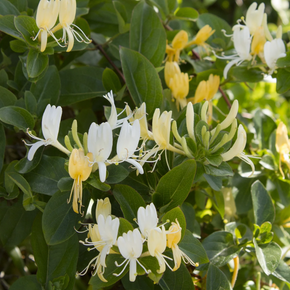
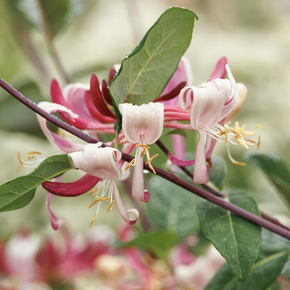
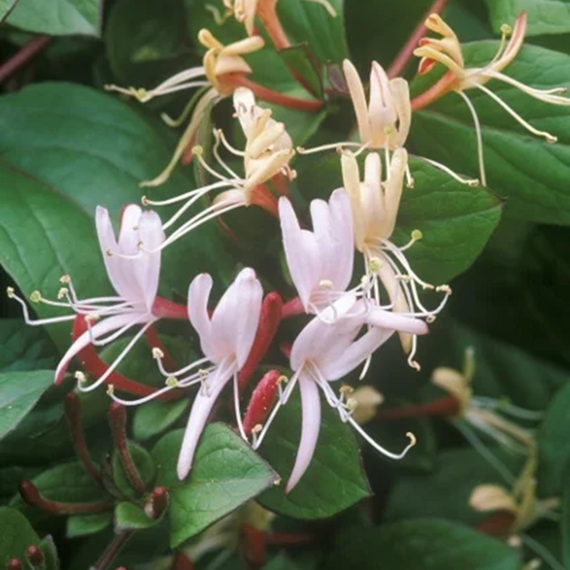
- Exotic, fragrant purple‑red and white bi‑color blooms that age to creamy yellow for a long summer display.
- Vigorous, twining vine; stems typically reach about 10–15 ft. with support or form a dense groundcover when left unsupported.
- Dark green foliage with purple‑tinted undersides adds depth and contrast even when out of flower.
- Adaptable and waterwise once established—great for fast screening on fences and arbors or for erosion control on slopes.
Purple‑Leaf Japanese Honeysuckle (Lonicera japonica ‘Purpurea’) delivers a striking mix of color and perfume: purple‑red and white tubular flowers that soften to cream, set against foliage with rich, purple‑tinted undersides. This fast‑growing, twining climber thrives in full to partial sun and average, well‑drained soils, quickly clothing structures or blanketing banks as a groundcover. Deciduous and easy‑care, it’s an excellent solution for quick coverage, pollinator appeal, and season‑long interest in USDA Zones 6–11.
Botanical Name
Lonicera japonica ‘Purpurea’ — Purple‑Leaf Japanese Honeysuckle.
Plant Type & Habit
Fast‑growing, twining climber; can also be used as a dense groundcover on banks and slopes when left unsupported.
Mature Size
Typically 10–15 ft. tall with support; spread varies by training and site.
Hardiness
USDA Zones 6–11.
Light & Exposure
Full sun to partial sun; benefits from light shade in hot summer regions.
Soil & Water
Grows easily in average, well‑drained soils. Water deeply and regularly the first season to establish; once established, reduce frequency and it tolerates moderate drought.
Flowers & Bloom Season
Summer bloom: purple‑red and white tubular flowers that age to creamy yellow; showy clusters with a sweet fragrance.
Foliage & Color
Dark green leaves with purple‑tinted undersides add color contrast and depth across the season.
Uses & Landscape Ideas
- Fast screening on fences, arbors, trellises, and lattices.
- Groundcover for erosion control on slopes and banks.
- Hillside drifts and naturalized edges for long‑season color and fragrance.
Training & Support
Provide a sturdy support (trellis, wire, arbor). Guide young shoots and tie in until vines twine naturally.
Pruning & Maintenance
Prune annually to control size and keep growth where wanted. Feed in early spring if soils are lean; remove spent or wayward stems to maintain a tidy form.
Pollinators & Wildlife
Fragrant tubular flowers attract hummingbirds and other pollinators; ornamental berries may follow in season.
Planting & Spacing
Plant at the same depth as in the container near your support. Space based on structure length and desired density, allowing access for pruning.
Regional Notes
This is a vigorous honeysuckle—manage spread with regular pruning and avoid allowing vines to escape into natural areas; follow local guidance.
- Exotic, fragrant purple‑red and white bi‑color blooms that age to creamy yellow for a long summer display.
- Vigorous, twining vine; stems typically reach about 10–15 ft. with support or form a dense groundcover when left unsupported.
- Dark green foliage with purple‑tinted undersides adds depth and contrast even when out of flower.
- Adaptable and waterwise once established—great for fast screening on fences and arbors or for erosion control on slopes.
Purple‑Leaf Japanese Honeysuckle (Lonicera japonica ‘Purpurea’) delivers a striking mix of color and perfume: purple‑red and white tubular flowers that soften to cream, set against foliage with rich, purple‑tinted undersides. This fast‑growing, twining climber thrives in full to partial sun and average, well‑drained soils, quickly clothing structures or blanketing banks as a groundcover. Deciduous and easy‑care, it’s an excellent solution for quick coverage, pollinator appeal, and season‑long interest in USDA Zones 6–11.
Botanical Name
Lonicera japonica ‘Purpurea’ — Purple‑Leaf Japanese Honeysuckle.
Plant Type & Habit
Fast‑growing, twining climber; can also be used as a dense groundcover on banks and slopes when left unsupported.
Mature Size
Typically 10–15 ft. tall with support; spread varies by training and site.
Hardiness
USDA Zones 6–11.
Light & Exposure
Full sun to partial sun; benefits from light shade in hot summer regions.
Soil & Water
Grows easily in average, well‑drained soils. Water deeply and regularly the first season to establish; once established, reduce frequency and it tolerates moderate drought.
Flowers & Bloom Season
Summer bloom: purple‑red and white tubular flowers that age to creamy yellow; showy clusters with a sweet fragrance.
Foliage & Color
Dark green leaves with purple‑tinted undersides add color contrast and depth across the season.
Uses & Landscape Ideas
- Fast screening on fences, arbors, trellises, and lattices.
- Groundcover for erosion control on slopes and banks.
- Hillside drifts and naturalized edges for long‑season color and fragrance.
Training & Support
Provide a sturdy support (trellis, wire, arbor). Guide young shoots and tie in until vines twine naturally.
Pruning & Maintenance
Prune annually to control size and keep growth where wanted. Feed in early spring if soils are lean; remove spent or wayward stems to maintain a tidy form.
Pollinators & Wildlife
Fragrant tubular flowers attract hummingbirds and other pollinators; ornamental berries may follow in season.
Planting & Spacing
Plant at the same depth as in the container near your support. Space based on structure length and desired density, allowing access for pruning.
Regional Notes
This is a vigorous honeysuckle—manage spread with regular pruning and avoid allowing vines to escape into natural areas; follow local guidance.
Related Products