

Zoom the image with the mouse
Purple Fountain Grass
SKU:
213490-P
UPC:
014949642757
$16.99 - $51.99
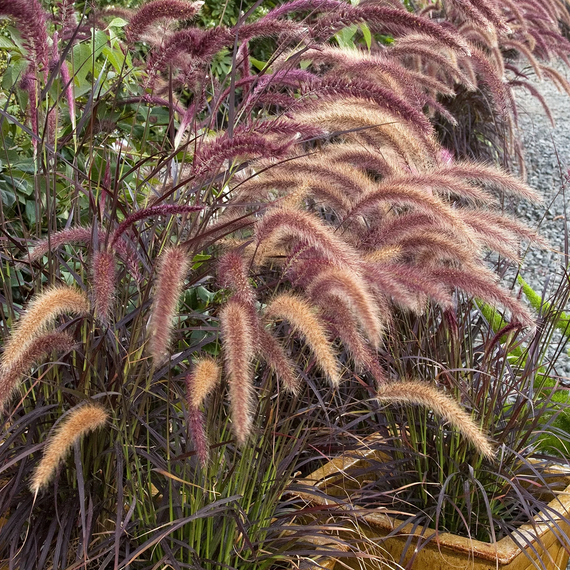
- Bold color & form: dense clumps of purplish‑maroon blades topped with rosy plumes for high-impact texture.
- Compact size fits beds and containers—about 2–4 ft tall × 2–3 ft wide.
- Drought‑tolerant, deer‑resistant, and waterwise once established; excellent on slopes for erosion control.
- Non‑reseeding cultivar for tidy performance; perennial in mild winters and stunning as annual color elsewhere.
Purple Fountain Grass (Pennisetum advena × setaceum ‘Rubrum’) delivers season‑long drama with bronzed‑to‑maroon foliage and arching, rose‑red plumes from summer into fall. A compact, clumping ornamental that thrives in full sun, it’s easy‑care, drought‑tolerant once established, and valued for non‑reseeding habit—perfect for borders, large containers, and slope stabilization. In warm regions it behaves as an herbaceous perennial; in colder climates it provides quick annual color with exceptional movement and contrast.
Botanical Name
Pennisetum advena × setaceum ‘Rubrum’ — commonly sold as Purple Fountain Grass.
Plant Type & Habit
Warm‑season, herbaceous ornamental grass with a clump‑forming, fountain‑like habit and gracefully arching plumes.
Mature Size
Typically 2–4 ft tall and 2–3 ft wide at maturity.
Hardiness
USDA Zones 8–11 in the landscape (perennial in mild winters); used as a fast annual display in colder zones.
Light & Exposure
Full sun is best; tolerates light partial sun while maintaining color and plume production.
Soil & Water
Adaptable to many soil types with good drainage. Water deeply during the first season to establish; once established, tolerates moderate drought.
Foliage & Plumes
Dense clumps of purplish‑maroon blades topped with rose‑red, bottlebrush plumes that soften to tawny seed heads for extended interest.
Bloom Season
Summer through fall, with plumes providing color, movement, and silhouette late into the season.
Uses & Landscape Ideas
- Border & specimen accents for contrast and motion.
- Large containers and entry groupings for a dramatic “thriller.”
- Slopes & dry stream beds for erosion control and texture.
Non‑Reseeding Cultivar
Selected to not reseed, offering reliable, tidy performance compared with species types.
Planting & Spacing
Plant at the same depth as the nursery container; space plants 24–36 in. apart for masses, or use singly as focal accents.
Maintenance & Pruning
Cut back clumps in late winter to early spring before new growth emerges. Feed lightly in spring if soils are lean.
Problem Solving & Toughness
Deer‑resistant, drought‑tolerant once established; suitable for coastal exposure and low‑maintenance plantings.
- Bold color & form: dense clumps of purplish‑maroon blades topped with rosy plumes for high-impact texture.
- Compact size fits beds and containers—about 2–4 ft tall × 2–3 ft wide.
- Drought‑tolerant, deer‑resistant, and waterwise once established; excellent on slopes for erosion control.
- Non‑reseeding cultivar for tidy performance; perennial in mild winters and stunning as annual color elsewhere.
Purple Fountain Grass (Pennisetum advena × setaceum ‘Rubrum’) delivers season‑long drama with bronzed‑to‑maroon foliage and arching, rose‑red plumes from summer into fall. A compact, clumping ornamental that thrives in full sun, it’s easy‑care, drought‑tolerant once established, and valued for non‑reseeding habit—perfect for borders, large containers, and slope stabilization. In warm regions it behaves as an herbaceous perennial; in colder climates it provides quick annual color with exceptional movement and contrast.
Botanical Name
Pennisetum advena × setaceum ‘Rubrum’ — commonly sold as Purple Fountain Grass.
Plant Type & Habit
Warm‑season, herbaceous ornamental grass with a clump‑forming, fountain‑like habit and gracefully arching plumes.
Mature Size
Typically 2–4 ft tall and 2–3 ft wide at maturity.
Hardiness
USDA Zones 8–11 in the landscape (perennial in mild winters); used as a fast annual display in colder zones.
Light & Exposure
Full sun is best; tolerates light partial sun while maintaining color and plume production.
Soil & Water
Adaptable to many soil types with good drainage. Water deeply during the first season to establish; once established, tolerates moderate drought.
Foliage & Plumes
Dense clumps of purplish‑maroon blades topped with rose‑red, bottlebrush plumes that soften to tawny seed heads for extended interest.
Bloom Season
Summer through fall, with plumes providing color, movement, and silhouette late into the season.
Uses & Landscape Ideas
- Border & specimen accents for contrast and motion.
- Large containers and entry groupings for a dramatic “thriller.”
- Slopes & dry stream beds for erosion control and texture.
Non‑Reseeding Cultivar
Selected to not reseed, offering reliable, tidy performance compared with species types.
Planting & Spacing
Plant at the same depth as the nursery container; space plants 24–36 in. apart for masses, or use singly as focal accents.
Maintenance & Pruning
Cut back clumps in late winter to early spring before new growth emerges. Feed lightly in spring if soils are lean.
Problem Solving & Toughness
Deer‑resistant, drought‑tolerant once established; suitable for coastal exposure and low‑maintenance plantings.
Related Products


