Zoom the image with the mouse
Orange King Bougainvillea - 1 Gallon
SKU:
1955200
UPC:
014949132012
$17.99
$14.39
(You save
$3.60
)
- Uniquely bronzy-orange bracts create a warm, glowing tropical display unlike typical pink or red bougainvilleas, thriving on arbors, trellises, and hanging baskets
- Strong vining habit quickly provides lush cover reaching 20 to 30 feet with support, also effective spilling over fences and walls as a groundcover on banks
- Exceptionally drought tolerant once established with coastal exposure, erosion control, and urban pollution tolerance; waterwise and easy care
- Evergreen perennial in frost-free USDA Zones 10 through 11; a spectacular warm-season annual container plant in cooler northern climates
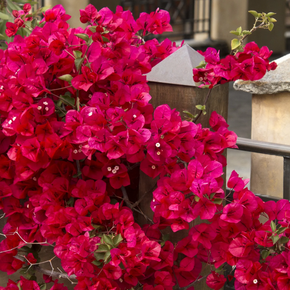
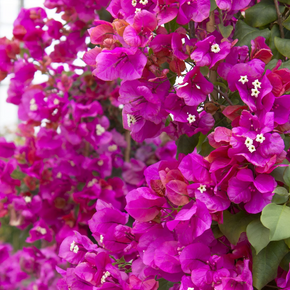
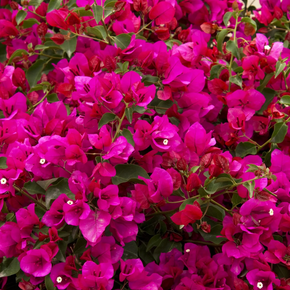
Orange King Bougainvillea (Bougainvillea x buttiana 'Orange King') stands out in the bougainvillea world with its uniquely beautiful bronze-orange bracts that create a warm, glowing tropical display unlike the typical pinks, reds, and purples of the genus. This strong, vining selection is both reliable and vigorous, quickly reaching 20 to 30 feet with support to shroud arbors in shade-giving foliage and spectacular warm-toned color. It is equally effective trained onto walls, fences, and trellises, or allowed to cascade down banks and spill over retaining walls as a colorful groundcover. Exceptionally drought tolerant once established and highly adaptable to coastal exposure and urban pollution, Orange King provides exceptional visual impact with minimal care requirements. Evergreen year-round in frost-free USDA Zones 10 and 11, it is also a spectacular summer annual container and hanging basket choice for warm-season tropical color in cooler climates.
Plant Details
| Attribute | Details |
|---|---|
| Botanical Name | Bougainvillea x buttiana 'Orange King' |
| Plant Type | Evergreen Vine / Tropical Shrub |
| Bract Color | Bronze-orange |
| True Flower Color | Small white tubular flowers within the bracts |
| Foliage Color | Green |
| Bloom Time | Summer; longer in frost-free areas |
| Growth Rate | Fast |
| Growth Habit | Climbing |
| Mature Size | 20-30 ft. tall with support |
| USDA Zones | 10-11 (perennial); all zones as warm-season annual |
| Light | Full sun |
| Water | Deeply when soil is dry; drought tolerant once established |
| Special Features | Easy Care, Waterwise, Fast Growing, Unique Orange Color |
| Landscape Use | Barrier, Container, Privacy Screen, Ground Cover, Hanging Basket |
The Unique Orange Bract Color
Orange King Bougainvillea earns its name from a bract color that is genuinely unusual in the bougainvillea world — a warm, burnished bronze-orange that provides exceptional contrast against red tile roofs, stucco walls, and Mediterranean-style architecture. The orange coloring makes this variety unique among bougainvillea cultivars and is both reliable and vigorous in production. The warm, glowing tones create a more muted, sophisticated tropical palette compared to the saturated pinks, reds, and magentas of other varieties, and the color choice makes it an outstanding accent in dry, hot garden designs and desert landscapes.
Growth Habit and Size
Orange King Bougainvillea is a vigorous climber whose stems can reach 20 to 30 feet with support. It grows energetically enough to shroud large arbors in foliage and flowers and to create impressive vertical coverage on walls and fences in a relatively short time. When allowed to grow without support, it is an effective cascading groundcover for banks and slopes. Spiral the stems up posts and columns, through wrought iron panels or fences, or train flat as an espalier. As with all bougainvilleas, the roots are fragile and must not be disturbed during planting — slide gently from the container without breaking or loosening the root ball.
Sunlight, Watering, and Soil
Full sun is essential — provide at least 6 to 8 hours of direct sunlight for best flowering. Orange King actually performs better in hotter, sunnier conditions and is a superb choice for the hottest, driest spots in the landscape where most plants wilt. Water deeply only when the soil is completely dry; bougainvillea flowers most prolifically under moderate drought stress between deep waterings. Provide lean, fast-draining soil — never rich, waterlogged conditions. Fertilize in spring with a balanced fertilizer avoiding high nitrogen. Wear heavy gloves when handling due to sharp thorns.
Care and Maintenance
- Root caution: Never disturb bougainvillea roots during planting; fragile roots must be kept intact to avoid transplant shock.
- Pruning: Prune lightly after each bloom cycle to stimulate new growth and subsequent bract production.
- Fertilizing: Apply balanced fertilizer in spring; avoid nitrogen-heavy products that promote leaves over flowers.
- Support: Provide adequate support for the vigorous, potentially heavy mature vine.
- Overwintering: Move containers indoors before frost; place near the brightest available window through winter.
Landscape Uses
Orange King's distinctive warm coloring makes it particularly effective against architectural elements in warm-climate landscapes. The bronze-orange bracts provide exceptional contrast against red tile roofs and warm stucco walls. Train it onto arbors to provide summer shade with floral interest. Spiral stems up columns and posts for elegant vertical structure. Thread through decorative ironwork fencing. Plant on hot, dry banks for colorful erosion-controlling groundcover. Use in very hot garden locations where other plants struggle — Orange King excels in the hottest positions in the landscape.
Companion Plants
| Plant | Why It Works |
|---|---|
| Canna (Canna) | Bold tropical foliage and warm-toned summer flowers complement the orange bougainvillea color beautifully |
| Hibiscus (Hibiscus) | Large tropical flowers in red, yellow, or orange harmonize with the warm bougainvillea color palette |
| Passion Flower (Passiflora) | Exotic interweaving vine with cool-toned exotic flowers provides an interesting complement to the warm orange |
| Lantana (Lantana) | Heat-tolerant blooms in orange and yellow tones reinforce the warm tropical color theme |
| Cordyline (Cordyline) | Bold, spiky architectural foliage provides dramatic structural contrast at the base of the climbing vine |
USDA Hardiness Zones
Orange King Bougainvillea is rated for USDA Zones 10 through 11 as a frost-tender evergreen perennial. In frost-free zones, it blooms abundantly through summer and intermittently throughout the year. In all cooler zones, it is grown as a warm-season annual, providing months of tropical color from planting through first frost. When grown in containers, it can be overwintered indoors near a sunny window and returned outdoors the following spring to provide another full season of spectacular bloom.
History and Background
Orange King Bougainvillea belongs to the Bougainvillea x buttiana hybrid group, a distinct class of bougainvillea hybrids developed from crosses between B. glabra and B. peruviana that produce particularly vivid and saturated bract colors. Like all bougainvillea cultivars, its ultimate ancestry traces to South American species first encountered by European botanists accompanying Louis-Antoine de Bougainville's famous circumnavigation voyage of 1766 to 1769. The brilliant papery bracts that make bougainvillea so spectacular are actually modified leaves (bracts) rather than true petals — a botanical adaptation that evolved to attract pollinators to the small white tubular true flowers nestled within each colorful cluster.
- Uniquely bronzy-orange bracts create a warm, glowing tropical display unlike typical pink or red bougainvilleas, thriving on arbors, trellises, and hanging baskets
- Strong vining habit quickly provides lush cover reaching 20 to 30 feet with support, also effective spilling over fences and walls as a groundcover on banks
- Exceptionally drought tolerant once established with coastal exposure, erosion control, and urban pollution tolerance; waterwise and easy care
- Evergreen perennial in frost-free USDA Zones 10 through 11; a spectacular warm-season annual container plant in cooler northern climates
Orange King Bougainvillea (Bougainvillea x buttiana 'Orange King') stands out in the bougainvillea world with its uniquely beautiful bronze-orange bracts that create a warm, glowing tropical display unlike the typical pinks, reds, and purples of the genus. This strong, vining selection is both reliable and vigorous, quickly reaching 20 to 30 feet with support to shroud arbors in shade-giving foliage and spectacular warm-toned color. It is equally effective trained onto walls, fences, and trellises, or allowed to cascade down banks and spill over retaining walls as a colorful groundcover. Exceptionally drought tolerant once established and highly adaptable to coastal exposure and urban pollution, Orange King provides exceptional visual impact with minimal care requirements. Evergreen year-round in frost-free USDA Zones 10 and 11, it is also a spectacular summer annual container and hanging basket choice for warm-season tropical color in cooler climates.
Plant Details
| Attribute | Details |
|---|---|
| Botanical Name | Bougainvillea x buttiana 'Orange King' |
| Plant Type | Evergreen Vine / Tropical Shrub |
| Bract Color | Bronze-orange |
| True Flower Color | Small white tubular flowers within the bracts |
| Foliage Color | Green |
| Bloom Time | Summer; longer in frost-free areas |
| Growth Rate | Fast |
| Growth Habit | Climbing |
| Mature Size | 20-30 ft. tall with support |
| USDA Zones | 10-11 (perennial); all zones as warm-season annual |
| Light | Full sun |
| Water | Deeply when soil is dry; drought tolerant once established |
| Special Features | Easy Care, Waterwise, Fast Growing, Unique Orange Color |
| Landscape Use | Barrier, Container, Privacy Screen, Ground Cover, Hanging Basket |
The Unique Orange Bract Color
Orange King Bougainvillea earns its name from a bract color that is genuinely unusual in the bougainvillea world — a warm, burnished bronze-orange that provides exceptional contrast against red tile roofs, stucco walls, and Mediterranean-style architecture. The orange coloring makes this variety unique among bougainvillea cultivars and is both reliable and vigorous in production. The warm, glowing tones create a more muted, sophisticated tropical palette compared to the saturated pinks, reds, and magentas of other varieties, and the color choice makes it an outstanding accent in dry, hot garden designs and desert landscapes.
Growth Habit and Size
Orange King Bougainvillea is a vigorous climber whose stems can reach 20 to 30 feet with support. It grows energetically enough to shroud large arbors in foliage and flowers and to create impressive vertical coverage on walls and fences in a relatively short time. When allowed to grow without support, it is an effective cascading groundcover for banks and slopes. Spiral the stems up posts and columns, through wrought iron panels or fences, or train flat as an espalier. As with all bougainvilleas, the roots are fragile and must not be disturbed during planting — slide gently from the container without breaking or loosening the root ball.
Sunlight, Watering, and Soil
Full sun is essential — provide at least 6 to 8 hours of direct sunlight for best flowering. Orange King actually performs better in hotter, sunnier conditions and is a superb choice for the hottest, driest spots in the landscape where most plants wilt. Water deeply only when the soil is completely dry; bougainvillea flowers most prolifically under moderate drought stress between deep waterings. Provide lean, fast-draining soil — never rich, waterlogged conditions. Fertilize in spring with a balanced fertilizer avoiding high nitrogen. Wear heavy gloves when handling due to sharp thorns.
Care and Maintenance
- Root caution: Never disturb bougainvillea roots during planting; fragile roots must be kept intact to avoid transplant shock.
- Pruning: Prune lightly after each bloom cycle to stimulate new growth and subsequent bract production.
- Fertilizing: Apply balanced fertilizer in spring; avoid nitrogen-heavy products that promote leaves over flowers.
- Support: Provide adequate support for the vigorous, potentially heavy mature vine.
- Overwintering: Move containers indoors before frost; place near the brightest available window through winter.
Landscape Uses
Orange King's distinctive warm coloring makes it particularly effective against architectural elements in warm-climate landscapes. The bronze-orange bracts provide exceptional contrast against red tile roofs and warm stucco walls. Train it onto arbors to provide summer shade with floral interest. Spiral stems up columns and posts for elegant vertical structure. Thread through decorative ironwork fencing. Plant on hot, dry banks for colorful erosion-controlling groundcover. Use in very hot garden locations where other plants struggle — Orange King excels in the hottest positions in the landscape.
Companion Plants
| Plant | Why It Works |
|---|---|
| Canna (Canna) | Bold tropical foliage and warm-toned summer flowers complement the orange bougainvillea color beautifully |
| Hibiscus (Hibiscus) | Large tropical flowers in red, yellow, or orange harmonize with the warm bougainvillea color palette |
| Passion Flower (Passiflora) | Exotic interweaving vine with cool-toned exotic flowers provides an interesting complement to the warm orange |
| Lantana (Lantana) | Heat-tolerant blooms in orange and yellow tones reinforce the warm tropical color theme |
| Cordyline (Cordyline) | Bold, spiky architectural foliage provides dramatic structural contrast at the base of the climbing vine |
USDA Hardiness Zones
Orange King Bougainvillea is rated for USDA Zones 10 through 11 as a frost-tender evergreen perennial. In frost-free zones, it blooms abundantly through summer and intermittently throughout the year. In all cooler zones, it is grown as a warm-season annual, providing months of tropical color from planting through first frost. When grown in containers, it can be overwintered indoors near a sunny window and returned outdoors the following spring to provide another full season of spectacular bloom.
History and Background
Orange King Bougainvillea belongs to the Bougainvillea x buttiana hybrid group, a distinct class of bougainvillea hybrids developed from crosses between B. glabra and B. peruviana that produce particularly vivid and saturated bract colors. Like all bougainvillea cultivars, its ultimate ancestry traces to South American species first encountered by European botanists accompanying Louis-Antoine de Bougainville's famous circumnavigation voyage of 1766 to 1769. The brilliant papery bracts that make bougainvillea so spectacular are actually modified leaves (bracts) rather than true petals — a botanical adaptation that evolved to attract pollinators to the small white tubular true flowers nestled within each colorful cluster.
Related Products