
Zoom the image with the mouse
Oak Leaf Acanthus - 2 Gallon
SKU:
2094345
UPC:
014949071403
$44.99
- Large, lustrous, deeply lobed oak leaf-shaped foliage creates an eye-catching structural element with bold, tropical presence in the garden
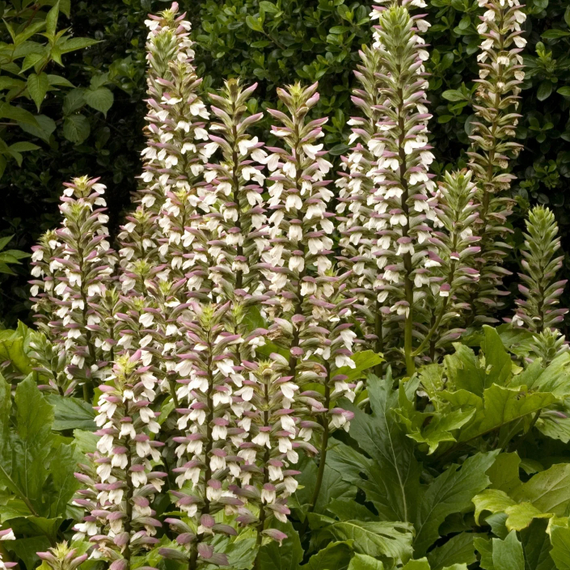
- Tall spires of lilac-tinged white flowers rise above the foliage in spring, providing dramatic vertical interest and excellent cut flower material
- Very tolerant of dry shade conditions once established, making it one of the best large-scale foliage plants for challenging low-light garden areas
- Fast growing to 4 feet tall and wide across USDA Zones 6 through 11, with deer and rabbit resistance for low-maintenance landscapes
Oak Leaf Acanthus (Acanthus mollis 'Oak Leaf') is a bold, eye-catching herbaceous perennial prized for its large, lustrous, deeply lobed leaves that provide dramatic architectural foliage interest in partially shaded borders and background plantings. Growing rapidly to 4 feet tall and wide or wider, this impressive plant is equally valued for its tall spires of lilac-tinged white flowers that rise above the foliage canopy in spring, creating a striking vertical display that doubles as exceptional cut flower material. Remarkably tolerant of dry shade conditions once established, Oak Leaf Acanthus is one of the most effective large-scale foliage plants for challenging garden areas where both light and moisture are limited. Deer and rabbit resistant and adaptable across USDA Zones 6 through 11, it transforms difficult, underused garden spaces into lush, visually compelling compositions with minimal ongoing care.
Plant Details
| Attribute | Details |
|---|---|
| Botanical Name | Acanthus mollis 'Oak Leaf' |
| Plant Type | Herbaceous Perennial |
| Flower Color | Lilac-tinged white |
| Foliage Color | Glossy green |
| Bloom Time | Spring |
| Growth Rate | Fast |
| Growth Habit | Spreading (via creeping roots) |
| Mature Size | 4 ft. tall and wide, or wider |
| USDA Zones | 6 - 11 |
| Light | Filtered sun, Partial shade |
| Water | When top 2 in. of soil is dry |
| Special Features | Easy Care, Fast Growing, Dry Shade Tolerant |
| Flower Attributes | Flowers for Cutting, Showy Flowers |
| Landscape Use | Border, Background, Structural Accent |
| Deer Resistant | Yes |
| Rabbit Resistant | Yes |
Size and Growth Habit
Oak Leaf Acanthus is a substantial, fast-growing perennial that quickly reaches 4 feet in both height and spread, with the potential to grow wider over time through its spreading root system. The large, deeply lobed leaves can be over a foot long, creating a dense, lush canopy of bold foliage that commands attention in any garden setting. In spring, flower spires rise well above the foliage mound, adding another foot or more of dramatic vertical interest. This plant spreads by creeping underground roots and can colonize an area over time; a root barrier may be needed in situations where containment is desired.
Light Requirements
Oak Leaf Acanthus thrives in filtered sun to partial shade, making it ideal for locations beneath high tree canopies, on the north side of buildings, or in dappled woodland garden settings. Protect it from harsh afternoon sun, which can scorch the large, thin leaves and diminish the foliage quality that is this plant's greatest ornamental asset. In cooler climates within its range, it tolerates more direct morning sun, but afternoon shade should always be provided. Its exceptional tolerance for dry shade once established makes it one of the most valuable perennials for challenging, low-light garden positions where few other large-scale foliage plants will thrive.
Watering
Water Oak Leaf Acanthus deeply and regularly during the first growing season to establish an extensive root system. Once established, this perennial demonstrates remarkable drought tolerance, particularly in shaded conditions where soil moisture is naturally retained longer. It performs best in evenly moist, well-drained soil but will endure periods of dryness that would cause many other shade perennials to wilt or decline. Avoid overwatering or planting in areas where water pools, as persistently soggy conditions can promote root rot. Its ability to thrive in dry shade makes it invaluable for plantings under mature trees where competing roots draw moisture away from other plants.
Soil Requirements
Oak Leaf Acanthus is easily grown in average, evenly moist, well-drained soil. It adapts to a range of soil types and does not require rich, heavily amended ground to perform well. In ideal conditions, amending with compost at planting time will support the fastest establishment and the most vigorous foliage growth. Once established, it tolerates leaner soil conditions and periodic dryness. Avoid heavy, waterlogged soils that remain saturated for extended periods, which can promote root diseases in this otherwise extremely tough and adaptable perennial.
Care and Maintenance
- Spring cleanup: Remove old foliage as new growth emerges in early spring to maintain a tidy, fresh appearance.
- Deadheading: Clip flower stalks after blooming to maintain a clean look and prevent self-seeding if spreading is not desired.
- Containment: This plant spreads by creeping roots; install a root barrier to contain its spread in formal garden settings.
- Sun protection: Protect from harsh afternoon sun, which can scorch the large, decorative leaves and reduce foliage quality.
- Fertilizing: Apply a light, balanced fertilizer in spring; excess fertilization is unnecessary and may promote overly aggressive spreading.
- Division: Divide clumps in fall or early spring to control spread or propagate new plants for other areas of the garden.
Landscape Uses
Oak Leaf Acanthus is an unparalleled structural foliage plant for partially shaded borders and background plantings. Plant it alongside paths where its dramatic, tropical-looking leaves can be admired up close, or use it as a lush backdrop behind brightly colored perennials and low-flowering shrubs. For relief from the many small, busy green leaves typical of shaded gardens, this Acanthus provides bold, oversized foliage that immediately elevates the visual impact of any planting scheme. It is equally effective as a groundcover-scale mass planting under large shade trees, where its dry shade tolerance allows it to thrive in conditions that defeat most other ornamental options.
Companion Plants
| Plant | Why It Works |
|---|---|
| Hosta (Hosta) | Complementary shade-loving foliage plant with different leaf shapes and colors that create layered textural interest |
| Japanese Forest Grass (Hakonechloa) | Graceful, cascading golden foliage provides bright color and soft movement at the acanthus base |
| Coral Bells (Heuchera) | Colorful, compact foliage in shades of purple, bronze, and lime adds low color contrast beneath the large acanthus leaves |
| Ferns (various) | Delicate, finely cut fronds provide beautiful textural contrast to the bold, glossy acanthus foliage |
| Hydrangea (Hydrangea) | Large, showy flower clusters in summer complement the spring-blooming acanthus for extended seasonal interest |
Cut Flower Use
The tall, dramatic flower spires of Oak Leaf Acanthus make outstanding cut flowers that add unique vertical structure and texture to fresh arrangements. Harvest flower stalks when the lower flowers on the spike are just beginning to open for the longest vase life. Cut stems in the early morning and immediately place in cool water. The flowers hold well in arrangements for 1 to 2 weeks. The large, architectural foliage can also be used as dramatic greenery in oversized floral displays and event arrangements. The dried seed pods that follow flowering are equally attractive in dried arrangements and seasonal wreaths.
Spreading Habit and Containment
Oak Leaf Acanthus spreads through creeping underground roots (rhizomes) and can gradually colonize an area if not contained. In informal garden settings, this spreading habit is an advantage, as the plant naturally fills in large areas with lush, low-maintenance foliage over time. In formal borders or smaller gardens where containment is important, install a physical root barrier (such as a deep plastic or metal edging buried at least 12 inches deep) around the planting area to prevent unwanted spread. Regular monitoring and removal of outlying shoots in early spring also helps keep the plant within its designated bounds.
USDA Hardiness Zones
Oak Leaf Acanthus is rated for USDA Hardiness Zones 6 through 11, providing adaptability across a wide range of climates from moderately cold northern gardens through warm, mild southern and western regions. In Zone 6, it may benefit from a protective winter mulch over the crown during the coldest months to ensure reliable spring regrowth. In Zones 7 through 11, it requires no winter protection and returns vigorously each spring as soil temperatures warm. Its broad adaptability across both cool, shaded northern gardens and warm, dry Mediterranean-type climates reflects the natural range of the Acanthus genus, which is native to the Mediterranean basin.
History and Background
Acanthus mollis, commonly known as Bear's Breeches, has been one of the most culturally significant ornamental plants in Western history. The distinctive deeply lobed leaf form of Acanthus served as the primary design inspiration for the capitals of Corinthian columns in ancient Greek and Roman architecture, making it one of the oldest ornamental motifs in the Western decorative arts tradition. The plant has been cultivated in Mediterranean gardens for thousands of years and remains a foundation plant in Italian, Spanish, and French garden designs to this day. The 'Oak Leaf' selection features even more deeply lobed foliage than the standard species, enhancing the architectural quality that has made this genus famous for millennia.
- Large, lustrous, deeply lobed oak leaf-shaped foliage creates an eye-catching structural element with bold, tropical presence in the garden
- Tall spires of lilac-tinged white flowers rise above the foliage in spring, providing dramatic vertical interest and excellent cut flower material
- Very tolerant of dry shade conditions once established, making it one of the best large-scale foliage plants for challenging low-light garden areas
- Fast growing to 4 feet tall and wide across USDA Zones 6 through 11, with deer and rabbit resistance for low-maintenance landscapes
Oak Leaf Acanthus (Acanthus mollis 'Oak Leaf') is a bold, eye-catching herbaceous perennial prized for its large, lustrous, deeply lobed leaves that provide dramatic architectural foliage interest in partially shaded borders and background plantings. Growing rapidly to 4 feet tall and wide or wider, this impressive plant is equally valued for its tall spires of lilac-tinged white flowers that rise above the foliage canopy in spring, creating a striking vertical display that doubles as exceptional cut flower material. Remarkably tolerant of dry shade conditions once established, Oak Leaf Acanthus is one of the most effective large-scale foliage plants for challenging garden areas where both light and moisture are limited. Deer and rabbit resistant and adaptable across USDA Zones 6 through 11, it transforms difficult, underused garden spaces into lush, visually compelling compositions with minimal ongoing care.
Plant Details
| Attribute | Details |
|---|---|
| Botanical Name | Acanthus mollis 'Oak Leaf' |
| Plant Type | Herbaceous Perennial |
| Flower Color | Lilac-tinged white |
| Foliage Color | Glossy green |
| Bloom Time | Spring |
| Growth Rate | Fast |
| Growth Habit | Spreading (via creeping roots) |
| Mature Size | 4 ft. tall and wide, or wider |
| USDA Zones | 6 - 11 |
| Light | Filtered sun, Partial shade |
| Water | When top 2 in. of soil is dry |
| Special Features | Easy Care, Fast Growing, Dry Shade Tolerant |
| Flower Attributes | Flowers for Cutting, Showy Flowers |
| Landscape Use | Border, Background, Structural Accent |
| Deer Resistant | Yes |
| Rabbit Resistant | Yes |
Size and Growth Habit
Oak Leaf Acanthus is a substantial, fast-growing perennial that quickly reaches 4 feet in both height and spread, with the potential to grow wider over time through its spreading root system. The large, deeply lobed leaves can be over a foot long, creating a dense, lush canopy of bold foliage that commands attention in any garden setting. In spring, flower spires rise well above the foliage mound, adding another foot or more of dramatic vertical interest. This plant spreads by creeping underground roots and can colonize an area over time; a root barrier may be needed in situations where containment is desired.
Light Requirements
Oak Leaf Acanthus thrives in filtered sun to partial shade, making it ideal for locations beneath high tree canopies, on the north side of buildings, or in dappled woodland garden settings. Protect it from harsh afternoon sun, which can scorch the large, thin leaves and diminish the foliage quality that is this plant's greatest ornamental asset. In cooler climates within its range, it tolerates more direct morning sun, but afternoon shade should always be provided. Its exceptional tolerance for dry shade once established makes it one of the most valuable perennials for challenging, low-light garden positions where few other large-scale foliage plants will thrive.
Watering
Water Oak Leaf Acanthus deeply and regularly during the first growing season to establish an extensive root system. Once established, this perennial demonstrates remarkable drought tolerance, particularly in shaded conditions where soil moisture is naturally retained longer. It performs best in evenly moist, well-drained soil but will endure periods of dryness that would cause many other shade perennials to wilt or decline. Avoid overwatering or planting in areas where water pools, as persistently soggy conditions can promote root rot. Its ability to thrive in dry shade makes it invaluable for plantings under mature trees where competing roots draw moisture away from other plants.
Soil Requirements
Oak Leaf Acanthus is easily grown in average, evenly moist, well-drained soil. It adapts to a range of soil types and does not require rich, heavily amended ground to perform well. In ideal conditions, amending with compost at planting time will support the fastest establishment and the most vigorous foliage growth. Once established, it tolerates leaner soil conditions and periodic dryness. Avoid heavy, waterlogged soils that remain saturated for extended periods, which can promote root diseases in this otherwise extremely tough and adaptable perennial.
Care and Maintenance
- Spring cleanup: Remove old foliage as new growth emerges in early spring to maintain a tidy, fresh appearance.
- Deadheading: Clip flower stalks after blooming to maintain a clean look and prevent self-seeding if spreading is not desired.
- Containment: This plant spreads by creeping roots; install a root barrier to contain its spread in formal garden settings.
- Sun protection: Protect from harsh afternoon sun, which can scorch the large, decorative leaves and reduce foliage quality.
- Fertilizing: Apply a light, balanced fertilizer in spring; excess fertilization is unnecessary and may promote overly aggressive spreading.
- Division: Divide clumps in fall or early spring to control spread or propagate new plants for other areas of the garden.
Landscape Uses
Oak Leaf Acanthus is an unparalleled structural foliage plant for partially shaded borders and background plantings. Plant it alongside paths where its dramatic, tropical-looking leaves can be admired up close, or use it as a lush backdrop behind brightly colored perennials and low-flowering shrubs. For relief from the many small, busy green leaves typical of shaded gardens, this Acanthus provides bold, oversized foliage that immediately elevates the visual impact of any planting scheme. It is equally effective as a groundcover-scale mass planting under large shade trees, where its dry shade tolerance allows it to thrive in conditions that defeat most other ornamental options.
Companion Plants
| Plant | Why It Works |
|---|---|
| Hosta (Hosta) | Complementary shade-loving foliage plant with different leaf shapes and colors that create layered textural interest |
| Japanese Forest Grass (Hakonechloa) | Graceful, cascading golden foliage provides bright color and soft movement at the acanthus base |
| Coral Bells (Heuchera) | Colorful, compact foliage in shades of purple, bronze, and lime adds low color contrast beneath the large acanthus leaves |
| Ferns (various) | Delicate, finely cut fronds provide beautiful textural contrast to the bold, glossy acanthus foliage |
| Hydrangea (Hydrangea) | Large, showy flower clusters in summer complement the spring-blooming acanthus for extended seasonal interest |
Cut Flower Use
The tall, dramatic flower spires of Oak Leaf Acanthus make outstanding cut flowers that add unique vertical structure and texture to fresh arrangements. Harvest flower stalks when the lower flowers on the spike are just beginning to open for the longest vase life. Cut stems in the early morning and immediately place in cool water. The flowers hold well in arrangements for 1 to 2 weeks. The large, architectural foliage can also be used as dramatic greenery in oversized floral displays and event arrangements. The dried seed pods that follow flowering are equally attractive in dried arrangements and seasonal wreaths.
Spreading Habit and Containment
Oak Leaf Acanthus spreads through creeping underground roots (rhizomes) and can gradually colonize an area if not contained. In informal garden settings, this spreading habit is an advantage, as the plant naturally fills in large areas with lush, low-maintenance foliage over time. In formal borders or smaller gardens where containment is important, install a physical root barrier (such as a deep plastic or metal edging buried at least 12 inches deep) around the planting area to prevent unwanted spread. Regular monitoring and removal of outlying shoots in early spring also helps keep the plant within its designated bounds.
USDA Hardiness Zones
Oak Leaf Acanthus is rated for USDA Hardiness Zones 6 through 11, providing adaptability across a wide range of climates from moderately cold northern gardens through warm, mild southern and western regions. In Zone 6, it may benefit from a protective winter mulch over the crown during the coldest months to ensure reliable spring regrowth. In Zones 7 through 11, it requires no winter protection and returns vigorously each spring as soil temperatures warm. Its broad adaptability across both cool, shaded northern gardens and warm, dry Mediterranean-type climates reflects the natural range of the Acanthus genus, which is native to the Mediterranean basin.
History and Background
Acanthus mollis, commonly known as Bear's Breeches, has been one of the most culturally significant ornamental plants in Western history. The distinctive deeply lobed leaf form of Acanthus served as the primary design inspiration for the capitals of Corinthian columns in ancient Greek and Roman architecture, making it one of the oldest ornamental motifs in the Western decorative arts tradition. The plant has been cultivated in Mediterranean gardens for thousands of years and remains a foundation plant in Italian, Spanish, and French garden designs to this day. The 'Oak Leaf' selection features even more deeply lobed foliage than the standard species, enhancing the architectural quality that has made this genus famous for millennia.
Related Products