

Zoom the image with the mouse
Morning Cloud Chitalpa - 5 Gallon
SKU:
105835
$59.99
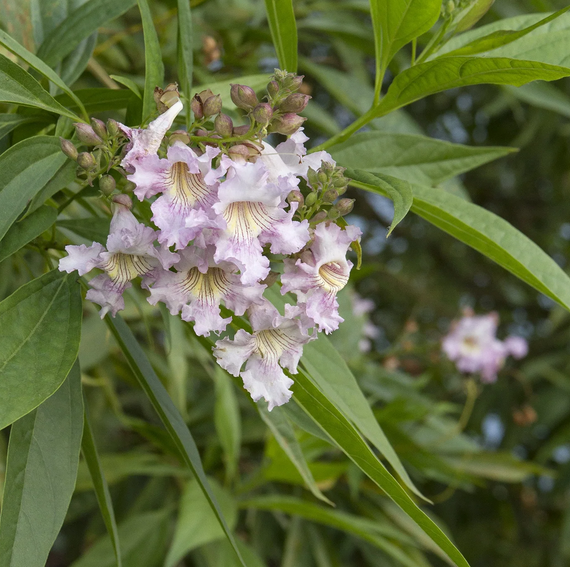
- Fast-growing accent tree with abundant white, trumpet-shaped blooms streaked with purple.
- Waterwise once established; thrives in full sun and well-drained soils.
- Graceful, multi-stemmed form with narrow, bright green leaves for airy, filtered shade.
- Attracts hummingbirds and pollinators; ideal for Southwestern and xeriscape designs.
Morning Cloud Chitalpa (× Chitalpa tashkentensis ‘Morning Cloud’) delivers a long season of showy, orchid-like flowers from late spring into summer, floating above slender, willow-like foliage on a naturally multi-stemmed, slightly cascading framework. Bred from desert-adapted parents for heat and drought resilience, this easy-care, waterwise ornamental thrives in full sun and well-drained soils, maturing to a handsome, landscape-scale specimen that adds light shade, movement, and pollinator activity with minimal upkeep.
Plant Description
Small, deciduous ornamental that tends to be multi-stemmed, with ascending branches that gently cascade. Narrow, bright green leaves create an airy canopy suited to beds, borders, and patio-adjacent plantings.
Flowers
Large clusters of trumpet-shaped, pale white blooms with purple-streaked throats; floriferous display reads as soft “clouds” over the canopy and is especially striking under night lighting.
Bloom Time
Typically from late spring into summer, providing an extended floral season for warm, dry gardens.
Sun Requirements
Full sun for best flowering, form, and vigor; tolerates heat and bright exposures common to Southwestern landscapes.
Watering Needs
Water deeply and regularly during the first growing season to establish an extensive root system; once established, water occasionally (more during prolonged heat) and avoid chronically wet conditions.
Soil Requirements
Adaptable to a wide range of well-drained soils. Apply a general-purpose fertilizer before spring growth if desired.
Growth & Size
Fast-growing; typically reaches about 25–30 ft. tall and wide at maturity, with a balanced, rounded outline that fits residential streetscapes and front-yard specimens.
Hardiness
USDA Zones 6–8; suited to low-desert and Southwestern climates, with best performance in hot, sunny sites.
Special Features
Waterwise once established; showy, long-season bloom; attracts hummingbirds and beneficial pollinators; excellent minimal-care specimen for dry sites.
Landscape Uses
Single specimen for high-impact bloom; light, view-friendly screening along property lines; accent in xeriscapes with salvias, yuccas, and stonecrop; effective near patios where flowers can be appreciated up close.
Care Instructions
Plant in full sun with well-drained soil. Deep-water to establish, then reduce frequency. Feed in early spring. Prune in late winter to maintain canopy clearance and structure; avoid heavy summer pruning.
Origin & Parentage
Intergeneric hybrid combining Catalpa bignonioides and desert willow (Chilopsis linearis), selected for larger leaves, heat tolerance, and drought resilience.
- Fast-growing accent tree with abundant white, trumpet-shaped blooms streaked with purple.
- Waterwise once established; thrives in full sun and well-drained soils.
- Graceful, multi-stemmed form with narrow, bright green leaves for airy, filtered shade.
- Attracts hummingbirds and pollinators; ideal for Southwestern and xeriscape designs.
Morning Cloud Chitalpa (× Chitalpa tashkentensis ‘Morning Cloud’) delivers a long season of showy, orchid-like flowers from late spring into summer, floating above slender, willow-like foliage on a naturally multi-stemmed, slightly cascading framework. Bred from desert-adapted parents for heat and drought resilience, this easy-care, waterwise ornamental thrives in full sun and well-drained soils, maturing to a handsome, landscape-scale specimen that adds light shade, movement, and pollinator activity with minimal upkeep.
Plant Description
Small, deciduous ornamental that tends to be multi-stemmed, with ascending branches that gently cascade. Narrow, bright green leaves create an airy canopy suited to beds, borders, and patio-adjacent plantings.
Flowers
Large clusters of trumpet-shaped, pale white blooms with purple-streaked throats; floriferous display reads as soft “clouds” over the canopy and is especially striking under night lighting.
Bloom Time
Typically from late spring into summer, providing an extended floral season for warm, dry gardens.
Sun Requirements
Full sun for best flowering, form, and vigor; tolerates heat and bright exposures common to Southwestern landscapes.
Watering Needs
Water deeply and regularly during the first growing season to establish an extensive root system; once established, water occasionally (more during prolonged heat) and avoid chronically wet conditions.
Soil Requirements
Adaptable to a wide range of well-drained soils. Apply a general-purpose fertilizer before spring growth if desired.
Growth & Size
Fast-growing; typically reaches about 25–30 ft. tall and wide at maturity, with a balanced, rounded outline that fits residential streetscapes and front-yard specimens.
Hardiness
USDA Zones 6–8; suited to low-desert and Southwestern climates, with best performance in hot, sunny sites.
Special Features
Waterwise once established; showy, long-season bloom; attracts hummingbirds and beneficial pollinators; excellent minimal-care specimen for dry sites.
Landscape Uses
Single specimen for high-impact bloom; light, view-friendly screening along property lines; accent in xeriscapes with salvias, yuccas, and stonecrop; effective near patios where flowers can be appreciated up close.
Care Instructions
Plant in full sun with well-drained soil. Deep-water to establish, then reduce frequency. Feed in early spring. Prune in late winter to maintain canopy clearance and structure; avoid heavy summer pruning.
Origin & Parentage
Intergeneric hybrid combining Catalpa bignonioides and desert willow (Chilopsis linearis), selected for larger leaves, heat tolerance, and drought resilience.
Related Products