Zoom the image with the mouse
Moonlight Parfait Winter Daphne - 2 Gallon
SKU:
1880080
UPC:
014949425831
$49.99
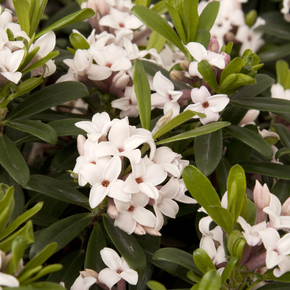
- Intoxicatingly fragrant rose-pink buds burst open to creamy white tubular flower clusters in late winter, filling the garden with a sweet, citrus-infused perfume when little else is blooming.
- Boldly variegated, glossy dark green leaves edged with a wide, double band of creamy yellow provide striking year-round foliage interest far beyond the bloom season.
- Compact, naturally mounded evergreen habit grows to approximately 3-4 feet tall and wide, making it ideal for foundation plantings, sheltered borders, and container arrangements.
- A patented, improved selection of the beloved Winter Daphne species, offering exceptional foliage contrast and reliable fragrant blooms that bridge the gap from late winter into early spring.
Daphne odora 'MonStrk' Moonlight Parfait is a showstopping evergreen shrub that delivers one of the most coveted fragrances in the garden world precisely when you need it most — late winter. This exceptional patented selection sets itself apart from the classic species with its bold, wide creamy-yellow leaf margins that frame each glossy, deep green leaf beautifully throughout every season, making it a standout in the landscape even when not in bloom. As winter winds down, rose-pink buds emerge along the branch tips and open to tight, elegant clusters of waxy, creamy-white tubular flowers touched with soft pink, releasing a heady, sweet-citrusy perfume that drifts through the entire garden. Native to China and Japan, this compact, densely mounded shrub grows slowly to a tidy 3-4 feet in height and spread, fitting gracefully into smaller garden spaces, mixed borders, foundation plantings, and large containers. Moonlight Parfait Winter Daphne thrives in partial shade with excellent soil drainage, rewarding patient gardeners who choose its permanent home wisely — established plants prefer not to be disturbed or heavily pruned, developing into long-lived, refined specimens that pollinators including bees, butterflies, and moths seek out eagerly during the late-winter bloom period. Hardy in USDA Zones 7-9, it is supremely well-suited to the mild winters and Mediterranean-influenced climates of Southern Oregon and Northern California.
Plant Description
Moonlight Parfait Winter Daphne (Daphne odora 'MonStrk') is a broadleaf evergreen shrub prized for two exceptional qualities: its extraordinarily fragrant late-winter flowers and its year-round variegated foliage. Each glossy, leathery, dark green leaf is framed by a distinctively wide, double-edged creamy yellow margin, giving the plant a luminous quality even out of bloom. In late winter, dense terminal clusters of small, waxy, tubular flowers emerge from deep rose-pink buds, opening to reveal creamy white blooms with soft pink highlights. The fragrance is famously powerful — a balanced blend of sweet jasmine and zesty lemon that can perfume a large area of the garden from just one plant. The shrub maintains a naturally neat, mounded, densely branched form without much intervention, and its fine-textured foliage sets it apart from coarser-leafed landscape shrubs. Small, fleshy red drupes occasionally follow the flowers in summer, though fruit production on cultivated plants is infrequent. This is a patented cultivar (PP #28,725) selected for its particularly bold and attractive leaf variegation.
Mature Size
| Characteristic | Measurement |
|---|---|
| Mature Height | 3 to 4 feet |
| Mature Spread | 3 to 4 feet |
| Growth Rate | Slow |
| Growth Habit | Mounded, densely branched, rounded |
| Estimated Lifespan | Approximately 20 years under ideal conditions |
Because of its slow, compact growth habit, Moonlight Parfait fills in to ground level naturally and rarely requires shaping. Its restrained size makes it an excellent candidate for smaller gardens, foundation beds, and large containers where a tidy, year-round presence is desired.
Hardiness Zones
Moonlight Parfait Winter Daphne is reliably hardy in USDA Zones 7-9, tolerating winter temperatures down to approximately 0-10°F. It is exceptionally well-suited to the mild, Mediterranean-influenced climates of Southern Oregon and Northern California, where cool, moist winters and warm, dry summers closely mirror its native habitat conditions in China and Japan. In cooler microclimates or areas subject to harsh frost, siting the plant on a south- or west-facing wall, under the eaves of a structure, or beneath the canopy of larger trees provides meaningful cold protection. Applying a 2-3 inch layer of organic mulch over the root zone each fall helps insulate the roots in exposed locations. Unlike many marginally hardy plants, established specimens in favorable locations prove long-lived and increasingly resilient over time.
Sunlight Requirements
Moonlight Parfait Winter Daphne performs best in partial shade, ideally receiving morning sun and protection from harsh afternoon sun. Dappled light beneath the canopy of open-canopied trees is also an excellent option. In climates with hot, dry summers — such as inland areas of Southern Oregon and Northern California — afternoon shade is particularly important to prevent leaf scorch on the creamy-edged variegated foliage, which is more susceptible to sun damage than all-green forms. While the plant can tolerate more sun in cooler coastal conditions, full, unrelenting summer sun should always be avoided. A sheltered location that mimics a woodland edge provides the most ideal light balance for strong growth and reliable blooming.
Soil and pH Preferences
Well-draining soil is the single most critical factor for success with Moonlight Parfait Winter Daphne. Root rot caused by waterlogged or poorly draining soil is the most common cause of decline and sudden death in daphnes. Choose or amend planting sites to ensure sharp drainage at all times. The ideal soil is moist, rich, sandy-humusy, or loamy with high organic matter content, though this cultivar is noted to also grow well in clay soils provided drainage is adequate. In heavy clay situations, planting in a slightly raised bed amended with coarse bark, compost, or peat moss significantly improves drainage and plant longevity. The preferred soil pH is slightly acidic to neutral, in the range of 6.0 to 7.0. Avoid planting in low spots, near downspouts, or in any area where water pools after rain.
Watering Guide
Moonlight Parfait Winter Daphne prefers consistently moist but never waterlogged soil — a "Goldilocks" balance that is neither too wet nor bone dry. Water deeply and slowly at the base of the plant, avoiding overhead watering on the foliage, which can encourage fungal disease. Allow the top inch of soil to dry slightly between watering sessions, then water thoroughly. During the hot, dry summers typical of Southern Oregon and Northern California, infrequent but deep watering is preferable to frequent shallow irrigation. Once established, the plant develops moderate drought tolerance, but extended dry periods can stress the plant and may reduce flowering potential. Standing water around the roots, even briefly, should always be avoided. Apply a 2-3 inch layer of organic mulch around the root zone — kept away from the stem — to help retain soil moisture and moderate soil temperature.
Fertilizing
Fertilize Moonlight Parfait Winter Daphne lightly and with care, as daphnes are sensitive to excessive nutrients. Apply a balanced, slow-release fertilizer formulated for shrubs or flowering plants once in early spring, just as new growth begins. A second light application can be made after the bloom period concludes in late winter or early spring. Avoid high-nitrogen fertilizers, which can promote lush leafy growth at the expense of flowers and may push soft growth vulnerable to frost. Do not fertilize in summer or fall, as this can stimulate tender new growth heading into cooler temperatures. Water thoroughly after any fertilizer application to help deliver nutrients to the root zone and prevent potential root burn. Over-fertilization is more harmful to daphnes than under-fertilization — when in doubt, apply less rather than more.
Pruning and Maintenance
Moonlight Parfait Winter Daphne requires very minimal pruning and, in fact, responds poorly to hard or aggressive cutting. The most important rule: never make deep cuts into the main stems or cut back into old, bare wood, as the plant often fails to regenerate from such wounds. Maintenance pruning should be limited to the removal of any dead, damaged, or diseased branches as they appear, cutting back only to a healthy node. If light shaping is desired to maintain a tidy appearance, do so immediately after the bloom period ends in early spring to avoid removing next season's flower buds. The naturally mounded, self-shaping growth habit of this cultivar means most plants will require little to no pruning at all. Wear gloves when handling, as the sap can cause skin irritation in sensitive individuals. One of the most important maintenance principles: choose the permanent planting location carefully, as established daphnes strongly dislike being transplanted and may decline or die if moved.
Planting Instructions
- Select a permanent location with partial shade, morning sun, and excellent soil drainage — daphnes resent being transplanted once established, so choosing the right spot from the start is essential.
- Dig a planting hole approximately twice as wide as the root ball and equal in depth. Avoid planting too deep; the crown should sit at or very slightly above the surrounding soil level.
- If soil drainage is questionable, amend the backfill with coarse bark, compost, or peat moss, or prepare a slightly raised planting bed to ensure water moves freely away from the roots.
- Gently remove the plant from its container and loosen the outer roots slightly. Place the root ball in the hole, confirm the crown height, and backfill with amended soil, firming gently around the base.
- Water thoroughly at planting to settle the soil and eliminate air pockets around the roots.
- Apply a 2-3 inch layer of organic mulch over the root zone, keeping mulch several inches away from the base of the stems to prevent crown rot.
- Water regularly during the first growing season to help establish a deep, healthy root system. Once established, the plant is more self-sufficient but still appreciates supplemental irrigation during prolonged dry spells.
- Avoid planting in windy, exposed locations. A sheltered spot near a wall, fence, or beneath the filtered canopy of taller trees is ideal.
Seasonal Interest
| Season | Garden Interest |
|---|---|
| Late Winter (Jan-Mar) | Deep rose-pink buds open to intensely fragrant creamy white flower clusters with pink highlights; peak bloom and fragrance season |
| Spring | Fresh new growth emerges; variegated foliage brightens with the season; occasional late blooms possible |
| Summer | Bold, glossy, creamy-yellow-edged foliage remains highly ornamental; occasional small red drupes may appear |
| Fall | Evergreen foliage holds color well; rich contrast between deep green centers and creamy margins continues |
| Winter | Evergreen structure and striking variegated foliage provide visual interest; flower buds begin to develop in preparation for late-winter bloom |
Landscape Uses
Moonlight Parfait Winter Daphne is a versatile and highly ornamental shrub suited to a wide range of landscape roles. Its compact, mounded form and year-round variegated foliage make it an excellent specimen or focal point in small gardens, courtyards, and entryways. Consider these uses:
- Near entryways, patios, and decks: Plant close to outdoor living areas to fully enjoy the extraordinary late-winter fragrance.
- Foundation planting: Its tidy, self-contained form and evergreen foliage make it ideal along building foundations, especially on sheltered north or east-facing walls that protect it from harsh afternoon sun.
- Mixed shrub border: Use as a fine-textured, variegated anchor among other broadleaf evergreens, camellias, rhododendrons, and ferns.
- Woodland garden: Thrives at the sheltered edge of a woodland setting with dappled light, mimicking its native habitat.
- Container planting: Well-suited to large containers on covered patios or protected decks, where it can serve as a dramatic "thriller" centerpiece planting.
- Winter garden: An outstanding choice for gardens designed to provide beauty and interest during the colder months when most other plants are dormant.
Companion Plants
Moonlight Parfait pairs beautifully with plants that share its preference for partial shade and well-drained, humus-rich soil, while complementing or contrasting with its bold, creamy-edged foliage and late-winter bloom season. Consider these companion plant ideas:
- Camellias (Camellia japonica or C. sasanqua): Bloom in fall through early spring, extending the fragrant and colorful season alongside daphne in similar conditions.
- Hellebores (Helleborus spp.): Overlap in late-winter bloom time and share a preference for sheltered, partially shaded sites; their nodding blooms contrast beautifully with daphne's upright flower clusters.
- Japanese Pieris (Pieris japonica): Evergreen companion with elegant, cascading flower buds forming in winter and opening in early spring; similar cultural requirements.
- Rhododendrons and Azaleas: Share partial shade and acidic to neutral soil needs; provide succession of bloom interest from spring onward.
- Japanese Forest Grass (Hakonechloa macra): Graceful, arching foliage in golden or green provides a soft textural contrast at the base of the daphne.
- Ferns (Dryopteris or Polystichum spp.): Shade-tolerant foliage plants that complement the daphne's bold leaf variegation with fine, lacy texture.
- Snowdrops (Galanthus spp.) and Winter Aconite (Eranthis hyemalis): Small-scale bulbs that bloom simultaneously with daphne in late winter, creating a layered winter tapestry beneath the shrub.
Wildlife Value
Despite blooming in late winter when most other nectar sources are unavailable, Moonlight Parfait Winter Daphne provides meaningful early-season food resources for pollinators. The intensely fragrant flowers are highly attractive to bees, particularly honeybees and early-emerging native bee species, which are drawn to the nectar and pollen. Butterflies, moths, and certain flies are also attracted to the flowers' nectar during mild late-winter and early spring days. This makes Moonlight Parfait a genuinely valuable plant for supporting pollinators during the critical gap between winter dormancy and the spring bloom season when food sources are scarce. Deer tend to avoid Daphne odora, likely due to the plant's toxic compounds, making it a practical choice in landscapes where deer browsing is a concern. Note that while the plant supports pollinators well, all plant parts are toxic to humans, pets, and livestock and should be kept out of reach of children and animals.
Pests and Diseases
Moonlight Parfait Winter Daphne has no serious, chronic pest or disease problems under optimal growing conditions. However, plants stressed by improper siting, poor drainage, or winter injury become more vulnerable to the following issues:
- Root Rot (Phytophthora and Pythium spp.): The most common and serious threat. Caused entirely by waterlogged or poorly draining soil. Prevention through excellent soil drainage is the only reliable solution.
- Crown Rot: Can occur when mulch or soil is piled against the base of the stems. Always keep mulch pulled back several inches from the crown.
- Aphids: Occasionally appear on new growth in spring. Small infestations can be controlled with a strong blast of water or insecticidal soap; monitor regularly.
- Scale Insects and Mealybugs: Infrequent but possible, particularly on stressed plants. Treat with horticultural oil applied in late winter before growth begins.
- Leaf Spot (Botrytis and fungal leaf spots): Can develop in humid, poorly ventilated conditions. Improve air circulation around the plant and avoid overhead irrigation.
- Canker and Twig Blight: May follow winter injury or mechanical wounds. Remove and dispose of affected branches promptly.
- Virus: Occasionally reported; there is no cure. Remove and discard affected plants to prevent spread.
- "Sudden Death" Syndrome: Daphnes are famously unpredictable and may decline rapidly for no apparent reason, even in plants that appeared healthy. This is a well-documented characteristic of the species and is not always preventable.
Container Growing
Moonlight Parfait Winter Daphne adapts well to large container culture, making it a spectacular choice for covered patios, protected entryways, and sheltered deck gardens. When growing in a container, keep the following guidelines in mind:
- Choose a container that is generously sized — at least 16-20 inches in diameter — with multiple drainage holes. Good drainage is even more critical in a container than in the ground.
- Use a high-quality, well-draining potting mix blended with perlite or coarse bark to ensure excellent aeration and drainage.
- Position the container in a spot that receives morning sun and afternoon shade, sheltered from drying winds and harsh summer heat.
- Container-grown daphnes dry out more quickly than in-ground plants and will require more frequent monitoring and watering, especially during warm weather — check soil moisture regularly.
- Fertilize lightly with a balanced slow-release fertilizer in early spring; avoid over-fertilizing in containers.
- In colder microclimates, the additional insulation of being against a building wall or moved to a sheltered, frost-protected location (such as an unheated garage or covered porch) during hard freezes will protect the root zone.
- Repot only when necessary, as daphnes are sensitive to root disturbance. Move up one container size at a time and handle roots with care.
Toxicity and Safety
All parts of Moonlight Parfait Winter Daphne — including the bark, leaves, flowers, stems, roots, and fruit — are considered highly toxic to humans and animals. The plant contains toxic diterpenoid compounds (suspected mezerein) that can cause serious harm if ingested. Ingestion of any plant part, particularly the attractive berries, can cause severe gastrointestinal distress and is potentially fatal to children and pets. The sap may also cause contact dermatitis (skin irritation or rash) in individuals with sensitive skin. Always wear gloves when pruning or handling the plant. Wash hands thoroughly after any contact. This plant should be sited thoughtfully in households with young children or pets that spend time in the garden. Despite these cautions, Moonlight Parfait remains a highly rewarding and widely grown garden shrub when appropriate care is taken regarding its toxic properties.
- Intoxicatingly fragrant rose-pink buds burst open to creamy white tubular flower clusters in late winter, filling the garden with a sweet, citrus-infused perfume when little else is blooming.
- Boldly variegated, glossy dark green leaves edged with a wide, double band of creamy yellow provide striking year-round foliage interest far beyond the bloom season.
- Compact, naturally mounded evergreen habit grows to approximately 3-4 feet tall and wide, making it ideal for foundation plantings, sheltered borders, and container arrangements.
- A patented, improved selection of the beloved Winter Daphne species, offering exceptional foliage contrast and reliable fragrant blooms that bridge the gap from late winter into early spring.
Daphne odora 'MonStrk' Moonlight Parfait is a showstopping evergreen shrub that delivers one of the most coveted fragrances in the garden world precisely when you need it most — late winter. This exceptional patented selection sets itself apart from the classic species with its bold, wide creamy-yellow leaf margins that frame each glossy, deep green leaf beautifully throughout every season, making it a standout in the landscape even when not in bloom. As winter winds down, rose-pink buds emerge along the branch tips and open to tight, elegant clusters of waxy, creamy-white tubular flowers touched with soft pink, releasing a heady, sweet-citrusy perfume that drifts through the entire garden. Native to China and Japan, this compact, densely mounded shrub grows slowly to a tidy 3-4 feet in height and spread, fitting gracefully into smaller garden spaces, mixed borders, foundation plantings, and large containers. Moonlight Parfait Winter Daphne thrives in partial shade with excellent soil drainage, rewarding patient gardeners who choose its permanent home wisely — established plants prefer not to be disturbed or heavily pruned, developing into long-lived, refined specimens that pollinators including bees, butterflies, and moths seek out eagerly during the late-winter bloom period. Hardy in USDA Zones 7-9, it is supremely well-suited to the mild winters and Mediterranean-influenced climates of Southern Oregon and Northern California.
Plant Description
Moonlight Parfait Winter Daphne (Daphne odora 'MonStrk') is a broadleaf evergreen shrub prized for two exceptional qualities: its extraordinarily fragrant late-winter flowers and its year-round variegated foliage. Each glossy, leathery, dark green leaf is framed by a distinctively wide, double-edged creamy yellow margin, giving the plant a luminous quality even out of bloom. In late winter, dense terminal clusters of small, waxy, tubular flowers emerge from deep rose-pink buds, opening to reveal creamy white blooms with soft pink highlights. The fragrance is famously powerful — a balanced blend of sweet jasmine and zesty lemon that can perfume a large area of the garden from just one plant. The shrub maintains a naturally neat, mounded, densely branched form without much intervention, and its fine-textured foliage sets it apart from coarser-leafed landscape shrubs. Small, fleshy red drupes occasionally follow the flowers in summer, though fruit production on cultivated plants is infrequent. This is a patented cultivar (PP #28,725) selected for its particularly bold and attractive leaf variegation.
Mature Size
| Characteristic | Measurement |
|---|---|
| Mature Height | 3 to 4 feet |
| Mature Spread | 3 to 4 feet |
| Growth Rate | Slow |
| Growth Habit | Mounded, densely branched, rounded |
| Estimated Lifespan | Approximately 20 years under ideal conditions |
Because of its slow, compact growth habit, Moonlight Parfait fills in to ground level naturally and rarely requires shaping. Its restrained size makes it an excellent candidate for smaller gardens, foundation beds, and large containers where a tidy, year-round presence is desired.
Hardiness Zones
Moonlight Parfait Winter Daphne is reliably hardy in USDA Zones 7-9, tolerating winter temperatures down to approximately 0-10°F. It is exceptionally well-suited to the mild, Mediterranean-influenced climates of Southern Oregon and Northern California, where cool, moist winters and warm, dry summers closely mirror its native habitat conditions in China and Japan. In cooler microclimates or areas subject to harsh frost, siting the plant on a south- or west-facing wall, under the eaves of a structure, or beneath the canopy of larger trees provides meaningful cold protection. Applying a 2-3 inch layer of organic mulch over the root zone each fall helps insulate the roots in exposed locations. Unlike many marginally hardy plants, established specimens in favorable locations prove long-lived and increasingly resilient over time.
Sunlight Requirements
Moonlight Parfait Winter Daphne performs best in partial shade, ideally receiving morning sun and protection from harsh afternoon sun. Dappled light beneath the canopy of open-canopied trees is also an excellent option. In climates with hot, dry summers — such as inland areas of Southern Oregon and Northern California — afternoon shade is particularly important to prevent leaf scorch on the creamy-edged variegated foliage, which is more susceptible to sun damage than all-green forms. While the plant can tolerate more sun in cooler coastal conditions, full, unrelenting summer sun should always be avoided. A sheltered location that mimics a woodland edge provides the most ideal light balance for strong growth and reliable blooming.
Soil and pH Preferences
Well-draining soil is the single most critical factor for success with Moonlight Parfait Winter Daphne. Root rot caused by waterlogged or poorly draining soil is the most common cause of decline and sudden death in daphnes. Choose or amend planting sites to ensure sharp drainage at all times. The ideal soil is moist, rich, sandy-humusy, or loamy with high organic matter content, though this cultivar is noted to also grow well in clay soils provided drainage is adequate. In heavy clay situations, planting in a slightly raised bed amended with coarse bark, compost, or peat moss significantly improves drainage and plant longevity. The preferred soil pH is slightly acidic to neutral, in the range of 6.0 to 7.0. Avoid planting in low spots, near downspouts, or in any area where water pools after rain.
Watering Guide
Moonlight Parfait Winter Daphne prefers consistently moist but never waterlogged soil — a "Goldilocks" balance that is neither too wet nor bone dry. Water deeply and slowly at the base of the plant, avoiding overhead watering on the foliage, which can encourage fungal disease. Allow the top inch of soil to dry slightly between watering sessions, then water thoroughly. During the hot, dry summers typical of Southern Oregon and Northern California, infrequent but deep watering is preferable to frequent shallow irrigation. Once established, the plant develops moderate drought tolerance, but extended dry periods can stress the plant and may reduce flowering potential. Standing water around the roots, even briefly, should always be avoided. Apply a 2-3 inch layer of organic mulch around the root zone — kept away from the stem — to help retain soil moisture and moderate soil temperature.
Fertilizing
Fertilize Moonlight Parfait Winter Daphne lightly and with care, as daphnes are sensitive to excessive nutrients. Apply a balanced, slow-release fertilizer formulated for shrubs or flowering plants once in early spring, just as new growth begins. A second light application can be made after the bloom period concludes in late winter or early spring. Avoid high-nitrogen fertilizers, which can promote lush leafy growth at the expense of flowers and may push soft growth vulnerable to frost. Do not fertilize in summer or fall, as this can stimulate tender new growth heading into cooler temperatures. Water thoroughly after any fertilizer application to help deliver nutrients to the root zone and prevent potential root burn. Over-fertilization is more harmful to daphnes than under-fertilization — when in doubt, apply less rather than more.
Pruning and Maintenance
Moonlight Parfait Winter Daphne requires very minimal pruning and, in fact, responds poorly to hard or aggressive cutting. The most important rule: never make deep cuts into the main stems or cut back into old, bare wood, as the plant often fails to regenerate from such wounds. Maintenance pruning should be limited to the removal of any dead, damaged, or diseased branches as they appear, cutting back only to a healthy node. If light shaping is desired to maintain a tidy appearance, do so immediately after the bloom period ends in early spring to avoid removing next season's flower buds. The naturally mounded, self-shaping growth habit of this cultivar means most plants will require little to no pruning at all. Wear gloves when handling, as the sap can cause skin irritation in sensitive individuals. One of the most important maintenance principles: choose the permanent planting location carefully, as established daphnes strongly dislike being transplanted and may decline or die if moved.
Planting Instructions
- Select a permanent location with partial shade, morning sun, and excellent soil drainage — daphnes resent being transplanted once established, so choosing the right spot from the start is essential.
- Dig a planting hole approximately twice as wide as the root ball and equal in depth. Avoid planting too deep; the crown should sit at or very slightly above the surrounding soil level.
- If soil drainage is questionable, amend the backfill with coarse bark, compost, or peat moss, or prepare a slightly raised planting bed to ensure water moves freely away from the roots.
- Gently remove the plant from its container and loosen the outer roots slightly. Place the root ball in the hole, confirm the crown height, and backfill with amended soil, firming gently around the base.
- Water thoroughly at planting to settle the soil and eliminate air pockets around the roots.
- Apply a 2-3 inch layer of organic mulch over the root zone, keeping mulch several inches away from the base of the stems to prevent crown rot.
- Water regularly during the first growing season to help establish a deep, healthy root system. Once established, the plant is more self-sufficient but still appreciates supplemental irrigation during prolonged dry spells.
- Avoid planting in windy, exposed locations. A sheltered spot near a wall, fence, or beneath the filtered canopy of taller trees is ideal.
Seasonal Interest
| Season | Garden Interest |
|---|---|
| Late Winter (Jan-Mar) | Deep rose-pink buds open to intensely fragrant creamy white flower clusters with pink highlights; peak bloom and fragrance season |
| Spring | Fresh new growth emerges; variegated foliage brightens with the season; occasional late blooms possible |
| Summer | Bold, glossy, creamy-yellow-edged foliage remains highly ornamental; occasional small red drupes may appear |
| Fall | Evergreen foliage holds color well; rich contrast between deep green centers and creamy margins continues |
| Winter | Evergreen structure and striking variegated foliage provide visual interest; flower buds begin to develop in preparation for late-winter bloom |
Landscape Uses
Moonlight Parfait Winter Daphne is a versatile and highly ornamental shrub suited to a wide range of landscape roles. Its compact, mounded form and year-round variegated foliage make it an excellent specimen or focal point in small gardens, courtyards, and entryways. Consider these uses:
- Near entryways, patios, and decks: Plant close to outdoor living areas to fully enjoy the extraordinary late-winter fragrance.
- Foundation planting: Its tidy, self-contained form and evergreen foliage make it ideal along building foundations, especially on sheltered north or east-facing walls that protect it from harsh afternoon sun.
- Mixed shrub border: Use as a fine-textured, variegated anchor among other broadleaf evergreens, camellias, rhododendrons, and ferns.
- Woodland garden: Thrives at the sheltered edge of a woodland setting with dappled light, mimicking its native habitat.
- Container planting: Well-suited to large containers on covered patios or protected decks, where it can serve as a dramatic "thriller" centerpiece planting.
- Winter garden: An outstanding choice for gardens designed to provide beauty and interest during the colder months when most other plants are dormant.
Companion Plants
Moonlight Parfait pairs beautifully with plants that share its preference for partial shade and well-drained, humus-rich soil, while complementing or contrasting with its bold, creamy-edged foliage and late-winter bloom season. Consider these companion plant ideas:
- Camellias (Camellia japonica or C. sasanqua): Bloom in fall through early spring, extending the fragrant and colorful season alongside daphne in similar conditions.
- Hellebores (Helleborus spp.): Overlap in late-winter bloom time and share a preference for sheltered, partially shaded sites; their nodding blooms contrast beautifully with daphne's upright flower clusters.
- Japanese Pieris (Pieris japonica): Evergreen companion with elegant, cascading flower buds forming in winter and opening in early spring; similar cultural requirements.
- Rhododendrons and Azaleas: Share partial shade and acidic to neutral soil needs; provide succession of bloom interest from spring onward.
- Japanese Forest Grass (Hakonechloa macra): Graceful, arching foliage in golden or green provides a soft textural contrast at the base of the daphne.
- Ferns (Dryopteris or Polystichum spp.): Shade-tolerant foliage plants that complement the daphne's bold leaf variegation with fine, lacy texture.
- Snowdrops (Galanthus spp.) and Winter Aconite (Eranthis hyemalis): Small-scale bulbs that bloom simultaneously with daphne in late winter, creating a layered winter tapestry beneath the shrub.
Wildlife Value
Despite blooming in late winter when most other nectar sources are unavailable, Moonlight Parfait Winter Daphne provides meaningful early-season food resources for pollinators. The intensely fragrant flowers are highly attractive to bees, particularly honeybees and early-emerging native bee species, which are drawn to the nectar and pollen. Butterflies, moths, and certain flies are also attracted to the flowers' nectar during mild late-winter and early spring days. This makes Moonlight Parfait a genuinely valuable plant for supporting pollinators during the critical gap between winter dormancy and the spring bloom season when food sources are scarce. Deer tend to avoid Daphne odora, likely due to the plant's toxic compounds, making it a practical choice in landscapes where deer browsing is a concern. Note that while the plant supports pollinators well, all plant parts are toxic to humans, pets, and livestock and should be kept out of reach of children and animals.
Pests and Diseases
Moonlight Parfait Winter Daphne has no serious, chronic pest or disease problems under optimal growing conditions. However, plants stressed by improper siting, poor drainage, or winter injury become more vulnerable to the following issues:
- Root Rot (Phytophthora and Pythium spp.): The most common and serious threat. Caused entirely by waterlogged or poorly draining soil. Prevention through excellent soil drainage is the only reliable solution.
- Crown Rot: Can occur when mulch or soil is piled against the base of the stems. Always keep mulch pulled back several inches from the crown.
- Aphids: Occasionally appear on new growth in spring. Small infestations can be controlled with a strong blast of water or insecticidal soap; monitor regularly.
- Scale Insects and Mealybugs: Infrequent but possible, particularly on stressed plants. Treat with horticultural oil applied in late winter before growth begins.
- Leaf Spot (Botrytis and fungal leaf spots): Can develop in humid, poorly ventilated conditions. Improve air circulation around the plant and avoid overhead irrigation.
- Canker and Twig Blight: May follow winter injury or mechanical wounds. Remove and dispose of affected branches promptly.
- Virus: Occasionally reported; there is no cure. Remove and discard affected plants to prevent spread.
- "Sudden Death" Syndrome: Daphnes are famously unpredictable and may decline rapidly for no apparent reason, even in plants that appeared healthy. This is a well-documented characteristic of the species and is not always preventable.
Container Growing
Moonlight Parfait Winter Daphne adapts well to large container culture, making it a spectacular choice for covered patios, protected entryways, and sheltered deck gardens. When growing in a container, keep the following guidelines in mind:
- Choose a container that is generously sized — at least 16-20 inches in diameter — with multiple drainage holes. Good drainage is even more critical in a container than in the ground.
- Use a high-quality, well-draining potting mix blended with perlite or coarse bark to ensure excellent aeration and drainage.
- Position the container in a spot that receives morning sun and afternoon shade, sheltered from drying winds and harsh summer heat.
- Container-grown daphnes dry out more quickly than in-ground plants and will require more frequent monitoring and watering, especially during warm weather — check soil moisture regularly.
- Fertilize lightly with a balanced slow-release fertilizer in early spring; avoid over-fertilizing in containers.
- In colder microclimates, the additional insulation of being against a building wall or moved to a sheltered, frost-protected location (such as an unheated garage or covered porch) during hard freezes will protect the root zone.
- Repot only when necessary, as daphnes are sensitive to root disturbance. Move up one container size at a time and handle roots with care.
Toxicity and Safety
All parts of Moonlight Parfait Winter Daphne — including the bark, leaves, flowers, stems, roots, and fruit — are considered highly toxic to humans and animals. The plant contains toxic diterpenoid compounds (suspected mezerein) that can cause serious harm if ingested. Ingestion of any plant part, particularly the attractive berries, can cause severe gastrointestinal distress and is potentially fatal to children and pets. The sap may also cause contact dermatitis (skin irritation or rash) in individuals with sensitive skin. Always wear gloves when pruning or handling the plant. Wash hands thoroughly after any contact. This plant should be sited thoughtfully in households with young children or pets that spend time in the garden. Despite these cautions, Moonlight Parfait remains a highly rewarding and widely grown garden shrub when appropriate care is taken regarding its toxic properties.
Related Products