
Zoom the image with the mouse
Major Wheeler Coral Honeysuckle - 1 Gallon
SKU:
2158905
UPC:
014949327241
$22.99
$18.39
(You save
$4.60
)
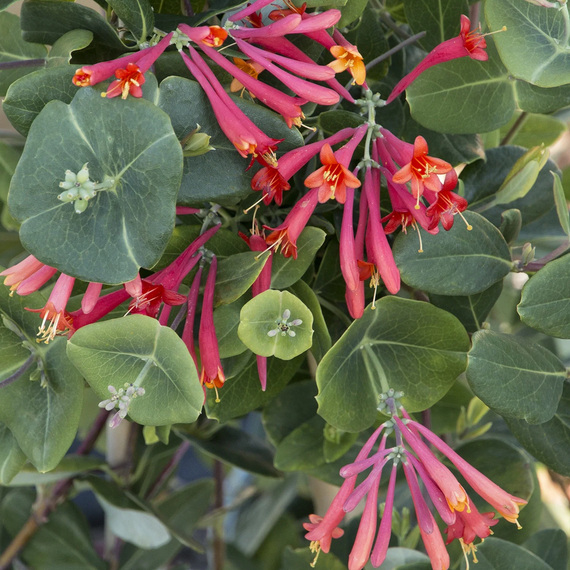
- Nonstop coral-red to gold tubular blooms from late spring into fall—hummingbird magnets all season.
- Vigorous native vine: twining stems reach 6–10 ft. with support; perfect for trellises, arbors, and fences.
- Thrives in full sun to partial sun; easy-care in average, well-drained soil and noted for mildew resistance.
- Wildlife-friendly: showy flowers for pollinators and berries for birds; great for naturalized gardens.
Major Wheeler Coral Honeysuckle (Lonicera sempervirens ‘Major Wheeler’) delivers waves of vivid coral-red, gold‑throated trumpets from late spring through summer and often into fall, drawing hummingbirds right to the garden. This fast, twining native vine tops out around 6–10 feet with support, thrives in full sun to partial sun, and is valued for clean, mildew‑resistant foliage. Plant in average, well‑drained soil, water regularly the first season, and give it a sturdy trellis or arbor—then enjoy months of color with minimal upkeep.
Botanical & Identity
Botanical name: Lonicera sempervirens ‘Major Wheeler’ (coral/trumpet honeysuckle). Deciduous, twining, noninvasive North American native selection.
Size & Growth Habit
Fast-growing vine with twining stems that typically reach 6–10 ft when given support. Can also be allowed to sprawl as a groundcover on banks and slopes.
Light Requirements
Full sun for best flowering; tolerates partial sun with slightly lighter bloom.
Water & Soil
Performs in average, well‑drained soils. Water deeply and regularly during the first growing season to establish; reduce frequency once established.
Hardiness & Seasonality
USDA Zones 4–8. Deciduous. Long bloom window from late spring through summer, often extending into early fall with consistent sun and moisture.
Flowering & Color
Clusters of tubular, coral‑red flowers with golden throats provide a bold display and continuous nectar source for hummingbirds.
Landscape & Uses
Excellent on trellises, arbors, fences, posts, and espaliers. Also useful as a groundcover on embankments for quick, colorful coverage.
Training & Support
Climbs by twining (no adhesive pads); supply wires or lattice. Gentle tying of young shoots helps establish coverage on structures.
Pruning & Maintenance
Generally low‑maintenance. Lightly prune after the main bloom to shape and direct growth; remove spent or winter‑damaged tips in early spring as needed.
Wildlife & Ecology
Highly attractive to hummingbirds and other pollinators. Decorative berries later in the season provide food for birds.
Foliage & Disease Resistance
Clean, green foliage noted for mildew resistance, even in humid climates—ideal for reliable, season‑long performance.
Placement Tips
Site where the floral display can be viewed up close—near patios, entries, or along frequently traveled paths. Provide air circulation and consistent sun for peak bloom.
Companion Plants
Pair with pollinator all‑stars like Echinacea (coneflower), Monarda (bee balm), Asclepias (butterfly weed), Aster, and Buddleja (butterfly bush) for continuous nectar and color.
- Nonstop coral-red to gold tubular blooms from late spring into fall—hummingbird magnets all season.
- Vigorous native vine: twining stems reach 6–10 ft. with support; perfect for trellises, arbors, and fences.
- Thrives in full sun to partial sun; easy-care in average, well-drained soil and noted for mildew resistance.
- Wildlife-friendly: showy flowers for pollinators and berries for birds; great for naturalized gardens.
Major Wheeler Coral Honeysuckle (Lonicera sempervirens ‘Major Wheeler’) delivers waves of vivid coral-red, gold‑throated trumpets from late spring through summer and often into fall, drawing hummingbirds right to the garden. This fast, twining native vine tops out around 6–10 feet with support, thrives in full sun to partial sun, and is valued for clean, mildew‑resistant foliage. Plant in average, well‑drained soil, water regularly the first season, and give it a sturdy trellis or arbor—then enjoy months of color with minimal upkeep.
Botanical & Identity
Botanical name: Lonicera sempervirens ‘Major Wheeler’ (coral/trumpet honeysuckle). Deciduous, twining, noninvasive North American native selection.
Size & Growth Habit
Fast-growing vine with twining stems that typically reach 6–10 ft when given support. Can also be allowed to sprawl as a groundcover on banks and slopes.
Light Requirements
Full sun for best flowering; tolerates partial sun with slightly lighter bloom.
Water & Soil
Performs in average, well‑drained soils. Water deeply and regularly during the first growing season to establish; reduce frequency once established.
Hardiness & Seasonality
USDA Zones 4–8. Deciduous. Long bloom window from late spring through summer, often extending into early fall with consistent sun and moisture.
Flowering & Color
Clusters of tubular, coral‑red flowers with golden throats provide a bold display and continuous nectar source for hummingbirds.
Landscape & Uses
Excellent on trellises, arbors, fences, posts, and espaliers. Also useful as a groundcover on embankments for quick, colorful coverage.
Training & Support
Climbs by twining (no adhesive pads); supply wires or lattice. Gentle tying of young shoots helps establish coverage on structures.
Pruning & Maintenance
Generally low‑maintenance. Lightly prune after the main bloom to shape and direct growth; remove spent or winter‑damaged tips in early spring as needed.
Wildlife & Ecology
Highly attractive to hummingbirds and other pollinators. Decorative berries later in the season provide food for birds.
Foliage & Disease Resistance
Clean, green foliage noted for mildew resistance, even in humid climates—ideal for reliable, season‑long performance.
Placement Tips
Site where the floral display can be viewed up close—near patios, entries, or along frequently traveled paths. Provide air circulation and consistent sun for peak bloom.
Companion Plants
Pair with pollinator all‑stars like Echinacea (coneflower), Monarda (bee balm), Asclepias (butterfly weed), Aster, and Buddleja (butterfly bush) for continuous nectar and color.
Related Products