

Zoom the image with the mouse
Kaleidoscope Abelia - 1 Gallon
SKU:
1653820
UPC:
753768022516
$21.99
- Year-round color: golden-yellow variegation on medium green leaves, red stems, and fiery orange-red fall tones.
- Long-blooming: fragrant white flowers from summer into early fall attract bees, butterflies, and hummingbirds.
- Compact and versatile: about 2–3 ft. tall × 3–4 ft. wide—great for low hedges, borders, groundcover drifts, or containers.
- Easy-care evergreen (semi-evergreen in colder zones); waterwise once established and tolerant of coastal conditions.
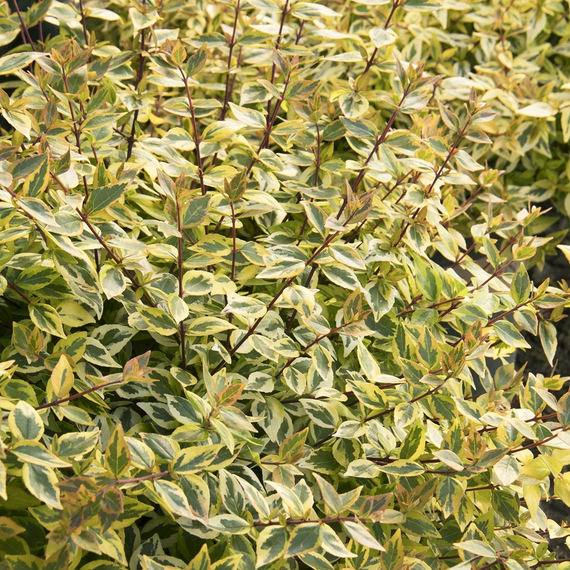
Kaleidoscope Abelia (Abelia × grandiflora ‘Kaleidoscope’) delivers nonstop interest in a compact package. Bright, variegated foliage glows golden in sun, intensifies through summer, and shifts to vivid orange and red in fall—all while red stems add contrast and clusters of sweet, white blooms perfume the garden from summer into early fall. Durable and adaptable, this low, mounding shrub shines as a foundation staple, colorful groundcover, or container accent in full sun to partial sun with well‑drained, enriched soil.
Plant Description
A dense, compact selection of glossy abelia famed for its kaleidoscopic foliage and seasonal white flowers. Naturally mounding habit fits small spaces and formal or informal designs alike.
Foliage & Seasonal Color
Leaves emerge green with golden-yellow margins, deepen to rich gold in summer, and blaze orange to red in fall and early winter. Red stems heighten contrast for four-season interest.
Flowers & Bloom Time
Pink buds open to clusters of lightly fragrant, tubular white flowers from summer into early fall, extending color and supporting pollinators long after spring bloomers fade.
Habit & Mature Size
Moderate growth to roughly 2–3 ft. tall and 3–4 ft. wide; forms a neat, low mound suited to edging, massing, or container use.
Sun Requirements
Full sun to partial sun; flowering and foliage variegation are most vibrant in full sun.
Water & Soil
Provide enriched, well‑drained, slightly acidic soil. Water deeply and regularly the first season to establish; afterward, it prefers regular moisture but tolerates brief dry spells.
Hardiness
USDA Zones 6–9; evergreen in mild winters and semi‑evergreen/partly deciduous in colder regions—offer protection from severe winter winds where needed.
Special Features
Deer and rabbit resistant; erosion control on slopes; waterwise once established; tolerant of coastal exposure. Excellent pollinator value.
Landscape Uses
Low hedge along walks and drives, massed groundcover for color, foundation planting, mixed borders, patio containers, and hillside stabilization.
Care & Pruning
Prune in late winter to early spring (blooms on new wood). Shape lightly or thin out up to one‑third of the oldest stems at the base. Apply a controlled‑release fertilizer in early spring.
Spacing & Hedges
Space 24–36 in. on center for a continuous low hedge; 30–48 in. on center for informal groupings and mass plantings.
Container Tips
Use a high‑quality, well‑drained potting mix in a container at least 14–18 in. wide. Position in full sun to partial sun and water when the top 1–2 in. of mix are dry.
Design Notes
Pair with blue grasses, nandina, barberry, pittosporum, agapanthus, or flowering perennials to echo its gold tones and set off the white blooms. Repeat along borders for a ribbon of color.
- Year-round color: golden-yellow variegation on medium green leaves, red stems, and fiery orange-red fall tones.
- Long-blooming: fragrant white flowers from summer into early fall attract bees, butterflies, and hummingbirds.
- Compact and versatile: about 2–3 ft. tall × 3–4 ft. wide—great for low hedges, borders, groundcover drifts, or containers.
- Easy-care evergreen (semi-evergreen in colder zones); waterwise once established and tolerant of coastal conditions.
Kaleidoscope Abelia (Abelia × grandiflora ‘Kaleidoscope’) delivers nonstop interest in a compact package. Bright, variegated foliage glows golden in sun, intensifies through summer, and shifts to vivid orange and red in fall—all while red stems add contrast and clusters of sweet, white blooms perfume the garden from summer into early fall. Durable and adaptable, this low, mounding shrub shines as a foundation staple, colorful groundcover, or container accent in full sun to partial sun with well‑drained, enriched soil.
Plant Description
A dense, compact selection of glossy abelia famed for its kaleidoscopic foliage and seasonal white flowers. Naturally mounding habit fits small spaces and formal or informal designs alike.
Foliage & Seasonal Color
Leaves emerge green with golden-yellow margins, deepen to rich gold in summer, and blaze orange to red in fall and early winter. Red stems heighten contrast for four-season interest.
Flowers & Bloom Time
Pink buds open to clusters of lightly fragrant, tubular white flowers from summer into early fall, extending color and supporting pollinators long after spring bloomers fade.
Habit & Mature Size
Moderate growth to roughly 2–3 ft. tall and 3–4 ft. wide; forms a neat, low mound suited to edging, massing, or container use.
Sun Requirements
Full sun to partial sun; flowering and foliage variegation are most vibrant in full sun.
Water & Soil
Provide enriched, well‑drained, slightly acidic soil. Water deeply and regularly the first season to establish; afterward, it prefers regular moisture but tolerates brief dry spells.
Hardiness
USDA Zones 6–9; evergreen in mild winters and semi‑evergreen/partly deciduous in colder regions—offer protection from severe winter winds where needed.
Special Features
Deer and rabbit resistant; erosion control on slopes; waterwise once established; tolerant of coastal exposure. Excellent pollinator value.
Landscape Uses
Low hedge along walks and drives, massed groundcover for color, foundation planting, mixed borders, patio containers, and hillside stabilization.
Care & Pruning
Prune in late winter to early spring (blooms on new wood). Shape lightly or thin out up to one‑third of the oldest stems at the base. Apply a controlled‑release fertilizer in early spring.
Spacing & Hedges
Space 24–36 in. on center for a continuous low hedge; 30–48 in. on center for informal groupings and mass plantings.
Container Tips
Use a high‑quality, well‑drained potting mix in a container at least 14–18 in. wide. Position in full sun to partial sun and water when the top 1–2 in. of mix are dry.
Design Notes
Pair with blue grasses, nandina, barberry, pittosporum, agapanthus, or flowering perennials to echo its gold tones and set off the white blooms. Repeat along borders for a ribbon of color.