

Zoom the image with the mouse
Japanese Painted Fern - 1 Gallon
SKU:
2055815
UPC:
014949361214
$19.99
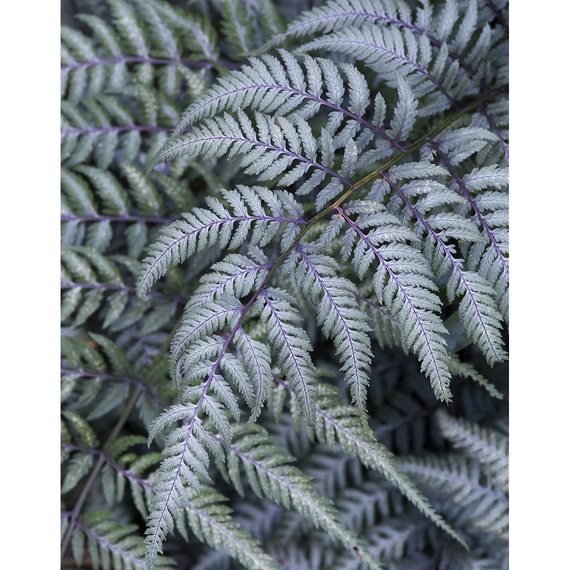
- Shimmering silver-blue fronds with deep purple midribs brighten shady spaces
- Compact, clumping habit—ideal for borders, pathways, and containers
- Thrives in partial to full shade with consistently moist, rich soil
- Cold-hardy perennial; selected as the 2004 Perennial Plant of the Year
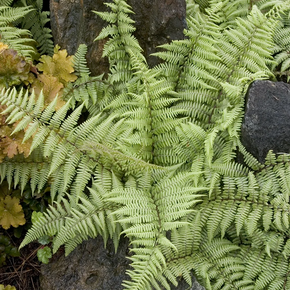
Japanese Painted Fern (Athyrium niponicum ‘Pictum’) is a shade‑garden standout prized for its luminous, silver‑washed fronds and elegant purple midribs. Forming neat, arching mounds 18–24 inches tall and wide, it delivers season‑long texture and contrast along woodland edges, shaded borders, and containers. This easy‑care, herbaceous perennial prefers organically rich, well‑drained soil that stays evenly moist, showing its best color in light shade. Deer‑ and rabbit‑resistant and celebrated as the 2004 Perennial Plant of the Year, it’s a reliable choice for effortless sophistication in low‑light sites.
Plant Overview
A deciduous, clumping fern noted for dramatic, variegated fronds: blue‑green centers, dark purple midribs, and silvery edges. Moderate growth to a tidy mound, perfect for foreground planting and containers.
Light Requirements
Best in partial shade to full shade. Light (dappled) shade brings out the strongest silver tones; avoid hot, direct afternoon sun.
Watering & Moisture
Keep soil consistently and evenly moist—never waterlogged and never bone‑dry. Mulch to retain moisture, especially in containers and during warm spells.
Size & Growth Habit
Moderate growing; typically reaches 18–24 in. tall and 18–24 in. wide with an arching, clumping habit that spreads slowly over time.
Hardiness & Zones
Cold-hardy in USDA Zones 4–8. Herbaceous perennial—dies back in winter and re-emerges in spring.
Foliage & Seasonal Interest
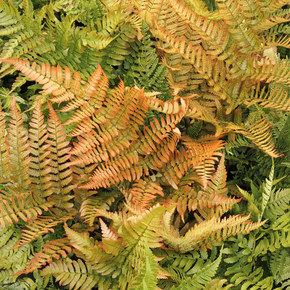
Grown for foliage (no showy blooms). Fronds emerge with striking silver and purple tones; color is most vivid in spring and in light shade, softening as summer heat arrives.
Landscape Uses
- Shade borders and woodland gardens
- Pathway edging and foreground accents
- Containers for porches, patios, and shaded entries
- Erosion control on consistently moist, shaded slopes
Soil & Planting
Provide organically rich, well‑drained soil with steady moisture. Amend with compost at planting for best establishment and color. Space plants 18–24 inches apart.
Care & Maintenance
- Water regularly to maintain even moisture
- Feed during the growing season with a balanced, general‑purpose fertilizer
- Cut back old fronds after new growth begins in spring
- Divide clumps every 2–3 years to refresh vigor
Wildlife & Problem Solving
- Deer and rabbit resistant by nature
- Helps with erosion control in consistently moist shade
- Tolerates very wet areas so long as drainage is present
Companion Plants
Pairs beautifully with Coral Bells (Heuchera), Lungwort (Pulmonaria), Hosta, Ligularia, and Bleeding Heart (Dicentra) for layered shade compositions.
Award & Accolades
Honored as the 2004 Perennial Plant of the Year, recognized for dependable performance and exceptional foliage color.
- Shimmering silver-blue fronds with deep purple midribs brighten shady spaces
- Compact, clumping habit—ideal for borders, pathways, and containers
- Thrives in partial to full shade with consistently moist, rich soil
- Cold-hardy perennial; selected as the 2004 Perennial Plant of the Year
Japanese Painted Fern (Athyrium niponicum ‘Pictum’) is a shade‑garden standout prized for its luminous, silver‑washed fronds and elegant purple midribs. Forming neat, arching mounds 18–24 inches tall and wide, it delivers season‑long texture and contrast along woodland edges, shaded borders, and containers. This easy‑care, herbaceous perennial prefers organically rich, well‑drained soil that stays evenly moist, showing its best color in light shade. Deer‑ and rabbit‑resistant and celebrated as the 2004 Perennial Plant of the Year, it’s a reliable choice for effortless sophistication in low‑light sites.
Plant Overview
A deciduous, clumping fern noted for dramatic, variegated fronds: blue‑green centers, dark purple midribs, and silvery edges. Moderate growth to a tidy mound, perfect for foreground planting and containers.
Light Requirements
Best in partial shade to full shade. Light (dappled) shade brings out the strongest silver tones; avoid hot, direct afternoon sun.
Watering & Moisture
Keep soil consistently and evenly moist—never waterlogged and never bone‑dry. Mulch to retain moisture, especially in containers and during warm spells.
Size & Growth Habit
Moderate growing; typically reaches 18–24 in. tall and 18–24 in. wide with an arching, clumping habit that spreads slowly over time.
Hardiness & Zones
Cold-hardy in USDA Zones 4–8. Herbaceous perennial—dies back in winter and re-emerges in spring.
Foliage & Seasonal Interest
Grown for foliage (no showy blooms). Fronds emerge with striking silver and purple tones; color is most vivid in spring and in light shade, softening as summer heat arrives.
Landscape Uses
- Shade borders and woodland gardens
- Pathway edging and foreground accents
- Containers for porches, patios, and shaded entries
- Erosion control on consistently moist, shaded slopes
Soil & Planting
Provide organically rich, well‑drained soil with steady moisture. Amend with compost at planting for best establishment and color. Space plants 18–24 inches apart.
Care & Maintenance
- Water regularly to maintain even moisture
- Feed during the growing season with a balanced, general‑purpose fertilizer
- Cut back old fronds after new growth begins in spring
- Divide clumps every 2–3 years to refresh vigor
Wildlife & Problem Solving
- Deer and rabbit resistant by nature
- Helps with erosion control in consistently moist shade
- Tolerates very wet areas so long as drainage is present
Companion Plants
Pairs beautifully with Coral Bells (Heuchera), Lungwort (Pulmonaria), Hosta, Ligularia, and Bleeding Heart (Dicentra) for layered shade compositions.
Award & Accolades
Honored as the 2004 Perennial Plant of the Year, recognized for dependable performance and exceptional foliage color.
Related Products