
Zoom the image with the mouse
James Walker Bougainvillea - 5 Gallon
SKU:
2102575
UPC:
014949131251
$54.99
$43.99
(You save
$11.00
)
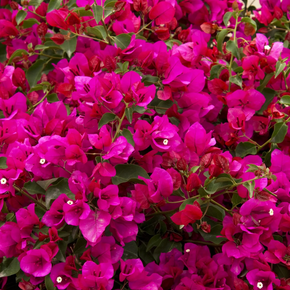
- Profusely blooming selection with large, richly saturated reddish-purple, petal-like bracts creating a dramatic and royal tropical display throughout summer
- Vigorous stems quickly climb 20 to 30 feet with support on arbors, trellises, and fences, or drape beautifully as an espalier or cascading bank cover
- Easy care and waterwise with exceptional drought tolerance once established, also tolerant of coastal exposure, erosion control, and urban pollution
- Evergreen in frost-free USDA Zones 10 through 11; grown as a stunning warm-season tropical annual or container accent in cooler northern climates
James Walker Bougainvillea (Bougainvillea 'James Walker') is a profusely blooming, richly colored selection renowned for its large, intensely saturated reddish-purple, petal-like bracts that create a dramatic, royal tropical display throughout summer. Vigorous climbing stems quickly reach 20 to 30 feet with support, making it ideal for covering arbors, trellises, pergolas, and fences with a breathtaking curtain of deep color, or for espaliering flat against walls and spilling over fences as a cascading bank cover. Easy care and waterwise with exceptional drought tolerance once established, it also withstands coastal exposure, urban pollution, and erosion-prone sites with equal ease. Evergreen and blooming year-round in frost-free USDA Zones 10 and 11, James Walker Bougainvillea performs equally well as a spectacular warm-season annual in containers and hanging baskets in cooler climates, bringing a richly royal tropical color to patios and decks throughout the warm season.
Plant Details
| Attribute | Details |
|---|---|
| Botanical Name | Bougainvillea 'James Walker' |
| Plant Type | Evergreen Vine / Tropical Shrub |
| Bract Color | Reddish-purple (large, profuse) |
| True Flower Color | Small white tubular flowers within the bracts |
| Foliage Color | Green |
| Bloom Time | Summer; longer in frost-free areas |
| Growth Rate | Fast |
| Growth Habit | Climbing |
| Mature Size | 20-30 ft. with support |
| USDA Zones | 10-11 (perennial); all zones as warm-season annual |
| Light | Full sun |
| Water | Deeply when soil is dry; drought tolerant once established |
| Special Features | Easy Care, Waterwise, Fast Growing, Profuse Flowering |
| Landscape Use | Barrier, Container, Espalier, Privacy Screen, Ground Cover |
The Reddish-Purple Bract Display
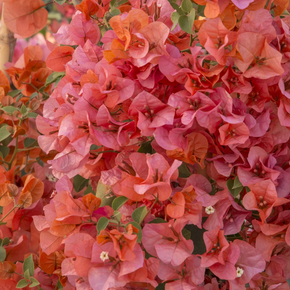
James Walker Bougainvillea is distinguished by its particularly large and richly colored reddish-purple bracts that create a more intense, deeply saturated color display than many pink or magenta bougainvillea varieties. The reddish-purple tone falls between true red and deep purple on the color spectrum, providing a distinctly royal, Mediterranean quality to the display. As with all bougainvilleas, the showy "petals" are technically bracts — modified leaves — that surround the small, true white tubular flowers within. The combination of large bract size and prolific production makes James Walker one of the most floriferous and visually impactful bougainvillea varieties for warm-climate garden use.
Size and Growth Habit
James Walker Bougainvillea is a vigorous, fast-growing climber with stems that quickly reach 20 to 30 feet with appropriate support structures. It uses thorny stems to scramble over and through structures with determined vigor. When trained on a strong trellis or arbor, it covers the structure rapidly and completely with dense, colorful foliage and bract-laden branches. The vigorous growth rate makes it one of the fastest-establishing bougainvillea varieties for providing quick coverage and color on large structures. In containers, its vigor can be moderated through regular pruning and root restriction.
Sunlight Requirements
James Walker Bougainvillea demands full sun for the most prolific and sustained bract production. A minimum of 6 to 8 hours of direct sunlight per day is required for the best color and flowering performance. Like all bougainvillea varieties, it thrives in the hottest, most sun-drenched conditions, becoming one of the most resilient and spectacular flowering plants in high-heat, high-sun environments. In lower light conditions, bract production decreases significantly and the plant redirects energy into vegetative growth at the expense of the spectacular floral display.
Watering
Water James Walker Bougainvillea deeply when the soil is fully dry. Bougainvilleas are drought-adapted and actually produce the most prolific bract display when subjected to moderate drought stress between waterings. Consistently overwatered bougainvillea produces lush vegetative growth at the expense of flowering. Container-grown plants need watering when the top 3 inches of soil feel dry. Use extreme caution not to disturb the fragile, brittle root ball when planting or transplanting — this is the most common cause of transplant failure in bougainvillea.
Soil and Planting Cautions
Provide average to lean, fast-draining soil for best results. Excellent drainage is critical — bougainvillea absolutely cannot tolerate waterlogged soil. Rich, heavily amended soils promote excessive vegetative growth rather than the prolific flowering that makes this plant exceptional. Most importantly, handle bougainvillea root balls with extreme care during planting. The roots are uniquely brittle and do not tolerate disturbance; any significant root damage causes severe transplant shock and potentially plant death. Slide the root ball gently from the container without breaking or loosening the roots.
Care and Maintenance
- Root caution: Never disturb the root ball when planting; bougainvillea roots are extremely brittle and sensitive to disturbance.
- Pruning: Prune lightly after each bloom cycle to encourage vigorous new growth, which is where new bract production occurs.
- Fertilizing: Apply a balanced fertilizer in spring; avoid high-nitrogen products which favor leaves over bracts.
- Support: Provide a strong, sturdy support structure adequate for the plant's ultimate vigorous size and weight.
- Gloves required: Always wear thick gardening gloves when handling bougainvillea due to its sharp, curved thorns.
- Overwintering: In zones below 10, move containers indoors before any frost risk; place near the brightest available window.
Landscape Uses
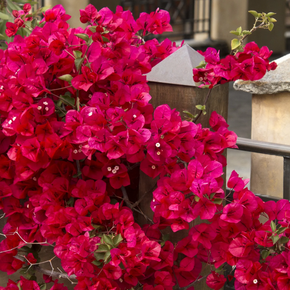
James Walker Bougainvillea excels on arbors and pergolas where its vigorous growth and profuse reddish-purple bracts create a breathtaking overhead floral display. Espalier it flat against a wall or fence for a sophisticated, two-dimensional flowering tapestry. Use it as a thorny, impenetrable flowering barrier along property boundaries. Allow it to cascade down banks and over retaining walls as a dramatic groundcover. In containers, its vigorous growth provides impressive seasonal coverage in a single warm season, making it one of the most rewarding seasonal annuals available for gardeners in cooler climates seeking tropical color impact.
Companion Plants
| Plant | Why It Works |
|---|---|
| Lantana (Lantana) | Bold warm-toned blooms in complementary heat-tolerant colors share the same drought tolerance and tropical aesthetic |
| Hibiscus (Hibiscus) | Large tropical flowers in complementary warm tones create a lush, resort-style landscape combination |
| Princess Flower (Tibouchina) | Rich purple flowers provide a beautiful tonal harmony with the reddish-purple bougainvillea bracts |
| Plumbago (Plumbago) | Pale blue flowers provide a cool-toned complement that highlights the deep reddish-purple bougainvillea color |
| Purple Fountain Grass (Pennisetum) | Dark, burgundy-purple foliage and plumes echo the bougainvillea's color palette at the base of the vine |
USDA Hardiness Zones
James Walker Bougainvillea is rated for USDA Zones 10 through 11 as a reliable evergreen perennial. In frost-free zones, it blooms intermittently year-round and can be maintained as a permanent landscape plant. In all cooler zones, it performs as a spectacular warm-season annual, planted outdoors after all frost risk has passed and removed or brought indoors before first frost. Container-grown specimens can be successfully overwintered indoors near a bright, sunny window with reduced watering until returned to the outdoor garden the following spring.
History and Background
Bougainvillea 'James Walker' is part of the large and diverse family of modern bougainvillea cultivars, all of which ultimately descend from three South American species — Bougainvillea spectabilis, B. glabra, and B. peruviana — that are native to the rocky hillsides and tropical forests of South America. The genus was named for Louis-Antoine de Bougainville, the French explorer who circumnavigated the globe from 1766 to 1769. The intense, papery bracts that make bougainvillea so spectacular are botanical modifications that evolved to attract pollinators to the small, otherwise inconspicuous true flowers nestled within them. 'James Walker' is prized for its particularly large, richly colored reddish-purple bracts and its prolific flowering tendency, which makes it one of the most visually impactful garden choices in warm-climate landscapes.
- Profusely blooming selection with large, richly saturated reddish-purple, petal-like bracts creating a dramatic and royal tropical display throughout summer
- Vigorous stems quickly climb 20 to 30 feet with support on arbors, trellises, and fences, or drape beautifully as an espalier or cascading bank cover
- Easy care and waterwise with exceptional drought tolerance once established, also tolerant of coastal exposure, erosion control, and urban pollution
- Evergreen in frost-free USDA Zones 10 through 11; grown as a stunning warm-season tropical annual or container accent in cooler northern climates
James Walker Bougainvillea (Bougainvillea 'James Walker') is a profusely blooming, richly colored selection renowned for its large, intensely saturated reddish-purple, petal-like bracts that create a dramatic, royal tropical display throughout summer. Vigorous climbing stems quickly reach 20 to 30 feet with support, making it ideal for covering arbors, trellises, pergolas, and fences with a breathtaking curtain of deep color, or for espaliering flat against walls and spilling over fences as a cascading bank cover. Easy care and waterwise with exceptional drought tolerance once established, it also withstands coastal exposure, urban pollution, and erosion-prone sites with equal ease. Evergreen and blooming year-round in frost-free USDA Zones 10 and 11, James Walker Bougainvillea performs equally well as a spectacular warm-season annual in containers and hanging baskets in cooler climates, bringing a richly royal tropical color to patios and decks throughout the warm season.
Plant Details
| Attribute | Details |
|---|---|
| Botanical Name | Bougainvillea 'James Walker' |
| Plant Type | Evergreen Vine / Tropical Shrub |
| Bract Color | Reddish-purple (large, profuse) |
| True Flower Color | Small white tubular flowers within the bracts |
| Foliage Color | Green |
| Bloom Time | Summer; longer in frost-free areas |
| Growth Rate | Fast |
| Growth Habit | Climbing |
| Mature Size | 20-30 ft. with support |
| USDA Zones | 10-11 (perennial); all zones as warm-season annual |
| Light | Full sun |
| Water | Deeply when soil is dry; drought tolerant once established |
| Special Features | Easy Care, Waterwise, Fast Growing, Profuse Flowering |
| Landscape Use | Barrier, Container, Espalier, Privacy Screen, Ground Cover |
The Reddish-Purple Bract Display
James Walker Bougainvillea is distinguished by its particularly large and richly colored reddish-purple bracts that create a more intense, deeply saturated color display than many pink or magenta bougainvillea varieties. The reddish-purple tone falls between true red and deep purple on the color spectrum, providing a distinctly royal, Mediterranean quality to the display. As with all bougainvilleas, the showy "petals" are technically bracts — modified leaves — that surround the small, true white tubular flowers within. The combination of large bract size and prolific production makes James Walker one of the most floriferous and visually impactful bougainvillea varieties for warm-climate garden use.
Size and Growth Habit
James Walker Bougainvillea is a vigorous, fast-growing climber with stems that quickly reach 20 to 30 feet with appropriate support structures. It uses thorny stems to scramble over and through structures with determined vigor. When trained on a strong trellis or arbor, it covers the structure rapidly and completely with dense, colorful foliage and bract-laden branches. The vigorous growth rate makes it one of the fastest-establishing bougainvillea varieties for providing quick coverage and color on large structures. In containers, its vigor can be moderated through regular pruning and root restriction.
Sunlight Requirements
James Walker Bougainvillea demands full sun for the most prolific and sustained bract production. A minimum of 6 to 8 hours of direct sunlight per day is required for the best color and flowering performance. Like all bougainvillea varieties, it thrives in the hottest, most sun-drenched conditions, becoming one of the most resilient and spectacular flowering plants in high-heat, high-sun environments. In lower light conditions, bract production decreases significantly and the plant redirects energy into vegetative growth at the expense of the spectacular floral display.
Watering
Water James Walker Bougainvillea deeply when the soil is fully dry. Bougainvilleas are drought-adapted and actually produce the most prolific bract display when subjected to moderate drought stress between waterings. Consistently overwatered bougainvillea produces lush vegetative growth at the expense of flowering. Container-grown plants need watering when the top 3 inches of soil feel dry. Use extreme caution not to disturb the fragile, brittle root ball when planting or transplanting — this is the most common cause of transplant failure in bougainvillea.
Soil and Planting Cautions
Provide average to lean, fast-draining soil for best results. Excellent drainage is critical — bougainvillea absolutely cannot tolerate waterlogged soil. Rich, heavily amended soils promote excessive vegetative growth rather than the prolific flowering that makes this plant exceptional. Most importantly, handle bougainvillea root balls with extreme care during planting. The roots are uniquely brittle and do not tolerate disturbance; any significant root damage causes severe transplant shock and potentially plant death. Slide the root ball gently from the container without breaking or loosening the roots.
Care and Maintenance
- Root caution: Never disturb the root ball when planting; bougainvillea roots are extremely brittle and sensitive to disturbance.
- Pruning: Prune lightly after each bloom cycle to encourage vigorous new growth, which is where new bract production occurs.
- Fertilizing: Apply a balanced fertilizer in spring; avoid high-nitrogen products which favor leaves over bracts.
- Support: Provide a strong, sturdy support structure adequate for the plant's ultimate vigorous size and weight.
- Gloves required: Always wear thick gardening gloves when handling bougainvillea due to its sharp, curved thorns.
- Overwintering: In zones below 10, move containers indoors before any frost risk; place near the brightest available window.
Landscape Uses
James Walker Bougainvillea excels on arbors and pergolas where its vigorous growth and profuse reddish-purple bracts create a breathtaking overhead floral display. Espalier it flat against a wall or fence for a sophisticated, two-dimensional flowering tapestry. Use it as a thorny, impenetrable flowering barrier along property boundaries. Allow it to cascade down banks and over retaining walls as a dramatic groundcover. In containers, its vigorous growth provides impressive seasonal coverage in a single warm season, making it one of the most rewarding seasonal annuals available for gardeners in cooler climates seeking tropical color impact.
Companion Plants
| Plant | Why It Works |
|---|---|
| Lantana (Lantana) | Bold warm-toned blooms in complementary heat-tolerant colors share the same drought tolerance and tropical aesthetic |
| Hibiscus (Hibiscus) | Large tropical flowers in complementary warm tones create a lush, resort-style landscape combination |
| Princess Flower (Tibouchina) | Rich purple flowers provide a beautiful tonal harmony with the reddish-purple bougainvillea bracts |
| Plumbago (Plumbago) | Pale blue flowers provide a cool-toned complement that highlights the deep reddish-purple bougainvillea color |
| Purple Fountain Grass (Pennisetum) | Dark, burgundy-purple foliage and plumes echo the bougainvillea's color palette at the base of the vine |
USDA Hardiness Zones
James Walker Bougainvillea is rated for USDA Zones 10 through 11 as a reliable evergreen perennial. In frost-free zones, it blooms intermittently year-round and can be maintained as a permanent landscape plant. In all cooler zones, it performs as a spectacular warm-season annual, planted outdoors after all frost risk has passed and removed or brought indoors before first frost. Container-grown specimens can be successfully overwintered indoors near a bright, sunny window with reduced watering until returned to the outdoor garden the following spring.
History and Background
Bougainvillea 'James Walker' is part of the large and diverse family of modern bougainvillea cultivars, all of which ultimately descend from three South American species — Bougainvillea spectabilis, B. glabra, and B. peruviana — that are native to the rocky hillsides and tropical forests of South America. The genus was named for Louis-Antoine de Bougainville, the French explorer who circumnavigated the globe from 1766 to 1769. The intense, papery bracts that make bougainvillea so spectacular are botanical modifications that evolved to attract pollinators to the small, otherwise inconspicuous true flowers nestled within them. 'James Walker' is prized for its particularly large, richly colored reddish-purple bracts and its prolific flowering tendency, which makes it one of the most visually impactful garden choices in warm-climate landscapes.
Related Products