

Zoom the image with the mouse
Jacaranda - 5 Gallon
SKU:
2159405
UPC:
014949032510
$79.99
- Show-stopping clusters of lavender‑blue, orchid‑like blooms in spring.
- Semi‑evergreen, fern‑textured foliage and an open, rounded crown for airy, dappled shade.
- Waterwise once established—tolerates moderate drought in well‑drained soils.
- Full‑sun performer with landscape size about 25–40 ft. tall × 25–35 ft. wide.
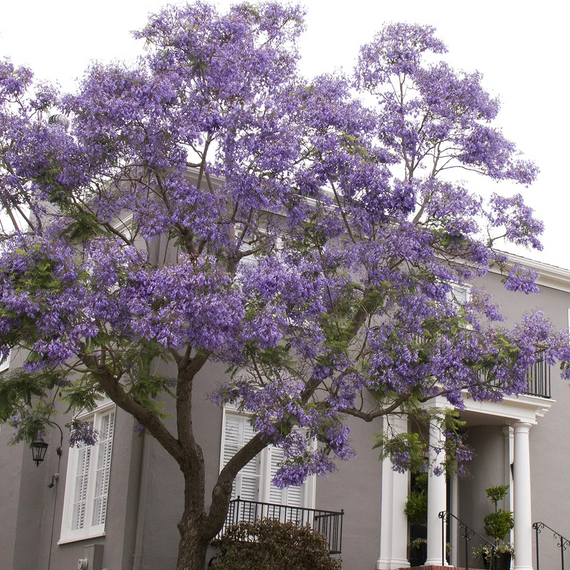
The Jacaranda (Jacaranda mimosifolia) brings a signature spring spectacle to frost‑free gardens, covering its open, rounded canopy with lavish lavender‑blue flowers above bright green, finely divided leaves. A semi‑evergreen shade tree that thrives in full sun and enriched, well‑drained soil, it’s an outstanding lawn specimen for waterwise landscapes—delivering filtered shade, striking seasonal color, and a relaxed, subtropical vibe with minimal fuss once established.
Plant Description
A semi‑evergreen, moderate‑growing tree with an open‑branched, rounded crown and fine, bipinnate (fern‑like) foliage that reads light and airy in the landscape—ideal for patios and courtyards needing filtered shade.
Flowers
Large, showy clusters of lavender‑blue, trumpet‑shaped blooms create a dramatic canopy display; blossoms carpet the ground beneath for an immersive seasonal moment.
Bloom Time
Primarily spring, with peak color as new season growth begins.
Foliage
Bright green, finely divided, fern‑like leaves that soften hardscapes and deliver a tropical texture; semi‑evergreen in warm climates.
Sun Requirements
Full sun (6+ hours of direct light daily) for the heaviest flowering and strongest canopy development.
Watering Needs
Water deeply and regularly the first growing season to establish an extensive root system. Once established, reduce frequency—tolerates moderate drought in well‑drained soils.
Soil Requirements
Provide enriched, well‑drained soil. Avoid chronically wet conditions; mulch to conserve moisture and moderate soil temperatures, keeping mulch a few inches from the trunk.
Growth & Size
Moderate growth to about 25–40 ft. tall and 25–35 ft. wide, forming a broad canopy that casts dappled shade without heavy darkness.
Hardiness & Climate
Best in USDA Zones 10–11; use in frost‑free or very mild winter climates for dependable bloom and semi‑evergreen foliage.
Special Features
Waterwise once established; excellent lawn specimen or street‑tree style accent; delivers high seasonal impact with low routine maintenance needs.
Landscape Uses
Signature front‑yard specimen, filtered‑shade provider for patios and decks, or a dramatic focal point in large planting beds; pairs beautifully with agapanthus, foxtail fern, Indian hawthorn, lilyturf, and sago palm.
Care Instructions
Plant at or slightly above grade in well‑drained soil. Water deeply during establishment; feed before spring growth. Prune after bloom (if needed) to refine structure and maintain desired size.
- Show-stopping clusters of lavender‑blue, orchid‑like blooms in spring.
- Semi‑evergreen, fern‑textured foliage and an open, rounded crown for airy, dappled shade.
- Waterwise once established—tolerates moderate drought in well‑drained soils.
- Full‑sun performer with landscape size about 25–40 ft. tall × 25–35 ft. wide.
The Jacaranda (Jacaranda mimosifolia) brings a signature spring spectacle to frost‑free gardens, covering its open, rounded canopy with lavish lavender‑blue flowers above bright green, finely divided leaves. A semi‑evergreen shade tree that thrives in full sun and enriched, well‑drained soil, it’s an outstanding lawn specimen for waterwise landscapes—delivering filtered shade, striking seasonal color, and a relaxed, subtropical vibe with minimal fuss once established.
Plant Description
A semi‑evergreen, moderate‑growing tree with an open‑branched, rounded crown and fine, bipinnate (fern‑like) foliage that reads light and airy in the landscape—ideal for patios and courtyards needing filtered shade.
Flowers
Large, showy clusters of lavender‑blue, trumpet‑shaped blooms create a dramatic canopy display; blossoms carpet the ground beneath for an immersive seasonal moment.
Bloom Time
Primarily spring, with peak color as new season growth begins.
Foliage
Bright green, finely divided, fern‑like leaves that soften hardscapes and deliver a tropical texture; semi‑evergreen in warm climates.
Sun Requirements
Full sun (6+ hours of direct light daily) for the heaviest flowering and strongest canopy development.
Watering Needs
Water deeply and regularly the first growing season to establish an extensive root system. Once established, reduce frequency—tolerates moderate drought in well‑drained soils.
Soil Requirements
Provide enriched, well‑drained soil. Avoid chronically wet conditions; mulch to conserve moisture and moderate soil temperatures, keeping mulch a few inches from the trunk.
Growth & Size
Moderate growth to about 25–40 ft. tall and 25–35 ft. wide, forming a broad canopy that casts dappled shade without heavy darkness.
Hardiness & Climate
Best in USDA Zones 10–11; use in frost‑free or very mild winter climates for dependable bloom and semi‑evergreen foliage.
Special Features
Waterwise once established; excellent lawn specimen or street‑tree style accent; delivers high seasonal impact with low routine maintenance needs.
Landscape Uses
Signature front‑yard specimen, filtered‑shade provider for patios and decks, or a dramatic focal point in large planting beds; pairs beautifully with agapanthus, foxtail fern, Indian hawthorn, lilyturf, and sago palm.
Care Instructions
Plant at or slightly above grade in well‑drained soil. Water deeply during establishment; feed before spring growth. Prune after bloom (if needed) to refine structure and maintain desired size.