

Zoom the image with the mouse
Iko Yama Fuji Silky Wisteria - 5 Gallon
SKU:
2232960
UPC:
014949474747
$62.99
$50.39
(You save
$12.60
)
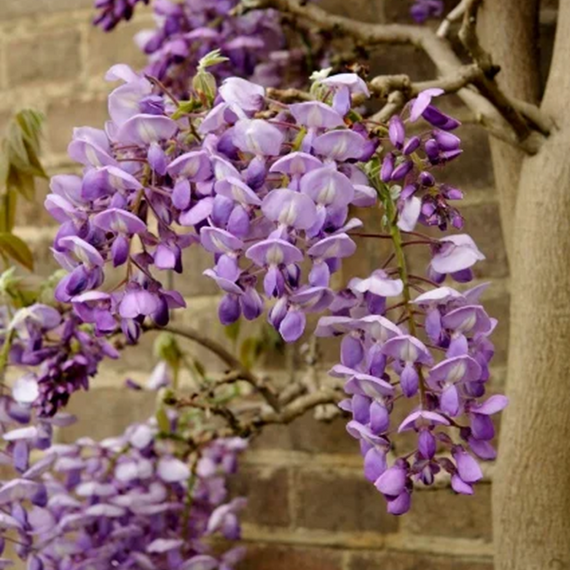
- Rich violet buds open to highly fragrant, pale lilac blooms in late spring.
- Twining stems reach 25–30 ft.; perfect for arbors, trellises, and espaliers.
- Performs in full sun to partial sun; waterwise and easy-care once established.
- Deciduous climber that becomes more floriferous with age; develops ornamental seedpods.
Iko Yama Fuji Silky Wisteria (Wisteria brachybotrys ‘Iko Yama Fuji’) is a show-stopping, deciduous climber prized for richly scented flower clusters that emerge from deep violet buds and open to soft lilac in late spring. With moderate vigor and twining stems that cover sturdy supports up to 25–30 feet, this selection brings romantic bloom and lush foliage to arbors, pergolas, and walls. Plant in full to partial sun with well‑drained soil, water deeply during establishment, and prune after flowering to keep the framework tidy and encourage abundant blossoms year after year.
Botanical Name
Wisteria brachybotrys ‘Iko Yama Fuji’ (Silky Wisteria); deciduous, twining vine.
Plant Highlights
- Highly fragrant, pale lilac flowers from rich violet buds in late spring.
- Attracts pollinators; noted for easy-care, waterwise performance.
- Suitable for containers, espaliers, and small-space training on sturdy supports.
- Forms long, velvety seedpods after bloom for added seasonal interest.
Size & Growth
Twining stems typically reach 25–30 ft. with support; moderate growth rate and refined climbing habit.
Light & Water
- Light: Full sun to partial sun for best flowering.
- Water: Keep evenly moist during establishment (water when the top 2 inches of soil are dry); maintain consistent moisture thereafter without waterlogging.
Bloom & Fragrance
- Bloom Time: Late spring to early summer.
- Flower: Strongly fragrant, showy racemes; pale lilac blooms opening from rich violet buds.
- After Bloom: Long, velvety seedpods enhance seasonal interest.
Hardiness & Climate
Hardy in USDA Zones 5–10; choose a warm, bright exposure for peak bloom performance.
Soil & Planting
- Prefers average, loamy, well‑drained soil; tolerant of a range of conditions.
- Amend planting area to improve drainage; apply mulch to conserve moisture and moderate soil temperature.
Support & Training
Provide a sturdy trellis, arbor, or pergola capable of bearing a mature vine. Train primary leaders along the structure and tie in new growth to build a long‑lasting flowering framework.
Pruning & Maintenance
- Prune annually after flowering to keep plants tidy and encourage future blooms.
- Feed in early spring; water deeply during the first growing season to establish extensive roots.
Landscape Uses
- Arbors, pergolas, trellises, and wall espaliers near patios, porches, or windows to enjoy fragrance up close.
- Container training for small spaces with regular pruning and stout support.
- Rich violet buds open to highly fragrant, pale lilac blooms in late spring.
- Twining stems reach 25–30 ft.; perfect for arbors, trellises, and espaliers.
- Performs in full sun to partial sun; waterwise and easy-care once established.
- Deciduous climber that becomes more floriferous with age; develops ornamental seedpods.
Iko Yama Fuji Silky Wisteria (Wisteria brachybotrys ‘Iko Yama Fuji’) is a show-stopping, deciduous climber prized for richly scented flower clusters that emerge from deep violet buds and open to soft lilac in late spring. With moderate vigor and twining stems that cover sturdy supports up to 25–30 feet, this selection brings romantic bloom and lush foliage to arbors, pergolas, and walls. Plant in full to partial sun with well‑drained soil, water deeply during establishment, and prune after flowering to keep the framework tidy and encourage abundant blossoms year after year.
Botanical Name
Wisteria brachybotrys ‘Iko Yama Fuji’ (Silky Wisteria); deciduous, twining vine.
Plant Highlights
- Highly fragrant, pale lilac flowers from rich violet buds in late spring.
- Attracts pollinators; noted for easy-care, waterwise performance.
- Suitable for containers, espaliers, and small-space training on sturdy supports.
- Forms long, velvety seedpods after bloom for added seasonal interest.
Size & Growth
Twining stems typically reach 25–30 ft. with support; moderate growth rate and refined climbing habit.
Light & Water
- Light: Full sun to partial sun for best flowering.
- Water: Keep evenly moist during establishment (water when the top 2 inches of soil are dry); maintain consistent moisture thereafter without waterlogging.
Bloom & Fragrance
- Bloom Time: Late spring to early summer.
- Flower: Strongly fragrant, showy racemes; pale lilac blooms opening from rich violet buds.
- After Bloom: Long, velvety seedpods enhance seasonal interest.
Hardiness & Climate
Hardy in USDA Zones 5–10; choose a warm, bright exposure for peak bloom performance.
Soil & Planting
- Prefers average, loamy, well‑drained soil; tolerant of a range of conditions.
- Amend planting area to improve drainage; apply mulch to conserve moisture and moderate soil temperature.
Support & Training
Provide a sturdy trellis, arbor, or pergola capable of bearing a mature vine. Train primary leaders along the structure and tie in new growth to build a long‑lasting flowering framework.
Pruning & Maintenance
- Prune annually after flowering to keep plants tidy and encourage future blooms.
- Feed in early spring; water deeply during the first growing season to establish extensive roots.
Landscape Uses
- Arbors, pergolas, trellises, and wall espaliers near patios, porches, or windows to enjoy fragrance up close.
- Container training for small spaces with regular pruning and stout support.