

Zoom the image with the mouse
Hot Rod Switch Grass - 1 Gallon
SKU:
2121675
UPC:
014949391297
$16.99
- Compact, upright clumping switch grass with excellent vertical form—about 3–4 ft tall × ~2 ft wide.
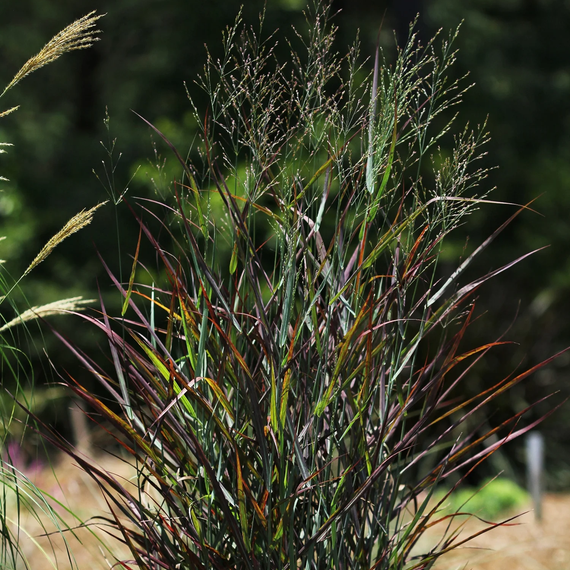
- Blue‑green blades quickly deepen to a rich burgundy/red in summer for vivid season‑long color.
- Airy purple flower panicles mature to showy seed heads that add winter interest and feed songbirds.
- Easy‑care and waterwise, deer‑ and salt‑tolerant; adapts to semi‑moist to wet soils and handles coastal exposure.
Hot Rod Switch Grass (Panicum virgatum ‘Hot Rod’, PP26,074) brings bold, upright texture in a compact footprint, starting blue‑green and shifting to deep burgundy by summer. Feathery purple panicles appear in summer and mature to ornamental seed heads that extend structure into winter and provide food for birds. Thriving in full sun (with tolerance for partial sun) and average to semi‑moist/wet soils, this easy, drought‑tolerant native selection delivers season‑long color, movement, and habitat value in USDA Zones 4–9.
Botanical Name
Panicum virgatum ‘Hot Rod’ — Hot Rod Switch Grass; Plant Patent PP26,074.
Plant Type & Habit
Warm‑season, clump‑forming ornamental grass with a narrow, upright habit ideal for rhythmic repeats and vertical accents.
Mature Size
Typically 3–4 ft tall × about 2 ft wide; compact footprint suits borders and small‑space designs.
Hardiness
USDA Zones 4–9.
Light & Exposure
Full sun for best color and density; tolerates partial sun.
Soil & Water
Adaptable to most soils; prefers semi‑moist to wet sites. Water regularly the first season to establish; then tolerates mild drought.
Foliage & Color
Blue‑green spring blades turn deep burgundy by summer for high‑impact color that holds into fall.
Flowers, Seed Heads & Season
Summer brings airy purple panicles; ornamental seed heads persist into winter, adding structure and sparkle.
Uses & Landscape Ideas
- Border and foundation repeats for color and motion.
- Erosion control and rain‑garden/wet‑area planting; suitable for coastal sites.
- Wildlife‑friendly meadows and naturalistic groupings.
Wildlife & Winter Interest
Seed heads offer winter food for songbirds; upright stems and plumes provide cold‑season texture.
Problem Solving & Toughness
Deer resistant, salt tolerant, and waterwise once established; useful from typical gardens to very wet areas.
Planting & Spacing
Plant at the same depth as in the container; space clumps about 18–24 in. apart for a mass, or use singly at 24–30 in. intervals for accents.
Maintenance & Pruning
Cut back old foliage in late winter to early spring just before new shoots appear; apply a light, general‑purpose fertilizer if soils are lean.
Companion Ideas
Combine with Coreopsis, Asters, Barberries, and Coneflowers for a long‑season, pollinator‑friendly palette and strong color contrast.
- Compact, upright clumping switch grass with excellent vertical form—about 3–4 ft tall × ~2 ft wide.
- Blue‑green blades quickly deepen to a rich burgundy/red in summer for vivid season‑long color.
- Airy purple flower panicles mature to showy seed heads that add winter interest and feed songbirds.
- Easy‑care and waterwise, deer‑ and salt‑tolerant; adapts to semi‑moist to wet soils and handles coastal exposure.
Hot Rod Switch Grass (Panicum virgatum ‘Hot Rod’, PP26,074) brings bold, upright texture in a compact footprint, starting blue‑green and shifting to deep burgundy by summer. Feathery purple panicles appear in summer and mature to ornamental seed heads that extend structure into winter and provide food for birds. Thriving in full sun (with tolerance for partial sun) and average to semi‑moist/wet soils, this easy, drought‑tolerant native selection delivers season‑long color, movement, and habitat value in USDA Zones 4–9.
Botanical Name
Panicum virgatum ‘Hot Rod’ — Hot Rod Switch Grass; Plant Patent PP26,074.
Plant Type & Habit
Warm‑season, clump‑forming ornamental grass with a narrow, upright habit ideal for rhythmic repeats and vertical accents.
Mature Size
Typically 3–4 ft tall × about 2 ft wide; compact footprint suits borders and small‑space designs.
Hardiness
USDA Zones 4–9.
Light & Exposure
Full sun for best color and density; tolerates partial sun.
Soil & Water
Adaptable to most soils; prefers semi‑moist to wet sites. Water regularly the first season to establish; then tolerates mild drought.
Foliage & Color
Blue‑green spring blades turn deep burgundy by summer for high‑impact color that holds into fall.
Flowers, Seed Heads & Season
Summer brings airy purple panicles; ornamental seed heads persist into winter, adding structure and sparkle.
Uses & Landscape Ideas
- Border and foundation repeats for color and motion.
- Erosion control and rain‑garden/wet‑area planting; suitable for coastal sites.
- Wildlife‑friendly meadows and naturalistic groupings.
Wildlife & Winter Interest
Seed heads offer winter food for songbirds; upright stems and plumes provide cold‑season texture.
Problem Solving & Toughness
Deer resistant, salt tolerant, and waterwise once established; useful from typical gardens to very wet areas.
Planting & Spacing
Plant at the same depth as in the container; space clumps about 18–24 in. apart for a mass, or use singly at 24–30 in. intervals for accents.
Maintenance & Pruning
Cut back old foliage in late winter to early spring just before new shoots appear; apply a light, general‑purpose fertilizer if soils are lean.
Companion Ideas
Combine with Coreopsis, Asters, Barberries, and Coneflowers for a long‑season, pollinator‑friendly palette and strong color contrast.