

Zoom the image with the mouse
Goldflame Honeysuckle
SKU:
1926165-P
UPC:
014949589953
$21.99 - $74.99
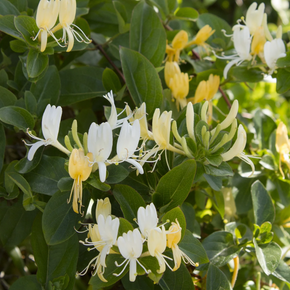
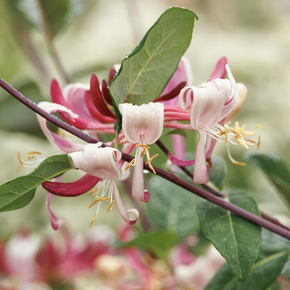
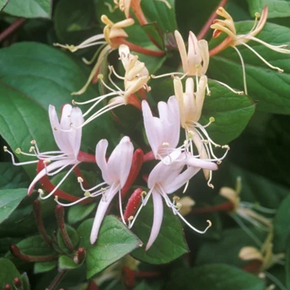
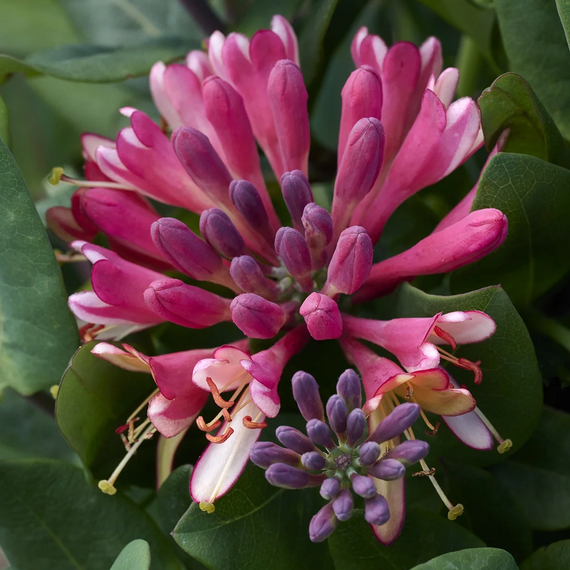
- Sweetly fragrant, tubular blooms: purple to deep pink buds open to golden-yellow flowers from spring through fall.
- Vigorous twining vine—stems quickly reach about 15 ft. with support; can also be pruned into a dense, shrub‑like form.
- Semi‑evergreen in mild climates and deciduous in colder regions for reliable seasonal interest.
- Pollinator‑friendly and easy‑care; ideal for trellises, arbors, fences, containers, or privacy screening.
Goldflame Honeysuckle (Lonicera × heckrottii ‘Goldflame’) delivers a long season of color and fragrance: rosy buds unfurl to golden‑throated trumpets that attract hummingbirds and other pollinators from spring well into fall. This fast‑growing, twining climber thrives in full to partial sun and well‑drained soils, quickly clothing structures with vibrant blooms and clean green foliage. In mild regions it’s semi‑evergreen, while in colder zones it’s deciduous—either way, it’s a low‑maintenance standout in USDA Zones 4–9.
Botanical Name
Lonicera × heckrottii ‘Goldflame’ — commonly called Goldflame Honeysuckle.
Plant Type & Habit
Fast‑growing, twining vine; can also be maintained as a shrub‑like form with regular pruning.
Mature Size
Twining stems typically reach about 15 ft. with support; width varies by training and structure.
Hardiness
USDA Zones 4–9. Semi‑evergreen in milder climates; deciduous in colder areas.
Light & Exposure
Full sun to partial sun. Best bloom and density occur with ample light and good air circulation.
Soil & Water
Performs in average to very fertile, well‑drained soils. Water deeply and regularly during the first season to establish roots; reduce frequency once established.
Flowers & Fragrance
Purple to deep pink buds open to golden yellow, tubular flowers with a sweet fragrance—showy in clusters for a long display.
Bloom Season
Spring through fall (heaviest in warm months, with continued color into the season’s end).
Uses & Landscape Ideas
- Trellises, arbors, fences, and posts for vertical color and coverage.
- Containers with a sturdy obelisk or trellis.
- Privacy screen when trained along wires or lattice.
- Espalier on sunny walls or to soften utility structures.
Pollinators & Wildlife
Highly attractive to hummingbirds and other pollinators throughout the flowering season.
Training & Support
Provide a sturdy support (trellis, arbor, wire, or fence). Guide young shoots and tie in as needed until vines twine naturally.
Pruning & Maintenance
Prune annually to control size and encourage new flowering wood. Feed in early spring if soils are lean. Remove spent or wayward stems to keep the plant tidy.
Problem Solving
Generally easy‑care; listed as rabbit resistant. Ensure good air flow to minimize foliar issues, and avoid waterlogged soils.
Planting & Spacing
Plant at the same depth as in the nursery container near your support. Allow enough lateral room for twining stems and access for pruning.
Companion Ideas
Pairs beautifully with Coneflower (Echinacea), Butterfly Bush (Buddleja), Milkweed (Asclepias), Bee Balm (Monarda), and Asters for a pollinator‑rich display.
- Sweetly fragrant, tubular blooms: purple to deep pink buds open to golden-yellow flowers from spring through fall.
- Vigorous twining vine—stems quickly reach about 15 ft. with support; can also be pruned into a dense, shrub‑like form.
- Semi‑evergreen in mild climates and deciduous in colder regions for reliable seasonal interest.
- Pollinator‑friendly and easy‑care; ideal for trellises, arbors, fences, containers, or privacy screening.
Goldflame Honeysuckle (Lonicera × heckrottii ‘Goldflame’) delivers a long season of color and fragrance: rosy buds unfurl to golden‑throated trumpets that attract hummingbirds and other pollinators from spring well into fall. This fast‑growing, twining climber thrives in full to partial sun and well‑drained soils, quickly clothing structures with vibrant blooms and clean green foliage. In mild regions it’s semi‑evergreen, while in colder zones it’s deciduous—either way, it’s a low‑maintenance standout in USDA Zones 4–9.
Botanical Name
Lonicera × heckrottii ‘Goldflame’ — commonly called Goldflame Honeysuckle.
Plant Type & Habit
Fast‑growing, twining vine; can also be maintained as a shrub‑like form with regular pruning.
Mature Size
Twining stems typically reach about 15 ft. with support; width varies by training and structure.
Hardiness
USDA Zones 4–9. Semi‑evergreen in milder climates; deciduous in colder areas.
Light & Exposure
Full sun to partial sun. Best bloom and density occur with ample light and good air circulation.
Soil & Water
Performs in average to very fertile, well‑drained soils. Water deeply and regularly during the first season to establish roots; reduce frequency once established.
Flowers & Fragrance
Purple to deep pink buds open to golden yellow, tubular flowers with a sweet fragrance—showy in clusters for a long display.
Bloom Season
Spring through fall (heaviest in warm months, with continued color into the season’s end).
Uses & Landscape Ideas
- Trellises, arbors, fences, and posts for vertical color and coverage.
- Containers with a sturdy obelisk or trellis.
- Privacy screen when trained along wires or lattice.
- Espalier on sunny walls or to soften utility structures.
Pollinators & Wildlife
Highly attractive to hummingbirds and other pollinators throughout the flowering season.
Training & Support
Provide a sturdy support (trellis, arbor, wire, or fence). Guide young shoots and tie in as needed until vines twine naturally.
Pruning & Maintenance
Prune annually to control size and encourage new flowering wood. Feed in early spring if soils are lean. Remove spent or wayward stems to keep the plant tidy.
Problem Solving
Generally easy‑care; listed as rabbit resistant. Ensure good air flow to minimize foliar issues, and avoid waterlogged soils.
Planting & Spacing
Plant at the same depth as in the nursery container near your support. Allow enough lateral room for twining stems and access for pruning.
Companion Ideas
Pairs beautifully with Coneflower (Echinacea), Butterfly Bush (Buddleja), Milkweed (Asclepias), Bee Balm (Monarda), and Asters for a pollinator‑rich display.
Related Products