

Zoom the image with the mouse
Fireworks Agapanthus - 1 Gallon
SKU:
2094375
UPC:
014949465752
$19.99
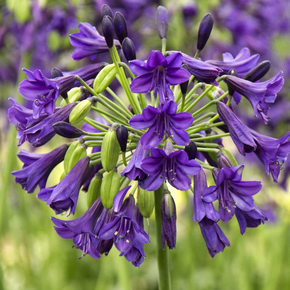
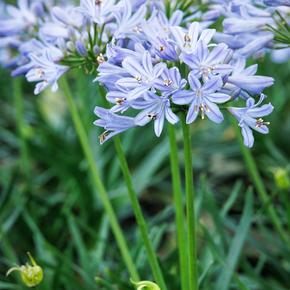
- Huge, bi‑color blooms: dramatic white‑and‑purple flower clusters burst above lush, strap‑like foliage.
- Neat, container‑friendly habit—foliage ~18 in. tall × ~18 in. wide; bloom stalks to ~30 in.
- Evergreen in warm climates and bred for improved crown‑rot resistance; easy‑care once established.
- Loves full sun and well‑drained soil; a standout for borders, mass plantings, and patio pots.
Fireworks Agapanthus (Agapanthus hybrid ‘MDB001’, PP30,162) delivers a summer show of oversized, two‑tone flower spheres that read like living pyrotechnics. Compact, strap‑leaf clumps fit beautifully into mixed containers or front‑of‑border ribbons, while sturdy, ~30‑inch scapes carry the bi‑color display high and clean. In full sun and well‑drained soils, this evergreen selection establishes easily, tolerates brief dry spells, and rewards with reliable, high‑impact color in warm landscapes.
Plant Description
Evergreen, clump‑forming agapanthus with short, broad, strap‑like foliage. In summer, large umbels of pendant, trumpet‑shaped flowers open white at the tips with rich purple‑blue throats for a vivid bi‑color effect.
Flowers & Bloom Time
Early to mid‑summer bloom on strong, upright stems; the big, two‑tone umbels are long‑lasting in the garden and excellent for cutting.
Habit & Size
Foliage mounds to roughly 18 in. tall and wide; flower scapes reach about 30 in., keeping proportions balanced for borders and containers.
Sun Requirements
Full sun is best for dense bloom and compact growth; tolerates light partial sun in hotter inland sites.
Water & Soil
Grow in average, well‑drained soil. Water deeply and regularly during the first growing season to establish; once established, reduce frequency—plants tolerate mild drought between soakings.
Hardiness
USDA Zones 9–11. In colder regions, treat as a container perennial and overwinter in a frost‑free location.
Special Features
Improved disease performance (crown‑rot resistance), pollinator‑friendly, coastal‑tolerant, and low‑maintenance after establishment.
Landscape Uses
Bold focal points in patio pots, front‑of‑border accents, massed swathes for color, and sunny poolside or coastal plantings.
Care & Feeding
Feed in early spring and again after flowering. Plants bloom best when left undisturbed; divide only when clumps become overcrowded.
Spacing & Planting
Space 18–24 in. on center for a continuous edge or rhythmic drift. Set crowns at pot depth; water to settle and mulch to conserve moisture.
Container Tips
Use a well‑drained, high‑quality potting mix in a 12–14 in. wide container. Provide full sun and water when the top 2–3 in. of mix are dry.
Patent & Naming
Cultivar ‘MDB001’; U.S. Plant Patent PP30,162.
- Huge, bi‑color blooms: dramatic white‑and‑purple flower clusters burst above lush, strap‑like foliage.
- Neat, container‑friendly habit—foliage ~18 in. tall × ~18 in. wide; bloom stalks to ~30 in.
- Evergreen in warm climates and bred for improved crown‑rot resistance; easy‑care once established.
- Loves full sun and well‑drained soil; a standout for borders, mass plantings, and patio pots.
Fireworks Agapanthus (Agapanthus hybrid ‘MDB001’, PP30,162) delivers a summer show of oversized, two‑tone flower spheres that read like living pyrotechnics. Compact, strap‑leaf clumps fit beautifully into mixed containers or front‑of‑border ribbons, while sturdy, ~30‑inch scapes carry the bi‑color display high and clean. In full sun and well‑drained soils, this evergreen selection establishes easily, tolerates brief dry spells, and rewards with reliable, high‑impact color in warm landscapes.
Plant Description
Evergreen, clump‑forming agapanthus with short, broad, strap‑like foliage. In summer, large umbels of pendant, trumpet‑shaped flowers open white at the tips with rich purple‑blue throats for a vivid bi‑color effect.
Flowers & Bloom Time
Early to mid‑summer bloom on strong, upright stems; the big, two‑tone umbels are long‑lasting in the garden and excellent for cutting.
Habit & Size
Foliage mounds to roughly 18 in. tall and wide; flower scapes reach about 30 in., keeping proportions balanced for borders and containers.
Sun Requirements
Full sun is best for dense bloom and compact growth; tolerates light partial sun in hotter inland sites.
Water & Soil
Grow in average, well‑drained soil. Water deeply and regularly during the first growing season to establish; once established, reduce frequency—plants tolerate mild drought between soakings.
Hardiness
USDA Zones 9–11. In colder regions, treat as a container perennial and overwinter in a frost‑free location.
Special Features
Improved disease performance (crown‑rot resistance), pollinator‑friendly, coastal‑tolerant, and low‑maintenance after establishment.
Landscape Uses
Bold focal points in patio pots, front‑of‑border accents, massed swathes for color, and sunny poolside or coastal plantings.
Care & Feeding
Feed in early spring and again after flowering. Plants bloom best when left undisturbed; divide only when clumps become overcrowded.
Spacing & Planting
Space 18–24 in. on center for a continuous edge or rhythmic drift. Set crowns at pot depth; water to settle and mulch to conserve moisture.
Container Tips
Use a well‑drained, high‑quality potting mix in a 12–14 in. wide container. Provide full sun and water when the top 2–3 in. of mix are dry.
Patent & Naming
Cultivar ‘MDB001’; U.S. Plant Patent PP30,162.