

Zoom the image with the mouse
Emerald Magic Meserve Holly - 3 Gallon
SKU:
2094700
UPC:
014949387115
$59.99
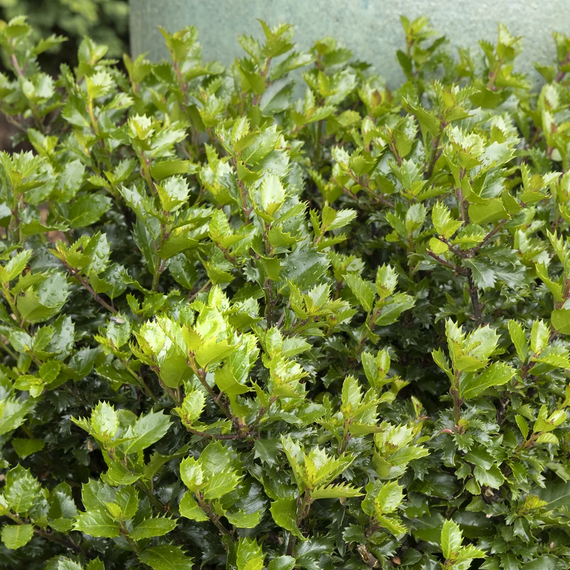
- Dense, compact evergreen holly with glossy dark blue-green foliage that takes on an attractive burgundy tinge in winter, providing year-round color and structure
- Naturally tidy rounded form reaches just 2 to 4 feet tall and 3 to 4 feet wide, a space-saving alternative to boxwood for hedges and foundation plantings
- Male pollenizer variety; plant alongside a female Meserve holly for brilliant red winter berry production on the female plant
- Cold hardy across USDA Zones 5 through 9 with full sun to partial shade adaptability and excellent cold hardiness for northern gardens
Emerald Magic Meserve Holly (Ilex x meserveae 'WillEmer') is a compact, refined evergreen holly prized for its dense branching habit, small glossy dark blue-green leaves, and the attractive burgundy tinge the foliage develops during winter months, adding seasonal variation to its year-round appeal. Maturing to just 2 to 4 feet tall and 3 to 4 feet wide, this naturally tidy, rounded shrub requires minimal pruning to maintain its handsome form, making it an outstanding low-maintenance alternative to boxwood for formal hedges, foundation plantings, and border edging. As a male variety, Emerald Magic does not produce berries itself, but serves as an essential pollinator for nearby female Meserve holly varieties that produce the showy red winter berries for which the group is famous. Hardy across USDA Zones 5 through 9, it is one of the most cold-tolerant and broadly adaptable compact holly selections available for North American gardens.
Plant Details
| Attribute | Details |
|---|---|
| Botanical Name | Ilex x meserveae 'WillEmer' |
| Plant Type | Evergreen Shrub |
| Foliage Color | Dark blue-green (burgundy tinge in winter) |
| Gender | Male (pollenizer; does not produce berries) |
| Bloom Time | Spring (inconspicuous white flowers) |
| Growth Rate | Slow to moderate |
| Growth Habit | Rounded / Compact |
| Mature Size | 2-4 ft. tall, 3-4 ft. wide |
| USDA Zones | 5 - 9 |
| Light | Full sun to partial shade |
| Water | Average moisture; well-drained, acidic soil |
| Special Features | Cold Hardy, Dense Habit, Pollenizer, Boxwood Alternative |
| Landscape Use | Foundation Planting, Hedge, Border, Container |
Understanding Male and Female Hollies
Like all Ilex species, Meserve hollies are dioecious plants — meaning individual plants are either male or female, and both sexes must be present for the female plant to produce the showy red berries for which hollies are celebrated. Emerald Magic is a male variety, meaning it does not produce berries but instead produces pollen that fertilizes the flowers on nearby female Meserve holly plants. For best berry production, plant one male Meserve holly within approximately 50 feet of every one to three female Meserve holly plants. 'Blue Prince' is a commonly paired male companion for 'Blue Princess' females, but Emerald Magic can serve as a pollinator for various female Meserve varieties when their bloom periods coincide.
Size and Growth Habit
Emerald Magic Meserve Holly is one of the most compact Meserve holly selections available, forming a naturally rounded, dense mound of tightly branched, fine-textured evergreen foliage that grows slowly to just 2 to 4 feet tall and 3 to 4 feet wide at maturity. Its naturally tidy, compact habit means it requires very little pruning to maintain an attractive form, making it significantly lower maintenance than many other formal hedging plants. The dense branching and fine-textured, spiny leaves create a solid, impenetrable hedge when plants are spaced appropriately. This compact size also makes it well-suited to smaller residential lots and formal container displays.
Sunlight Requirements
Emerald Magic Meserve Holly thrives in full sun to partial shade. In full sun, it produces the densest growth, the deepest foliage color, and the most compact habit. In partial shade, growth is slightly more open but remains healthy and attractive. Holly is one of the few broad-leaved evergreen shrubs that tolerates moderate shade without significant performance decline, making it useful in landscape situations where full sun is unavailable. In the warmest parts of its zone range, some afternoon shade protection can help prevent leaf scorch and maintain the deep, lustrous foliage color that makes this variety so attractive.
Watering
Water Emerald Magic Meserve Holly with average, consistent moisture throughout the growing season. During the first growing season, water deeply and regularly to establish the root system. Once established, maintain evenly moist soil, particularly during hot, dry summers. Mulching heavily around the base helps retain soil moisture and keeps the roots cool. Avoid planting in overly wet, waterlogged sites. Before the ground freezes in fall, water thoroughly to ensure the plant enters winter well-hydrated; winter desiccation (drying of the evergreen leaves from cold wind and sun) is one of the most common causes of winter damage to broad-leaved evergreens like holly.
Soil Requirements
Meserve hollies prefer moist, well-drained, acidic soil with a pH of approximately 5.0 to 6.5. Avoid alkaline soils, which can cause chlorosis (yellowing) from iron deficiency. Incorporate acidic organic matter such as peat moss, pine bark fines, or compost into planting beds to lower soil pH and improve drainage. A 2 to 3 inch layer of acidic mulch (pine bark, pine needles) over the root zone helps maintain appropriate soil acidity while retaining moisture. In alkaline soils, incorporate sulfur to lower pH before planting and use an acid-forming fertilizer to maintain appropriate soil chemistry over time.
Care and Maintenance
- Fertilizing: Apply an acid-forming fertilizer formulated for hollies and evergreens in early spring before new growth begins.
- Pruning: Minimal pruning needed; the natural rounded form is self-maintaining. Prune lightly in late winter if needed to refine shape.
- Mulching: Maintain a 2-3 inch layer of acidic mulch to retain moisture, cool roots, and maintain soil acidity.
- Winter watering: Water thoroughly before the ground freezes in fall to reduce winter desiccation of the evergreen foliage.
- Anti-desiccant spray: In exposed, windy northern locations (Zone 5), an anti-desiccant spray applied in late fall can help reduce winter leaf burn.
Landscape Uses
Emerald Magic Meserve Holly excels as a tidy, low-maintenance foundation planting around homes and commercial buildings, where its compact, rounded form fits well under windows and along building foundations without requiring frequent pruning. Its dense, impenetrable habit (thanks to small, spiny leaves) makes it an effective low hedge along walkways and property boundaries. In mixed evergreen beds, it provides fine-textured, year-round foliage interest that bridges the gap between larger evergreen shrubs. In containers for semi-formal effects on patios and terraces, it creates a polished, polished seasonal display that can be moved indoors to a cool, bright location over winter in colder climates.
Companion Plants
| Plant | Why It Works |
|---|---|
| Blue Princess Holly (Ilex x meserveae 'Blue Princess') | The ideal female companion for berry production; plant one male for every 1-3 female plants |
| Boxwood (Buxus) | Similar scale and formal use; combining creates varied texture in formal hedging designs |
| Hellebore (Helleborus) | Winter-blooming shade perennial that thrives at the base of hollies in similar acidic, partially shaded conditions |
| Azalea (Azalea) | Spring flowering shrub sharing the same acidic soil preference creates a complementary seasonal display |
| Coral Bells (Heuchera) | Colorful, low-growing foliage plant at the base that provides seasonal color contrast against the evergreen holly |
USDA Hardiness Zones
Emerald Magic Meserve Holly is rated for USDA Zones 5 through 9, giving it broader cold hardiness than many other broad-leaved evergreen shrubs. The Meserve holly hybrids were specifically developed by breeder Kathleen Meserve of Long Island, New York, to combine the ornamental beauty of English holly with the cold hardiness needed for northern American climates. This cold hardiness was achieved by incorporating the cold-tolerant prostrate holly (Ilex rugosa) into the breeding lineage. In Zone 5, provide wind protection and ensure plants are well-watered before the ground freezes to minimize winter foliage desiccation.
History and Background
The Meserve holly hybrids represent one of the most significant American plant breeding achievements of the 20th century. They were developed by Kathleen Meserve of St. James, New York, who began her breeding program in the 1950s with the goal of combining the glossy, attractive foliage and colorful berries of the English holly (Ilex aquifolium) with the cold hardiness of the Japanese prostrate holly (Ilex rugosa). The resulting hybrids, which she donated to the U.S. National Arboretum, were initially released as the "Blue Holly" series. Later, through additional breeding involving Ilex cornuta, further cold-hardy and heat-tolerant varieties were developed. Emerald Magic represents a more recent introduction from this lineage, selected specifically for its compact habit and attractive winter foliage coloration. It is covered by U.S. Plant Patent PP12,314.
- Dense, compact evergreen holly with glossy dark blue-green foliage that takes on an attractive burgundy tinge in winter, providing year-round color and structure
- Naturally tidy rounded form reaches just 2 to 4 feet tall and 3 to 4 feet wide, a space-saving alternative to boxwood for hedges and foundation plantings
- Male pollenizer variety; plant alongside a female Meserve holly for brilliant red winter berry production on the female plant
- Cold hardy across USDA Zones 5 through 9 with full sun to partial shade adaptability and excellent cold hardiness for northern gardens
Emerald Magic Meserve Holly (Ilex x meserveae 'WillEmer') is a compact, refined evergreen holly prized for its dense branching habit, small glossy dark blue-green leaves, and the attractive burgundy tinge the foliage develops during winter months, adding seasonal variation to its year-round appeal. Maturing to just 2 to 4 feet tall and 3 to 4 feet wide, this naturally tidy, rounded shrub requires minimal pruning to maintain its handsome form, making it an outstanding low-maintenance alternative to boxwood for formal hedges, foundation plantings, and border edging. As a male variety, Emerald Magic does not produce berries itself, but serves as an essential pollinator for nearby female Meserve holly varieties that produce the showy red winter berries for which the group is famous. Hardy across USDA Zones 5 through 9, it is one of the most cold-tolerant and broadly adaptable compact holly selections available for North American gardens.
Plant Details
| Attribute | Details |
|---|---|
| Botanical Name | Ilex x meserveae 'WillEmer' |
| Plant Type | Evergreen Shrub |
| Foliage Color | Dark blue-green (burgundy tinge in winter) |
| Gender | Male (pollenizer; does not produce berries) |
| Bloom Time | Spring (inconspicuous white flowers) |
| Growth Rate | Slow to moderate |
| Growth Habit | Rounded / Compact |
| Mature Size | 2-4 ft. tall, 3-4 ft. wide |
| USDA Zones | 5 - 9 |
| Light | Full sun to partial shade |
| Water | Average moisture; well-drained, acidic soil |
| Special Features | Cold Hardy, Dense Habit, Pollenizer, Boxwood Alternative |
| Landscape Use | Foundation Planting, Hedge, Border, Container |
Understanding Male and Female Hollies
Like all Ilex species, Meserve hollies are dioecious plants — meaning individual plants are either male or female, and both sexes must be present for the female plant to produce the showy red berries for which hollies are celebrated. Emerald Magic is a male variety, meaning it does not produce berries but instead produces pollen that fertilizes the flowers on nearby female Meserve holly plants. For best berry production, plant one male Meserve holly within approximately 50 feet of every one to three female Meserve holly plants. 'Blue Prince' is a commonly paired male companion for 'Blue Princess' females, but Emerald Magic can serve as a pollinator for various female Meserve varieties when their bloom periods coincide.
Size and Growth Habit
Emerald Magic Meserve Holly is one of the most compact Meserve holly selections available, forming a naturally rounded, dense mound of tightly branched, fine-textured evergreen foliage that grows slowly to just 2 to 4 feet tall and 3 to 4 feet wide at maturity. Its naturally tidy, compact habit means it requires very little pruning to maintain an attractive form, making it significantly lower maintenance than many other formal hedging plants. The dense branching and fine-textured, spiny leaves create a solid, impenetrable hedge when plants are spaced appropriately. This compact size also makes it well-suited to smaller residential lots and formal container displays.
Sunlight Requirements
Emerald Magic Meserve Holly thrives in full sun to partial shade. In full sun, it produces the densest growth, the deepest foliage color, and the most compact habit. In partial shade, growth is slightly more open but remains healthy and attractive. Holly is one of the few broad-leaved evergreen shrubs that tolerates moderate shade without significant performance decline, making it useful in landscape situations where full sun is unavailable. In the warmest parts of its zone range, some afternoon shade protection can help prevent leaf scorch and maintain the deep, lustrous foliage color that makes this variety so attractive.
Watering
Water Emerald Magic Meserve Holly with average, consistent moisture throughout the growing season. During the first growing season, water deeply and regularly to establish the root system. Once established, maintain evenly moist soil, particularly during hot, dry summers. Mulching heavily around the base helps retain soil moisture and keeps the roots cool. Avoid planting in overly wet, waterlogged sites. Before the ground freezes in fall, water thoroughly to ensure the plant enters winter well-hydrated; winter desiccation (drying of the evergreen leaves from cold wind and sun) is one of the most common causes of winter damage to broad-leaved evergreens like holly.
Soil Requirements
Meserve hollies prefer moist, well-drained, acidic soil with a pH of approximately 5.0 to 6.5. Avoid alkaline soils, which can cause chlorosis (yellowing) from iron deficiency. Incorporate acidic organic matter such as peat moss, pine bark fines, or compost into planting beds to lower soil pH and improve drainage. A 2 to 3 inch layer of acidic mulch (pine bark, pine needles) over the root zone helps maintain appropriate soil acidity while retaining moisture. In alkaline soils, incorporate sulfur to lower pH before planting and use an acid-forming fertilizer to maintain appropriate soil chemistry over time.
Care and Maintenance
- Fertilizing: Apply an acid-forming fertilizer formulated for hollies and evergreens in early spring before new growth begins.
- Pruning: Minimal pruning needed; the natural rounded form is self-maintaining. Prune lightly in late winter if needed to refine shape.
- Mulching: Maintain a 2-3 inch layer of acidic mulch to retain moisture, cool roots, and maintain soil acidity.
- Winter watering: Water thoroughly before the ground freezes in fall to reduce winter desiccation of the evergreen foliage.
- Anti-desiccant spray: In exposed, windy northern locations (Zone 5), an anti-desiccant spray applied in late fall can help reduce winter leaf burn.
Landscape Uses
Emerald Magic Meserve Holly excels as a tidy, low-maintenance foundation planting around homes and commercial buildings, where its compact, rounded form fits well under windows and along building foundations without requiring frequent pruning. Its dense, impenetrable habit (thanks to small, spiny leaves) makes it an effective low hedge along walkways and property boundaries. In mixed evergreen beds, it provides fine-textured, year-round foliage interest that bridges the gap between larger evergreen shrubs. In containers for semi-formal effects on patios and terraces, it creates a polished, polished seasonal display that can be moved indoors to a cool, bright location over winter in colder climates.
Companion Plants
| Plant | Why It Works |
|---|---|
| Blue Princess Holly (Ilex x meserveae 'Blue Princess') | The ideal female companion for berry production; plant one male for every 1-3 female plants |
| Boxwood (Buxus) | Similar scale and formal use; combining creates varied texture in formal hedging designs |
| Hellebore (Helleborus) | Winter-blooming shade perennial that thrives at the base of hollies in similar acidic, partially shaded conditions |
| Azalea (Azalea) | Spring flowering shrub sharing the same acidic soil preference creates a complementary seasonal display |
| Coral Bells (Heuchera) | Colorful, low-growing foliage plant at the base that provides seasonal color contrast against the evergreen holly |
USDA Hardiness Zones
Emerald Magic Meserve Holly is rated for USDA Zones 5 through 9, giving it broader cold hardiness than many other broad-leaved evergreen shrubs. The Meserve holly hybrids were specifically developed by breeder Kathleen Meserve of Long Island, New York, to combine the ornamental beauty of English holly with the cold hardiness needed for northern American climates. This cold hardiness was achieved by incorporating the cold-tolerant prostrate holly (Ilex rugosa) into the breeding lineage. In Zone 5, provide wind protection and ensure plants are well-watered before the ground freezes to minimize winter foliage desiccation.
History and Background
The Meserve holly hybrids represent one of the most significant American plant breeding achievements of the 20th century. They were developed by Kathleen Meserve of St. James, New York, who began her breeding program in the 1950s with the goal of combining the glossy, attractive foliage and colorful berries of the English holly (Ilex aquifolium) with the cold hardiness of the Japanese prostrate holly (Ilex rugosa). The resulting hybrids, which she donated to the U.S. National Arboretum, were initially released as the "Blue Holly" series. Later, through additional breeding involving Ilex cornuta, further cold-hardy and heat-tolerant varieties were developed. Emerald Magic represents a more recent introduction from this lineage, selected specifically for its compact habit and attractive winter foliage coloration. It is covered by U.S. Plant Patent PP12,314.