

Zoom the image with the mouse
Devon Skies Blue-Eyed Grass - 1 Gallon
SKU:
2102485
UPC:
014949237571
$12.99
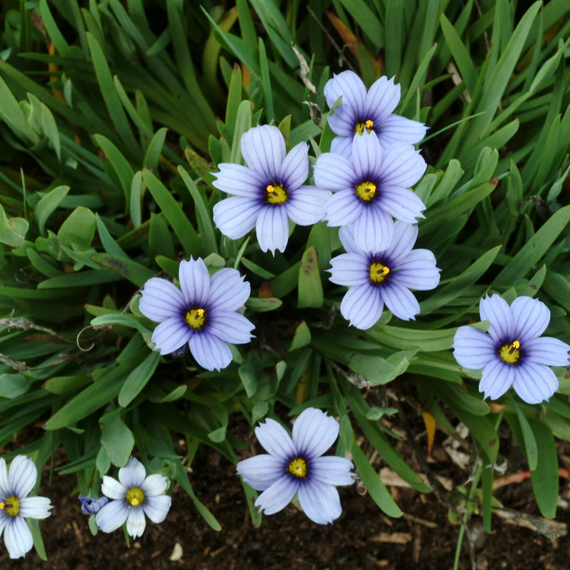
- Enchanting sky-blue, star-shaped flowers with sunny yellow centers bloom prolifically from late spring through summer, creating a vivid carpet of color above neat, grass-like foliage.
- A sterile hybrid that won't self-seed or spread aggressively, making it a tidy, well-behaved choice for borders, rock gardens, pathways, and pollinator plantings.
- Tolerates heat, humidity, drought once established, and even poor soils as long as drainage is good — a remarkably tough yet delicate-looking perennial for low-water landscapes.
- Deer resistant and butterfly friendly, this compact, clump-forming perennial from the iris family delivers four-season foliage interest and effortless, low-maintenance charm.
Sisyrinchium 'Devon Skies' Blue-Eyed Grass is a captivating hybrid perennial that bridges the gap between refined garden elegance and rugged, low-maintenance toughness. Despite its common name and slender, grass-like appearance, this charming plant is a true member of the iris family (Iridaceae), producing an eye-catching profusion of 1-inch-wide, sky-blue, star-shaped flowers, each accented by a bright yellow center eye, held just above glossy, dark green foliage on stems that reach roughly 6 inches tall. Discovered in a UK garden belonging to the National Collection Holders for Sisyrinchium, 'Devon Skies' has earned a devoted following among gardeners for its exceptionally long bloom period, showy floral display, and its sterile habit that eliminates unwanted self-seeding. Hardy in USDA Zones 5 through 9, it thrives in full sun to light shade and is remarkably tolerant of heat, humidity, and drought once established, making it an outstanding choice for the water-conscious gardens of Southern Oregon and Northern California. Use it as a neat, non-invasive edging along walkways, tuck it into rock gardens, mass it at the front of mixed perennial borders, or grow it in containers for a season-long splash of cool, saturated blue color that pairs beautifully with warm-toned companions like echinacea, salvia, and lavender.
Plant Description
Sisyrinchium 'Devon Skies' is a clump-forming, herbaceous perennial belonging to the iris family (Iridaceae), not the grass family as its common name might imply. Its slender, flat, sword-like leaves are a rich, glossy dark green and grow in tidy, upright fans that closely resemble ornamental grass foliage. Rising just above this grass-like mound, wiry stems bear showy, 1-inch-wide, flat-faced, star-shaped flowers in a vivid sky blue to ultramarine hue, each centered with a distinctive bright yellow eye. The blooms face upward, catching the light and attracting the eye from a distance. 'Devon Skies' is a sterile hybrid selection, meaning it produces no viable seed and will not spread by self-sowing throughout the garden. It was originally discovered in the garden of Edmund and Rita Heaton in the United Kingdom, the recognized National Collection Holders for the Sisyrinchium genus, and has since become one of the most widely admired cultivars in the group for its exceptionally large, long-lasting flowers and well-behaved growth habit.
Mature Size
| Measurement | Dimension |
|---|---|
| Foliage Height | 3 to 4 inches |
| Flowering Height | Approximately 6 inches |
| Spread / Width | 10 to 12 inches |
| Growth Habit | Compact, clump-forming |
| Growth Rate | Moderate to fast; reaches full size in 1 to 2 seasons |
Because 'Devon Skies' is sterile and spreads only by vegetative clump expansion rather than by seed, it remains a tidy, non-invasive perennial that stays right where you plant it. Clumps can be divided every 2 to 3 years to maintain vigor and to propagate new plants.
Hardiness Zones and Climate Tolerance
Sisyrinchium 'Devon Skies' is reliably hardy in USDA Hardiness Zones 5 through 9, with some sources citing Zones 7 through 10 for the cultivar specifically. It performs exceptionally well in the mild, Mediterranean-influenced climates of Southern Oregon and Northern California, where cool winters and warm, dry summers align closely with its preferred growing conditions. Once established, it demonstrates impressive tolerance for summer heat, high humidity, and extended dry spells, making it a dependable performer even in challenging warm-season conditions. In colder climates, the foliage may die back to the ground over winter but reliably re-emerges in spring. In mild coastal and inland valley gardens, the foliage often remains semi-evergreen through winter, providing year-round interest.
Sunlight Requirements
For the best flowering performance, plant 'Devon Skies' in a location that receives full sun, defined as 6 or more hours of direct sunlight per day. It will also grow satisfactorily in light or partial shade, receiving 3 to 6 hours of sun daily. In warmer inland gardens and during the peak heat of summer, some afternoon shade is beneficial and helps prevent foliage scorch while extending the bloom period. In the cooler coastal regions of Southern Oregon and Northern California, full sun exposure consistently delivers the most abundant and longest-lasting flower display. Avoid deep, dense shade, which will significantly reduce blooming and cause the foliage clumps to sprawl and lose their characteristic upright, tidy form.
Soil and pH Preferences
'Devon Skies' is refreshingly adaptable when it comes to soil and will perform well even in poor to moderately fertile ground, provided drainage is good. Excellent drainage is the single most critical soil requirement for this plant; consistently waterlogged soil will cause root rot and plant decline. Ideal soil is sandy to loamy in texture with a slightly acidic to neutral pH range of 6.0 to 7.2. If your native soil is heavy clay, amend the planting area with coarse sand, fine grit, or perlite to improve drainage, or consider raised beds and rock garden placements where water moves freely away from the root zone. Adding organic matter such as compost at planting time improves both nutrient availability and moisture retention in sandy soils without compromising drainage.
Watering Guide
During the establishment period — typically the first growing season after planting — keep the soil consistently and evenly moist, watering whenever the top inch or two begins to dry out. Once fully established, 'Devon Skies' has low to moderate water needs and demonstrates good drought tolerance. Water established plants every 7 to 10 days during warm, dry weather, adjusting frequency based on local conditions, soil type, and temperature. In the hot, dry summers typical of Southern Oregon and Northern California, supplemental irrigation during prolonged dry spells will maintain the best appearance and extend the bloom season. Always water deeply and slowly, using drip irrigation or a soaker hose to deliver moisture directly to the root zone. Avoid overhead watering that keeps foliage wet for extended periods, as this can encourage fungal issues. Reduce watering frequency in fall and allow the soil to dry slightly between waterings to harden the plant for winter.
Fertilizing
'Devon Skies' is a light feeder and does not require heavy or frequent fertilization, particularly when planted in average to moderately fertile garden soil. An application of a balanced, slow-release granular fertilizer (such as a 10-10-10 formulation) worked into the soil at planting time provides a strong start. In subsequent years, top-dress the planting area with a thin layer of compost in early spring to provide a gentle, organic nutrient boost as new growth emerges. A light application of a balanced liquid or granular fertilizer in mid-summer can help sustain the extended bloom period. Avoid over-fertilizing with high-nitrogen products, which will promote lush, floppy foliage at the expense of flowers. Plants grown in containers benefit from a diluted balanced liquid fertilizer applied every 4 to 6 weeks throughout the active growing season.
Pruning and Maintenance
Sisyrinchium 'Devon Skies' is a low-maintenance plant that requires very little pruning to look its best. Because it is sterile, there is no need to deadhead spent blooms to prevent self-seeding, though removing faded flowers can help tidy the plant's appearance and may encourage continued rebloom. After the main flush of flowering, shearing the foliage clump back by about one-third will refresh the plant's appearance, stimulate new basal growth, and often trigger a secondary round of blooms. In late fall or early winter, trim the foliage back to the base to tidy the planting and remove any weathered or damaged leaves. Every 2 to 3 years, divide established clumps in early spring or fall to maintain plant vigor, improve flowering, and prevent the center of the clump from dying out.
Planting Instructions
- Select a site with full sun to light shade and well-drained soil. Avoid low-lying areas where water pools after rain.
- Loosen the soil to a depth of at least 10 to 12 inches and amend with compost or coarse grit as needed to improve drainage and fertility.
- Dig a planting hole slightly wider and the same depth as the root ball. Set the plant so the top of the root ball sits level with or very slightly above the surrounding soil grade to ensure good drainage away from the crown.
- Space multiple plants 10 to 12 inches apart on center to allow for mature spread and good air circulation.
- Backfill the hole with amended native soil, firming gently around the roots to eliminate air pockets.
- Water thoroughly immediately after planting to settle the soil and hydrate the roots.
- Apply a 1- to 2-inch layer of fine-textured mulch around (but not directly on top of) the crown to conserve moisture and suppress weeds.
- The best times to plant are early spring after the last frost date or early fall at least 6 to 8 weeks before the first frost, allowing roots to establish during cooler, milder weather.
Bloom Season and Seasonal Interest
'Devon Skies' delivers a genuinely extended season of color. The sky-blue, star-shaped flowers begin to appear in late spring and bloom prolifically through early summer, with continued or repeat blooming carrying on through midsummer and into late summer in many climates. In the Pacific coastal regions of Southern Oregon and Northern California, the bloom season can be exceptionally long — often from April through August or September — thanks to moderate temperatures and the cultivar's noted heat tolerance. Outside of the flowering period, the upright, glossy, dark green foliage clumps provide clean, attractive texture in the garden year-round. In mild climates the foliage remains semi-evergreen, maintaining a tidy presence through winter and providing a fresh green backdrop as early spring bulbs and perennials emerge nearby.
Landscape Uses
The compact size, non-invasive nature, and long bloom season of 'Devon Skies' make it one of the most versatile small perennials available for a wide range of garden applications. Its most natural and effective uses include:
- Edging and borders: Its neat, low mound and upward-facing blue flowers make it an ideal edging plant along garden paths, walkways, and the front of mixed perennial or shrub borders.
- Rock gardens: Excellent drainage tolerance and compact form make it perfectly suited to rock garden plantings, gravel gardens, and dry creek bed margins.
- Mass plantings and ground cover: When planted in drifts or masses, clumps slowly knit together to form an attractive weed-suppressing ground cover blanketed in blue flowers during the bloom season.
- Naturalized and low-water gardens: Well-suited to informal, naturalized garden areas and water-wise landscapes thanks to its drought tolerance and low maintenance requirements.
- Container gardening: The compact size and showy flowers make it an outstanding filler in mixed patio containers, window boxes, and decorative pots.
- Pollinator gardens: An excellent addition to butterfly and native pollinator garden plantings, especially as an early-season nectar source.
- Parking strips and hell strips: Tolerates tough, restricted growing conditions and foot traffic margins, making it practical for roadside plantings.
Companion Plants
The cool, saturated blue of 'Devon Skies' creates stunning combinations with a wide range of garden companions. Consider pairing it with the following plants for complementary color, texture, and seasonal interest in Southern Oregon and Northern California gardens:
- Lavender (Lavandula spp.): Echoes the blue-purple flower palette while contributing fragrance and silvery foliage contrast. Both share a preference for full sun and excellent drainage.
- Echinacea (Coneflower): Bold, warm-toned flowers in pink, orange, and gold create vivid contrast against the cool blue of 'Devon Skies,' and both attract pollinators prolifically.
- Salvia (Salvia spp.): The spiky blue, purple, or red flower spikes of ornamental sages complement the star-shaped blooms and both thrive in dry, sunny conditions.
- Armeria (Sea Thrift): A perfect rock garden and border edge companion with a similar low-growing habit and pompom flowers in pink or white.
- Sedum (Stonecrop): Fleshy, drought-tolerant foliage in contrasting colors and textures pairs beautifully with the grass-like form of 'Devon Skies.'
- Festuca glauca (Blue Fescue): The silvery blue of blue fescue picks up the flower color of 'Devon Skies' while providing a complementary fine-textured foliage contrast.
- Heuchera (Coral Bells): Bold, burgundy or chartreuse foliage makes a dramatic backdrop against the blue flowers and green strap leaves of 'Devon Skies.'
- Veronica (Speedwell): Low-growing, blue-flowered Veronica species extend the blue color theme while sharing similar sun and drainage preferences.
Wildlife Value
Despite its diminutive size, Sisyrinchium 'Devon Skies' makes a meaningful contribution to garden ecology. The nectar-rich flowers are actively visited by native bees, honeybees, and a variety of spring and early-summer butterflies, making it a valuable component of any pollinator-friendly planting scheme. Because it blooms relatively early in the season, it provides an important nectar source at a time when many other perennials have not yet begun to flower, helping to support pollinators during a critical period. The plant is also notably deer resistant — a particularly valuable trait in the rural and semi-rural landscapes of Southern Oregon and Northern California where deer browsing pressure can be significant. Rabbits and most other browsing animals generally leave it undisturbed as well.
Pests and Diseases
Sisyrinchium 'Devon Skies' is a remarkably trouble-free perennial with no serious insect or disease problems known to affect it under typical garden conditions. Its most significant vulnerability is to root rot caused by prolonged exposure to waterlogged, poorly drained soil — ensuring adequate drainage at the planting site is the single most effective preventive measure. In very humid conditions or with overhead watering, minor fungal leaf spotting can occasionally occur; improving air circulation by spacing plants properly and avoiding wetting foliage when watering will prevent most issues. Occasional visits from spider mites are possible during very hot, dry weather; if fine webbing or stippled, discolored foliage is noticed, treat with insecticidal soap or neem oil as a safe and effective solution. The cultivar is listed as resistant to verticillium wilt, a soil-borne fungal disease that can affect many garden perennials, adding an extra layer of reliability and longevity in the garden.
Container Growing
'Devon Skies' is an excellent candidate for container culture, where its compact mounding habit, upward-facing blue flowers, and tidy evergreen foliage can be showcased at close range on patios, decks, and entryways. Select a container with ample drainage holes — this is non-negotiable, as standing water in a pot will quickly cause root rot. Use a quality, well-draining potting mix amended with perlite or coarse grit at a ratio of roughly 3 parts potting mix to 1 part amendment. Because containers dry out faster than in-ground plantings, monitor soil moisture closely and water whenever the top inch of the mix feels dry, aiming for even moisture without saturation. Feed container-grown plants with a balanced liquid fertilizer diluted to half strength every 4 to 6 weeks from spring through midsummer. In very cold winters, move containers to a sheltered, frost-protected location to prevent the pot from freezing solid. Repot every 2 years or when the plant becomes rootbound, refreshing the potting mix at the same time.
Propagation
Because 'Devon Skies' is a sterile hybrid cultivar that does not set viable seed, division is the primary and most reliable method of propagation for home gardeners.
- Division: The best time to divide established clumps is in early spring as new growth emerges, or in early fall at least 6 to 8 weeks before the first expected frost. Dig the entire clump carefully, then use a sharp, clean spade or knife to separate it into smaller sections, each with several healthy shoots and a good portion of root. Replant divisions at the same depth they were previously growing, water well, and keep evenly moist until re-established.
- Division frequency: Divide every 2 to 3 years to maintain plant vigor, as clumps can begin to die out in the center if left undivided for too long.
- Stem cuttings: Basal stem cuttings taken in spring can be rooted in a perlite-and-peat propagation medium, though this method is less commonly used than division.
- Enchanting sky-blue, star-shaped flowers with sunny yellow centers bloom prolifically from late spring through summer, creating a vivid carpet of color above neat, grass-like foliage.
- A sterile hybrid that won't self-seed or spread aggressively, making it a tidy, well-behaved choice for borders, rock gardens, pathways, and pollinator plantings.
- Tolerates heat, humidity, drought once established, and even poor soils as long as drainage is good — a remarkably tough yet delicate-looking perennial for low-water landscapes.
- Deer resistant and butterfly friendly, this compact, clump-forming perennial from the iris family delivers four-season foliage interest and effortless, low-maintenance charm.
Sisyrinchium 'Devon Skies' Blue-Eyed Grass is a captivating hybrid perennial that bridges the gap between refined garden elegance and rugged, low-maintenance toughness. Despite its common name and slender, grass-like appearance, this charming plant is a true member of the iris family (Iridaceae), producing an eye-catching profusion of 1-inch-wide, sky-blue, star-shaped flowers, each accented by a bright yellow center eye, held just above glossy, dark green foliage on stems that reach roughly 6 inches tall. Discovered in a UK garden belonging to the National Collection Holders for Sisyrinchium, 'Devon Skies' has earned a devoted following among gardeners for its exceptionally long bloom period, showy floral display, and its sterile habit that eliminates unwanted self-seeding. Hardy in USDA Zones 5 through 9, it thrives in full sun to light shade and is remarkably tolerant of heat, humidity, and drought once established, making it an outstanding choice for the water-conscious gardens of Southern Oregon and Northern California. Use it as a neat, non-invasive edging along walkways, tuck it into rock gardens, mass it at the front of mixed perennial borders, or grow it in containers for a season-long splash of cool, saturated blue color that pairs beautifully with warm-toned companions like echinacea, salvia, and lavender.
Plant Description
Sisyrinchium 'Devon Skies' is a clump-forming, herbaceous perennial belonging to the iris family (Iridaceae), not the grass family as its common name might imply. Its slender, flat, sword-like leaves are a rich, glossy dark green and grow in tidy, upright fans that closely resemble ornamental grass foliage. Rising just above this grass-like mound, wiry stems bear showy, 1-inch-wide, flat-faced, star-shaped flowers in a vivid sky blue to ultramarine hue, each centered with a distinctive bright yellow eye. The blooms face upward, catching the light and attracting the eye from a distance. 'Devon Skies' is a sterile hybrid selection, meaning it produces no viable seed and will not spread by self-sowing throughout the garden. It was originally discovered in the garden of Edmund and Rita Heaton in the United Kingdom, the recognized National Collection Holders for the Sisyrinchium genus, and has since become one of the most widely admired cultivars in the group for its exceptionally large, long-lasting flowers and well-behaved growth habit.
Mature Size
| Measurement | Dimension |
|---|---|
| Foliage Height | 3 to 4 inches |
| Flowering Height | Approximately 6 inches |
| Spread / Width | 10 to 12 inches |
| Growth Habit | Compact, clump-forming |
| Growth Rate | Moderate to fast; reaches full size in 1 to 2 seasons |
Because 'Devon Skies' is sterile and spreads only by vegetative clump expansion rather than by seed, it remains a tidy, non-invasive perennial that stays right where you plant it. Clumps can be divided every 2 to 3 years to maintain vigor and to propagate new plants.
Hardiness Zones and Climate Tolerance
Sisyrinchium 'Devon Skies' is reliably hardy in USDA Hardiness Zones 5 through 9, with some sources citing Zones 7 through 10 for the cultivar specifically. It performs exceptionally well in the mild, Mediterranean-influenced climates of Southern Oregon and Northern California, where cool winters and warm, dry summers align closely with its preferred growing conditions. Once established, it demonstrates impressive tolerance for summer heat, high humidity, and extended dry spells, making it a dependable performer even in challenging warm-season conditions. In colder climates, the foliage may die back to the ground over winter but reliably re-emerges in spring. In mild coastal and inland valley gardens, the foliage often remains semi-evergreen through winter, providing year-round interest.
Sunlight Requirements
For the best flowering performance, plant 'Devon Skies' in a location that receives full sun, defined as 6 or more hours of direct sunlight per day. It will also grow satisfactorily in light or partial shade, receiving 3 to 6 hours of sun daily. In warmer inland gardens and during the peak heat of summer, some afternoon shade is beneficial and helps prevent foliage scorch while extending the bloom period. In the cooler coastal regions of Southern Oregon and Northern California, full sun exposure consistently delivers the most abundant and longest-lasting flower display. Avoid deep, dense shade, which will significantly reduce blooming and cause the foliage clumps to sprawl and lose their characteristic upright, tidy form.
Soil and pH Preferences
'Devon Skies' is refreshingly adaptable when it comes to soil and will perform well even in poor to moderately fertile ground, provided drainage is good. Excellent drainage is the single most critical soil requirement for this plant; consistently waterlogged soil will cause root rot and plant decline. Ideal soil is sandy to loamy in texture with a slightly acidic to neutral pH range of 6.0 to 7.2. If your native soil is heavy clay, amend the planting area with coarse sand, fine grit, or perlite to improve drainage, or consider raised beds and rock garden placements where water moves freely away from the root zone. Adding organic matter such as compost at planting time improves both nutrient availability and moisture retention in sandy soils without compromising drainage.
Watering Guide
During the establishment period — typically the first growing season after planting — keep the soil consistently and evenly moist, watering whenever the top inch or two begins to dry out. Once fully established, 'Devon Skies' has low to moderate water needs and demonstrates good drought tolerance. Water established plants every 7 to 10 days during warm, dry weather, adjusting frequency based on local conditions, soil type, and temperature. In the hot, dry summers typical of Southern Oregon and Northern California, supplemental irrigation during prolonged dry spells will maintain the best appearance and extend the bloom season. Always water deeply and slowly, using drip irrigation or a soaker hose to deliver moisture directly to the root zone. Avoid overhead watering that keeps foliage wet for extended periods, as this can encourage fungal issues. Reduce watering frequency in fall and allow the soil to dry slightly between waterings to harden the plant for winter.
Fertilizing
'Devon Skies' is a light feeder and does not require heavy or frequent fertilization, particularly when planted in average to moderately fertile garden soil. An application of a balanced, slow-release granular fertilizer (such as a 10-10-10 formulation) worked into the soil at planting time provides a strong start. In subsequent years, top-dress the planting area with a thin layer of compost in early spring to provide a gentle, organic nutrient boost as new growth emerges. A light application of a balanced liquid or granular fertilizer in mid-summer can help sustain the extended bloom period. Avoid over-fertilizing with high-nitrogen products, which will promote lush, floppy foliage at the expense of flowers. Plants grown in containers benefit from a diluted balanced liquid fertilizer applied every 4 to 6 weeks throughout the active growing season.
Pruning and Maintenance
Sisyrinchium 'Devon Skies' is a low-maintenance plant that requires very little pruning to look its best. Because it is sterile, there is no need to deadhead spent blooms to prevent self-seeding, though removing faded flowers can help tidy the plant's appearance and may encourage continued rebloom. After the main flush of flowering, shearing the foliage clump back by about one-third will refresh the plant's appearance, stimulate new basal growth, and often trigger a secondary round of blooms. In late fall or early winter, trim the foliage back to the base to tidy the planting and remove any weathered or damaged leaves. Every 2 to 3 years, divide established clumps in early spring or fall to maintain plant vigor, improve flowering, and prevent the center of the clump from dying out.
Planting Instructions
- Select a site with full sun to light shade and well-drained soil. Avoid low-lying areas where water pools after rain.
- Loosen the soil to a depth of at least 10 to 12 inches and amend with compost or coarse grit as needed to improve drainage and fertility.
- Dig a planting hole slightly wider and the same depth as the root ball. Set the plant so the top of the root ball sits level with or very slightly above the surrounding soil grade to ensure good drainage away from the crown.
- Space multiple plants 10 to 12 inches apart on center to allow for mature spread and good air circulation.
- Backfill the hole with amended native soil, firming gently around the roots to eliminate air pockets.
- Water thoroughly immediately after planting to settle the soil and hydrate the roots.
- Apply a 1- to 2-inch layer of fine-textured mulch around (but not directly on top of) the crown to conserve moisture and suppress weeds.
- The best times to plant are early spring after the last frost date or early fall at least 6 to 8 weeks before the first frost, allowing roots to establish during cooler, milder weather.
Bloom Season and Seasonal Interest
'Devon Skies' delivers a genuinely extended season of color. The sky-blue, star-shaped flowers begin to appear in late spring and bloom prolifically through early summer, with continued or repeat blooming carrying on through midsummer and into late summer in many climates. In the Pacific coastal regions of Southern Oregon and Northern California, the bloom season can be exceptionally long — often from April through August or September — thanks to moderate temperatures and the cultivar's noted heat tolerance. Outside of the flowering period, the upright, glossy, dark green foliage clumps provide clean, attractive texture in the garden year-round. In mild climates the foliage remains semi-evergreen, maintaining a tidy presence through winter and providing a fresh green backdrop as early spring bulbs and perennials emerge nearby.
Landscape Uses
The compact size, non-invasive nature, and long bloom season of 'Devon Skies' make it one of the most versatile small perennials available for a wide range of garden applications. Its most natural and effective uses include:
- Edging and borders: Its neat, low mound and upward-facing blue flowers make it an ideal edging plant along garden paths, walkways, and the front of mixed perennial or shrub borders.
- Rock gardens: Excellent drainage tolerance and compact form make it perfectly suited to rock garden plantings, gravel gardens, and dry creek bed margins.
- Mass plantings and ground cover: When planted in drifts or masses, clumps slowly knit together to form an attractive weed-suppressing ground cover blanketed in blue flowers during the bloom season.
- Naturalized and low-water gardens: Well-suited to informal, naturalized garden areas and water-wise landscapes thanks to its drought tolerance and low maintenance requirements.
- Container gardening: The compact size and showy flowers make it an outstanding filler in mixed patio containers, window boxes, and decorative pots.
- Pollinator gardens: An excellent addition to butterfly and native pollinator garden plantings, especially as an early-season nectar source.
- Parking strips and hell strips: Tolerates tough, restricted growing conditions and foot traffic margins, making it practical for roadside plantings.
Companion Plants
The cool, saturated blue of 'Devon Skies' creates stunning combinations with a wide range of garden companions. Consider pairing it with the following plants for complementary color, texture, and seasonal interest in Southern Oregon and Northern California gardens:
- Lavender (Lavandula spp.): Echoes the blue-purple flower palette while contributing fragrance and silvery foliage contrast. Both share a preference for full sun and excellent drainage.
- Echinacea (Coneflower): Bold, warm-toned flowers in pink, orange, and gold create vivid contrast against the cool blue of 'Devon Skies,' and both attract pollinators prolifically.
- Salvia (Salvia spp.): The spiky blue, purple, or red flower spikes of ornamental sages complement the star-shaped blooms and both thrive in dry, sunny conditions.
- Armeria (Sea Thrift): A perfect rock garden and border edge companion with a similar low-growing habit and pompom flowers in pink or white.
- Sedum (Stonecrop): Fleshy, drought-tolerant foliage in contrasting colors and textures pairs beautifully with the grass-like form of 'Devon Skies.'
- Festuca glauca (Blue Fescue): The silvery blue of blue fescue picks up the flower color of 'Devon Skies' while providing a complementary fine-textured foliage contrast.
- Heuchera (Coral Bells): Bold, burgundy or chartreuse foliage makes a dramatic backdrop against the blue flowers and green strap leaves of 'Devon Skies.'
- Veronica (Speedwell): Low-growing, blue-flowered Veronica species extend the blue color theme while sharing similar sun and drainage preferences.
Wildlife Value
Despite its diminutive size, Sisyrinchium 'Devon Skies' makes a meaningful contribution to garden ecology. The nectar-rich flowers are actively visited by native bees, honeybees, and a variety of spring and early-summer butterflies, making it a valuable component of any pollinator-friendly planting scheme. Because it blooms relatively early in the season, it provides an important nectar source at a time when many other perennials have not yet begun to flower, helping to support pollinators during a critical period. The plant is also notably deer resistant — a particularly valuable trait in the rural and semi-rural landscapes of Southern Oregon and Northern California where deer browsing pressure can be significant. Rabbits and most other browsing animals generally leave it undisturbed as well.
Pests and Diseases
Sisyrinchium 'Devon Skies' is a remarkably trouble-free perennial with no serious insect or disease problems known to affect it under typical garden conditions. Its most significant vulnerability is to root rot caused by prolonged exposure to waterlogged, poorly drained soil — ensuring adequate drainage at the planting site is the single most effective preventive measure. In very humid conditions or with overhead watering, minor fungal leaf spotting can occasionally occur; improving air circulation by spacing plants properly and avoiding wetting foliage when watering will prevent most issues. Occasional visits from spider mites are possible during very hot, dry weather; if fine webbing or stippled, discolored foliage is noticed, treat with insecticidal soap or neem oil as a safe and effective solution. The cultivar is listed as resistant to verticillium wilt, a soil-borne fungal disease that can affect many garden perennials, adding an extra layer of reliability and longevity in the garden.
Container Growing
'Devon Skies' is an excellent candidate for container culture, where its compact mounding habit, upward-facing blue flowers, and tidy evergreen foliage can be showcased at close range on patios, decks, and entryways. Select a container with ample drainage holes — this is non-negotiable, as standing water in a pot will quickly cause root rot. Use a quality, well-draining potting mix amended with perlite or coarse grit at a ratio of roughly 3 parts potting mix to 1 part amendment. Because containers dry out faster than in-ground plantings, monitor soil moisture closely and water whenever the top inch of the mix feels dry, aiming for even moisture without saturation. Feed container-grown plants with a balanced liquid fertilizer diluted to half strength every 4 to 6 weeks from spring through midsummer. In very cold winters, move containers to a sheltered, frost-protected location to prevent the pot from freezing solid. Repot every 2 years or when the plant becomes rootbound, refreshing the potting mix at the same time.
Propagation
Because 'Devon Skies' is a sterile hybrid cultivar that does not set viable seed, division is the primary and most reliable method of propagation for home gardeners.
- Division: The best time to divide established clumps is in early spring as new growth emerges, or in early fall at least 6 to 8 weeks before the first expected frost. Dig the entire clump carefully, then use a sharp, clean spade or knife to separate it into smaller sections, each with several healthy shoots and a good portion of root. Replant divisions at the same depth they were previously growing, water well, and keep evenly moist until re-established.
- Division frequency: Divide every 2 to 3 years to maintain plant vigor, as clumps can begin to die out in the center if left undivided for too long.
- Stem cuttings: Basal stem cuttings taken in spring can be rooted in a perlite-and-peat propagation medium, though this method is less commonly used than division.
Related Products