

Darkstar Ninebark
- Near-black, dark purple foliage delivers dramatic contrast and modern color in mixed shrub borders.
- Summer interest: crisp white blooms followed by attractive red fruit for multi-season appeal.
- Compact, well-branched form matures around 5 ft. tall and 3–4 ft. wide—easy to place and layer.
- Adaptable and low-fuss: full to partial sun and water when the top 2 inches of soil are dry.
Darkstar® Ninebark (Physocarpus opulifolius ‘Minbla3’, PP #33,455) is a standout deciduous shrub prized for its big, dark purple foliage that reads almost black—an instant upgrade for borders that need deeper contrast. The naturally compact, well-branched habit slips neatly into mixed plantings, where summer brings a fresh flush of white flowers followed by attractive red fruit for extended seasonal interest. Use it as a bold punctuation in foundation beds, a colorful anchor in shrub borders, or mass it for a dramatic, low-maintenance backdrop that makes surrounding greens and blooms pop.
Plant Description
A compact, deciduous ninebark with large, dark purple foliage and a tidy branching structure. Adds bold color and texture to shrub borders without needing constant shaping.
Foliage Color
Big, dark purple leaves with an almost-black cast provide strong contrast against lighter foliage and bright flowers—excellent for modern and mixed-color landscapes.
Flowers & Fruit
White flowers appear in summer, followed by attractive red fruit that extends interest beyond bloom and adds a subtle ornamental accent.
Habit & Size
Moderately growing, well-branched shrub that reaches about 5 ft. tall and 3 to 4 ft. wide, making it easy to tuck into borders and layer with perennials.
Sun & Exposure
Full sun to partial sun. More sun generally supports denser growth and best leaf color; partial sun works well in mixed borders.
Watering
Water when the top 2 inches of soil are dry. During the first season, keep a consistent schedule to establish roots; afterward, water during extended dry spells.
Soil
Prefers well-drained garden soil. Plant in a site that doesn’t stay waterlogged for best long-term performance and clean growth.
Hardiness
Hardy in USDA Zones 4–8. As a deciduous shrub, it drops leaves in winter and returns with fresh growth each spring.
Landscape Uses
A versatile choice for shrub borders and mixed beds. Use as a focal accent, repeat in groups for a ribbon of dark foliage, or combine with lighter evergreens for year-round contrast.
Care & Maintenance
Minimal routine care. Remove any weak or crossing stems as needed to keep the plant looking its best, and lightly shape if you want a more formal outline.
Seasonal Interest
Dark foliage provides season-long color; summer flowers brighten the canopy; red fruit adds a finishing detail later in the season for layered interest.
Plant Patent
PP #33,455. Asexual reproduction may be restricted during the life of the patent.
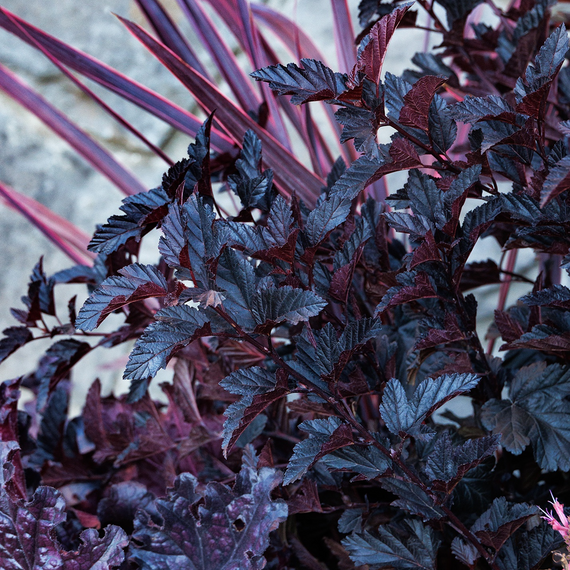
- Near-black, dark purple foliage delivers dramatic contrast and modern color in mixed shrub borders.
- Summer interest: crisp white blooms followed by attractive red fruit for multi-season appeal.
- Compact, well-branched form matures around 5 ft. tall and 3–4 ft. wide—easy to place and layer.
- Adaptable and low-fuss: full to partial sun and water when the top 2 inches of soil are dry.
Darkstar® Ninebark (Physocarpus opulifolius ‘Minbla3’, PP #33,455) is a standout deciduous shrub prized for its big, dark purple foliage that reads almost black—an instant upgrade for borders that need deeper contrast. The naturally compact, well-branched habit slips neatly into mixed plantings, where summer brings a fresh flush of white flowers followed by attractive red fruit for extended seasonal interest. Use it as a bold punctuation in foundation beds, a colorful anchor in shrub borders, or mass it for a dramatic, low-maintenance backdrop that makes surrounding greens and blooms pop.
Plant Description
A compact, deciduous ninebark with large, dark purple foliage and a tidy branching structure. Adds bold color and texture to shrub borders without needing constant shaping.
Foliage Color
Big, dark purple leaves with an almost-black cast provide strong contrast against lighter foliage and bright flowers—excellent for modern and mixed-color landscapes.
Flowers & Fruit
White flowers appear in summer, followed by attractive red fruit that extends interest beyond bloom and adds a subtle ornamental accent.
Habit & Size
Moderately growing, well-branched shrub that reaches about 5 ft. tall and 3 to 4 ft. wide, making it easy to tuck into borders and layer with perennials.
Sun & Exposure
Full sun to partial sun. More sun generally supports denser growth and best leaf color; partial sun works well in mixed borders.
Watering
Water when the top 2 inches of soil are dry. During the first season, keep a consistent schedule to establish roots; afterward, water during extended dry spells.
Soil
Prefers well-drained garden soil. Plant in a site that doesn’t stay waterlogged for best long-term performance and clean growth.
Hardiness
Hardy in USDA Zones 4–8. As a deciduous shrub, it drops leaves in winter and returns with fresh growth each spring.
Landscape Uses
A versatile choice for shrub borders and mixed beds. Use as a focal accent, repeat in groups for a ribbon of dark foliage, or combine with lighter evergreens for year-round contrast.
Care & Maintenance
Minimal routine care. Remove any weak or crossing stems as needed to keep the plant looking its best, and lightly shape if you want a more formal outline.
Seasonal Interest
Dark foliage provides season-long color; summer flowers brighten the canopy; red fruit adds a finishing detail later in the season for layered interest.
Plant Patent
PP #33,455. Asexual reproduction may be restricted during the life of the patent.