

Zoom the image with the mouse
Bush Pearl Kangaroo Paw - 1 Gallon
SKU:
2055725
$12.99
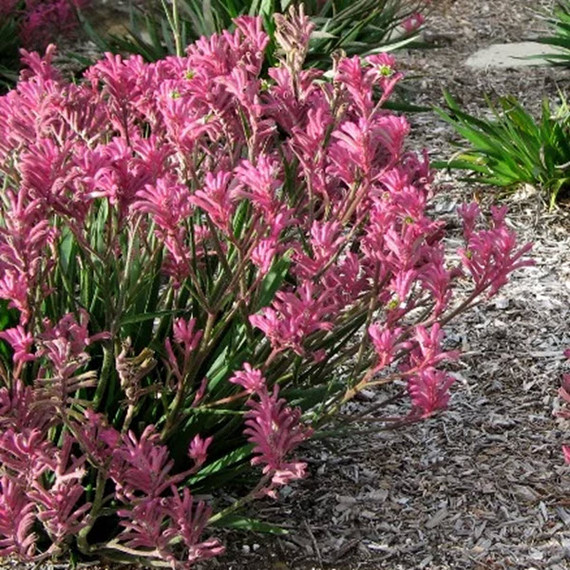
- Vivid Candy-Pink Blooms All Season Long — Velvety, magenta-pink buds open into bright candy-pink tubular flowers on elegantly branching stems, delivering a bold, long-lasting color display from spring through summer and often beyond.
- Compact, Waterwise & Low-Maintenance — A naturally dwarf habit reaching just 1–2 ft. tall and wide makes this variety perfect for patio containers, small garden beds, and water-conscious landscapes with minimal upkeep once established.
- Disease-Resistant Hybrid from the Bush Gems Series — Bred in Australia's renowned Kings Park and Botanic Garden program, this interspecific hybrid (Anigozanthos humilis x flavidus) delivers superior ink spot disease resistance compared to older kangaroo paw cultivars.
- Wildlife Magnet & Stunning Cut Flower — Nectar-rich flowers draw hummingbirds, honeyeaters, bees, and butterflies to the garden, while the long, sturdy flower stems make spectacular, exotic-looking cut flower arrangements that last well in the vase.
The Bush Pearl Kangaroo Paw (Anigozanthos 'Bush Pearl') is one of the most celebrated compact kangaroo paw varieties available to home gardeners, combining the electrifying visual punch of Australian native flora with the reliability and tidy habit modern landscapes demand. Bursting with velvety, candy-pink blooms on elongated branching stalks above clumps of green, sword-like evergreen foliage, this herbaceous perennial delivers months of dynamic, carefree color without demanding constant attention. As a member of the prestigious Bush Gems Series — developed through a collaboration between Monrovia and the Kings Park and Botanic Garden in Western Australia — Bush Pearl carries superior ink spot disease resistance, making it far more durable than older kangaroo paw varieties. It thrives in full sun and well-drained, slightly acidic to neutral soil, and its exceptional drought tolerance makes it a go-to plant for xeriscaping, waterwise gardening, and low-irrigation landscape designs in USDA Hardiness Zones 9–11. Whether massed in garden beds for a spectacular pink display, planted as an upright thriller in mixed patio containers, or harvested as a long-lasting cut flower for vases and arrangements, Bush Pearl Kangaroo Paw earns its place as a standout accent plant in any warm-climate garden.
Plant Specifications
| Botanical Name | Anigozanthos 'Bush Pearl' (syn. A. humilis x flavidus 'Bush Pearl' PBR) |
| Common Name | Bush Pearl Kangaroo Paw |
| Plant Family | Haemodoraceae |
| Series | Bush Gems™ (Monrovia / Kings Park, Western Australia) |
| Plant Type | Evergreen clumping herbaceous perennial |
| Mature Height | 1–2 ft. (approx. 30–60 cm) |
| Mature Spread | 1–2 ft. (approx. 45–70 cm) |
| Flower Color | Candy pink (magenta-pink buds opening to pale pink) |
| Foliage | Evergreen; green to blue-green, strap-like, sword-shaped |
| Bloom Season | Late spring through summer; repeat-blooming in warm climates |
| USDA Hardiness Zones | 9–11 |
| Sunlight | Full sun (minimum 6 hours direct sun per day) |
| Water Needs | Low; drought-tolerant once established |
| Soil Type | Sandy, loamy, or sandy-loam; must be well-draining |
| Soil pH | Slightly acidic to neutral (5.5–7.0) |
| Growth Rate | Moderate |
| Origin | Native to Western Australia; hybrid cultivar |
Sunlight & Placement
Bush Pearl Kangaroo Paw is a full-sun plant — no exceptions. It requires a minimum of 6 hours of direct sunlight per day to bloom well and maintain a compact, healthy form. In shadier conditions, flowering is significantly reduced and plants become weak and floppy.
Ideal placements include:
- South- or west-facing garden beds that receive all-day or afternoon sun
- Open patio areas free from tree canopy shade
- Raised beds and slopes where air circulation is excellent
- Container plantings on sunny decks, balconies, or verandas
Good air circulation is equally important. Avoid planting in areas with high humidity or poor airflow, as this can encourage fungal disease. In coastal gardens, Bush Pearl is particularly well-suited, as it also tolerates salt air.
Watering Guide
One of Bush Pearl's greatest strengths is its drought tolerance once established. Overwatering is a far more common problem than underwatering, and is the leading cause of plant decline.
Watering by stage:
- At planting: Water thoroughly to settle the soil and help roots make contact with surrounding soil.
- First season (establishment): Water deeply once or twice per week during the first 6–8 weeks. Allow the top 1–2 inches of soil to dry between waterings.
- Established plants: Water deeply but infrequently — every 2–3 weeks during dry spells is typically sufficient. In cool or rainy seasons, natural rainfall often provides enough moisture.
- In containers: Allow the top inch of potting mix to dry completely before watering again. Containers dry out faster than ground soil, especially in summer.
Key rule: Never let Bush Pearl sit in waterlogged or poorly drained soil. It will often die in standing water. If you are uncertain, err on the side of underwatering.
Soil & Planting Instructions
Soil preparation is the most important step to long-term success with Bush Pearl Kangaroo Paw. This plant is intolerant of heavy clay soils or any situation where water pools around the root zone.
Ground planting:
- Choose a full-sun location with naturally well-draining soil, or amend heavily compacted soil by working in coarse sand or fine gravel to improve drainage.
- Dig a hole twice as wide and the same depth as the root ball.
- Place the plant so the crown sits at or slightly above the surrounding soil level — never plant too deep.
- Backfill with the excavated soil mixed with a small amount of slow-release native plant fertilizer.
- Water in thoroughly, then apply a light layer of mulch (2–3 inches) around the base, keeping mulch away from the crown.
Container planting:
- Use a free-draining potting mix formulated for native plants or cacti, or blend standard potting mix with perlite at a 1:1 ratio.
- Ensure the container has large drainage holes. Terra cotta pots are ideal as they allow moisture to evaporate from the sides.
- Repot when the plant has doubled in size or after 12 months, whichever comes first.
Fertilizing
Kangaroo paws are native to nutrient-poor Western Australian soils, so they require less fertilizer than most garden plants. Over-fertilizing, especially with high-phosphorus products, can damage or kill them.
- Use only native plant or phosphorus-free fertilizers. Standard garden fertilizers with high phosphorus levels are toxic to Proteaceae-family and related native plants.
- Apply a slow-release fertilizer formulated for native plants in early spring to kick off the blooming season, and again in early summer to support continued flowering.
- Avoid fertilizing in fall and winter when the plant is not actively growing.
- Container-grown plants benefit from a liquid native plant fertilizer applied monthly during the active growing season (spring–summer), as nutrients leach more quickly from pots.
- Signs of over-fertilization include leaf tip burn, yellowing, and root damage. If in doubt, apply at half the recommended rate.
Pruning & Deadheading
Regular deadheading and seasonal grooming are key to keeping Bush Pearl looking its best and encouraging the most prolific bloom production.
During the blooming season:
- Remove spent flower stems by cutting them all the way back to the base of the plant (at soil level), not just the flower head. Leaving stem stubs can lead to rot and disease.
- For the best ongoing display, remove the very first flower spike when it appears — this stimulates the plant to produce multiple new flowering stems rather than putting all energy into one early spike.
- Remove any dead, yellow, or brown foliage as it appears throughout the season to maintain air circulation and appearance.
End-of-season (renewal pruning):
- After the main flush of blooms has finished, cut the entire plant back by approximately one-third to encourage a fresh flush of healthy foliage and new flower spikes.
- Every 2–3 years, a more aggressive “hard cutback” to within 4–6 inches of the crown will rejuvenate the clump and restore vigorous flowering.
Pests, Diseases & Common Problems
Bush Pearl is one of the most disease-resistant kangaroo paw cultivars available, bred specifically to overcome the ink spot fungal disease (Alternaria alternata) that historically made kangaroo paws difficult to grow. However, a few common issues are worth knowing:
| Ink Spot Disease | Bush Pearl has strong inherited resistance. If black spots appear on leaves, improve air circulation and avoid overhead watering. |
| Root Rot | The most common cause of plant death; nearly always due to poorly drained soil or overwatering. Ensure excellent drainage and allow soil to dry between waterings. |
| Yellow / Brown Leaves | Often caused by overwatering, nutrient deficiency (use native fertilizer), or normal seasonal leaf shedding. Check soil moisture first. |
| Spider Mites | May appear in hot, dry conditions. Treat with a gentle horticultural oil or insecticidal soap, applied in the evening to avoid leaf burn. |
| Snails & Slugs | Can damage new foliage at the crown. Use iron phosphate-based bait around the base of the plant. |
| Poor Flowering | Usually caused by insufficient sunlight, over-fertilizing with nitrogen, or failure to remove old flower stems. Ensure 6+ hours of direct sun and deadhead regularly. |
Landscape Uses & Design Ideas
Bush Pearl's compact size, vivid color, and low-water needs make it one of the most versatile plants available for warm-climate gardens. Here are the most effective ways to use it:
- Mass planting: Plant in groups of 3, 5, or 7 for a spectacular block of candy-pink color in garden beds and borders. The effect is truly stunning when all plants bloom simultaneously.
- Container thriller: Its upright habit makes it the perfect “thriller” in the spiller-thriller-filler container formula. Pair with trailing silver dichondra or low-mounding succulent fillers for maximum impact.
- Waterwise & xeriscape gardens: Excellent alongside other drought-tolerant plants like lavender, agapanthus, ornamental grasses, and Mediterranean herbs.
- Native and wildlife gardens: A magnet for hummingbirds and pollinators, making it an ecological powerhouse in wildlife-friendly garden designs.
- Coastal gardens: Tolerates salt air and coastal conditions well. Use in seaside beds and exposed planting positions.
- Cut flower garden: Harvest stems when the bottom flowers of each spike begin to open; they last 1–2 weeks in a vase and make unique, exotic-looking floral arrangements.
- Urban gardens: Highly tolerant of urban pollution and exhaust, making it suitable even for street-side planting in warm climates.
Wildlife & Ecological Benefits
Bush Pearl Kangaroo Paw is not just a beautiful garden plant — it plays a meaningful ecological role wherever it is grown:
- Hummingbirds: The tubular, nectar-rich flowers are perfectly shaped for hummingbird feeding. Expect regular visits from ruby-throated, Anna's, and broad-tailed hummingbirds depending on your region.
- Honeyeaters (Australia): In its native range and Australian gardens, Bush Pearl is an important food source for nectar-feeding honeyeater birds.
- Bees: Native bees and honeybees are frequently seen visiting the flowers for nectar, supporting local pollinator populations.
- Butterflies: Several butterfly species are attracted to the blooms, adding additional movement and life to the garden.
- Non-invasive: As a clump-forming hybrid, Bush Pearl does not spread aggressively or set viable seed, making it a responsible, non-invasive choice for garden use outside its native range.
- Pet & human safe: Anigozanthos 'Bush Pearl' is not known to be toxic to humans, dogs, or cats. As always, consult a veterinarian if accidental ingestion is suspected.
Propagation
As a registered Plant Breeders' Rights (PBR) cultivar, commercial propagation of Anigozanthos 'Bush Pearl' is restricted. However, home gardeners may propagate for personal, non-commercial use:
Division (recommended method):
- Divide clumps after the main flowering period has ended, typically in late summer or early autumn.
- Carefully dig up the entire clump and shake off excess soil to expose the rhizomes.
- Use a sharp, clean knife or spade to cut the rhizome clump into sections, each with healthy roots and several fans of leaves.
- Replant divisions immediately at the same soil depth, water in well, and keep slightly moist until re-established (usually 4–6 weeks).
Note on seed propagation: As an interspecific hybrid, seeds set by Bush Pearl will not produce plants true to the parent. The cultivar's distinctive pink color and compact form are only reliably reproduced through vegetative propagation. Commercial production is carried out via tissue culture.
Hardiness, Cold Tolerance & Overwintering
Bush Pearl Kangaroo Paw is rated for USDA Hardiness Zones 9–11, making it best suited to warm, frost-light climates such as:
- Southern California, Arizona, Nevada, Texas (southern), Florida
- Mediterranean climate regions (mild, wet winters / dry summers)
- Coastal Pacific Northwest in sheltered, frost-free microclimates
Cold tolerance: Bush Pearl can tolerate brief overnight frosts down to approximately 28–30°F (-1 to -2°C), but sustained freezes or hard frosts will damage or kill the plant.
Overwintering in colder zones (Zone 8 and below):
- Grow in containers so the plant can be moved indoors or to a frost-free greenhouse or garage during winter months.
- If left outdoors, apply a 3–4 inch layer of dry mulch over the crown before the first frost and remove after the last frost date in spring.
- Reduce watering significantly during winter dormancy to prevent root rot in cool, wet conditions.
- Vivid Candy-Pink Blooms All Season Long — Velvety, magenta-pink buds open into bright candy-pink tubular flowers on elegantly branching stems, delivering a bold, long-lasting color display from spring through summer and often beyond.
- Compact, Waterwise & Low-Maintenance — A naturally dwarf habit reaching just 1–2 ft. tall and wide makes this variety perfect for patio containers, small garden beds, and water-conscious landscapes with minimal upkeep once established.
- Disease-Resistant Hybrid from the Bush Gems Series — Bred in Australia's renowned Kings Park and Botanic Garden program, this interspecific hybrid (Anigozanthos humilis x flavidus) delivers superior ink spot disease resistance compared to older kangaroo paw cultivars.
- Wildlife Magnet & Stunning Cut Flower — Nectar-rich flowers draw hummingbirds, honeyeaters, bees, and butterflies to the garden, while the long, sturdy flower stems make spectacular, exotic-looking cut flower arrangements that last well in the vase.
The Bush Pearl Kangaroo Paw (Anigozanthos 'Bush Pearl') is one of the most celebrated compact kangaroo paw varieties available to home gardeners, combining the electrifying visual punch of Australian native flora with the reliability and tidy habit modern landscapes demand. Bursting with velvety, candy-pink blooms on elongated branching stalks above clumps of green, sword-like evergreen foliage, this herbaceous perennial delivers months of dynamic, carefree color without demanding constant attention. As a member of the prestigious Bush Gems Series — developed through a collaboration between Monrovia and the Kings Park and Botanic Garden in Western Australia — Bush Pearl carries superior ink spot disease resistance, making it far more durable than older kangaroo paw varieties. It thrives in full sun and well-drained, slightly acidic to neutral soil, and its exceptional drought tolerance makes it a go-to plant for xeriscaping, waterwise gardening, and low-irrigation landscape designs in USDA Hardiness Zones 9–11. Whether massed in garden beds for a spectacular pink display, planted as an upright thriller in mixed patio containers, or harvested as a long-lasting cut flower for vases and arrangements, Bush Pearl Kangaroo Paw earns its place as a standout accent plant in any warm-climate garden.
Plant Specifications
| Botanical Name | Anigozanthos 'Bush Pearl' (syn. A. humilis x flavidus 'Bush Pearl' PBR) |
| Common Name | Bush Pearl Kangaroo Paw |
| Plant Family | Haemodoraceae |
| Series | Bush Gems™ (Monrovia / Kings Park, Western Australia) |
| Plant Type | Evergreen clumping herbaceous perennial |
| Mature Height | 1–2 ft. (approx. 30–60 cm) |
| Mature Spread | 1–2 ft. (approx. 45–70 cm) |
| Flower Color | Candy pink (magenta-pink buds opening to pale pink) |
| Foliage | Evergreen; green to blue-green, strap-like, sword-shaped |
| Bloom Season | Late spring through summer; repeat-blooming in warm climates |
| USDA Hardiness Zones | 9–11 |
| Sunlight | Full sun (minimum 6 hours direct sun per day) |
| Water Needs | Low; drought-tolerant once established |
| Soil Type | Sandy, loamy, or sandy-loam; must be well-draining |
| Soil pH | Slightly acidic to neutral (5.5–7.0) |
| Growth Rate | Moderate |
| Origin | Native to Western Australia; hybrid cultivar |
Sunlight & Placement
Bush Pearl Kangaroo Paw is a full-sun plant — no exceptions. It requires a minimum of 6 hours of direct sunlight per day to bloom well and maintain a compact, healthy form. In shadier conditions, flowering is significantly reduced and plants become weak and floppy.
Ideal placements include:
- South- or west-facing garden beds that receive all-day or afternoon sun
- Open patio areas free from tree canopy shade
- Raised beds and slopes where air circulation is excellent
- Container plantings on sunny decks, balconies, or verandas
Good air circulation is equally important. Avoid planting in areas with high humidity or poor airflow, as this can encourage fungal disease. In coastal gardens, Bush Pearl is particularly well-suited, as it also tolerates salt air.
Watering Guide
One of Bush Pearl's greatest strengths is its drought tolerance once established. Overwatering is a far more common problem than underwatering, and is the leading cause of plant decline.
Watering by stage:
- At planting: Water thoroughly to settle the soil and help roots make contact with surrounding soil.
- First season (establishment): Water deeply once or twice per week during the first 6–8 weeks. Allow the top 1–2 inches of soil to dry between waterings.
- Established plants: Water deeply but infrequently — every 2–3 weeks during dry spells is typically sufficient. In cool or rainy seasons, natural rainfall often provides enough moisture.
- In containers: Allow the top inch of potting mix to dry completely before watering again. Containers dry out faster than ground soil, especially in summer.
Key rule: Never let Bush Pearl sit in waterlogged or poorly drained soil. It will often die in standing water. If you are uncertain, err on the side of underwatering.
Soil & Planting Instructions
Soil preparation is the most important step to long-term success with Bush Pearl Kangaroo Paw. This plant is intolerant of heavy clay soils or any situation where water pools around the root zone.
Ground planting:
- Choose a full-sun location with naturally well-draining soil, or amend heavily compacted soil by working in coarse sand or fine gravel to improve drainage.
- Dig a hole twice as wide and the same depth as the root ball.
- Place the plant so the crown sits at or slightly above the surrounding soil level — never plant too deep.
- Backfill with the excavated soil mixed with a small amount of slow-release native plant fertilizer.
- Water in thoroughly, then apply a light layer of mulch (2–3 inches) around the base, keeping mulch away from the crown.
Container planting:
- Use a free-draining potting mix formulated for native plants or cacti, or blend standard potting mix with perlite at a 1:1 ratio.
- Ensure the container has large drainage holes. Terra cotta pots are ideal as they allow moisture to evaporate from the sides.
- Repot when the plant has doubled in size or after 12 months, whichever comes first.
Fertilizing
Kangaroo paws are native to nutrient-poor Western Australian soils, so they require less fertilizer than most garden plants. Over-fertilizing, especially with high-phosphorus products, can damage or kill them.
- Use only native plant or phosphorus-free fertilizers. Standard garden fertilizers with high phosphorus levels are toxic to Proteaceae-family and related native plants.
- Apply a slow-release fertilizer formulated for native plants in early spring to kick off the blooming season, and again in early summer to support continued flowering.
- Avoid fertilizing in fall and winter when the plant is not actively growing.
- Container-grown plants benefit from a liquid native plant fertilizer applied monthly during the active growing season (spring–summer), as nutrients leach more quickly from pots.
- Signs of over-fertilization include leaf tip burn, yellowing, and root damage. If in doubt, apply at half the recommended rate.
Pruning & Deadheading
Regular deadheading and seasonal grooming are key to keeping Bush Pearl looking its best and encouraging the most prolific bloom production.
During the blooming season:
- Remove spent flower stems by cutting them all the way back to the base of the plant (at soil level), not just the flower head. Leaving stem stubs can lead to rot and disease.
- For the best ongoing display, remove the very first flower spike when it appears — this stimulates the plant to produce multiple new flowering stems rather than putting all energy into one early spike.
- Remove any dead, yellow, or brown foliage as it appears throughout the season to maintain air circulation and appearance.
End-of-season (renewal pruning):
- After the main flush of blooms has finished, cut the entire plant back by approximately one-third to encourage a fresh flush of healthy foliage and new flower spikes.
- Every 2–3 years, a more aggressive “hard cutback” to within 4–6 inches of the crown will rejuvenate the clump and restore vigorous flowering.
Pests, Diseases & Common Problems
Bush Pearl is one of the most disease-resistant kangaroo paw cultivars available, bred specifically to overcome the ink spot fungal disease (Alternaria alternata) that historically made kangaroo paws difficult to grow. However, a few common issues are worth knowing:
| Ink Spot Disease | Bush Pearl has strong inherited resistance. If black spots appear on leaves, improve air circulation and avoid overhead watering. |
| Root Rot | The most common cause of plant death; nearly always due to poorly drained soil or overwatering. Ensure excellent drainage and allow soil to dry between waterings. |
| Yellow / Brown Leaves | Often caused by overwatering, nutrient deficiency (use native fertilizer), or normal seasonal leaf shedding. Check soil moisture first. |
| Spider Mites | May appear in hot, dry conditions. Treat with a gentle horticultural oil or insecticidal soap, applied in the evening to avoid leaf burn. |
| Snails & Slugs | Can damage new foliage at the crown. Use iron phosphate-based bait around the base of the plant. |
| Poor Flowering | Usually caused by insufficient sunlight, over-fertilizing with nitrogen, or failure to remove old flower stems. Ensure 6+ hours of direct sun and deadhead regularly. |
Landscape Uses & Design Ideas
Bush Pearl's compact size, vivid color, and low-water needs make it one of the most versatile plants available for warm-climate gardens. Here are the most effective ways to use it:
- Mass planting: Plant in groups of 3, 5, or 7 for a spectacular block of candy-pink color in garden beds and borders. The effect is truly stunning when all plants bloom simultaneously.
- Container thriller: Its upright habit makes it the perfect “thriller” in the spiller-thriller-filler container formula. Pair with trailing silver dichondra or low-mounding succulent fillers for maximum impact.
- Waterwise & xeriscape gardens: Excellent alongside other drought-tolerant plants like lavender, agapanthus, ornamental grasses, and Mediterranean herbs.
- Native and wildlife gardens: A magnet for hummingbirds and pollinators, making it an ecological powerhouse in wildlife-friendly garden designs.
- Coastal gardens: Tolerates salt air and coastal conditions well. Use in seaside beds and exposed planting positions.
- Cut flower garden: Harvest stems when the bottom flowers of each spike begin to open; they last 1–2 weeks in a vase and make unique, exotic-looking floral arrangements.
- Urban gardens: Highly tolerant of urban pollution and exhaust, making it suitable even for street-side planting in warm climates.
Wildlife & Ecological Benefits
Bush Pearl Kangaroo Paw is not just a beautiful garden plant — it plays a meaningful ecological role wherever it is grown:
- Hummingbirds: The tubular, nectar-rich flowers are perfectly shaped for hummingbird feeding. Expect regular visits from ruby-throated, Anna's, and broad-tailed hummingbirds depending on your region.
- Honeyeaters (Australia): In its native range and Australian gardens, Bush Pearl is an important food source for nectar-feeding honeyeater birds.
- Bees: Native bees and honeybees are frequently seen visiting the flowers for nectar, supporting local pollinator populations.
- Butterflies: Several butterfly species are attracted to the blooms, adding additional movement and life to the garden.
- Non-invasive: As a clump-forming hybrid, Bush Pearl does not spread aggressively or set viable seed, making it a responsible, non-invasive choice for garden use outside its native range.
- Pet & human safe: Anigozanthos 'Bush Pearl' is not known to be toxic to humans, dogs, or cats. As always, consult a veterinarian if accidental ingestion is suspected.
Propagation
As a registered Plant Breeders' Rights (PBR) cultivar, commercial propagation of Anigozanthos 'Bush Pearl' is restricted. However, home gardeners may propagate for personal, non-commercial use:
Division (recommended method):
- Divide clumps after the main flowering period has ended, typically in late summer or early autumn.
- Carefully dig up the entire clump and shake off excess soil to expose the rhizomes.
- Use a sharp, clean knife or spade to cut the rhizome clump into sections, each with healthy roots and several fans of leaves.
- Replant divisions immediately at the same soil depth, water in well, and keep slightly moist until re-established (usually 4–6 weeks).
Note on seed propagation: As an interspecific hybrid, seeds set by Bush Pearl will not produce plants true to the parent. The cultivar's distinctive pink color and compact form are only reliably reproduced through vegetative propagation. Commercial production is carried out via tissue culture.
Hardiness, Cold Tolerance & Overwintering
Bush Pearl Kangaroo Paw is rated for USDA Hardiness Zones 9–11, making it best suited to warm, frost-light climates such as:
- Southern California, Arizona, Nevada, Texas (southern), Florida
- Mediterranean climate regions (mild, wet winters / dry summers)
- Coastal Pacific Northwest in sheltered, frost-free microclimates
Cold tolerance: Bush Pearl can tolerate brief overnight frosts down to approximately 28–30°F (-1 to -2°C), but sustained freezes or hard frosts will damage or kill the plant.
Overwintering in colder zones (Zone 8 and below):
- Grow in containers so the plant can be moved indoors or to a frost-free greenhouse or garage during winter months.
- If left outdoors, apply a 3–4 inch layer of dry mulch over the crown before the first frost and remove after the last frost date in spring.
- Reduce watering significantly during winter dormancy to prevent root rot in cool, wet conditions.