
Zoom the image with the mouse
Brilliance Autumn Fern - 2 Gallon
SKU:
1930215
UPC:
014949053362
$29.99
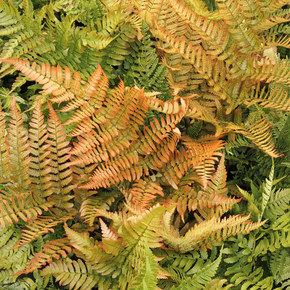
- Exceptionally vibrant orange-red to copper-pink new fronds emerge each spring, holding their brilliant color longer than the species before maturing to glossy, deep green — delivering striking multi-season color in shaded gardens.
- Evergreen to semi-evergreen in USDA Zones 5-9, forming a tidy, vase-shaped clump 20-24 inches tall and wide — a low-maintenance, reliable performer that returns year after year.
- Tough and adaptable — deer resistant, rabbit resistant, and tolerant of clay soils, dry shade once established, and a wide range of soil pH levels, making it ideal for challenging garden spots.
- Recipient of the prestigious Royal Horticultural Society Award of Garden Merit, recognized for outstanding garden performance and exceptional ornamental quality.
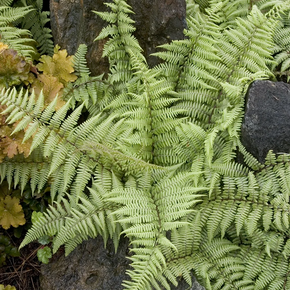
Brilliance Autumn Fern (Dryopteris erythrosora 'Brilliance') is one of the most spectacular and reliable shade ferns available for Pacific Northwest and Northern California gardens, earning its name through a breathtaking seasonal color display that few other foliage plants can match. Each spring, tightly coiled fiddleheads unfurl into arching, bipinnate, triangular fronds in vivid shades of orange-red, salmon, and copper-pink — a color intensity noticeably brighter and longer-lasting than the straight species. As the season progresses, those radiant fronds gradually transition to a lustrous, deep green, and in fall the show continues as bright red sori (spore clusters) appear in neat rows on the undersides of the mature fronds, adding another layer of seasonal interest before cooler temperatures can coax faint bronzy tones back into the foliage. Native to the woodland hillsides and mountain slopes of Japan, China, Korea, and Taiwan, this evergreen fern grows in a graceful, vase-shaped clump reaching 20-24 inches tall and wide, spreading slowly and non-invasively via short creeping rhizomes. Hardy in USDA Zones 5-9 and thriving in partial to full shade, Brilliance Autumn Fern adapts to chalk, clay, loam, or sandy soils across a broad pH range, and once established becomes notably tolerant of drier shade conditions. Its virtual immunity to serious pest and disease problems, combined with strong deer and rabbit resistance, makes it an effortlessly beautiful solution for shady borders, woodland gardens, underplanting beneath trees and shrubs, and mass plantings where reliable, low-maintenance color is needed throughout the growing season.
Plant Description
Brilliance Autumn Fern is an arching, evergreen to semi-evergreen fern that forms a neat, vase-shaped clump. Its fronds are bipinnate (divided twice) and triangular in outline, growing up to 2 feet long with a graceful, arching habit and a distinctly glossy texture that catches the light beautifully. The 'Brilliance' cultivar is specifically selected for new frond color that is noticeably more intense — brighter orange-red to copper-pink — than the straight species, and that color persists well into late spring and early summer before mellowing to rich, glossy dark green. In fall, the eye-catching bright red sori (spore-bearing structures) appear in neat rows on the undersides of mature fronds, giving the plant yet another season of ornamental interest. The plant spreads gradually by short, creeping underground rhizomes, slowly enlarging its clump over time without becoming invasive. The genus name Dryopteris comes from the Greek words for "oak" and "fern," referencing woodland habitats, while the specific epithet erythrosora translates to "red sori" — a perfect description of this plant's most distinctive autumn feature.
Mature Size
| Characteristic | Measurement |
|---|---|
| Mature Height | 20 to 24 inches (approximately 2 feet) |
| Mature Spread | 20 to 24 inches (approximately 2 feet) |
| Recommended Spacing | 24 inches on center |
| Individual Frond Length | Up to 2 feet |
| Growth Rate | Moderate; may take 5-10 years to reach full maturity |
| Growth Habit | Upright, vase-shaped clump; spreads slowly by rhizomes |
Hardiness and Climate
Brilliance Autumn Fern is hardy in USDA Hardiness Zones 5 through 9, making it an excellent choice for a very wide range of climates including all of Southern Oregon and Northern California. It is also rated for AHS Heat Zones 5-9 and is recognized across a broad range of Sunset Climate Zones (2-9 and 14-24), confirming its adaptability from mild coastal gardens to inland valley conditions. In the warmest parts of its hardiness range (Zones 8-9), the plant typically remains fully evergreen through winter, providing year-round structure and color. In colder zones (5-6), the fronds may become semi-evergreen, losing some foliage in harsh winters before reliably re-emerging in spring. It tolerates temperatures down to approximately -10°F (-23°C) at its hardiest. Shelter from harsh desiccating winds is beneficial in all climates, as strong winds can damage or brown the delicate frond tips.
Sunlight Requirements
Brilliance Autumn Fern performs best in partial shade to full shade, making it one of the most valuable plants for difficult low-light areas of the garden. It mirrors its natural habitat on forest floors and woodland hillsides where it receives dappled or filtered light. Ideal exposures include:
- Part Shade (2-4 hours of indirect or dappled light): Optimal for most garden situations. Fronds display their most vibrant copper-red color and hold it longest in soft, indirect light.
- Full Shade (little to no direct sun): Handles deep shade well, making it useful under dense tree canopies or on north-facing slopes where most plants struggle.
- Full Sun: Can tolerate full sun only with consistently moist to wet soil, but the coppery new frond color fades to green more quickly in intense sunlight, and fronds may scorch in hot afternoon sun. Full sun is not recommended in warm inland climates.
For the richest and longest-lasting orange-red frond color, site this fern where it receives morning light or bright, indirect filtered light throughout the day, protected from harsh afternoon sun.
Soil and pH Preferences
One of the great strengths of Brilliance Autumn Fern is its adaptability to a wide range of soil conditions. It will grow in chalk, clay, loam, or sandy soils, and tolerates acidic, neutral, or even mildly alkaline pH. That said, it performs at its very best in the following conditions:
- Soil Texture: Rich, loose, humusy soil with good organic content is ideal. Heavy clay soils are tolerated but benefit from amendment with compost or leaf mold to improve drainage and aeration.
- Drainage: Prefers moist but well-drained conditions. While it can handle temporarily wet or poorly drained soils, prolonged waterlogging should be avoided to prevent root rot.
- Soil pH: Performs best in slightly acidic to neutral soil (pH 5.5 to 7.0), though it tolerates a broader range. Slightly acidic, organically rich woodland-type soil is the ideal.
- Organic Matter: Amending planting areas with compost, well-rotted leaf mold, or aged bark at planting time significantly improves establishment and long-term vigor.
- Clay Soil: This cultivar carries a specific tolerance rating for clay soils, making it a reliable option where many plants fail.
Watering Guide
Consistent moisture is the single most important care factor for Brilliance Autumn Fern, particularly during its first growing season in the ground.
- During Establishment (first season): Water regularly and deeply to keep the root zone consistently moist. Do not allow the soil to dry out completely during this critical period.
- Established Plants: Once established, this fern develops a degree of drought tolerance, especially when planted in cool shade and mulched well. However, it will always look its best with average, consistent moisture. During prolonged dry spells, supplemental watering is beneficial.
- Overwatering: Avoid constantly saturated or waterlogged soil, which can lead to root rot. Ensure planting beds have adequate drainage.
- Mulching: Applying a 2-3 inch layer of organic mulch (such as shredded bark, leaf mold, or compost) around the base of the plant — keeping it away from the crown — is highly recommended. Mulch conserves moisture, moderates soil temperature, suppresses weeds, and slowly releases nutrients.
- Watering Method: Water at the base of the plant rather than overhead when possible, to keep fronds dry and reduce any risk of fungal issues.
Fertilizing
Brilliance Autumn Fern is not a heavy feeder and thrives with minimal fertilization, especially when planted in organically rich soil. Over-fertilizing can actually be detrimental, causing excessive lush growth that is more susceptible to damage.
- When to Fertilize: Apply fertilizer once in early spring as new fronds begin to emerge, and optionally a second time in early summer if growth appears slow or fronds lack vigor.
- What to Use: A balanced, slow-release granular fertilizer (such as a 10-10-10 or 14-14-14 formulation) applied around the base of the plant works well. Alternatively, a light top-dressing of compost or well-rotted leaf mold each spring provides a gentle, natural nutrient boost that also improves soil structure.
- Application: Apply fertilizer to moist soil and water in lightly. Keep granular fertilizer away from direct contact with the crown and frond bases.
- Avoid High Nitrogen: Excessive nitrogen encourages very soft, lush frond growth that may flop or be more prone to frost damage. Balanced or low-nitrogen formulations are preferable.
- Fall and Winter: Do not fertilize in late summer, fall, or winter. Stimulating new growth as temperatures drop can result in cold-damaged fronds.
Planting Instructions
- Choose the Right Site: Select a location with partial to full shade and well-drained soil with good organic content. Avoid low-lying areas where water pools after rain.
- Timing: Plant in spring or early fall for best establishment. In Southern Oregon and Northern California, container-grown plants can be planted almost any time the ground is workable, as long as adequate water is provided.
- Prepare the Planting Hole: Dig a hole approximately twice as wide as the root ball and equal in depth. Amend the removed soil with compost or aged leaf mold at a ratio of about 1 part amendment to 2 parts native soil.
- Set the Plant: Place the fern so the top of the root ball sits level with — or just slightly above — the surrounding soil surface. Avoid planting too deep, as burying the crown can lead to rot. Do not plant too high, as elevated rhizomes are susceptible to drying out and erosion.
- Backfill and Firm: Fill in around the root ball with the amended soil, gently firming to eliminate large air pockets. Do not pack the soil tightly.
- Water Thoroughly: Water deeply immediately after planting to settle the soil and initiate root establishment.
- Mulch: Apply a 2-3 inch layer of organic mulch around the plant, keeping mulch a few inches away from the crown to prevent rot.
- Spacing: Space plants 24 inches apart for use as a ground cover or mass planting.
Pruning and Maintenance
Brilliance Autumn Fern is a truly low-maintenance plant that requires very little intervention to look its best.
- Removing Old Fronds: In late winter to early spring, before new fiddleheads emerge, remove any tattered, brown, or weathered fronds by cutting them back to the base at the crown. This tidies the plant and makes way for the spectacular new spring growth. In mild climates where the plant remains mostly evergreen, only remove fronds that are clearly dead or damaged.
- Throughout the Season: Snip off any individual fronds that become damaged, browned at the tips, or unattractive during the growing season. Always cut fronds at their base — never cut into the central crown.
- Do Not Cut the Crown: The crown is the growing point from which all new fronds emerge. Cutting into it can seriously harm or kill the plant.
- Division: When clumps become crowded or growth declines after several years, divide in early spring just as new growth is starting. Dig the entire clump, separate the rhizome mass into sections each containing healthy growth buds, and replant promptly.
- General Tidiness: Beyond frond removal and occasional division, this fern requires no deadheading, staking, or seasonal cutback. It is an ideal plant for low-effort, high-impact shade gardens.
Seasonal Interest
Few shade plants can match the four-season interest provided by Brilliance Autumn Fern:
- Spring: The season's highlight — tightly coiled fiddleheads unfurl into brilliantly colored fronds in vivid shades of orange-red, coppery salmon, and rose-pink. The 'Brilliance' cultivar holds this spectacular color noticeably longer into late spring and early summer than the standard species, offering weeks of radiant display.
- Summer: Fronds gradually transition to a rich, lustrous, glossy dark green, providing a lush, cooling backdrop for other shade garden plants. The glossy texture catches dappled light beautifully throughout summer.
- Fall: Bright red sori (spore clusters) appear in neat rows on the undersides of the mature fronds, adding a subtle but charming detail upon closer inspection. After the first frost, the foliage may take on bronzy or coppery undertones, echoing the vivid spring display.
- Winter: In Southern Oregon and Northern California climates (Zones 7-9), the plant typically remains evergreen or nearly so, providing welcome green structure and texture in the garden through the winter months.
Landscape Uses
Brilliance Autumn Fern is one of the most versatile shade plants available, with a broad range of effective landscape applications:
- Shady Borders and Beds: Provides bold, colorful foliage interest in mixed shade borders throughout the growing season.
- Woodland and Naturalized Gardens: Perfectly suited to naturalistic woodland plantings, where it mimics its native East Asian forest habitat.
- Ground Cover: Excellent for massing in shaded areas under trees and large shrubs where grass struggles to thrive. Plant 24 inches apart for a lush, weed-suppressing ground cover effect.
- Underplanting Roses and Shrubs: Its low profile and shade tolerance make it ideal for underplanting beneath roses, hydrangeas, rhododendrons, and other ornamental shrubs.
- Difficult Shaded Spots: Thrives in challenging corners — dry shade, clay soil, north-facing exposures — where many plants fail.
- Container Planting: Works beautifully as a "filler" in large patio containers and mixed shade planters, where its arching form and color provide seasonal drama.
- Along Pathways: Its compact, tidy form and low maintenance make it a superb edging plant along shaded pathways and walkways.
- Streamside and Rain Gardens: Its tolerance of periodically moist to wet soils makes it suitable for planting along water features, streams, or in rain garden perimeters.
Companion Plants
Brilliance Autumn Fern combines beautifully with a wide range of shade-loving perennials, shrubs, and ground covers. Its vivid copper-orange spring color and glossy summer green provide stunning contrast with the following companion plants:
- Hostas (Hosta spp.): The bold, broad leaves of hostas in blue, gold, or variegated forms create a dramatic textural contrast with the fine, arching fern fronds.
- Astilbes (Astilbe spp.): Feathery astilbe plumes in pink, red, or white look stunning rising above the fern's coppery new growth in late spring and early summer.
- Hellebores (Helleborus spp.): Early-blooming hellebores complement the emerging spring fronds and share the same preference for part shade and humusy soil.
- Japanese Forest Grass (Hakonechloa macra): The golden or variegated cascading blades of hakone grass provide a beautiful soft contrast to the fern's more structured, arching fronds.
- Bleeding Heart (Lamprocapnos spectabilis): The delicate, arching form and pink or white flowers of bleeding heart pair elegantly with the emerging fern fiddleheads in spring.
- Coral Bells (Heuchera spp.): Dark-leaved or colorful heucheras create a rich tapestry of foliage color alongside the fern's seasonal display.
- Pulmonaria (Lungwort): Low-growing pulmonarias with spotted, silver-marked foliage provide a lovely ground-level contrast at the base of taller fern clumps.
- Epimediums: Tough, low-maintenance epimediums are natural companions in dry-shade situations where both plants thrive together.
Pests and Diseases
One of the most appealing qualities of Brilliance Autumn Fern is its exceptional resistance to both pests and diseases. It is widely regarded as one of the most trouble-free ferns available for garden use.
- General Pest Resistance: Under normal garden conditions, this fern is rarely troubled by insects or diseases, making it an outstanding choice for low-spray, low-intervention gardens.
- Potential Pests: Occasional pest problems may include slugs and snails (particularly on young, tender new fiddleheads in spring), aphids on new growth, and rarely fern scale. These can typically be managed with targeted hand-picking, iron phosphate slug bait, or insecticidal soap.
- Root Rot: The most common disease issue is root rot (Phytophthora spp.), caused by poorly drained or chronically waterlogged soil. This is best prevented by ensuring good drainage at planting time and avoiding overwatering.
- Fern Rust: Fungal rust (Puccinia spp.) can occasionally appear in humid conditions with poor air circulation. Thinning dense plantings and avoiding overhead irrigation help prevent it.
- Deer and Rabbit Resistance: This fern is notably resistant to browsing by deer and rabbits — a significant advantage for gardens in rural and suburban areas of Southern Oregon and Northern California where wildlife pressure is common.
Container Growing
Brilliance Autumn Fern performs very well in containers and makes an excellent "filler" plant in mixed patio planters, bringing seasonal color and fine texture to shaded outdoor living areas.
- Container Size: Choose a container at least 12-16 inches in diameter with generous depth to accommodate the root mass. Larger containers require less frequent watering and allow the plant to reach a more impressive size.
- Drainage: Ensure the container has adequate drainage holes. Ferns will not tolerate standing water at the bottom of the pot.
- Potting Mix: Use a rich, well-draining potting mix with good organic content — a blend of quality potting soil amended with compost, peat moss or coco coir, and perlite is ideal. A slightly acidic mix (pH 5.5-6.5) is preferred.
- Watering in Containers: Container-grown ferns dry out more quickly than those in the ground. Check soil moisture regularly and water when the top inch of the potting mix feels dry. Never allow the root ball to dry out completely.
- Fertilizing in Containers: Feed container plants with a balanced, diluted liquid fertilizer at half-strength monthly during the spring and summer growing season.
- Overwintering Containers: In Zone 7 and warmer, container plants can remain outdoors year-round in a sheltered location. In colder zones, move containers to a protected, frost-free location such as an unheated garage or garden shed for winter.
- Repotting: Repot into a slightly larger container every 2-3 years in early spring when the plant becomes root-bound.
Wildlife Value
While Brilliance Autumn Fern does not provide nectar for pollinators (it is a non-flowering fern that reproduces by spores), it contributes meaningful value to the garden ecosystem in other ways:
- Habitat and Cover: The dense, arching clumps of foliage provide excellent shelter and nesting cover for small ground-dwelling birds, amphibians such as frogs and salamanders, and beneficial insects that help control garden pests.
- Moisture Retention: As a ground cover in shaded areas, it helps retain soil moisture and moderate soil temperature, creating a more hospitable microhabitat for soil-dwelling organisms and beneficial earthworms.
- Deer and Rabbit Resistant: Because deer and rabbits typically leave it alone, it can serve as a protective "buffer" planting around more palatable garden plants in wildlife-pressure areas.
- Spores as Habitat Indicator: In naturalistic woodland garden settings, thriving fern colonies are a hallmark of healthy, moist, humus-rich woodland habitat, encouraging a broad range of shade-loving wildlife to take up residence.
- Non-Toxic: This fern is considered non-toxic to people and pets, making it a safe choice for family gardens and landscapes where children and animals roam.
- Exceptionally vibrant orange-red to copper-pink new fronds emerge each spring, holding their brilliant color longer than the species before maturing to glossy, deep green — delivering striking multi-season color in shaded gardens.
- Evergreen to semi-evergreen in USDA Zones 5-9, forming a tidy, vase-shaped clump 20-24 inches tall and wide — a low-maintenance, reliable performer that returns year after year.
- Tough and adaptable — deer resistant, rabbit resistant, and tolerant of clay soils, dry shade once established, and a wide range of soil pH levels, making it ideal for challenging garden spots.
- Recipient of the prestigious Royal Horticultural Society Award of Garden Merit, recognized for outstanding garden performance and exceptional ornamental quality.
Brilliance Autumn Fern (Dryopteris erythrosora 'Brilliance') is one of the most spectacular and reliable shade ferns available for Pacific Northwest and Northern California gardens, earning its name through a breathtaking seasonal color display that few other foliage plants can match. Each spring, tightly coiled fiddleheads unfurl into arching, bipinnate, triangular fronds in vivid shades of orange-red, salmon, and copper-pink — a color intensity noticeably brighter and longer-lasting than the straight species. As the season progresses, those radiant fronds gradually transition to a lustrous, deep green, and in fall the show continues as bright red sori (spore clusters) appear in neat rows on the undersides of the mature fronds, adding another layer of seasonal interest before cooler temperatures can coax faint bronzy tones back into the foliage. Native to the woodland hillsides and mountain slopes of Japan, China, Korea, and Taiwan, this evergreen fern grows in a graceful, vase-shaped clump reaching 20-24 inches tall and wide, spreading slowly and non-invasively via short creeping rhizomes. Hardy in USDA Zones 5-9 and thriving in partial to full shade, Brilliance Autumn Fern adapts to chalk, clay, loam, or sandy soils across a broad pH range, and once established becomes notably tolerant of drier shade conditions. Its virtual immunity to serious pest and disease problems, combined with strong deer and rabbit resistance, makes it an effortlessly beautiful solution for shady borders, woodland gardens, underplanting beneath trees and shrubs, and mass plantings where reliable, low-maintenance color is needed throughout the growing season.
Plant Description
Brilliance Autumn Fern is an arching, evergreen to semi-evergreen fern that forms a neat, vase-shaped clump. Its fronds are bipinnate (divided twice) and triangular in outline, growing up to 2 feet long with a graceful, arching habit and a distinctly glossy texture that catches the light beautifully. The 'Brilliance' cultivar is specifically selected for new frond color that is noticeably more intense — brighter orange-red to copper-pink — than the straight species, and that color persists well into late spring and early summer before mellowing to rich, glossy dark green. In fall, the eye-catching bright red sori (spore-bearing structures) appear in neat rows on the undersides of mature fronds, giving the plant yet another season of ornamental interest. The plant spreads gradually by short, creeping underground rhizomes, slowly enlarging its clump over time without becoming invasive. The genus name Dryopteris comes from the Greek words for "oak" and "fern," referencing woodland habitats, while the specific epithet erythrosora translates to "red sori" — a perfect description of this plant's most distinctive autumn feature.
Mature Size
| Characteristic | Measurement |
|---|---|
| Mature Height | 20 to 24 inches (approximately 2 feet) |
| Mature Spread | 20 to 24 inches (approximately 2 feet) |
| Recommended Spacing | 24 inches on center |
| Individual Frond Length | Up to 2 feet |
| Growth Rate | Moderate; may take 5-10 years to reach full maturity |
| Growth Habit | Upright, vase-shaped clump; spreads slowly by rhizomes |
Hardiness and Climate
Brilliance Autumn Fern is hardy in USDA Hardiness Zones 5 through 9, making it an excellent choice for a very wide range of climates including all of Southern Oregon and Northern California. It is also rated for AHS Heat Zones 5-9 and is recognized across a broad range of Sunset Climate Zones (2-9 and 14-24), confirming its adaptability from mild coastal gardens to inland valley conditions. In the warmest parts of its hardiness range (Zones 8-9), the plant typically remains fully evergreen through winter, providing year-round structure and color. In colder zones (5-6), the fronds may become semi-evergreen, losing some foliage in harsh winters before reliably re-emerging in spring. It tolerates temperatures down to approximately -10°F (-23°C) at its hardiest. Shelter from harsh desiccating winds is beneficial in all climates, as strong winds can damage or brown the delicate frond tips.
Sunlight Requirements
Brilliance Autumn Fern performs best in partial shade to full shade, making it one of the most valuable plants for difficult low-light areas of the garden. It mirrors its natural habitat on forest floors and woodland hillsides where it receives dappled or filtered light. Ideal exposures include:
- Part Shade (2-4 hours of indirect or dappled light): Optimal for most garden situations. Fronds display their most vibrant copper-red color and hold it longest in soft, indirect light.
- Full Shade (little to no direct sun): Handles deep shade well, making it useful under dense tree canopies or on north-facing slopes where most plants struggle.
- Full Sun: Can tolerate full sun only with consistently moist to wet soil, but the coppery new frond color fades to green more quickly in intense sunlight, and fronds may scorch in hot afternoon sun. Full sun is not recommended in warm inland climates.
For the richest and longest-lasting orange-red frond color, site this fern where it receives morning light or bright, indirect filtered light throughout the day, protected from harsh afternoon sun.
Soil and pH Preferences
One of the great strengths of Brilliance Autumn Fern is its adaptability to a wide range of soil conditions. It will grow in chalk, clay, loam, or sandy soils, and tolerates acidic, neutral, or even mildly alkaline pH. That said, it performs at its very best in the following conditions:
- Soil Texture: Rich, loose, humusy soil with good organic content is ideal. Heavy clay soils are tolerated but benefit from amendment with compost or leaf mold to improve drainage and aeration.
- Drainage: Prefers moist but well-drained conditions. While it can handle temporarily wet or poorly drained soils, prolonged waterlogging should be avoided to prevent root rot.
- Soil pH: Performs best in slightly acidic to neutral soil (pH 5.5 to 7.0), though it tolerates a broader range. Slightly acidic, organically rich woodland-type soil is the ideal.
- Organic Matter: Amending planting areas with compost, well-rotted leaf mold, or aged bark at planting time significantly improves establishment and long-term vigor.
- Clay Soil: This cultivar carries a specific tolerance rating for clay soils, making it a reliable option where many plants fail.
Watering Guide
Consistent moisture is the single most important care factor for Brilliance Autumn Fern, particularly during its first growing season in the ground.
- During Establishment (first season): Water regularly and deeply to keep the root zone consistently moist. Do not allow the soil to dry out completely during this critical period.
- Established Plants: Once established, this fern develops a degree of drought tolerance, especially when planted in cool shade and mulched well. However, it will always look its best with average, consistent moisture. During prolonged dry spells, supplemental watering is beneficial.
- Overwatering: Avoid constantly saturated or waterlogged soil, which can lead to root rot. Ensure planting beds have adequate drainage.
- Mulching: Applying a 2-3 inch layer of organic mulch (such as shredded bark, leaf mold, or compost) around the base of the plant — keeping it away from the crown — is highly recommended. Mulch conserves moisture, moderates soil temperature, suppresses weeds, and slowly releases nutrients.
- Watering Method: Water at the base of the plant rather than overhead when possible, to keep fronds dry and reduce any risk of fungal issues.
Fertilizing
Brilliance Autumn Fern is not a heavy feeder and thrives with minimal fertilization, especially when planted in organically rich soil. Over-fertilizing can actually be detrimental, causing excessive lush growth that is more susceptible to damage.
- When to Fertilize: Apply fertilizer once in early spring as new fronds begin to emerge, and optionally a second time in early summer if growth appears slow or fronds lack vigor.
- What to Use: A balanced, slow-release granular fertilizer (such as a 10-10-10 or 14-14-14 formulation) applied around the base of the plant works well. Alternatively, a light top-dressing of compost or well-rotted leaf mold each spring provides a gentle, natural nutrient boost that also improves soil structure.
- Application: Apply fertilizer to moist soil and water in lightly. Keep granular fertilizer away from direct contact with the crown and frond bases.
- Avoid High Nitrogen: Excessive nitrogen encourages very soft, lush frond growth that may flop or be more prone to frost damage. Balanced or low-nitrogen formulations are preferable.
- Fall and Winter: Do not fertilize in late summer, fall, or winter. Stimulating new growth as temperatures drop can result in cold-damaged fronds.
Planting Instructions
- Choose the Right Site: Select a location with partial to full shade and well-drained soil with good organic content. Avoid low-lying areas where water pools after rain.
- Timing: Plant in spring or early fall for best establishment. In Southern Oregon and Northern California, container-grown plants can be planted almost any time the ground is workable, as long as adequate water is provided.
- Prepare the Planting Hole: Dig a hole approximately twice as wide as the root ball and equal in depth. Amend the removed soil with compost or aged leaf mold at a ratio of about 1 part amendment to 2 parts native soil.
- Set the Plant: Place the fern so the top of the root ball sits level with — or just slightly above — the surrounding soil surface. Avoid planting too deep, as burying the crown can lead to rot. Do not plant too high, as elevated rhizomes are susceptible to drying out and erosion.
- Backfill and Firm: Fill in around the root ball with the amended soil, gently firming to eliminate large air pockets. Do not pack the soil tightly.
- Water Thoroughly: Water deeply immediately after planting to settle the soil and initiate root establishment.
- Mulch: Apply a 2-3 inch layer of organic mulch around the plant, keeping mulch a few inches away from the crown to prevent rot.
- Spacing: Space plants 24 inches apart for use as a ground cover or mass planting.
Pruning and Maintenance
Brilliance Autumn Fern is a truly low-maintenance plant that requires very little intervention to look its best.
- Removing Old Fronds: In late winter to early spring, before new fiddleheads emerge, remove any tattered, brown, or weathered fronds by cutting them back to the base at the crown. This tidies the plant and makes way for the spectacular new spring growth. In mild climates where the plant remains mostly evergreen, only remove fronds that are clearly dead or damaged.
- Throughout the Season: Snip off any individual fronds that become damaged, browned at the tips, or unattractive during the growing season. Always cut fronds at their base — never cut into the central crown.
- Do Not Cut the Crown: The crown is the growing point from which all new fronds emerge. Cutting into it can seriously harm or kill the plant.
- Division: When clumps become crowded or growth declines after several years, divide in early spring just as new growth is starting. Dig the entire clump, separate the rhizome mass into sections each containing healthy growth buds, and replant promptly.
- General Tidiness: Beyond frond removal and occasional division, this fern requires no deadheading, staking, or seasonal cutback. It is an ideal plant for low-effort, high-impact shade gardens.
Seasonal Interest
Few shade plants can match the four-season interest provided by Brilliance Autumn Fern:
- Spring: The season's highlight — tightly coiled fiddleheads unfurl into brilliantly colored fronds in vivid shades of orange-red, coppery salmon, and rose-pink. The 'Brilliance' cultivar holds this spectacular color noticeably longer into late spring and early summer than the standard species, offering weeks of radiant display.
- Summer: Fronds gradually transition to a rich, lustrous, glossy dark green, providing a lush, cooling backdrop for other shade garden plants. The glossy texture catches dappled light beautifully throughout summer.
- Fall: Bright red sori (spore clusters) appear in neat rows on the undersides of the mature fronds, adding a subtle but charming detail upon closer inspection. After the first frost, the foliage may take on bronzy or coppery undertones, echoing the vivid spring display.
- Winter: In Southern Oregon and Northern California climates (Zones 7-9), the plant typically remains evergreen or nearly so, providing welcome green structure and texture in the garden through the winter months.
Landscape Uses
Brilliance Autumn Fern is one of the most versatile shade plants available, with a broad range of effective landscape applications:
- Shady Borders and Beds: Provides bold, colorful foliage interest in mixed shade borders throughout the growing season.
- Woodland and Naturalized Gardens: Perfectly suited to naturalistic woodland plantings, where it mimics its native East Asian forest habitat.
- Ground Cover: Excellent for massing in shaded areas under trees and large shrubs where grass struggles to thrive. Plant 24 inches apart for a lush, weed-suppressing ground cover effect.
- Underplanting Roses and Shrubs: Its low profile and shade tolerance make it ideal for underplanting beneath roses, hydrangeas, rhododendrons, and other ornamental shrubs.
- Difficult Shaded Spots: Thrives in challenging corners — dry shade, clay soil, north-facing exposures — where many plants fail.
- Container Planting: Works beautifully as a "filler" in large patio containers and mixed shade planters, where its arching form and color provide seasonal drama.
- Along Pathways: Its compact, tidy form and low maintenance make it a superb edging plant along shaded pathways and walkways.
- Streamside and Rain Gardens: Its tolerance of periodically moist to wet soils makes it suitable for planting along water features, streams, or in rain garden perimeters.
Companion Plants
Brilliance Autumn Fern combines beautifully with a wide range of shade-loving perennials, shrubs, and ground covers. Its vivid copper-orange spring color and glossy summer green provide stunning contrast with the following companion plants:
- Hostas (Hosta spp.): The bold, broad leaves of hostas in blue, gold, or variegated forms create a dramatic textural contrast with the fine, arching fern fronds.
- Astilbes (Astilbe spp.): Feathery astilbe plumes in pink, red, or white look stunning rising above the fern's coppery new growth in late spring and early summer.
- Hellebores (Helleborus spp.): Early-blooming hellebores complement the emerging spring fronds and share the same preference for part shade and humusy soil.
- Japanese Forest Grass (Hakonechloa macra): The golden or variegated cascading blades of hakone grass provide a beautiful soft contrast to the fern's more structured, arching fronds.
- Bleeding Heart (Lamprocapnos spectabilis): The delicate, arching form and pink or white flowers of bleeding heart pair elegantly with the emerging fern fiddleheads in spring.
- Coral Bells (Heuchera spp.): Dark-leaved or colorful heucheras create a rich tapestry of foliage color alongside the fern's seasonal display.
- Pulmonaria (Lungwort): Low-growing pulmonarias with spotted, silver-marked foliage provide a lovely ground-level contrast at the base of taller fern clumps.
- Epimediums: Tough, low-maintenance epimediums are natural companions in dry-shade situations where both plants thrive together.
Pests and Diseases
One of the most appealing qualities of Brilliance Autumn Fern is its exceptional resistance to both pests and diseases. It is widely regarded as one of the most trouble-free ferns available for garden use.
- General Pest Resistance: Under normal garden conditions, this fern is rarely troubled by insects or diseases, making it an outstanding choice for low-spray, low-intervention gardens.
- Potential Pests: Occasional pest problems may include slugs and snails (particularly on young, tender new fiddleheads in spring), aphids on new growth, and rarely fern scale. These can typically be managed with targeted hand-picking, iron phosphate slug bait, or insecticidal soap.
- Root Rot: The most common disease issue is root rot (Phytophthora spp.), caused by poorly drained or chronically waterlogged soil. This is best prevented by ensuring good drainage at planting time and avoiding overwatering.
- Fern Rust: Fungal rust (Puccinia spp.) can occasionally appear in humid conditions with poor air circulation. Thinning dense plantings and avoiding overhead irrigation help prevent it.
- Deer and Rabbit Resistance: This fern is notably resistant to browsing by deer and rabbits — a significant advantage for gardens in rural and suburban areas of Southern Oregon and Northern California where wildlife pressure is common.
Container Growing
Brilliance Autumn Fern performs very well in containers and makes an excellent "filler" plant in mixed patio planters, bringing seasonal color and fine texture to shaded outdoor living areas.
- Container Size: Choose a container at least 12-16 inches in diameter with generous depth to accommodate the root mass. Larger containers require less frequent watering and allow the plant to reach a more impressive size.
- Drainage: Ensure the container has adequate drainage holes. Ferns will not tolerate standing water at the bottom of the pot.
- Potting Mix: Use a rich, well-draining potting mix with good organic content — a blend of quality potting soil amended with compost, peat moss or coco coir, and perlite is ideal. A slightly acidic mix (pH 5.5-6.5) is preferred.
- Watering in Containers: Container-grown ferns dry out more quickly than those in the ground. Check soil moisture regularly and water when the top inch of the potting mix feels dry. Never allow the root ball to dry out completely.
- Fertilizing in Containers: Feed container plants with a balanced, diluted liquid fertilizer at half-strength monthly during the spring and summer growing season.
- Overwintering Containers: In Zone 7 and warmer, container plants can remain outdoors year-round in a sheltered location. In colder zones, move containers to a protected, frost-free location such as an unheated garage or garden shed for winter.
- Repotting: Repot into a slightly larger container every 2-3 years in early spring when the plant becomes root-bound.
Wildlife Value
While Brilliance Autumn Fern does not provide nectar for pollinators (it is a non-flowering fern that reproduces by spores), it contributes meaningful value to the garden ecosystem in other ways:
- Habitat and Cover: The dense, arching clumps of foliage provide excellent shelter and nesting cover for small ground-dwelling birds, amphibians such as frogs and salamanders, and beneficial insects that help control garden pests.
- Moisture Retention: As a ground cover in shaded areas, it helps retain soil moisture and moderate soil temperature, creating a more hospitable microhabitat for soil-dwelling organisms and beneficial earthworms.
- Deer and Rabbit Resistant: Because deer and rabbits typically leave it alone, it can serve as a protective "buffer" planting around more palatable garden plants in wildlife-pressure areas.
- Spores as Habitat Indicator: In naturalistic woodland garden settings, thriving fern colonies are a hallmark of healthy, moist, humus-rich woodland habitat, encouraging a broad range of shade-loving wildlife to take up residence.
- Non-Toxic: This fern is considered non-toxic to people and pets, making it a safe choice for family gardens and landscapes where children and animals roam.
Related Products