

Zoom the image with the mouse
Bowles Golden Sedge - 1 Gallon
SKU:
1880785
UPC:
014949386811
$14.90
- Brilliant golden foliage that lights up beds, borders, and pond edges; color shows best in sun and brightens shade.
- Moisture‑loving, semi‑evergreen clumper; ideal for rain gardens, boggy spots, and shallow water margins.
- Compact habit: typically 1–2 ft. tall and 2–3 ft. wide; slow‑spreading, tidy mounds.
- Easy‑care and deer/rabbit‑resistant; great for erosion control and consistently wet areas.
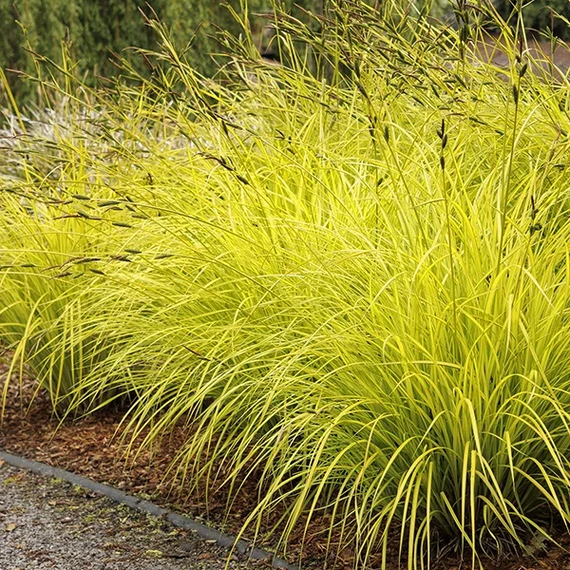
Bowles Golden Sedge (Carex elata ‘Aurea’) forms glowing cushions of narrow, golden blades that provide season‑long color and graceful movement. Best foliage intensity occurs in full sun with abundant moisture, yet this semi‑evergreen sedge also brightens partially shaded sites. Thriving in rich, consistently moist to wet soils—and even tolerating shallow water at pond edges—it’s a low‑maintenance accent for borders, containers, rain gardens, and water features in USDA Zones 4–9.
Botanical Name
Carex elata ‘Aurea’ — commonly sold as Bowles Golden Sedge.
Plant Type & Habit
Semi‑evergreen, slow‑spreading clumping sedge valued for its foliage; refined, fountain‑like habit.
Mature Size
Typically 1–2 ft. tall and 2–3 ft. wide; forms neat, slow‑expanding mounds.
Hardiness
USDA Zones 4–9.
Light & Exposure
Full sun to partial sun for best color; also brightens light shade. Provide ample moisture in sunnier exposures.
Soil & Water
Thrives in enriched, loamy, slightly acidic, well‑drained yet consistently moist soils. Keep evenly moist—does not tolerate dry conditions. Suited to rain gardens and tolerates shallow water at pond edges.
Foliage & Texture
Striking golden blades (often with subtle green striping) emerge bright in spring and hold color through the season; fine texture adds movement and contrast.
Flowers
Inconspicuous; grown primarily for dramatic, year‑round foliage effect.
Uses & Landscape Ideas
- Border, edging, and mass planting for luminous contrast.
- Containers (kept evenly moist) as a textural filler.
- Pond margins, rain gardens, and wet sites where shallow water or saturated soil occurs.
- Combines beautifully with deep‑green foliage plants for high contrast.
Companion Ideas
Pair with Hosta, Iris, Cardinal Flower (Lobelia), Sweetspire (Itea), and Clethra for color and texture balance in moist settings.
Maintenance & Pruning
Keep soil consistently moist. For a tidy look, cut back old foliage just before new growth in spring. Avoid drought; mulch to conserve moisture.
Problem Solving & Tolerances
Deer and rabbit resistant; useful for erosion control and very wet areas. Not drought tolerant.
Planting & Spacing
Plant at the same depth as in the container; space 2–3 ft. apart when massing. Ensure steady moisture and consider slight afternoon shade in hotter regions.
Containers & Water Features
Excellent in large containers with water‑retentive potting mix and consistent irrigation. Suitable for shallow water at pond edges when crowns are not fully submerged.
- Brilliant golden foliage that lights up beds, borders, and pond edges; color shows best in sun and brightens shade.
- Moisture‑loving, semi‑evergreen clumper; ideal for rain gardens, boggy spots, and shallow water margins.
- Compact habit: typically 1–2 ft. tall and 2–3 ft. wide; slow‑spreading, tidy mounds.
- Easy‑care and deer/rabbit‑resistant; great for erosion control and consistently wet areas.
Bowles Golden Sedge (Carex elata ‘Aurea’) forms glowing cushions of narrow, golden blades that provide season‑long color and graceful movement. Best foliage intensity occurs in full sun with abundant moisture, yet this semi‑evergreen sedge also brightens partially shaded sites. Thriving in rich, consistently moist to wet soils—and even tolerating shallow water at pond edges—it’s a low‑maintenance accent for borders, containers, rain gardens, and water features in USDA Zones 4–9.
Botanical Name
Carex elata ‘Aurea’ — commonly sold as Bowles Golden Sedge.
Plant Type & Habit
Semi‑evergreen, slow‑spreading clumping sedge valued for its foliage; refined, fountain‑like habit.
Mature Size
Typically 1–2 ft. tall and 2–3 ft. wide; forms neat, slow‑expanding mounds.
Hardiness
USDA Zones 4–9.
Light & Exposure
Full sun to partial sun for best color; also brightens light shade. Provide ample moisture in sunnier exposures.
Soil & Water
Thrives in enriched, loamy, slightly acidic, well‑drained yet consistently moist soils. Keep evenly moist—does not tolerate dry conditions. Suited to rain gardens and tolerates shallow water at pond edges.
Foliage & Texture
Striking golden blades (often with subtle green striping) emerge bright in spring and hold color through the season; fine texture adds movement and contrast.
Flowers
Inconspicuous; grown primarily for dramatic, year‑round foliage effect.
Uses & Landscape Ideas
- Border, edging, and mass planting for luminous contrast.
- Containers (kept evenly moist) as a textural filler.
- Pond margins, rain gardens, and wet sites where shallow water or saturated soil occurs.
- Combines beautifully with deep‑green foliage plants for high contrast.
Companion Ideas
Pair with Hosta, Iris, Cardinal Flower (Lobelia), Sweetspire (Itea), and Clethra for color and texture balance in moist settings.
Maintenance & Pruning
Keep soil consistently moist. For a tidy look, cut back old foliage just before new growth in spring. Avoid drought; mulch to conserve moisture.
Problem Solving & Tolerances
Deer and rabbit resistant; useful for erosion control and very wet areas. Not drought tolerant.
Planting & Spacing
Plant at the same depth as in the container; space 2–3 ft. apart when massing. Ensure steady moisture and consider slight afternoon shade in hotter regions.
Containers & Water Features
Excellent in large containers with water‑retentive potting mix and consistent irrigation. Suitable for shallow water at pond edges when crowns are not fully submerged.