


Zoom the image with the mouse
Bonsai Blue Jacaranda - 5 Gallon
SKU:
2319325
UPC:
014949459270
$149.99
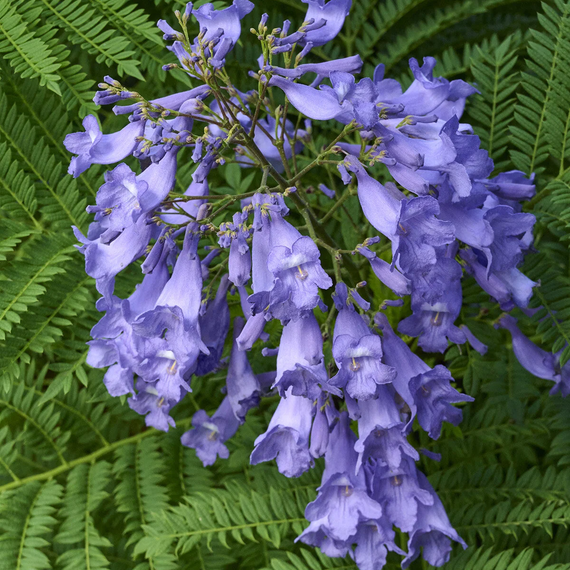
- A truly dwarf Jacaranda bred for smaller gardens, patios, and containers — producing the same breathtaking deep violet-blue trumpet blooms as its full-sized relatives on a compact, manageable frame.
- Lacy, fern-like, bright green compound foliage delivers tropical elegance all season long, and the semi-evergreen habit keeps the tree looking attractive even outside of bloom time.
- Remarkably heat and drought tolerant once established, making it a standout low-maintenance specimen for warm, sunny Southern Oregon and Northern California landscapes.
- Versatile enough for small urban gardens, mixed borders, and large decorative pots on terraces or patios — a patio-perfect showpiece that attracts butterflies, bees, and hummingbirds.
Jacaranda Bonsai Blue (Jacaranda mimosifolia 'Sakai01' PP #26,574) is a patented, truly dwarf selection of the beloved Blue Jacaranda, purpose-bred to deliver all the tropical drama of the classic species in a fraction of the space. Where standard Jacarandas can reach 50 feet or more, this compact cultivar tops out at just around 6 feet tall with a proportionally tidy spread, making it ideal for today's smaller gardens, urban streetscapes, and container plantings on sunny patios and terraces. From late spring through early summer, the tree erupts in large, clustered panicles of deep violet-blue, bell-shaped tubular flowers — each bloom up to 2 inches long — creating a vivid purple canopy that is nothing short of spectacular. Even when not in bloom, the delicate, bipinnate foliage composed of tiny, bright green leaflets arranged in a lacy fern-like pattern creates beautiful year-round texture. Its semi-evergreen nature means it holds its leaves in mild winters, while its impressive heat and drought tolerance (once established) make it exceptionally well-suited to the warm, dry summers of Southern Oregon and Northern California. Whether used as a focal specimen in a mixed border, a statement tree in a small garden, or a showpiece in a large decorative container on a sunny deck, Jacaranda Bonsai Blue brings bold color, tropical flair, and sophisticated elegance to any landscape where it is given plenty of sun and warmth to thrive.
Plant Description
Jacaranda Bonsai Blue is a patented dwarf cultivar of the classic Blue Jacaranda (Jacaranda mimosifolia), a subtropical tree native to south-central South America — primarily Argentina and Brazil. Unlike the towering species trees found lining boulevards in warm-climate cities, this compact selection was specifically bred to remain small and tidy without sacrificing the species' most celebrated features. The tree produces spectacular, large panicles of deep violet-blue, tubular, bell-shaped flowers in late spring through early summer, each individual flower reaching approximately 2 inches in length. The blooms appear in showy clusters and often precede or coincide with fresh leaf emergence, creating a stunning purple-dominant canopy effect. The compound, bipinnate leaves are composed of many small, feathery leaflets arranged in a delicate fern-like pattern, giving the foliage an airy, tropical quality. The bark is thin and grayish-brown, becoming lightly scaly on more mature specimens. Woody, rounded seed pods form after flowering and contain numerous small, winged seeds. This tree is semi-evergreen — it retains its foliage in mild winters but may drop leaves in cooler conditions before re-leafing vigorously in spring.
Mature Size
| Attribute | Measurement |
|---|---|
| Mature Height | Approximately 5-6 feet (around 1.5 meters) |
| Mature Spread | Approximately 18-24 inches |
| Growth Rate | Moderate to fast during the active growing season |
| Plant Form | Upright, compact small tree with a rounded to spreading canopy |
This dwarf selection is dramatically smaller than the standard species, which can reach 40-50 feet in tropical and subtropical conditions. Bonsai Blue's compact stature makes it suitable for small gardens, planting beds with limited vertical clearance, and large decorative containers where a full-sized Jacaranda would be completely impractical.
Hardiness Zones
Jacaranda Bonsai Blue is rated for USDA Hardiness Zones 9-11. It thrives in the warm, frost-minimal climates of Southern Oregon and Northern California, particularly in protected locations at the warmer end of Zone 9. As a subtropical species, it will not tolerate hard freezes or prolonged cold. Established trees can withstand brief temperature dips to around 18-20 degrees Fahrenheit, but extended cold below 25 degrees Fahrenheit can cause significant damage or death. In borderline Zone 9 locations, planting in a sheltered, south-facing microclimate, against a warm masonry wall, or in a large container that can be moved to a frost-protected area in winter will greatly improve cold hardiness and long-term survival. Consistent warm summers and mild winters yield the best flowering performance.
Sunlight Requirements
Jacaranda Bonsai Blue is a full-sun plant that performs best with a minimum of 6 hours of direct sunlight per day. The more sun it receives, the more vigorously it grows and the more profusely it blooms. Insufficient light is one of the most common reasons this tree fails to flower — even a healthy, well-established plant in too much shade will prioritize vegetative growth over flower bud production. In very hot inland valleys, light afternoon shade can help prevent leaf scorch during peak summer heat, but the plant should receive full morning sun. When grown in containers, position the pot in the sunniest available spot. If overwintered indoors, place the tree directly in front of a bright, south-facing window and supplement with a full-spectrum grow light running 12-14 hours per day to maintain vigor until it can return outdoors in spring.
Soil and pH Preferences
This Jacaranda thrives in well-draining soils and is quite adaptable in terms of soil texture, tolerating sandy, loamy, and even moderately rocky soils. The critical requirement is excellent drainage — roots must never sit in waterlogged conditions, as standing water leads quickly to root rot. For in-ground planting, amend heavy clay soils generously with coarse sand, perlite, and organic matter to improve drainage and aeration before planting. The preferred soil pH range is slightly acidic to neutral, approximately 6.0 to 7.0. Overly alkaline soils can cause iron chlorosis, presenting as yellowing leaves with green veins. If your soil pH runs high, incorporate sulfur to lower it or apply chelated iron supplements periodically to maintain healthy green foliage. For container culture, use a high-quality, fast-draining potting mix blended with perlite or coarse horticultural sand.
Watering Guide
Consistent moisture is key during the active growing season (spring through summer), but overwatering is equally damaging as underwatering. Follow these general guidelines:
- Spring and Summer: Water deeply and regularly, allowing the top 2-3 inches of soil to begin drying before watering again. During heat waves or extended dry periods, daily or near-daily watering may be necessary, especially for container-grown plants.
- Fall: Begin tapering off watering frequency as temperatures cool and growth slows. Allow slightly more drying between waterings.
- Winter: Reduce to approximately once per week for in-ground plants in mild climates, or once every 1-2 weeks for container plants brought under cover. Do not allow the root zone to dry out completely.
- Watering technique: Water deeply at the base of the tree, directing moisture toward the drip line rather than directly against the trunk. Ensure water penetrates at least 3 inches into the soil.
- Yellowing leaves often indicate overwatering; browning, shriveling leaves typically indicate underwatering or excessive heat stress.
Established in-ground trees develop notable drought tolerance but will perform and bloom best with consistent supplemental irrigation during dry Southern Oregon and Northern California summers.
Fertilizing
Regular feeding during the growing season supports vigorous growth and abundant flowering. Use a balanced, water-soluble fertilizer (such as a 10-10-10 or similar NPK formulation) diluted to half strength and applied every 1-2 weeks from spring through midsummer. In late summer, consider switching to a fertilizer with a higher phosphorus content (a "bloom booster" formula) to encourage the development of flower buds for the following season's display. Cease fertilizing in late fall and do not feed during winter dormancy, as feeding a resting plant can damage the root system. Resume feeding in early spring as new growth emerges. If leaves show signs of iron chlorosis (yellowing between the veins), apply a chelated iron supplement and ensure soil pH is not too high. Avoid over-fertilizing, which can result in excessive leafy growth at the expense of flowers, and may cause burnt leaf tips from salt accumulation in the soil.
Pruning and Maintenance
Bonsai Blue Jacaranda responds very well to pruning and can be shaped to maintain a compact, attractive form. Key pruning guidelines include:
- Major structural pruning is best performed in late winter or early spring, just before new growth begins. This is the ideal time to remove crossing, crowded, or poorly placed branches and to establish or refine the overall form of the tree.
- Maintenance pruning can be done throughout the growing season. Cut new shoots back to 1-2 leaf pairs once 4-5 pairs have developed to encourage back-budding, denser branching, and a more compact habit.
- Avoid heavy pruning in late summer or fall, as flower buds are formed on mature wood and can be inadvertently removed, reducing the following year's bloom display.
- Oversized leaves can be removed at any point during the growing season without harming the tree; doing so typically stimulates the emergence of smaller replacement leaves that are more proportionate to the plant's compact size.
- Always use clean, sharp pruning tools to make smooth cuts that heal quickly. Wipe blades with rubbing alcohol between uses to prevent the spread of disease.
- Remove spent flower clusters and any dried seed pods as desired to maintain a tidy appearance and redirect the tree's energy into vegetative and root growth.
Planting Instructions
- Timing: Plant in spring after the last frost date has passed, or in early fall in mild-winter areas. Spring planting allows the tree to establish its root system through the warm growing season before facing its first winter.
- Site selection: Choose a location with full sun exposure (minimum 6 hours daily), good air circulation, and protection from cold north or east winds. A south- or west-facing microclimate near a wall or fence is ideal in Zone 9 areas.
- Soil preparation: Dig a planting hole 2-3 times the width of the root ball and equal to its depth. Amend heavy clay soils with coarse sand and organic compost. Ensure the site drains well — standing water after rain is a red flag.
- Planting depth: Set the tree so the top of the root ball is level with or very slightly above the surrounding soil grade. Never plant deeper than the original growing depth, as this can cause crown rot.
- Backfill and settle: Fill in with native soil blended with compost, tamping gently to eliminate large air pockets. Form a shallow watering basin around the perimeter of the planting hole.
- Initial watering: Water deeply and thoroughly immediately after planting. Keep the root zone consistently moist for the first growing season until the tree is established.
- Mulching: Apply a 2-3 inch layer of organic mulch (wood chips, shredded bark) around the base, keeping mulch a few inches away from the trunk to prevent rot and discourage pests.
Container Growing
Jacaranda Bonsai Blue is exceptionally well-suited to container culture and is an ideal choice for patios, rooftops, courtyards, and any space where in-ground planting is not possible. For container growing success:
- Use a container with a minimum capacity of 5-7 gallons; larger is generally better for root health and moisture retention. Ensure the pot has adequate drainage holes.
- Fill with a high-quality, fast-draining potting mix blended with 20-30% perlite or coarse sand to ensure excellent drainage and prevent waterlogging.
- Position the container in the sunniest available spot — at least 6 hours of direct sun daily is essential for both healthy growth and flowering performance.
- Container plants dry out much faster than in-ground plantings and will require more frequent watering, especially during hot summer weather. Check soil moisture daily during peak summer heat.
- Fertilize more consistently than in-ground plants, as nutrients leach from containers with regular watering. Use a balanced, diluted liquid fertilizer every 1-2 weeks during the growing season.
- Repot every 2-3 years or when the tree becomes noticeably root-bound, refreshing the soil mix and pruning back up to one-third of the root mass to encourage healthy regrowth.
- In borderline Zone 9 areas, one of the greatest advantages of container growing is the ability to move the tree to a frost-protected garage, greenhouse, or indoors before freezing temperatures arrive in winter.
Seasonal Interest
| Season | What to Expect |
|---|---|
| Spring | The main flowering event begins — stunning clusters of deep violet-blue, tubular blooms often emerge just before or alongside the fresh new foliage, creating a breathtaking all-purple canopy display. New bright green compound leaves unfurl. |
| Early Summer | Continued flowering through early summer. The lacy, fern-like foliage fills in fully, providing beautiful tropical texture and shade beneath the canopy. Spent flowers drop, creating a purple carpet effect beneath the tree. |
| Summer | Rich, full foliage provides tropical texture and visual interest. Woody, oval seed pods begin to form and ripen. Pollinators remain active around the tree. |
| Fall | Foliage may begin to thin and yellow slightly as days shorten and temperatures cool. Tree enters a semi-dormant phase in preparation for winter rest. Seed pods can be harvested if desired. |
| Winter | In mild climates (Zone 9-11), the tree is semi-evergreen and retains much of its foliage. In cooler conditions, leaves may drop entirely, exposing the attractive branching structure. The tree rests in preparation for its spectacular spring bloom. |
Landscape Uses
The compact size and spectacular floral display of Jacaranda Bonsai Blue make it one of the most versatile statement plants available for warm-climate gardens. Consider these applications:
- Focal specimen tree: Plant as a standalone feature in a lawn, courtyard, or garden bed where its spring bloom display will be the undisputed center of attention.
- Small urban and courtyard gardens: Its dwarf stature makes it perfect for tight spaces where a full-sized tree would be impossible.
- Patio and terrace container plant: An elegant potted specimen for decks, patios, rooftop gardens, balconies, or entryways.
- Mixed border accent: Use as a tall backdrop element in a mixed perennial or shrub border, providing early season color before many other plants take center stage.
- Street tree or parking strip planting: Its heat tolerance and compact scale make it suitable for narrow planting strips in warm urban environments.
- Mediterranean and tropical-style garden themes: A natural fit alongside other warm-climate plants such as Bougainvillea, Agapanthus, Salvia, and ornamental grasses.
- Pool surrounds: The open canopy allows filtered light through and the tree creates a tropical resort atmosphere. Note that spent flowers will drop into the pool area — factor this into placement decisions.
Companion Plants
Jacaranda Bonsai Blue pairs beautifully with other sun-loving, warm-climate plants that complement its tropical character and violet-blue bloom color. Consider these companion plant combinations:
- Agapanthus (Lily of the Nile): The blue to purple summer flower spikes of Agapanthus echo the Jacaranda's cool-toned blooms and thrive under the same full-sun, well-drained conditions.
- Salvia leucantha (Mexican Bush Sage): Deep purple and white velvety flower spikes extend the purple color theme through late summer and fall after the Jacaranda has finished blooming.
- Bougainvillea: The bold magenta or orange bracts of Bougainvillea create a vivid tropical contrast against the Jacaranda's violet-blue canopy in late spring and summer.
- Ornamental grasses (Nassella tenuissima, Pennisetum): Fine-textured grasses echo the feathery quality of the Jacaranda's compound foliage and provide year-round movement and texture.
- Lavender (Lavandula spp.): Shares the same water-wise, sun-loving requirements and reinforces the purple color palette at a lower level in the planting scheme.
- Lantana: A heat-loving, drought-tolerant groundcover that thrives in the same conditions and provides a colorful, pollinator-friendly carpet beneath the Jacaranda's canopy.
- Rockrose (Cistus spp.): Drought-tolerant and sun-loving, with cheerful blooms that complement the Jacaranda's seasonal display.
Pests and Diseases
Jacaranda Bonsai Blue is relatively pest-resistant but can occasionally be affected by the following:
- Aphids: Small, soft-bodied insects that cluster on new shoots and tender growth, causing distortion and sticky honeydew deposits. Knock off with a strong stream of water, apply insecticidal soap, or treat with neem oil.
- Scale insects: Hard or soft scale can appear on stems and branches, weakening the plant. Treat with horticultural oil applied when the tree is not in active heat stress. Avoid spraying in temperatures above 90 degrees Fahrenheit.
- Mealybugs: White, cottony masses in leaf axils and on stems. Treat with isopropyl alcohol applied with a cotton swab for localized infestations, or apply neem oil or insecticidal soap spray for broader coverage.
- Whiteflies: Tiny white flying insects on leaf undersides. Use yellow sticky traps and insecticidal soap treatments.
- Spider mites: More common during hot, dry conditions. Look for fine webbing on leaf undersides and stippled foliage. Increase humidity around the plant and apply horticultural oil or miticide.
- Root rot (Phytophthora): The most serious disease risk, caused by overwatering or poor drainage. Symptoms include yellowing leaves, wilting, and soft, darkened roots. Prevention through proper drainage is far more effective than treatment. If caught early, remove from wet soil, trim affected roots, and replant in fresh, well-draining mix.
- Iron chlorosis: A physiological condition (not a disease) caused by alkaline soil preventing iron uptake. Presents as yellowing leaves with green veins. Treat with chelated iron and adjust soil pH downward.
- Bacterial leaf scorch: An insect-borne bacterial disease that causes wilting, browning, and leaf drop with no cure. Prevention focuses on maintaining plant health and controlling insect vectors.
Wildlife Value
Jacaranda Bonsai Blue is a genuine wildlife magnet during its bloom season, offering significant value in the garden ecosystem:
- Bees: The tubular, nectar-rich flowers are highly attractive to honeybees, native bees, and bumblebees, providing an abundant early-season food source when many other flowering plants are just getting started.
- Butterflies: Multiple butterfly species are drawn to the blooms for nectar, adding another layer of living color to the garden during flowering.
- Hummingbirds: The trumpet-shaped flowers are a natural fit for hummingbird feeding, and these birds are often seen visiting Jacaranda blooms during the flowering period in Southern Oregon and Northern California.
- Other pollinators: Various beneficial insects including native wasps and other pollinators utilize the flowers as a nectar source, supporting overall garden biodiversity.
The tree does not provide significant fruit or seed value for birds, but its role as a spring pollinator resource makes it a worthwhile addition to any wildlife-friendly garden design. The open canopy structure also provides light dappled shade that many insects favor during warm days.
Toxicity Information
Jacaranda mimosifolia and its cultivars, including Bonsai Blue, are considered mildly toxic to humans and animals. All parts of the plant — including the leaves, flowers, and seed pods — may cause mild gastrointestinal upset if ingested in quantity. The plant is not considered severely toxic, but it is advisable to keep children and pets from consuming any part of the tree. Dogs, cats, and horses may experience mild digestive disturbance if they ingest plant material. As a precaution, plant in areas where curious pets or young children are supervised, or use container placement to limit access. Consult a veterinarian or poison control center if significant ingestion is suspected.
- A truly dwarf Jacaranda bred for smaller gardens, patios, and containers — producing the same breathtaking deep violet-blue trumpet blooms as its full-sized relatives on a compact, manageable frame.
- Lacy, fern-like, bright green compound foliage delivers tropical elegance all season long, and the semi-evergreen habit keeps the tree looking attractive even outside of bloom time.
- Remarkably heat and drought tolerant once established, making it a standout low-maintenance specimen for warm, sunny Southern Oregon and Northern California landscapes.
- Versatile enough for small urban gardens, mixed borders, and large decorative pots on terraces or patios — a patio-perfect showpiece that attracts butterflies, bees, and hummingbirds.
Jacaranda Bonsai Blue (Jacaranda mimosifolia 'Sakai01' PP #26,574) is a patented, truly dwarf selection of the beloved Blue Jacaranda, purpose-bred to deliver all the tropical drama of the classic species in a fraction of the space. Where standard Jacarandas can reach 50 feet or more, this compact cultivar tops out at just around 6 feet tall with a proportionally tidy spread, making it ideal for today's smaller gardens, urban streetscapes, and container plantings on sunny patios and terraces. From late spring through early summer, the tree erupts in large, clustered panicles of deep violet-blue, bell-shaped tubular flowers — each bloom up to 2 inches long — creating a vivid purple canopy that is nothing short of spectacular. Even when not in bloom, the delicate, bipinnate foliage composed of tiny, bright green leaflets arranged in a lacy fern-like pattern creates beautiful year-round texture. Its semi-evergreen nature means it holds its leaves in mild winters, while its impressive heat and drought tolerance (once established) make it exceptionally well-suited to the warm, dry summers of Southern Oregon and Northern California. Whether used as a focal specimen in a mixed border, a statement tree in a small garden, or a showpiece in a large decorative container on a sunny deck, Jacaranda Bonsai Blue brings bold color, tropical flair, and sophisticated elegance to any landscape where it is given plenty of sun and warmth to thrive.
Plant Description
Jacaranda Bonsai Blue is a patented dwarf cultivar of the classic Blue Jacaranda (Jacaranda mimosifolia), a subtropical tree native to south-central South America — primarily Argentina and Brazil. Unlike the towering species trees found lining boulevards in warm-climate cities, this compact selection was specifically bred to remain small and tidy without sacrificing the species' most celebrated features. The tree produces spectacular, large panicles of deep violet-blue, tubular, bell-shaped flowers in late spring through early summer, each individual flower reaching approximately 2 inches in length. The blooms appear in showy clusters and often precede or coincide with fresh leaf emergence, creating a stunning purple-dominant canopy effect. The compound, bipinnate leaves are composed of many small, feathery leaflets arranged in a delicate fern-like pattern, giving the foliage an airy, tropical quality. The bark is thin and grayish-brown, becoming lightly scaly on more mature specimens. Woody, rounded seed pods form after flowering and contain numerous small, winged seeds. This tree is semi-evergreen — it retains its foliage in mild winters but may drop leaves in cooler conditions before re-leafing vigorously in spring.
Mature Size
| Attribute | Measurement |
|---|---|
| Mature Height | Approximately 5-6 feet (around 1.5 meters) |
| Mature Spread | Approximately 18-24 inches |
| Growth Rate | Moderate to fast during the active growing season |
| Plant Form | Upright, compact small tree with a rounded to spreading canopy |
This dwarf selection is dramatically smaller than the standard species, which can reach 40-50 feet in tropical and subtropical conditions. Bonsai Blue's compact stature makes it suitable for small gardens, planting beds with limited vertical clearance, and large decorative containers where a full-sized Jacaranda would be completely impractical.
Hardiness Zones
Jacaranda Bonsai Blue is rated for USDA Hardiness Zones 9-11. It thrives in the warm, frost-minimal climates of Southern Oregon and Northern California, particularly in protected locations at the warmer end of Zone 9. As a subtropical species, it will not tolerate hard freezes or prolonged cold. Established trees can withstand brief temperature dips to around 18-20 degrees Fahrenheit, but extended cold below 25 degrees Fahrenheit can cause significant damage or death. In borderline Zone 9 locations, planting in a sheltered, south-facing microclimate, against a warm masonry wall, or in a large container that can be moved to a frost-protected area in winter will greatly improve cold hardiness and long-term survival. Consistent warm summers and mild winters yield the best flowering performance.
Sunlight Requirements
Jacaranda Bonsai Blue is a full-sun plant that performs best with a minimum of 6 hours of direct sunlight per day. The more sun it receives, the more vigorously it grows and the more profusely it blooms. Insufficient light is one of the most common reasons this tree fails to flower — even a healthy, well-established plant in too much shade will prioritize vegetative growth over flower bud production. In very hot inland valleys, light afternoon shade can help prevent leaf scorch during peak summer heat, but the plant should receive full morning sun. When grown in containers, position the pot in the sunniest available spot. If overwintered indoors, place the tree directly in front of a bright, south-facing window and supplement with a full-spectrum grow light running 12-14 hours per day to maintain vigor until it can return outdoors in spring.
Soil and pH Preferences
This Jacaranda thrives in well-draining soils and is quite adaptable in terms of soil texture, tolerating sandy, loamy, and even moderately rocky soils. The critical requirement is excellent drainage — roots must never sit in waterlogged conditions, as standing water leads quickly to root rot. For in-ground planting, amend heavy clay soils generously with coarse sand, perlite, and organic matter to improve drainage and aeration before planting. The preferred soil pH range is slightly acidic to neutral, approximately 6.0 to 7.0. Overly alkaline soils can cause iron chlorosis, presenting as yellowing leaves with green veins. If your soil pH runs high, incorporate sulfur to lower it or apply chelated iron supplements periodically to maintain healthy green foliage. For container culture, use a high-quality, fast-draining potting mix blended with perlite or coarse horticultural sand.
Watering Guide
Consistent moisture is key during the active growing season (spring through summer), but overwatering is equally damaging as underwatering. Follow these general guidelines:
- Spring and Summer: Water deeply and regularly, allowing the top 2-3 inches of soil to begin drying before watering again. During heat waves or extended dry periods, daily or near-daily watering may be necessary, especially for container-grown plants.
- Fall: Begin tapering off watering frequency as temperatures cool and growth slows. Allow slightly more drying between waterings.
- Winter: Reduce to approximately once per week for in-ground plants in mild climates, or once every 1-2 weeks for container plants brought under cover. Do not allow the root zone to dry out completely.
- Watering technique: Water deeply at the base of the tree, directing moisture toward the drip line rather than directly against the trunk. Ensure water penetrates at least 3 inches into the soil.
- Yellowing leaves often indicate overwatering; browning, shriveling leaves typically indicate underwatering or excessive heat stress.
Established in-ground trees develop notable drought tolerance but will perform and bloom best with consistent supplemental irrigation during dry Southern Oregon and Northern California summers.
Fertilizing
Regular feeding during the growing season supports vigorous growth and abundant flowering. Use a balanced, water-soluble fertilizer (such as a 10-10-10 or similar NPK formulation) diluted to half strength and applied every 1-2 weeks from spring through midsummer. In late summer, consider switching to a fertilizer with a higher phosphorus content (a "bloom booster" formula) to encourage the development of flower buds for the following season's display. Cease fertilizing in late fall and do not feed during winter dormancy, as feeding a resting plant can damage the root system. Resume feeding in early spring as new growth emerges. If leaves show signs of iron chlorosis (yellowing between the veins), apply a chelated iron supplement and ensure soil pH is not too high. Avoid over-fertilizing, which can result in excessive leafy growth at the expense of flowers, and may cause burnt leaf tips from salt accumulation in the soil.
Pruning and Maintenance
Bonsai Blue Jacaranda responds very well to pruning and can be shaped to maintain a compact, attractive form. Key pruning guidelines include:
- Major structural pruning is best performed in late winter or early spring, just before new growth begins. This is the ideal time to remove crossing, crowded, or poorly placed branches and to establish or refine the overall form of the tree.
- Maintenance pruning can be done throughout the growing season. Cut new shoots back to 1-2 leaf pairs once 4-5 pairs have developed to encourage back-budding, denser branching, and a more compact habit.
- Avoid heavy pruning in late summer or fall, as flower buds are formed on mature wood and can be inadvertently removed, reducing the following year's bloom display.
- Oversized leaves can be removed at any point during the growing season without harming the tree; doing so typically stimulates the emergence of smaller replacement leaves that are more proportionate to the plant's compact size.
- Always use clean, sharp pruning tools to make smooth cuts that heal quickly. Wipe blades with rubbing alcohol between uses to prevent the spread of disease.
- Remove spent flower clusters and any dried seed pods as desired to maintain a tidy appearance and redirect the tree's energy into vegetative and root growth.
Planting Instructions
- Timing: Plant in spring after the last frost date has passed, or in early fall in mild-winter areas. Spring planting allows the tree to establish its root system through the warm growing season before facing its first winter.
- Site selection: Choose a location with full sun exposure (minimum 6 hours daily), good air circulation, and protection from cold north or east winds. A south- or west-facing microclimate near a wall or fence is ideal in Zone 9 areas.
- Soil preparation: Dig a planting hole 2-3 times the width of the root ball and equal to its depth. Amend heavy clay soils with coarse sand and organic compost. Ensure the site drains well — standing water after rain is a red flag.
- Planting depth: Set the tree so the top of the root ball is level with or very slightly above the surrounding soil grade. Never plant deeper than the original growing depth, as this can cause crown rot.
- Backfill and settle: Fill in with native soil blended with compost, tamping gently to eliminate large air pockets. Form a shallow watering basin around the perimeter of the planting hole.
- Initial watering: Water deeply and thoroughly immediately after planting. Keep the root zone consistently moist for the first growing season until the tree is established.
- Mulching: Apply a 2-3 inch layer of organic mulch (wood chips, shredded bark) around the base, keeping mulch a few inches away from the trunk to prevent rot and discourage pests.
Container Growing
Jacaranda Bonsai Blue is exceptionally well-suited to container culture and is an ideal choice for patios, rooftops, courtyards, and any space where in-ground planting is not possible. For container growing success:
- Use a container with a minimum capacity of 5-7 gallons; larger is generally better for root health and moisture retention. Ensure the pot has adequate drainage holes.
- Fill with a high-quality, fast-draining potting mix blended with 20-30% perlite or coarse sand to ensure excellent drainage and prevent waterlogging.
- Position the container in the sunniest available spot — at least 6 hours of direct sun daily is essential for both healthy growth and flowering performance.
- Container plants dry out much faster than in-ground plantings and will require more frequent watering, especially during hot summer weather. Check soil moisture daily during peak summer heat.
- Fertilize more consistently than in-ground plants, as nutrients leach from containers with regular watering. Use a balanced, diluted liquid fertilizer every 1-2 weeks during the growing season.
- Repot every 2-3 years or when the tree becomes noticeably root-bound, refreshing the soil mix and pruning back up to one-third of the root mass to encourage healthy regrowth.
- In borderline Zone 9 areas, one of the greatest advantages of container growing is the ability to move the tree to a frost-protected garage, greenhouse, or indoors before freezing temperatures arrive in winter.
Seasonal Interest
| Season | What to Expect |
|---|---|
| Spring | The main flowering event begins — stunning clusters of deep violet-blue, tubular blooms often emerge just before or alongside the fresh new foliage, creating a breathtaking all-purple canopy display. New bright green compound leaves unfurl. |
| Early Summer | Continued flowering through early summer. The lacy, fern-like foliage fills in fully, providing beautiful tropical texture and shade beneath the canopy. Spent flowers drop, creating a purple carpet effect beneath the tree. |
| Summer | Rich, full foliage provides tropical texture and visual interest. Woody, oval seed pods begin to form and ripen. Pollinators remain active around the tree. |
| Fall | Foliage may begin to thin and yellow slightly as days shorten and temperatures cool. Tree enters a semi-dormant phase in preparation for winter rest. Seed pods can be harvested if desired. |
| Winter | In mild climates (Zone 9-11), the tree is semi-evergreen and retains much of its foliage. In cooler conditions, leaves may drop entirely, exposing the attractive branching structure. The tree rests in preparation for its spectacular spring bloom. |
Landscape Uses
The compact size and spectacular floral display of Jacaranda Bonsai Blue make it one of the most versatile statement plants available for warm-climate gardens. Consider these applications:
- Focal specimen tree: Plant as a standalone feature in a lawn, courtyard, or garden bed where its spring bloom display will be the undisputed center of attention.
- Small urban and courtyard gardens: Its dwarf stature makes it perfect for tight spaces where a full-sized tree would be impossible.
- Patio and terrace container plant: An elegant potted specimen for decks, patios, rooftop gardens, balconies, or entryways.
- Mixed border accent: Use as a tall backdrop element in a mixed perennial or shrub border, providing early season color before many other plants take center stage.
- Street tree or parking strip planting: Its heat tolerance and compact scale make it suitable for narrow planting strips in warm urban environments.
- Mediterranean and tropical-style garden themes: A natural fit alongside other warm-climate plants such as Bougainvillea, Agapanthus, Salvia, and ornamental grasses.
- Pool surrounds: The open canopy allows filtered light through and the tree creates a tropical resort atmosphere. Note that spent flowers will drop into the pool area — factor this into placement decisions.
Companion Plants
Jacaranda Bonsai Blue pairs beautifully with other sun-loving, warm-climate plants that complement its tropical character and violet-blue bloom color. Consider these companion plant combinations:
- Agapanthus (Lily of the Nile): The blue to purple summer flower spikes of Agapanthus echo the Jacaranda's cool-toned blooms and thrive under the same full-sun, well-drained conditions.
- Salvia leucantha (Mexican Bush Sage): Deep purple and white velvety flower spikes extend the purple color theme through late summer and fall after the Jacaranda has finished blooming.
- Bougainvillea: The bold magenta or orange bracts of Bougainvillea create a vivid tropical contrast against the Jacaranda's violet-blue canopy in late spring and summer.
- Ornamental grasses (Nassella tenuissima, Pennisetum): Fine-textured grasses echo the feathery quality of the Jacaranda's compound foliage and provide year-round movement and texture.
- Lavender (Lavandula spp.): Shares the same water-wise, sun-loving requirements and reinforces the purple color palette at a lower level in the planting scheme.
- Lantana: A heat-loving, drought-tolerant groundcover that thrives in the same conditions and provides a colorful, pollinator-friendly carpet beneath the Jacaranda's canopy.
- Rockrose (Cistus spp.): Drought-tolerant and sun-loving, with cheerful blooms that complement the Jacaranda's seasonal display.
Pests and Diseases
Jacaranda Bonsai Blue is relatively pest-resistant but can occasionally be affected by the following:
- Aphids: Small, soft-bodied insects that cluster on new shoots and tender growth, causing distortion and sticky honeydew deposits. Knock off with a strong stream of water, apply insecticidal soap, or treat with neem oil.
- Scale insects: Hard or soft scale can appear on stems and branches, weakening the plant. Treat with horticultural oil applied when the tree is not in active heat stress. Avoid spraying in temperatures above 90 degrees Fahrenheit.
- Mealybugs: White, cottony masses in leaf axils and on stems. Treat with isopropyl alcohol applied with a cotton swab for localized infestations, or apply neem oil or insecticidal soap spray for broader coverage.
- Whiteflies: Tiny white flying insects on leaf undersides. Use yellow sticky traps and insecticidal soap treatments.
- Spider mites: More common during hot, dry conditions. Look for fine webbing on leaf undersides and stippled foliage. Increase humidity around the plant and apply horticultural oil or miticide.
- Root rot (Phytophthora): The most serious disease risk, caused by overwatering or poor drainage. Symptoms include yellowing leaves, wilting, and soft, darkened roots. Prevention through proper drainage is far more effective than treatment. If caught early, remove from wet soil, trim affected roots, and replant in fresh, well-draining mix.
- Iron chlorosis: A physiological condition (not a disease) caused by alkaline soil preventing iron uptake. Presents as yellowing leaves with green veins. Treat with chelated iron and adjust soil pH downward.
- Bacterial leaf scorch: An insect-borne bacterial disease that causes wilting, browning, and leaf drop with no cure. Prevention focuses on maintaining plant health and controlling insect vectors.
Wildlife Value
Jacaranda Bonsai Blue is a genuine wildlife magnet during its bloom season, offering significant value in the garden ecosystem:
- Bees: The tubular, nectar-rich flowers are highly attractive to honeybees, native bees, and bumblebees, providing an abundant early-season food source when many other flowering plants are just getting started.
- Butterflies: Multiple butterfly species are drawn to the blooms for nectar, adding another layer of living color to the garden during flowering.
- Hummingbirds: The trumpet-shaped flowers are a natural fit for hummingbird feeding, and these birds are often seen visiting Jacaranda blooms during the flowering period in Southern Oregon and Northern California.
- Other pollinators: Various beneficial insects including native wasps and other pollinators utilize the flowers as a nectar source, supporting overall garden biodiversity.
The tree does not provide significant fruit or seed value for birds, but its role as a spring pollinator resource makes it a worthwhile addition to any wildlife-friendly garden design. The open canopy structure also provides light dappled shade that many insects favor during warm days.
Toxicity Information
Jacaranda mimosifolia and its cultivars, including Bonsai Blue, are considered mildly toxic to humans and animals. All parts of the plant — including the leaves, flowers, and seed pods — may cause mild gastrointestinal upset if ingested in quantity. The plant is not considered severely toxic, but it is advisable to keep children and pets from consuming any part of the tree. Dogs, cats, and horses may experience mild digestive disturbance if they ingest plant material. As a precaution, plant in areas where curious pets or young children are supervised, or use container placement to limit access. Consult a veterinarian or poison control center if significant ingestion is suspected.
Related Products


