Zoom the image with the mouse
Blue Star Fern - 1 Gallon
SKU:
2015185
UPC:
014949486962
$27.99
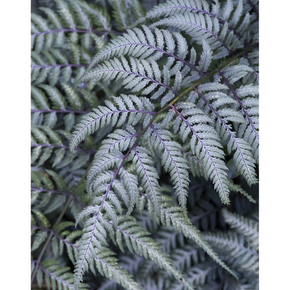
- Striking blue-green, deeply lobed fronds with a soft, velvety texture deliver year-round color and bold tropical character indoors or in warm outdoor settings.
- An epiphytic fern by nature, Blue Star is one of the most forgiving ferns available, tolerating lower light levels and a range of indoor environments with minimal fuss.
- Completely non-toxic to cats, dogs, and people, making it a worry-free choice for households with curious pets or children.
- Award of Garden Merit recipient that doubles beautifully as a lush hanging basket plant, an elevated shelf specimen, or a striking addition to mixed tropical containers.
Phlebodium aureum Blue Star Fern is a standout epiphytic fern native to the tropical and subtropical forests of North America, South America, and the Caribbean, where it anchors itself to tree canopies and absorbs moisture and nutrients from the humid air around it. Its broad, deeply lobed fronds showcase a cool, dusty blue-green hue unlike virtually any other fern on the market, and the fuzzy, creeping golden-orange rhizomes that wander along the soil surface add a second layer of visual intrigue. Indoors, Blue Star Fern grows to a tidy 2 to 3 feet tall and wide, making it ideal for tabletops, shelving, hanging baskets, and bright bathrooms, while gardeners in USDA Hardiness Zones 8 through 11 can enjoy it as a lush, evergreen outdoor accent in shaded patio containers or sheltered garden beds. Unlike finicky ferns that demand constant humidity and attention, Blue Star adapts readily to normal home conditions, asking only for bright indirect light, consistently moist but well-draining soil, and occasional light feeding during the growing season. Its low-maintenance nature, RHS Award of Garden Merit, pet-safe profile, and genuinely eye-catching foliage make Phlebodium aureum Blue Star Fern one of the most rewarding tropical plants you can bring home.
Plant Description
Blue Star Fern (Phlebodium aureum) is a rhizomatous, epiphytic fern belonging to the family Polypodiaceae. It is best recognized by its broad, arching fronds that are deeply lobed or pinnately divided, each displaying a distinctive dusty blue-green to blue-gray color with a soft, almost velvety surface texture. The fronds can reach 16 to 50 inches in length and up to 20 inches wide, with each frond carrying roughly 35 pinnae. Creeping golden-orange or rust-colored rhizomes sprawl outward across the top of the growing medium, a hallmark trait of this genus and a clue to its epiphytic origins. The plant is evergreen and produces no flowers, relying on spores borne in rusty-brown sori on the undersides of mature fronds for reproduction. It is also commonly sold and known under the names Golden Polypody, Gold Foot Fern, Hare Foot Fern, Rabbit's Foot Fern, and Cabbage Palm Fern.
Mature Size
| Setting | Height | Spread |
|---|---|---|
| Indoors (houseplant) | 2 - 3 ft | 2 - 3 ft |
| Outdoors (in-ground, warm climates) | 2 - 4 ft | 3 - 6 ft |
| Individual frond length | 16 - 50 in | up to 20 in wide |
Blue Star Fern is a slow to moderate grower indoors, meaning repotting is rarely needed and the plant will comfortably inhabit its container for several years before requiring a size upgrade.
Hardiness Zones and Outdoor Use
Blue Star Fern is rated for USDA Hardiness Zones 8 through 11 for outdoor cultivation, with some references extending hardiness to Zone 13 in very mild, frost-free tropical climates. In Southern Oregon and Northern California, it can be grown outdoors year-round in sheltered, frost-free microclimates in Zone 9 or above. In Zones 8 and below, or anywhere frost is possible, it should be treated as a container plant and moved indoors before nighttime temperatures drop below 50 degrees F (10 degrees C). Frost will damage or kill the fronds, and prolonged exposure to temperatures below 50 degrees F can cause significant stress even without a hard freeze. Outdoors, always site this fern in a sheltered position protected from cold wind and drying afternoon sun.
Sunlight Requirements
Blue Star Fern performs best in bright, indirect light and is one of the few ferns that can tolerate a fairly wide range of light conditions. Ideal indoor placement is near an east- or north-facing window, or a few feet back from a bright south- or west-facing window where direct rays are filtered by a sheer curtain. Direct sunlight, especially intense afternoon sun, will scorch and bleach the fronds. While the plant can adapt to medium or lower light, growth will slow and fronds may lose some of their vivid blue intensity. Outdoors, position it in full shade or dappled shade beneath a tree canopy, on a shaded porch, or under a patio cover to replicate the dappled forest conditions of its natural habitat.
- Best indoors: Bright indirect light near an east or north window
- Tolerated: Medium light, filtered shade
- Avoid: Direct sunlight, especially intense afternoon sun
- Outdoors: Full shade to part shade only
Soil and pH Preferences
Because Blue Star Fern is epiphytic in nature, it does not thrive in dense, heavy potting soil. It requires a loose, chunky, exceptionally well-draining growing medium that allows air to reach the roots and rhizomes while still retaining some moisture. Excellent mixes include orchid bark blended with perlite, a combination of coconut coir, tree bark chips, and sphagnum peat moss, or a commercial epiphyte mix. Standard potting soil can be used if amended generously with perlite or bark to open up the structure. A neutral soil pH of approximately 6.0 to 7.0 is ideal. Avoid heavy clay-based mixes or any medium that stays consistently wet, as waterlogged conditions are the leading cause of root rot in this plant. The creeping rhizomes should always be left sitting on top of the growing medium rather than buried beneath it.
Watering Guide
Blue Star Fern likes to remain consistently moist but should never sit in standing water. The right balance mimics the naturally humid, freely draining tree-bark environment of its tropical home. A few practical guidelines:
- Water when the top 1 inch of the growing medium feels slightly dry to the touch.
- Water from the sides of the pot, not directly into the crown or onto the rhizomes, to prevent crown rot.
- For plants growing in a loose, bark-heavy mix, bottom-watering by briefly submerging the pot in a basin of water and then allowing it to drain fully is very effective.
- Reduce watering frequency in winter when growth slows, but do not allow the medium to dry out completely.
- Always use a pot with drainage holes. Never allow the plant to sit in a saucer of standing water.
- If tap water in your area is heavily chlorinated or fluoride-treated, use filtered or room-temperature rainwater to prevent brown frond tips.
Humidity and Temperature
As a tropical plant, Blue Star Fern thrives in warm, humid conditions that mimic the forest canopy environments where it naturally grows. The ideal temperature range is 65 to 80 degrees F (18 to 27 degrees C). It will tolerate temperatures as low as 50 degrees F (10 degrees C) but should be protected from cold drafts, air conditioning vents, and exterior doors in winter. Frost will cause frond damage and potential plant death.
For humidity, this fern prefers 50% relative humidity or higher. In dry indoor climates, especially during winter when heating systems reduce humidity, consider these solutions:
- Place the pot on a pebble tray filled with water so evaporation raises the humidity immediately around the plant.
- Group it with other houseplants to create a naturally more humid microclimate.
- Run a small humidifier nearby.
- Position it in a bright bathroom or kitchen where ambient humidity tends to be higher.
- Lightly mist the fronds in the morning, allowing them to dry before evening to reduce the risk of fungal issues.
Fertilizing
Blue Star Fern is not a heavy feeder and can be easily damaged by over-fertilization, which often manifests as brown frond tips or yellowing leaves. Follow these guidelines for healthy, steady growth:
- Fertilize once every 4 to 6 weeks during the active growing season, which runs from spring through late summer.
- Use a balanced, water-soluble houseplant fertilizer (such as a 10-10-10 or 20-20-20 formula) diluted to half the recommended strength.
- Do not fertilize during fall and winter when the plant's growth naturally slows.
- Never apply fertilizer to dry soil; always water the plant first to prevent root burn.
- Flush the growing medium with plain water every few months to prevent salt buildup from fertilizer residue, which can damage sensitive roots.
Pruning and Maintenance
Blue Star Fern requires very little pruning and is considered a low-maintenance plant overall. Routine care involves the following:
- Remove dead, yellowing, or damaged fronds by cutting them cleanly at the base with clean, sharp scissors or pruning snips. This tidies the plant and redirects energy to healthy new growth.
- Do not remove the fuzzy, creeping rhizomes that extend over the pot rim or along the soil surface. These are a natural and healthy feature of the plant.
- Brown frond tips caused by low humidity or water quality can be carefully trimmed with scissors to maintain a neat appearance without removing the entire frond.
- Wipe fronds gently with a damp cloth occasionally to remove dust, which can block light absorption.
- There is no need for a hard annual cutback; simply remove unattractive foliage as it appears throughout the year.
Repotting and Container Growing
Blue Star Fern is a slow grower and does not need frequent repotting. Most plants are comfortable in the same container for 2 to 3 years before becoming pot-bound. When roots begin circling the bottom of the pot or creeping rhizomes have fully colonized the surface with no room to spread, it is time to repot. The best time to repot is in spring or early summer at the start of the active growing season.
When choosing a new pot, select one only 1 to 2 inches larger in diameter than the current container. Too large a pot will hold excess moisture and increase the risk of root rot. Always ensure the new container has drainage holes. Hanging baskets and elevated planters are particularly well-suited to this plant, as they show off the arching fronds and wandering rhizomes beautifully. When repotting, position the rhizomes on top of the growing medium rather than burying them, as they naturally grow along the surface in the wild.
Propagation
Blue Star Fern can be propagated by two methods: rhizome division and spore collection. Division is by far the simpler and more reliable option for home gardeners.
Division (Recommended):
- Propagate in spring or early summer during active growth.
- Gently remove the plant from its pot and shake loose excess growing medium.
- Identify natural separations in the root mass or locate a section of healthy rhizome with at least 2 to 3 fronds and visible roots attached.
- Carefully pull apart by hand or use a clean, sharp knife to separate the division.
- Dust any cut surfaces lightly with powdered activated charcoal to prevent infection.
- Pot each division in fresh, well-draining epiphyte mix with the rhizome resting on the soil surface.
- Water lightly and place in a warm, humid spot with bright indirect light. New growth should appear within a few weeks.
Spores: Mature fronds develop rust-brown sori (spore clusters) on their undersides. Fronds can be laid spore-side-down on white paper to release spores, which are then scattered over a moist sterile medium and kept under humidity until germination. This method requires patience and several months before viable plantlets emerge.
Pests and Diseases
Blue Star Fern is relatively resistant to serious pest and disease problems when grown in appropriate conditions, but the following issues can occasionally arise:
| Problem | Signs | Treatment |
|---|---|---|
| Spider Mites | Fine webbing, stippled or speckled fronds | Rinse with a strong stream of water; apply insecticidal soap or neem oil spray |
| Mealybugs | White cottony masses in frond crevices and on stems | Dab with rubbing alcohol on a cotton swab; treat with insecticidal soap |
| Scale Insects | Small brown bumps on stems and frond undersides | Scrape off manually; apply neem oil or horticultural oil |
| Fungus Gnats | Small flies around soil; larvae damage roots | Allow soil to dry slightly between waterings; apply Bacillus thuringiensis israelensis (Bti) to soil |
| Thrips | Silvery streaks on fronds; tiny insects visible on white paper when plant is shaken | Remove damaged fronds; apply neem oil spray; repeat weekly |
| Root or Crown Rot | Wilting, blackened frond bases, mushy stems or roots | Remove affected roots; repot in fresh, dry mix; avoid watering crown directly |
| Leaf Spot | Brown or yellow spots on fronds | Improve air circulation; avoid wetting foliage; remove affected fronds |
Common Problems and Solutions
The following are the most frequently encountered issues with Blue Star Fern and their likely causes:
- Brown frond tips: Most commonly caused by low humidity, fluoride or chlorine in tap water, or over-fertilization. Increase humidity, switch to filtered water, and reduce fertilizer concentration.
- Yellow fronds: Typically indicates overwatering, underwatering, excess fertilizer salts, or a pot-bound root system. Evaluate watering habits, flush the soil, and check whether repotting is needed.
- Pale, washed-out fronds or leggy growth: Insufficient light. Move the plant to a brighter location with more indirect light.
- Dropping or dying fronds after purchase or move: Normal adjustment stress from a change in environment. Give the plant 2 to 3 weeks to acclimate in its new spot before making changes.
- Fronds dying at the crown: A sign of crown rot, often caused by watering directly into the center of the plant. Water from the sides and check roots for rot.
- No new growth: In winter, slow or halted growth is normal. If occurring in the growing season, check for root-bound conditions, inadequate light, or pest pressure.
Landscape and Indoor Uses
Blue Star Fern's versatility makes it an excellent choice for a wide variety of decorative applications:
- Hanging baskets: The arching fronds and trailing rhizomes are displayed to full advantage when the plant is elevated. It makes a dramatic hanging basket for a covered porch, pergola, or bright interior space.
- Shaded patio containers: In Zones 8 and warmer, it thrives in mixed tropical container arrangements on shaded patios or under covered outdoor living areas.
- Indoor focal point: A mature specimen on a plant stand or pedestal in a bright room or sunroom creates a lush, tropical atmosphere.
- Bathroom or kitchen accent: The naturally higher humidity in these rooms makes them ideal homes for Blue Star Fern.
- Terrarium and vivarium plantings: Its manageable indoor size, tolerance of lower light, and love of humidity make it a popular choice for large terrariums and bioactive enclosures.
- Office greenery: One of the more forgiving ferns for the lower-light conditions common in commercial interiors.
- Outdoor shade garden (Zone 9+): Can be planted in the ground as an evergreen accent beneath trees or along shaded walls in frost-free climates.
Wildlife Value and Pet Safety
Blue Star Fern is non-toxic to cats, dogs, and humans, making it one of the safest tropical foliage plants available for households with pets and children. While the ASPCA does not list Phlebodium aureum as a toxic plant, it is always wise to discourage pets from chewing on houseplants as a general practice. Because this fern does not produce flowers or nectar, it offers limited value to pollinators. However, when grown outdoors in warm climates, its dense, humid foliage can provide shelter and microhabitat for small beneficial insects and amphibians in shaded garden settings.
- Striking blue-green, deeply lobed fronds with a soft, velvety texture deliver year-round color and bold tropical character indoors or in warm outdoor settings.
- An epiphytic fern by nature, Blue Star is one of the most forgiving ferns available, tolerating lower light levels and a range of indoor environments with minimal fuss.
- Completely non-toxic to cats, dogs, and people, making it a worry-free choice for households with curious pets or children.
- Award of Garden Merit recipient that doubles beautifully as a lush hanging basket plant, an elevated shelf specimen, or a striking addition to mixed tropical containers.
Phlebodium aureum Blue Star Fern is a standout epiphytic fern native to the tropical and subtropical forests of North America, South America, and the Caribbean, where it anchors itself to tree canopies and absorbs moisture and nutrients from the humid air around it. Its broad, deeply lobed fronds showcase a cool, dusty blue-green hue unlike virtually any other fern on the market, and the fuzzy, creeping golden-orange rhizomes that wander along the soil surface add a second layer of visual intrigue. Indoors, Blue Star Fern grows to a tidy 2 to 3 feet tall and wide, making it ideal for tabletops, shelving, hanging baskets, and bright bathrooms, while gardeners in USDA Hardiness Zones 8 through 11 can enjoy it as a lush, evergreen outdoor accent in shaded patio containers or sheltered garden beds. Unlike finicky ferns that demand constant humidity and attention, Blue Star adapts readily to normal home conditions, asking only for bright indirect light, consistently moist but well-draining soil, and occasional light feeding during the growing season. Its low-maintenance nature, RHS Award of Garden Merit, pet-safe profile, and genuinely eye-catching foliage make Phlebodium aureum Blue Star Fern one of the most rewarding tropical plants you can bring home.
Plant Description
Blue Star Fern (Phlebodium aureum) is a rhizomatous, epiphytic fern belonging to the family Polypodiaceae. It is best recognized by its broad, arching fronds that are deeply lobed or pinnately divided, each displaying a distinctive dusty blue-green to blue-gray color with a soft, almost velvety surface texture. The fronds can reach 16 to 50 inches in length and up to 20 inches wide, with each frond carrying roughly 35 pinnae. Creeping golden-orange or rust-colored rhizomes sprawl outward across the top of the growing medium, a hallmark trait of this genus and a clue to its epiphytic origins. The plant is evergreen and produces no flowers, relying on spores borne in rusty-brown sori on the undersides of mature fronds for reproduction. It is also commonly sold and known under the names Golden Polypody, Gold Foot Fern, Hare Foot Fern, Rabbit's Foot Fern, and Cabbage Palm Fern.
Mature Size
| Setting | Height | Spread |
|---|---|---|
| Indoors (houseplant) | 2 - 3 ft | 2 - 3 ft |
| Outdoors (in-ground, warm climates) | 2 - 4 ft | 3 - 6 ft |
| Individual frond length | 16 - 50 in | up to 20 in wide |
Blue Star Fern is a slow to moderate grower indoors, meaning repotting is rarely needed and the plant will comfortably inhabit its container for several years before requiring a size upgrade.
Hardiness Zones and Outdoor Use
Blue Star Fern is rated for USDA Hardiness Zones 8 through 11 for outdoor cultivation, with some references extending hardiness to Zone 13 in very mild, frost-free tropical climates. In Southern Oregon and Northern California, it can be grown outdoors year-round in sheltered, frost-free microclimates in Zone 9 or above. In Zones 8 and below, or anywhere frost is possible, it should be treated as a container plant and moved indoors before nighttime temperatures drop below 50 degrees F (10 degrees C). Frost will damage or kill the fronds, and prolonged exposure to temperatures below 50 degrees F can cause significant stress even without a hard freeze. Outdoors, always site this fern in a sheltered position protected from cold wind and drying afternoon sun.
Sunlight Requirements
Blue Star Fern performs best in bright, indirect light and is one of the few ferns that can tolerate a fairly wide range of light conditions. Ideal indoor placement is near an east- or north-facing window, or a few feet back from a bright south- or west-facing window where direct rays are filtered by a sheer curtain. Direct sunlight, especially intense afternoon sun, will scorch and bleach the fronds. While the plant can adapt to medium or lower light, growth will slow and fronds may lose some of their vivid blue intensity. Outdoors, position it in full shade or dappled shade beneath a tree canopy, on a shaded porch, or under a patio cover to replicate the dappled forest conditions of its natural habitat.
- Best indoors: Bright indirect light near an east or north window
- Tolerated: Medium light, filtered shade
- Avoid: Direct sunlight, especially intense afternoon sun
- Outdoors: Full shade to part shade only
Soil and pH Preferences
Because Blue Star Fern is epiphytic in nature, it does not thrive in dense, heavy potting soil. It requires a loose, chunky, exceptionally well-draining growing medium that allows air to reach the roots and rhizomes while still retaining some moisture. Excellent mixes include orchid bark blended with perlite, a combination of coconut coir, tree bark chips, and sphagnum peat moss, or a commercial epiphyte mix. Standard potting soil can be used if amended generously with perlite or bark to open up the structure. A neutral soil pH of approximately 6.0 to 7.0 is ideal. Avoid heavy clay-based mixes or any medium that stays consistently wet, as waterlogged conditions are the leading cause of root rot in this plant. The creeping rhizomes should always be left sitting on top of the growing medium rather than buried beneath it.
Watering Guide
Blue Star Fern likes to remain consistently moist but should never sit in standing water. The right balance mimics the naturally humid, freely draining tree-bark environment of its tropical home. A few practical guidelines:
- Water when the top 1 inch of the growing medium feels slightly dry to the touch.
- Water from the sides of the pot, not directly into the crown or onto the rhizomes, to prevent crown rot.
- For plants growing in a loose, bark-heavy mix, bottom-watering by briefly submerging the pot in a basin of water and then allowing it to drain fully is very effective.
- Reduce watering frequency in winter when growth slows, but do not allow the medium to dry out completely.
- Always use a pot with drainage holes. Never allow the plant to sit in a saucer of standing water.
- If tap water in your area is heavily chlorinated or fluoride-treated, use filtered or room-temperature rainwater to prevent brown frond tips.
Humidity and Temperature
As a tropical plant, Blue Star Fern thrives in warm, humid conditions that mimic the forest canopy environments where it naturally grows. The ideal temperature range is 65 to 80 degrees F (18 to 27 degrees C). It will tolerate temperatures as low as 50 degrees F (10 degrees C) but should be protected from cold drafts, air conditioning vents, and exterior doors in winter. Frost will cause frond damage and potential plant death.
For humidity, this fern prefers 50% relative humidity or higher. In dry indoor climates, especially during winter when heating systems reduce humidity, consider these solutions:
- Place the pot on a pebble tray filled with water so evaporation raises the humidity immediately around the plant.
- Group it with other houseplants to create a naturally more humid microclimate.
- Run a small humidifier nearby.
- Position it in a bright bathroom or kitchen where ambient humidity tends to be higher.
- Lightly mist the fronds in the morning, allowing them to dry before evening to reduce the risk of fungal issues.
Fertilizing
Blue Star Fern is not a heavy feeder and can be easily damaged by over-fertilization, which often manifests as brown frond tips or yellowing leaves. Follow these guidelines for healthy, steady growth:
- Fertilize once every 4 to 6 weeks during the active growing season, which runs from spring through late summer.
- Use a balanced, water-soluble houseplant fertilizer (such as a 10-10-10 or 20-20-20 formula) diluted to half the recommended strength.
- Do not fertilize during fall and winter when the plant's growth naturally slows.
- Never apply fertilizer to dry soil; always water the plant first to prevent root burn.
- Flush the growing medium with plain water every few months to prevent salt buildup from fertilizer residue, which can damage sensitive roots.
Pruning and Maintenance
Blue Star Fern requires very little pruning and is considered a low-maintenance plant overall. Routine care involves the following:
- Remove dead, yellowing, or damaged fronds by cutting them cleanly at the base with clean, sharp scissors or pruning snips. This tidies the plant and redirects energy to healthy new growth.
- Do not remove the fuzzy, creeping rhizomes that extend over the pot rim or along the soil surface. These are a natural and healthy feature of the plant.
- Brown frond tips caused by low humidity or water quality can be carefully trimmed with scissors to maintain a neat appearance without removing the entire frond.
- Wipe fronds gently with a damp cloth occasionally to remove dust, which can block light absorption.
- There is no need for a hard annual cutback; simply remove unattractive foliage as it appears throughout the year.
Repotting and Container Growing
Blue Star Fern is a slow grower and does not need frequent repotting. Most plants are comfortable in the same container for 2 to 3 years before becoming pot-bound. When roots begin circling the bottom of the pot or creeping rhizomes have fully colonized the surface with no room to spread, it is time to repot. The best time to repot is in spring or early summer at the start of the active growing season.
When choosing a new pot, select one only 1 to 2 inches larger in diameter than the current container. Too large a pot will hold excess moisture and increase the risk of root rot. Always ensure the new container has drainage holes. Hanging baskets and elevated planters are particularly well-suited to this plant, as they show off the arching fronds and wandering rhizomes beautifully. When repotting, position the rhizomes on top of the growing medium rather than burying them, as they naturally grow along the surface in the wild.
Propagation
Blue Star Fern can be propagated by two methods: rhizome division and spore collection. Division is by far the simpler and more reliable option for home gardeners.
Division (Recommended):
- Propagate in spring or early summer during active growth.
- Gently remove the plant from its pot and shake loose excess growing medium.
- Identify natural separations in the root mass or locate a section of healthy rhizome with at least 2 to 3 fronds and visible roots attached.
- Carefully pull apart by hand or use a clean, sharp knife to separate the division.
- Dust any cut surfaces lightly with powdered activated charcoal to prevent infection.
- Pot each division in fresh, well-draining epiphyte mix with the rhizome resting on the soil surface.
- Water lightly and place in a warm, humid spot with bright indirect light. New growth should appear within a few weeks.
Spores: Mature fronds develop rust-brown sori (spore clusters) on their undersides. Fronds can be laid spore-side-down on white paper to release spores, which are then scattered over a moist sterile medium and kept under humidity until germination. This method requires patience and several months before viable plantlets emerge.
Pests and Diseases
Blue Star Fern is relatively resistant to serious pest and disease problems when grown in appropriate conditions, but the following issues can occasionally arise:
| Problem | Signs | Treatment |
|---|---|---|
| Spider Mites | Fine webbing, stippled or speckled fronds | Rinse with a strong stream of water; apply insecticidal soap or neem oil spray |
| Mealybugs | White cottony masses in frond crevices and on stems | Dab with rubbing alcohol on a cotton swab; treat with insecticidal soap |
| Scale Insects | Small brown bumps on stems and frond undersides | Scrape off manually; apply neem oil or horticultural oil |
| Fungus Gnats | Small flies around soil; larvae damage roots | Allow soil to dry slightly between waterings; apply Bacillus thuringiensis israelensis (Bti) to soil |
| Thrips | Silvery streaks on fronds; tiny insects visible on white paper when plant is shaken | Remove damaged fronds; apply neem oil spray; repeat weekly |
| Root or Crown Rot | Wilting, blackened frond bases, mushy stems or roots | Remove affected roots; repot in fresh, dry mix; avoid watering crown directly |
| Leaf Spot | Brown or yellow spots on fronds | Improve air circulation; avoid wetting foliage; remove affected fronds |
Common Problems and Solutions
The following are the most frequently encountered issues with Blue Star Fern and their likely causes:
- Brown frond tips: Most commonly caused by low humidity, fluoride or chlorine in tap water, or over-fertilization. Increase humidity, switch to filtered water, and reduce fertilizer concentration.
- Yellow fronds: Typically indicates overwatering, underwatering, excess fertilizer salts, or a pot-bound root system. Evaluate watering habits, flush the soil, and check whether repotting is needed.
- Pale, washed-out fronds or leggy growth: Insufficient light. Move the plant to a brighter location with more indirect light.
- Dropping or dying fronds after purchase or move: Normal adjustment stress from a change in environment. Give the plant 2 to 3 weeks to acclimate in its new spot before making changes.
- Fronds dying at the crown: A sign of crown rot, often caused by watering directly into the center of the plant. Water from the sides and check roots for rot.
- No new growth: In winter, slow or halted growth is normal. If occurring in the growing season, check for root-bound conditions, inadequate light, or pest pressure.
Landscape and Indoor Uses
Blue Star Fern's versatility makes it an excellent choice for a wide variety of decorative applications:
- Hanging baskets: The arching fronds and trailing rhizomes are displayed to full advantage when the plant is elevated. It makes a dramatic hanging basket for a covered porch, pergola, or bright interior space.
- Shaded patio containers: In Zones 8 and warmer, it thrives in mixed tropical container arrangements on shaded patios or under covered outdoor living areas.
- Indoor focal point: A mature specimen on a plant stand or pedestal in a bright room or sunroom creates a lush, tropical atmosphere.
- Bathroom or kitchen accent: The naturally higher humidity in these rooms makes them ideal homes for Blue Star Fern.
- Terrarium and vivarium plantings: Its manageable indoor size, tolerance of lower light, and love of humidity make it a popular choice for large terrariums and bioactive enclosures.
- Office greenery: One of the more forgiving ferns for the lower-light conditions common in commercial interiors.
- Outdoor shade garden (Zone 9+): Can be planted in the ground as an evergreen accent beneath trees or along shaded walls in frost-free climates.
Wildlife Value and Pet Safety
Blue Star Fern is non-toxic to cats, dogs, and humans, making it one of the safest tropical foliage plants available for households with pets and children. While the ASPCA does not list Phlebodium aureum as a toxic plant, it is always wise to discourage pets from chewing on houseplants as a general practice. Because this fern does not produce flowers or nectar, it offers limited value to pollinators. However, when grown outdoors in warm climates, its dense, humid foliage can provide shelter and microhabitat for small beneficial insects and amphibians in shaded garden settings.
Related Products