
Zoom the image with the mouse
Blue Moon Kentucky Wisteria
SKU:
214960-P
UPC:
753768067623
$24.99 - $62.99
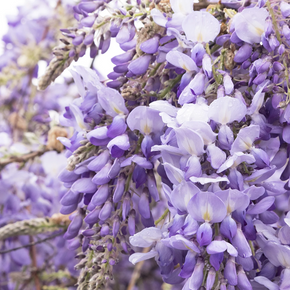
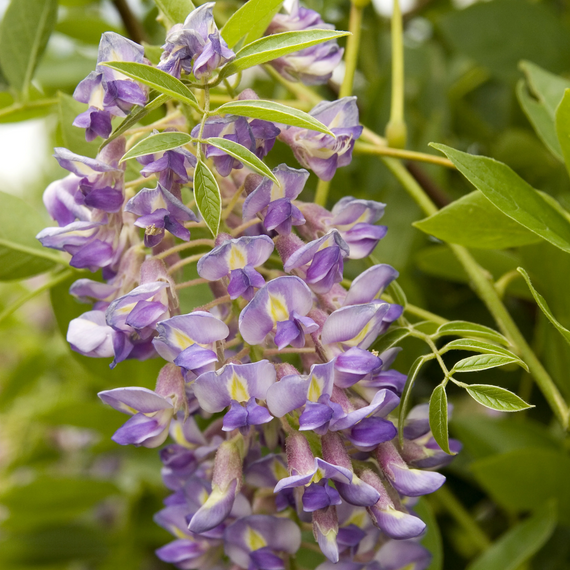
- Exceptionally hardy wisteria with fragrant lavender‑blue racemes; reblooms up to three times once established.
- Twining stems reach 15–25 ft., perfect for sturdy arbors, pergolas, and long fence runs.
- Blooms from late spring into summer; yellow fall foliage extends seasonal interest.
- Easy-care in full to partial sun with enriched, well‑drained, slightly acidic soil.
Blue Moon Kentucky Wisteria (Wisteria macrostachya ‘Blue Moon’) brings reliable, cold‑hardy wisteria performance to more climates, producing foot‑long, sweetly fragrant, lavender‑blue clusters that can repeat up to three times a season. Fast‑growing twining stems quickly cloak robust supports, while its lush green foliage and golden fall color add multi‑season appeal. Plant where it gets plenty of sun, give it a strong structure, and prune after flowering to encourage repeat bloom and a tidy framework.
Botanical Name
Wisteria macrostachya ‘Blue Moon’ (Kentucky wisteria); deciduous, twining vine.
Plant Highlights
- Reblooming habit—often flowers up to three times per growing season once established.
- Foot‑long racemes of fragrant, lavender‑blue, pea‑like flowers.
- Fast growth and strong twining for rapid coverage.
- Showy yellow fall foliage; attracts pollinators.
Size & Growth
Twining stems typically reach 15–25 ft. with support; vigorous, climbing habit suitable for large, sturdy structures.
Light & Water
- Light: Full sun to partial sun (best flowering in full sun).
- Water: Water when the top ~2 inches of soil are dry; water deeply and regularly the first season to establish, then reduce frequency.
Bloom & Fragrance
- Bloom Window: Late spring through summer, with repeat flushes on established plants.
- Flowers: Fragrant, lavender‑blue racemes to about 12 inches.
Hardiness & Climate
USDA Zones 4–9; selected for exceptional cold hardiness compared with Asian wisterias.
Soil & Planting
- Thrives in enriched, slightly acidic, well‑drained soil.
- Mulch to conserve moisture; avoid over‑fertilizing with high nitrogen to keep blooms prolific.
Support & Training
Provide a sturdy arbor, pergola, or heavy‑duty trellis. Train leaders along the structure; tie in new shoots and allow flowering spurs to develop along the framework.
Pruning & Maintenance
- Trim lightly after flowering to encourage rebloom.
- Prune in late winter to shape and control size; avoid excessive removal of green growth all at once.
- Feed in early spring if needed.
Landscape Uses
- Freestanding arbors and pergolas near patios for close‑up fragrance.
- Long fence lines, terrace walls, or large trellises for dramatic vertical color.
- Espalier applications where a strong framework is in place.
- Exceptionally hardy wisteria with fragrant lavender‑blue racemes; reblooms up to three times once established.
- Twining stems reach 15–25 ft., perfect for sturdy arbors, pergolas, and long fence runs.
- Blooms from late spring into summer; yellow fall foliage extends seasonal interest.
- Easy-care in full to partial sun with enriched, well‑drained, slightly acidic soil.
Blue Moon Kentucky Wisteria (Wisteria macrostachya ‘Blue Moon’) brings reliable, cold‑hardy wisteria performance to more climates, producing foot‑long, sweetly fragrant, lavender‑blue clusters that can repeat up to three times a season. Fast‑growing twining stems quickly cloak robust supports, while its lush green foliage and golden fall color add multi‑season appeal. Plant where it gets plenty of sun, give it a strong structure, and prune after flowering to encourage repeat bloom and a tidy framework.
Botanical Name
Wisteria macrostachya ‘Blue Moon’ (Kentucky wisteria); deciduous, twining vine.
Plant Highlights
- Reblooming habit—often flowers up to three times per growing season once established.
- Foot‑long racemes of fragrant, lavender‑blue, pea‑like flowers.
- Fast growth and strong twining for rapid coverage.
- Showy yellow fall foliage; attracts pollinators.
Size & Growth
Twining stems typically reach 15–25 ft. with support; vigorous, climbing habit suitable for large, sturdy structures.
Light & Water
- Light: Full sun to partial sun (best flowering in full sun).
- Water: Water when the top ~2 inches of soil are dry; water deeply and regularly the first season to establish, then reduce frequency.
Bloom & Fragrance
- Bloom Window: Late spring through summer, with repeat flushes on established plants.
- Flowers: Fragrant, lavender‑blue racemes to about 12 inches.
Hardiness & Climate
USDA Zones 4–9; selected for exceptional cold hardiness compared with Asian wisterias.
Soil & Planting
- Thrives in enriched, slightly acidic, well‑drained soil.
- Mulch to conserve moisture; avoid over‑fertilizing with high nitrogen to keep blooms prolific.
Support & Training
Provide a sturdy arbor, pergola, or heavy‑duty trellis. Train leaders along the structure; tie in new shoots and allow flowering spurs to develop along the framework.
Pruning & Maintenance
- Trim lightly after flowering to encourage rebloom.
- Prune in late winter to shape and control size; avoid excessive removal of green growth all at once.
- Feed in early spring if needed.
Landscape Uses
- Freestanding arbors and pergolas near patios for close‑up fragrance.
- Long fence lines, terrace walls, or large trellises for dramatic vertical color.
- Espalier applications where a strong framework is in place.
Related Products