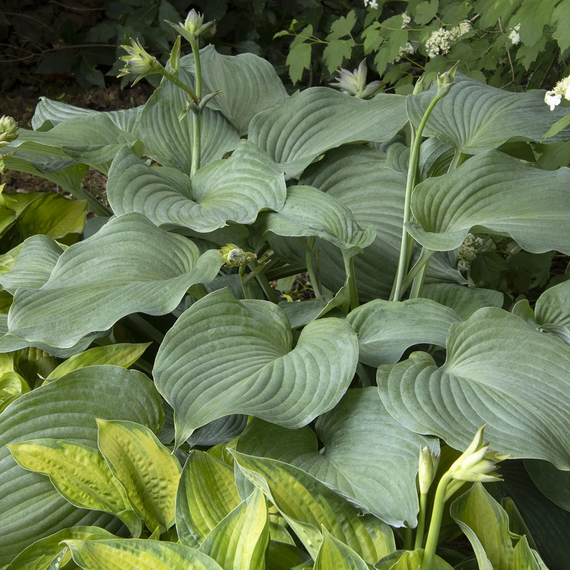

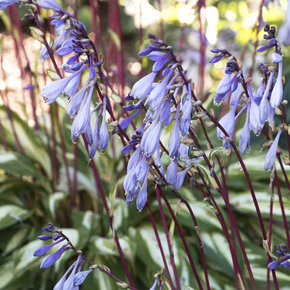

Blue Angel Hosta (Hosta x 'Blue Angel') is the grandest of all blue-foliaged hostas, producing an extraordinary lush, dense, cascading mound of pointed, silver-blue leaves that reach 2 to 3 feet tall and spread an impressive 6 feet wide at maturity. In summer, white, bell-shaped flowers rise on tall stems above the dramatic foliage mound, adding graceful vertical interest and attracting hummingbirds to the dappled shade garden. Its enormous, textural presence makes it an exceptional choice for massing beneath the canopy of shade trees, fleshing out foundation beds under low windows, and bringing life and drama to challenging side yards and smaller urban plots that receive no direct sun. Hardy across USDA Zones 3 through 9 with the thick, heavy foliage that naturally resists slug damage, Blue Angel Hosta is a low-maintenance shade garden anchor that commands attention wherever it grows.
| Attribute | Details |
|---|---|
| Botanical Name | Hosta x 'Blue Angel' |
| Plant Type | Herbaceous Perennial |
| Flower Color | White |
| Foliage Color | Silver-blue to blue-green |
| Bloom Time | Summer |
| Growth Rate | Moderate |
| Mature Size | Foliage 2-3 ft. tall, 6 ft. wide; blooms 3-4 ft. tall |
| USDA Zones | 3 - 9 |
| Light | Filtered sun, Partial shade, Full shade, Partial sun |
| Water | Keep soil consistently moist but not soggy |
| Special Features | Attracts Hummingbirds, Dramatic Foliage Color, Easy Care, Attracts Pollinators |
| Landscape Use | Border, Container, Foundation Planting, Mass Planting |
| Slug Resistance | Good (thick foliage) |
Blue Angel Hosta is truly one of the largest hostas available to home gardeners. At maturity, the foliage mound reaches 2 to 3 feet in height and an exceptional 6 feet in spread, creating a bold, cascading presence in the shade garden that few other shade perennials can match in terms of sheer visual scale. The large, pointed, deeply ribbed and corrugated leaves are beautifully textured and maintain their attractive silver-blue color throughout the growing season. Flower scapes rise 3 to 4 feet above the foliage mound in summer. Due to its large size at maturity, allow adequate spacing of at least 3 to 4 feet between plants and nearby structures to accommodate the full mature spread.
Blue Angel Hosta thrives in filtered sun, partial shade, and full shade, making it one of the most adaptable of all shade perennials. In deep shade, the silver-blue foliage color remains most vibrant and intense. Some morning sun is acceptable and may slightly increase flowering vigor, but harsh afternoon direct sun should always be avoided, as it scorches the large, delicate leaves and dulls the distinctive blue coloration that makes this variety so prized. In hot summer climates, deep shade is preferable to protect the foliage quality throughout the season. The blue color of the foliage is actually produced by a waxy coating on the leaves, which is gradually worn away by direct sun exposure.
Keep the soil consistently moist but not soggy. Blue Angel Hosta thrives in consistently moist, well-drained soil and does not tolerate drought well, particularly during the heat of summer. During the first growing season, water deeply and regularly to establish an extensive root system. Once established, maintain consistent moisture, especially during dry periods; the large leaf surface area of this variety loses moisture through transpiration faster than smaller hostas. Drip irrigation or soaker hoses are ideal for providing consistent root-zone moisture without wetting the foliage, which can promote disease. Reduce watering in fall as the plant naturally enters dormancy.
Blue Angel Hosta prefers slightly acidic, evenly moist, well-drained, humusy soil enriched with organic matter. Incorporate generous quantities of compost into planting beds to improve soil moisture retention and create the rich, woodland-garden type soil this plant loves. Heavy clay soils should be amended to improve drainage while retaining adequate moisture. Avoid harsh alkaline conditions and compacted soils that drain poorly between waterings. A thick layer of organic mulch around the base of the plant helps maintain consistent soil moisture, moderate temperature extremes, and suppress the weed competition that hostas cannot tolerate when young.
Blue Angel Hosta is exceptional for massing beneath the canopy of mature shade trees, where its enormous foliage mounds create a lush, woodland-floor effect that suppresses weeds and makes a stunning statement. It is perfect for filling foundation beds under low windows, where its large but predictable spread fills the space completely over time. As a candidate for side yards and smaller urban plots dominated by multistory buildings, it brings dramatic, tropical-looking foliage to challenging no-sun spaces. It creates a real standout in large pots paired with golden or lime-green foliage for stunning seasonal contrast on covered patios and under pergolas.
| Plant | Why It Works |
|---|---|
| Coral Bells (Heuchera) | Bold, colorful foliage in burgundy, caramel, and lime provides vivid contrast at a smaller scale beside the blue hosta |
| Columbine (Aquilegia) | Delicate spring flowers and fine-textured foliage create a light counterpoint to the bold hosta mound |
| Lungwort (Pulmonaria) | Silver-spotted foliage and early spring flowers complement the blue hosta and extend the season of interest |
| Lenten Rose (Helleborus) | Early-blooming winter perennial fills in beautifully beside hostas and thrives in identical shade conditions |
| Bleeding Heart (Dicentra) | Arching, fernlike foliage and dangling heart-shaped flowers provide delicate early-season contrast |
Blue Angel Hosta attracts hummingbirds, which are strongly drawn to the white, bell-shaped tubular flowers that rise above the foliage mound in summer. Bees and other pollinators also visit the flowers during the blooming period. The large, dense foliage mounds provide valuable shelter and microhabitat for ground-dwelling insects and other small garden creatures. This variety's thick foliage provides better natural resistance to slug damage than thin-leaved hostas, reducing the need for slug-control interventions that can harm beneficial wildlife.
Blue Angel Hosta is rated for USDA Zones 3 through 9. In Zone 3, it reliably returns each spring after winter lows as cold as -40 degrees Fahrenheit. In warmer zones through Zone 9, it performs as a long-lived herbaceous perennial, dying back to the ground in winter and re-emerging vigorously each spring. In warmer climates toward Zone 9, it benefits from deeper shade and consistent moisture during summer heat. The distinctive blue-silver waxy coating on the foliage that gives this variety its color becomes somewhat less pronounced in very hot climates compared to cooler northern gardens.
The genus Hosta contains many species, most native to China and Japan, where they grow as woodland understory plants beneath the forest canopy. The species Hosta plantaginea, from which most modern hybrids ultimately descend, reached Europe in the 1780s and was first introduced from China by the French botanist Lamarck. The genus was named in honor of Austrian botanist Nicolaus Thomas Host. Blue Angel is a cultivar with a sport of Hosta 'Patriot' in its background and represents decades of intensive breeding focused on exceptional blue foliage color, large leaf size, and slug resistance. The blue coloration in hostas is produced by a natural waxy coating on the leaf surface that gradually wears away with sun exposure, which is why shade cultivation preserves the most vivid blue tones throughout the season.
Blue Angel Hosta (Hosta x 'Blue Angel') is the grandest of all blue-foliaged hostas, producing an extraordinary lush, dense, cascading mound of pointed, silver-blue leaves that reach 2 to 3 feet tall and spread an impressive 6 feet wide at maturity. In summer, white, bell-shaped flowers rise on tall stems above the dramatic foliage mound, adding graceful vertical interest and attracting hummingbirds to the dappled shade garden. Its enormous, textural presence makes it an exceptional choice for massing beneath the canopy of shade trees, fleshing out foundation beds under low windows, and bringing life and drama to challenging side yards and smaller urban plots that receive no direct sun. Hardy across USDA Zones 3 through 9 with the thick, heavy foliage that naturally resists slug damage, Blue Angel Hosta is a low-maintenance shade garden anchor that commands attention wherever it grows.
| Attribute | Details |
|---|---|
| Botanical Name | Hosta x 'Blue Angel' |
| Plant Type | Herbaceous Perennial |
| Flower Color | White |
| Foliage Color | Silver-blue to blue-green |
| Bloom Time | Summer |
| Growth Rate | Moderate |
| Mature Size | Foliage 2-3 ft. tall, 6 ft. wide; blooms 3-4 ft. tall |
| USDA Zones | 3 - 9 |
| Light | Filtered sun, Partial shade, Full shade, Partial sun |
| Water | Keep soil consistently moist but not soggy |
| Special Features | Attracts Hummingbirds, Dramatic Foliage Color, Easy Care, Attracts Pollinators |
| Landscape Use | Border, Container, Foundation Planting, Mass Planting |
| Slug Resistance | Good (thick foliage) |
Blue Angel Hosta is truly one of the largest hostas available to home gardeners. At maturity, the foliage mound reaches 2 to 3 feet in height and an exceptional 6 feet in spread, creating a bold, cascading presence in the shade garden that few other shade perennials can match in terms of sheer visual scale. The large, pointed, deeply ribbed and corrugated leaves are beautifully textured and maintain their attractive silver-blue color throughout the growing season. Flower scapes rise 3 to 4 feet above the foliage mound in summer. Due to its large size at maturity, allow adequate spacing of at least 3 to 4 feet between plants and nearby structures to accommodate the full mature spread.
Blue Angel Hosta thrives in filtered sun, partial shade, and full shade, making it one of the most adaptable of all shade perennials. In deep shade, the silver-blue foliage color remains most vibrant and intense. Some morning sun is acceptable and may slightly increase flowering vigor, but harsh afternoon direct sun should always be avoided, as it scorches the large, delicate leaves and dulls the distinctive blue coloration that makes this variety so prized. In hot summer climates, deep shade is preferable to protect the foliage quality throughout the season. The blue color of the foliage is actually produced by a waxy coating on the leaves, which is gradually worn away by direct sun exposure.
Keep the soil consistently moist but not soggy. Blue Angel Hosta thrives in consistently moist, well-drained soil and does not tolerate drought well, particularly during the heat of summer. During the first growing season, water deeply and regularly to establish an extensive root system. Once established, maintain consistent moisture, especially during dry periods; the large leaf surface area of this variety loses moisture through transpiration faster than smaller hostas. Drip irrigation or soaker hoses are ideal for providing consistent root-zone moisture without wetting the foliage, which can promote disease. Reduce watering in fall as the plant naturally enters dormancy.
Blue Angel Hosta prefers slightly acidic, evenly moist, well-drained, humusy soil enriched with organic matter. Incorporate generous quantities of compost into planting beds to improve soil moisture retention and create the rich, woodland-garden type soil this plant loves. Heavy clay soils should be amended to improve drainage while retaining adequate moisture. Avoid harsh alkaline conditions and compacted soils that drain poorly between waterings. A thick layer of organic mulch around the base of the plant helps maintain consistent soil moisture, moderate temperature extremes, and suppress the weed competition that hostas cannot tolerate when young.
Blue Angel Hosta is exceptional for massing beneath the canopy of mature shade trees, where its enormous foliage mounds create a lush, woodland-floor effect that suppresses weeds and makes a stunning statement. It is perfect for filling foundation beds under low windows, where its large but predictable spread fills the space completely over time. As a candidate for side yards and smaller urban plots dominated by multistory buildings, it brings dramatic, tropical-looking foliage to challenging no-sun spaces. It creates a real standout in large pots paired with golden or lime-green foliage for stunning seasonal contrast on covered patios and under pergolas.
| Plant | Why It Works |
|---|---|
| Coral Bells (Heuchera) | Bold, colorful foliage in burgundy, caramel, and lime provides vivid contrast at a smaller scale beside the blue hosta |
| Columbine (Aquilegia) | Delicate spring flowers and fine-textured foliage create a light counterpoint to the bold hosta mound |
| Lungwort (Pulmonaria) | Silver-spotted foliage and early spring flowers complement the blue hosta and extend the season of interest |
| Lenten Rose (Helleborus) | Early-blooming winter perennial fills in beautifully beside hostas and thrives in identical shade conditions |
| Bleeding Heart (Dicentra) | Arching, fernlike foliage and dangling heart-shaped flowers provide delicate early-season contrast |
Blue Angel Hosta attracts hummingbirds, which are strongly drawn to the white, bell-shaped tubular flowers that rise above the foliage mound in summer. Bees and other pollinators also visit the flowers during the blooming period. The large, dense foliage mounds provide valuable shelter and microhabitat for ground-dwelling insects and other small garden creatures. This variety's thick foliage provides better natural resistance to slug damage than thin-leaved hostas, reducing the need for slug-control interventions that can harm beneficial wildlife.
Blue Angel Hosta is rated for USDA Zones 3 through 9. In Zone 3, it reliably returns each spring after winter lows as cold as -40 degrees Fahrenheit. In warmer zones through Zone 9, it performs as a long-lived herbaceous perennial, dying back to the ground in winter and re-emerging vigorously each spring. In warmer climates toward Zone 9, it benefits from deeper shade and consistent moisture during summer heat. The distinctive blue-silver waxy coating on the foliage that gives this variety its color becomes somewhat less pronounced in very hot climates compared to cooler northern gardens.
The genus Hosta contains many species, most native to China and Japan, where they grow as woodland understory plants beneath the forest canopy. The species Hosta plantaginea, from which most modern hybrids ultimately descend, reached Europe in the 1780s and was first introduced from China by the French botanist Lamarck. The genus was named in honor of Austrian botanist Nicolaus Thomas Host. Blue Angel is a cultivar with a sport of Hosta 'Patriot' in its background and represents decades of intensive breeding focused on exceptional blue foliage color, large leaf size, and slug resistance. The blue coloration in hostas is produced by a natural waxy coating on the leaf surface that gradually wears away with sun exposure, which is why shade cultivation preserves the most vivid blue tones throughout the season.