
Zoom the image with the mouse
Barbara Karst Bougainvillea
SKU:
1657995-P
UPC:
014949127056
$17.59 - $45.59
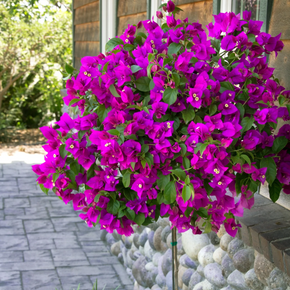
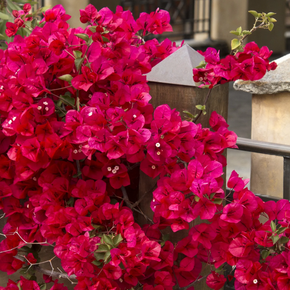
- Spectacular magenta-red, petal-like bracts blaze with vivid tropical color throughout summer and even longer in frost-free climates
- Vigorous climbing stems quickly reach 20 to 30 feet with support, making it ideal for covering arbors, trellises, fences, and walls in a blaze of color
- Drought tolerant once established with outstanding tolerance for coastal conditions, urban pollution, and lean soils
- Evergreen in frost-free climates across USDA Zones 10 through 11; provides superb warm-season color as a tropical annual in cooler northern gardens
Barbara Karst Bougainvillea (Bougainvillea 'Barbara Karst') is one of the most popular and widely planted bougainvillea varieties in the world, celebrated for its spectacular, richly saturated magenta-red, petal-like bracts that blaze with vibrant tropical color throughout the summer and well beyond in frost-free climates. Vigorous climbing stems quickly reach 20 to 30 feet with support, making it an outstanding choice for covering arbors, trellises, pergolas, fences, and walls with a luminous curtain of color. It also performs beautifully as a dramatic groundcover on slopes and banks when allowed to ramble unsupported, and creates a fine cover for patios and outdoor living spaces when trained overhead. Drought tolerant once established and highly adaptable to challenging conditions including coastal exposure, urban air pollution, and lean soils, Barbara Karst Bougainvillea is an easy-care, waterwise choice for warm-climate landscapes where maximum visual impact with minimal water is the goal.
Plant Details
| Attribute | Details |
|---|---|
| Botanical Name | Bougainvillea 'Barbara Karst' |
| Plant Type | Evergreen Vine / Tropical Shrub |
| Bract Color | Bright magenta-red |
| True Flower Color | Small white tubular flowers within the bracts |
| Foliage Color | Green |
| Bloom Time | Summer; longer in frost-free areas |
| Growth Rate | Fast |
| Growth Habit | Climbing / Rambling |
| Mature Size | 20-30 ft. tall with support |
| USDA Zones | 10-11 (perennial); all zones as warm-season annual |
| Light | Full sun |
| Water | Water deeply when soil is dry; drought tolerant once established |
| Special Features | Easy Care, Waterwise, Fast Growing |
| Landscape Use | Barrier, Espalier, Privacy Screen, Ground Cover, Arbor, Trellis |
Understanding Bougainvillea Blooms
A common source of wonder for many gardeners: what appears to be the flowers of a bougainvillea are not actually flowers at all. Those vivid, papery, magenta-red displays are technically bracts, which are modified leaves that surround and protect the actual flowers. The true flowers of bougainvillea are small, tubular, white or cream-colored structures nestled within the showy bracts. It is the bracts that draw pollinators and human admirers alike with their brilliant, long-lasting color. The bracts of Barbara Karst are among the most intensely saturated magenta-red of any bougainvillea variety, holding their vivid color exceptionally well in full sun conditions.
Size and Growth Habit
Barbara Karst Bougainvillea is one of the most vigorous bougainvillea varieties available, with stems that can climb 20 to 30 feet with appropriate support in a single growing season under ideal warm-climate conditions. It is an aggressive, fast-growing climber that uses thorny stems to scramble over and through structures. When trained on a trellis or arbor, it quickly covers the structure with dense, bract-laden branches. Without support, it can be allowed to ramble freely as a dramatic groundcover or cascading bank planting, where it will spread outward at a similar vigorous rate. In containers, it can be kept more compact through regular pruning and restricted root space.
Sunlight Requirements
Barbara Karst Bougainvillea demands full sun for the most prolific and sustained flowering. Bougainvilleas are sun-worshippers by nature and require a minimum of 6 to 8 hours of direct sunlight per day for the best bract production and the most vibrant, saturated color. In lower light conditions, the plant will produce significantly fewer bracts and may develop a looser, less vigorous growth habit. In the hottest desert climates, it will still thrive in full reflected heat that challenges most other flowering plants, making it one of the few plants that actually performs better the hotter and sunnier the conditions become.
Watering
Water Barbara Karst Bougainvillea deeply when the soil is dry. During the first growing season, water deeply and regularly to establish an extensive root system. Once established, reduce watering frequency significantly; bougainvilleas are famously drought tolerant and actually produce their most prolific bract display when subjected to moderate drought stress between waterings. Overwatering is one of the most common mistakes made with bougainvillea; consistently wet soil promotes lush vegetative growth at the expense of flowering, and can lead to root rot. Container-grown plants should be watered when the top 3 inches of soil are dry, as containers dry out faster than in-ground plantings.
Soil Requirements
Provide average to lean, fast-draining soil for best results. Barbara Karst Bougainvillea performs best in well-drained, slightly acidic to neutral soil and actually produces more prolific bract color when grown in leaner, less fertile conditions. Rich, heavily amended soils promote excessive vegetative growth at the expense of flowering. This is one plant that thrives with minimal soil improvement. The critical requirement is excellent drainage; bougainvillea absolutely does not tolerate soggy, waterlogged soils and will decline rapidly in poorly drained conditions.
Planting Cautions
Bougainvillea has a particularly sensitive and fragile root system that must be protected during planting. Use extreme caution not to disturb, break, or unwrap the root ball when transplanting. The roots are brittle and easily damaged, and any significant root disruption will cause severe transplant shock, wilting, and potentially plant death. Slide the plant gently from the container without squeezing or compressing the root ball. Do not attempt to loosen or spread the roots as you would with most other plants. Water thoroughly immediately after planting and keep the root zone consistently moist for the first few weeks to minimize transplant stress.
Care and Maintenance
- Planting: Handle the root ball with extreme care; never disturb, loosen, or break the roots during planting.
- Fertilizing: Apply a balanced fertilizer in spring; avoid high-nitrogen fertilizers which promote leafy growth at the expense of bracts.
- Pruning: Prune after each major bloom cycle to encourage new growth and subsequent bract production. Bougainvillea blooms on new growth.
- Support: Provide a sturdy trellis, arbor, or fence structure; the stems are vigorous and heavy when fully grown.
- Gloves: Always wear thick gloves when handling; the stems have sharp thorns that can cause injury.
- Overwintering: In Zone 9 and below, protect from frost or grow as a container plant moved indoors before first frost.
Landscape Uses
Barbara Karst Bougainvillea is one of the most versatile and impactful plants for warm-climate landscaping. Train it onto a pergola or arbor for a dramatic overhead flowering canopy that provides shade with spectacular color. Espalier it flat against a wall or fence for a living, flowering tapestry. Allow it to scramble unsupported down a slope or over a bank as a spectacular, erosion-controlling groundcover. Use it as a thorny, impenetrable flowering barrier along a property boundary. In cooler climates, grow it in large containers on sunny patios and decks as a stunning seasonal tropical accent, and overwinter indoors before frost arrives.
Companion Plants
| Plant | Why It Works |
|---|---|
| Lantana (Lantana) | Heat-loving blooms in warm tones share the same sun, heat, and drought tolerance for a bold tropical palette |
| Cordyline (Cordyline) | Bold, spiky tropical foliage in burgundy or green provides dramatic architectural contrast at the vine's base |
| Salvia (Salvia) | Blue or purple flower spikes offer a cool color complement to the intense magenta-red bracts |
| Evergreen Clematis (Clematis) | Provides interweaving flowering texture and cool tones alongside the bold bougainvillea display |
| Upright Juniper (Juniperus) | Tall, dark evergreen column provides a clean, structural vertical contrast against the spreading vine |
Wildlife and Pollinators
While the showy bracts of bougainvillea are not nectar sources, the small white tubular true flowers nestled within the bracts are attractive to hummingbirds and butterflies. Hummingbirds in particular are drawn to the tubular flower structure, making bougainvillea a useful plant for hummingbird gardens in warm climates. The dense thorny stems also provide valuable nesting habitat for birds. Bougainvillea flowers have been used in Mexican folk medicine to treat cough, and the leaves of related species contain pinitol, a compound being studied for its potential in treating metabolic diseases.
USDA Hardiness Zones and Cold Tolerance
Barbara Karst Bougainvillea is rated for USDA Zones 10 through 11 as a reliable evergreen perennial that blooms year-round in frost-free climates. It is frost-tender and cannot survive freezing temperatures. In Zone 9, it may survive light frost if established and protected, but may experience significant dieback. In all cooler zones, it can be grown as a spectacular seasonal annual, planted after all frost danger has passed and removed or brought indoors before first frost. When grown in containers, it can be overwintered indoors near a bright, sunny window and returned outdoors the following spring.
History and Background
Bougainvillea was named for Louis-Antoine de Bougainville, the celebrated French explorer who circumnavigated the globe in the mid-18th century. During a stop at the Solomon Islands, his naturalists discovered the spectacular woody, flowering vines and named them after their captain. The genus comprises 14 species of spiny shrubs, trees, and vines native to South America. Virtually all contemporary garden cultivars, including Barbara Karst, were derived from crosses of three species: Bougainvillea spectabilis, B. glabra, and B. peruviana. Barbara Karst has remained one of the most popular and widely grown cultivars worldwide for decades, prized for its exceptionally vibrant magenta-red bract color, vigorous growth, and reliable performance in tropical and subtropical climates.
- Spectacular magenta-red, petal-like bracts blaze with vivid tropical color throughout summer and even longer in frost-free climates
- Vigorous climbing stems quickly reach 20 to 30 feet with support, making it ideal for covering arbors, trellises, fences, and walls in a blaze of color
- Drought tolerant once established with outstanding tolerance for coastal conditions, urban pollution, and lean soils
- Evergreen in frost-free climates across USDA Zones 10 through 11; provides superb warm-season color as a tropical annual in cooler northern gardens
Barbara Karst Bougainvillea (Bougainvillea 'Barbara Karst') is one of the most popular and widely planted bougainvillea varieties in the world, celebrated for its spectacular, richly saturated magenta-red, petal-like bracts that blaze with vibrant tropical color throughout the summer and well beyond in frost-free climates. Vigorous climbing stems quickly reach 20 to 30 feet with support, making it an outstanding choice for covering arbors, trellises, pergolas, fences, and walls with a luminous curtain of color. It also performs beautifully as a dramatic groundcover on slopes and banks when allowed to ramble unsupported, and creates a fine cover for patios and outdoor living spaces when trained overhead. Drought tolerant once established and highly adaptable to challenging conditions including coastal exposure, urban air pollution, and lean soils, Barbara Karst Bougainvillea is an easy-care, waterwise choice for warm-climate landscapes where maximum visual impact with minimal water is the goal.
Plant Details
| Attribute | Details |
|---|---|
| Botanical Name | Bougainvillea 'Barbara Karst' |
| Plant Type | Evergreen Vine / Tropical Shrub |
| Bract Color | Bright magenta-red |
| True Flower Color | Small white tubular flowers within the bracts |
| Foliage Color | Green |
| Bloom Time | Summer; longer in frost-free areas |
| Growth Rate | Fast |
| Growth Habit | Climbing / Rambling |
| Mature Size | 20-30 ft. tall with support |
| USDA Zones | 10-11 (perennial); all zones as warm-season annual |
| Light | Full sun |
| Water | Water deeply when soil is dry; drought tolerant once established |
| Special Features | Easy Care, Waterwise, Fast Growing |
| Landscape Use | Barrier, Espalier, Privacy Screen, Ground Cover, Arbor, Trellis |
Understanding Bougainvillea Blooms
A common source of wonder for many gardeners: what appears to be the flowers of a bougainvillea are not actually flowers at all. Those vivid, papery, magenta-red displays are technically bracts, which are modified leaves that surround and protect the actual flowers. The true flowers of bougainvillea are small, tubular, white or cream-colored structures nestled within the showy bracts. It is the bracts that draw pollinators and human admirers alike with their brilliant, long-lasting color. The bracts of Barbara Karst are among the most intensely saturated magenta-red of any bougainvillea variety, holding their vivid color exceptionally well in full sun conditions.
Size and Growth Habit
Barbara Karst Bougainvillea is one of the most vigorous bougainvillea varieties available, with stems that can climb 20 to 30 feet with appropriate support in a single growing season under ideal warm-climate conditions. It is an aggressive, fast-growing climber that uses thorny stems to scramble over and through structures. When trained on a trellis or arbor, it quickly covers the structure with dense, bract-laden branches. Without support, it can be allowed to ramble freely as a dramatic groundcover or cascading bank planting, where it will spread outward at a similar vigorous rate. In containers, it can be kept more compact through regular pruning and restricted root space.
Sunlight Requirements
Barbara Karst Bougainvillea demands full sun for the most prolific and sustained flowering. Bougainvilleas are sun-worshippers by nature and require a minimum of 6 to 8 hours of direct sunlight per day for the best bract production and the most vibrant, saturated color. In lower light conditions, the plant will produce significantly fewer bracts and may develop a looser, less vigorous growth habit. In the hottest desert climates, it will still thrive in full reflected heat that challenges most other flowering plants, making it one of the few plants that actually performs better the hotter and sunnier the conditions become.
Watering
Water Barbara Karst Bougainvillea deeply when the soil is dry. During the first growing season, water deeply and regularly to establish an extensive root system. Once established, reduce watering frequency significantly; bougainvilleas are famously drought tolerant and actually produce their most prolific bract display when subjected to moderate drought stress between waterings. Overwatering is one of the most common mistakes made with bougainvillea; consistently wet soil promotes lush vegetative growth at the expense of flowering, and can lead to root rot. Container-grown plants should be watered when the top 3 inches of soil are dry, as containers dry out faster than in-ground plantings.
Soil Requirements
Provide average to lean, fast-draining soil for best results. Barbara Karst Bougainvillea performs best in well-drained, slightly acidic to neutral soil and actually produces more prolific bract color when grown in leaner, less fertile conditions. Rich, heavily amended soils promote excessive vegetative growth at the expense of flowering. This is one plant that thrives with minimal soil improvement. The critical requirement is excellent drainage; bougainvillea absolutely does not tolerate soggy, waterlogged soils and will decline rapidly in poorly drained conditions.
Planting Cautions
Bougainvillea has a particularly sensitive and fragile root system that must be protected during planting. Use extreme caution not to disturb, break, or unwrap the root ball when transplanting. The roots are brittle and easily damaged, and any significant root disruption will cause severe transplant shock, wilting, and potentially plant death. Slide the plant gently from the container without squeezing or compressing the root ball. Do not attempt to loosen or spread the roots as you would with most other plants. Water thoroughly immediately after planting and keep the root zone consistently moist for the first few weeks to minimize transplant stress.
Care and Maintenance
- Planting: Handle the root ball with extreme care; never disturb, loosen, or break the roots during planting.
- Fertilizing: Apply a balanced fertilizer in spring; avoid high-nitrogen fertilizers which promote leafy growth at the expense of bracts.
- Pruning: Prune after each major bloom cycle to encourage new growth and subsequent bract production. Bougainvillea blooms on new growth.
- Support: Provide a sturdy trellis, arbor, or fence structure; the stems are vigorous and heavy when fully grown.
- Gloves: Always wear thick gloves when handling; the stems have sharp thorns that can cause injury.
- Overwintering: In Zone 9 and below, protect from frost or grow as a container plant moved indoors before first frost.
Landscape Uses
Barbara Karst Bougainvillea is one of the most versatile and impactful plants for warm-climate landscaping. Train it onto a pergola or arbor for a dramatic overhead flowering canopy that provides shade with spectacular color. Espalier it flat against a wall or fence for a living, flowering tapestry. Allow it to scramble unsupported down a slope or over a bank as a spectacular, erosion-controlling groundcover. Use it as a thorny, impenetrable flowering barrier along a property boundary. In cooler climates, grow it in large containers on sunny patios and decks as a stunning seasonal tropical accent, and overwinter indoors before frost arrives.
Companion Plants
| Plant | Why It Works |
|---|---|
| Lantana (Lantana) | Heat-loving blooms in warm tones share the same sun, heat, and drought tolerance for a bold tropical palette |
| Cordyline (Cordyline) | Bold, spiky tropical foliage in burgundy or green provides dramatic architectural contrast at the vine's base |
| Salvia (Salvia) | Blue or purple flower spikes offer a cool color complement to the intense magenta-red bracts |
| Evergreen Clematis (Clematis) | Provides interweaving flowering texture and cool tones alongside the bold bougainvillea display |
| Upright Juniper (Juniperus) | Tall, dark evergreen column provides a clean, structural vertical contrast against the spreading vine |
Wildlife and Pollinators
While the showy bracts of bougainvillea are not nectar sources, the small white tubular true flowers nestled within the bracts are attractive to hummingbirds and butterflies. Hummingbirds in particular are drawn to the tubular flower structure, making bougainvillea a useful plant for hummingbird gardens in warm climates. The dense thorny stems also provide valuable nesting habitat for birds. Bougainvillea flowers have been used in Mexican folk medicine to treat cough, and the leaves of related species contain pinitol, a compound being studied for its potential in treating metabolic diseases.
USDA Hardiness Zones and Cold Tolerance
Barbara Karst Bougainvillea is rated for USDA Zones 10 through 11 as a reliable evergreen perennial that blooms year-round in frost-free climates. It is frost-tender and cannot survive freezing temperatures. In Zone 9, it may survive light frost if established and protected, but may experience significant dieback. In all cooler zones, it can be grown as a spectacular seasonal annual, planted after all frost danger has passed and removed or brought indoors before first frost. When grown in containers, it can be overwintered indoors near a bright, sunny window and returned outdoors the following spring.
History and Background
Bougainvillea was named for Louis-Antoine de Bougainville, the celebrated French explorer who circumnavigated the globe in the mid-18th century. During a stop at the Solomon Islands, his naturalists discovered the spectacular woody, flowering vines and named them after their captain. The genus comprises 14 species of spiny shrubs, trees, and vines native to South America. Virtually all contemporary garden cultivars, including Barbara Karst, were derived from crosses of three species: Bougainvillea spectabilis, B. glabra, and B. peruviana. Barbara Karst has remained one of the most popular and widely grown cultivars worldwide for decades, prized for its exceptionally vibrant magenta-red bract color, vigorous growth, and reliable performance in tropical and subtropical climates.
Related Products