

Zoom the image with the mouse
Autumn Splendor Horse Chestnut - 5 Gallon
SKU:
2094520
UPC:
014949065174
$99.99
- Dense, rounded crown with glossy emerald-green foliage that turns brilliant maroon‑red in fall.
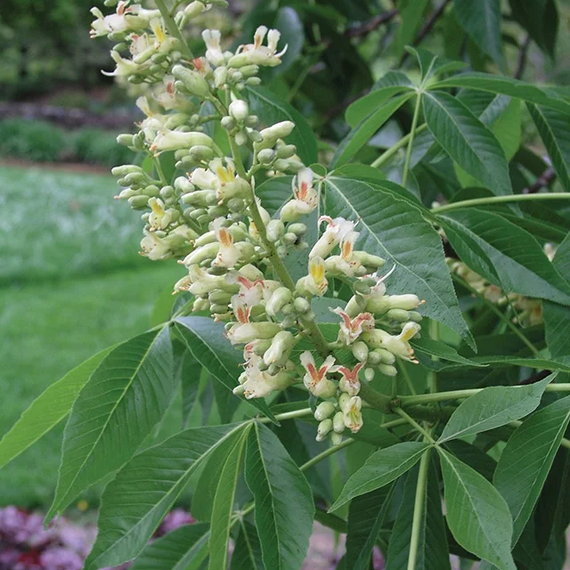
- Showy spring panicles of yellow flowers attract pollinators and add seasonal color.
- Leaves are resistant to summer leaf scorch for a clean look through the hottest months.
- Medium-sized, cold-hardy specimen tree maturing about 20–25 ft. tall and wide.
Autumn Splendor Horse Chestnut (Aesculus × arnoldiana ‘Autumn Splendor’) brings four‑season appeal to landscapes: glossy, fan‑like leaves stay fresh through summer, then ignite in maroon‑red hues as temperatures cool. In spring, upright clusters of yellow blossoms crown the canopy, drawing pollinators and signaling the season’s change. Naturally rounded and just the right scale for streets, front lawns, and mixed borders, this adaptable, water‑wise tree thrives in full sun to partial sun and deep, well‑drained soils—delivering dependable shade, standout fall color, and low‑maintenance performance.
Plant Description
Medium-sized deciduous shade tree with a dense, rounded habit and glossy, emerald‑green, palmate foliage. An excellent focal specimen that stays tidy across the growing season.
Flowers
Showy, upright panicles of yellow blooms appear at branch tips in spring, providing seasonal interest and nectar for visiting pollinators.
Foliage
Fan‑like leaves composed of multiple lance‑shaped, toothed leaflets resist summer leaf scorch; foliage transforms to brilliant maroon‑red in autumn.
Sun Requirements
Full sun to partial sun; best color and canopy density occur with at least 6 hours of direct light.
Watering Needs
Keep soil evenly moist (not soggy) during establishment; once established, water deeply during extended dry periods to maintain vigor.
Soil Requirements
Prefers deep, well‑drained soils and adapts to a variety of soil types. Mulch to conserve moisture and moderate soil temperature, keeping mulch a few inches from the trunk.
Growth & Size
Moderate growth rate; typically reaches about 20–25 ft. tall and wide at maturity, forming a broad, rounded crown suited to small and mid‑sized landscapes.
Special Features
Outstanding fall color; water‑wise once established; tolerant of urban conditions; attractive to pollinators; foliage noted for resistance to leaf scorch.
Landscape Uses
Ideal as a specimen for front lawns, along streetscapes, or as a bold anchor in mixed borders. Pairs well with spring‑flowering understory trees and native perennials.
Care Instructions
Water regularly the first few seasons to establish a deep root system; reduce frequency thereafter. Fertilize in early spring. Prune in winter only to remove dead or damaged wood.
Origin & Parentage
University of Minnesota introduction with parentage from yellow buckeye (A. flava), red buckeye (A. pavia), and Ohio buckeye (A. × glabra), selected for strong fall color and durable foliage.
Safety Note
Horse chestnut fruits are ornamental only and should not be ingested.
- Dense, rounded crown with glossy emerald-green foliage that turns brilliant maroon‑red in fall.
- Showy spring panicles of yellow flowers attract pollinators and add seasonal color.
- Leaves are resistant to summer leaf scorch for a clean look through the hottest months.
- Medium-sized, cold-hardy specimen tree maturing about 20–25 ft. tall and wide.
Autumn Splendor Horse Chestnut (Aesculus × arnoldiana ‘Autumn Splendor’) brings four‑season appeal to landscapes: glossy, fan‑like leaves stay fresh through summer, then ignite in maroon‑red hues as temperatures cool. In spring, upright clusters of yellow blossoms crown the canopy, drawing pollinators and signaling the season’s change. Naturally rounded and just the right scale for streets, front lawns, and mixed borders, this adaptable, water‑wise tree thrives in full sun to partial sun and deep, well‑drained soils—delivering dependable shade, standout fall color, and low‑maintenance performance.
Plant Description
Medium-sized deciduous shade tree with a dense, rounded habit and glossy, emerald‑green, palmate foliage. An excellent focal specimen that stays tidy across the growing season.
Flowers
Showy, upright panicles of yellow blooms appear at branch tips in spring, providing seasonal interest and nectar for visiting pollinators.
Foliage
Fan‑like leaves composed of multiple lance‑shaped, toothed leaflets resist summer leaf scorch; foliage transforms to brilliant maroon‑red in autumn.
Sun Requirements
Full sun to partial sun; best color and canopy density occur with at least 6 hours of direct light.
Watering Needs
Keep soil evenly moist (not soggy) during establishment; once established, water deeply during extended dry periods to maintain vigor.
Soil Requirements
Prefers deep, well‑drained soils and adapts to a variety of soil types. Mulch to conserve moisture and moderate soil temperature, keeping mulch a few inches from the trunk.
Growth & Size
Moderate growth rate; typically reaches about 20–25 ft. tall and wide at maturity, forming a broad, rounded crown suited to small and mid‑sized landscapes.
Special Features
Outstanding fall color; water‑wise once established; tolerant of urban conditions; attractive to pollinators; foliage noted for resistance to leaf scorch.
Landscape Uses
Ideal as a specimen for front lawns, along streetscapes, or as a bold anchor in mixed borders. Pairs well with spring‑flowering understory trees and native perennials.
Care Instructions
Water regularly the first few seasons to establish a deep root system; reduce frequency thereafter. Fertilize in early spring. Prune in winter only to remove dead or damaged wood.
Origin & Parentage
University of Minnesota introduction with parentage from yellow buckeye (A. flava), red buckeye (A. pavia), and Ohio buckeye (A. × glabra), selected for strong fall color and durable foliage.
Safety Note
Horse chestnut fruits are ornamental only and should not be ingested.