
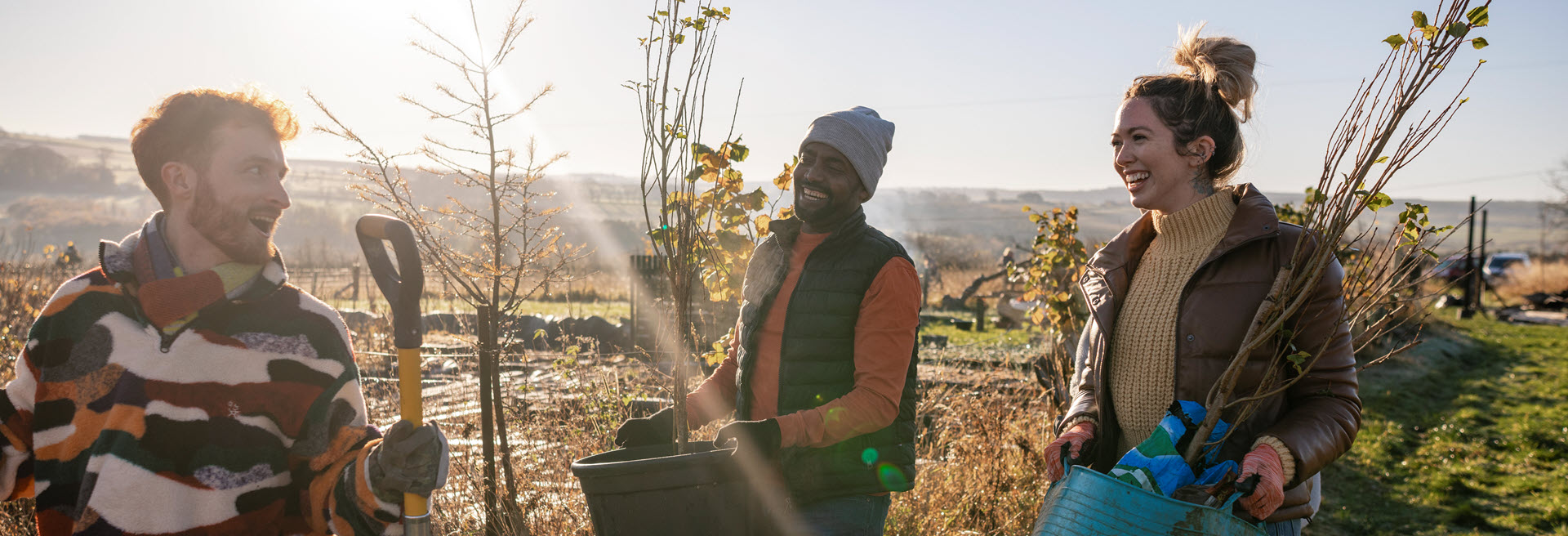
Grange Co-op is excited to announce its annual Arbor Day celebration & giveaway for 2026, offering a giveaway of over 1,400 free saplings companywide*. The event will take place on Arbor Day - Friday, April 24th, beginning at 11 a.m., at all Grange Co-op retail locations. These free baby trees are always incredibly popular and tend to be claimed quickly, so community members are encouraged to join us right at the start of the event. Supplies are limited.
Visitors to any of the participating Grange Co-op locations will have the opportunity to choose from a variety of popular shade tree saplings suitable for our region’s climate, while supplies last. Available varieties may include Red & Japanese Maple, Ginkgo, Eastern Redbud, and Chinese Dogwood. Not all varieties may be available at all locations, and availability is subject to change.
Arbor Day has been celebrated for more than 150 years. At Grange Co-op, the day reflects the company’s commitment to stewardship and community. By sharing free saplings with neighbors each year, Grange Co-op hopes to help grow greener spaces that future generations will enjoy. “Arbor Day is many people’s introduction to landscaping on a larger scale,” said Jordan Land, Youth & Community Outreach Coordinator for Grange Co-op. “Planting a tree is a simple act that can leave a legacy for decades. Watching a tree you plant grow alongside your family can be so endearing and fulfilling”
To find your nearest Grange Co-op location, please visit our store locator page here: https://www.grangecoop.com/store-locator/
Acer rubrum / Red Maple
USDA Zones 3-9
A mid-sized deciduous tree native to eastern North America and renowned for its striking foliage and adaptable nature. Typically growing 40-60 feet, this species boasts vibrant but small red flowers in spring but is famously known for its brilliant red leaves in autumn. Red Maples thrive in well-drained, acidic to pH neutral soil, and regular moisture in the growing season. Tolerant to a variety of environmental conditions, including full sun to partial shade.
Acer palmatum var 'Atropurpureum' / Japanese Maple
USDA Zones 5-9
This cultivar of Acer palmatum has a graceful, rounded shape and is prized for its ornamental value in gardens and landscapes. It typically grows to a height of 10-15 feet, with a similar spread, and thrives in partial shade with well-drained, acidic soil and regular watering. The tree’s delicate, lacey leaves provide a rich contrast against green shrubs and other plants, making it a popular choice for bonsai, small gardens, and decorative planting beds.
Cercis canadensis / Eastern Redbud
USDA Zones 5-9
Native to eastern Northern America and prized for charming pink to purple blossoms that blanket bare branches in early spring, followed by dark green heart-shaped leaves. A mid-sized tree growing 20-30 feet tall, the Eastern Redbud is ideal for smaller landscapes or as an understory tree in larger settings. Thrives in well-drained soil and prefers full sun to partial shade, though it can tolerate some shade. Regular watering, especially during dry spells, and occasional pruning to maintain its shape are recommended for optimal growth
Cornus kousa var 'Chinensis' / Chinese Dogwood
USDA Zones 5-8
This variety of Cornus kousa features large, white to pinkish bloom-like bracts, which come into color late spring to early summer. The mid-sized tree grows to 15-30 feet, with a rounded, spreading form. Its dark green foliage turns vibrant red and purple in the fall and produces small, reddish fruits that attract birds. Prefers slightly acidic soil, full- to part-sun exposure, regular watering, and a cool root zone shaded from direct sun.
Ginkgo biloba / Ginkgo
USDA Zones 3-9
An ancient tree species native to China, celebrated for its distinctive fan‑shaped leaves that turn a brilliant golden yellow each fall. Ginkgo is a hardy, slow‑growing tree that typically reaches 40–60 feet tall, making it a striking choice for streetscapes, parks, and spacious home landscapes. It thrives in full sun and adapts well to a wide range of soils, including urban conditions. Once established, it tolerates heat, drought, and pollution with ease. Minimal pruning is needed—just occasional shaping and removal of lower branches as it matures.
*Limit one per household. While supplies last.