

Zoom the image with the mouse
Texas Purple Japanese Wisteria - 5 Gallon
SKU:
1063620
UPC:
014949767757
$49.99
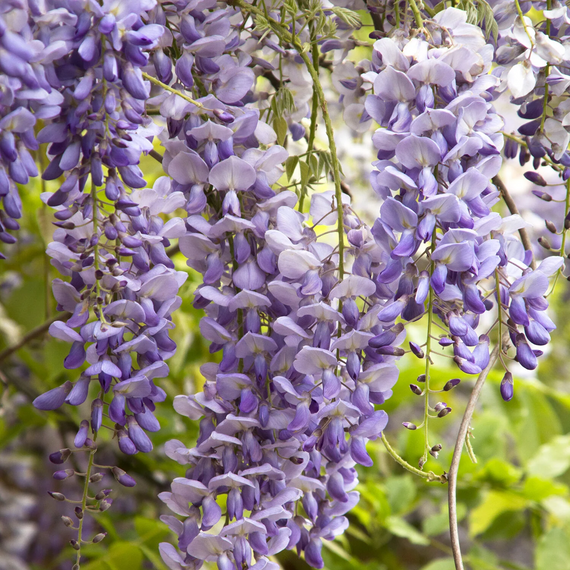
- Spectacular spring display of densely packed, 6- to 12-inch cascading racemes of fragrant violet-purple blooms that open nearly simultaneously for a breathtaking show
- Vigorous, deciduous climbing vine reaching 20 to 30 feet, ideal for covering pergolas, arbors, fences, and sturdy trellises with lush, rich green pinnate foliage all season
- Hardy in USDA Zones 5 through 9 and drought tolerant once established, making it well suited to a wide range of Western garden climates
- Attracts butterflies and bees with its sweetly scented blossoms, adding outstanding wildlife value and fragrance to any sunny landscape setting
Texas Purple Japanese Wisteria (Wisteria sinensis 'Texas Purple') is one of the most awe-inspiring flowering vines available to home gardeners, delivering a breathtaking spring spectacle of pendulous, 6- to 12-inch-long racemes dripping with richly fragrant, violet-purple, pea-shaped blossoms that emerge in a glorious near-simultaneous flush before the foliage fully unfurls. This fast-growing, deciduous woody vine twines counterclockwise around its supports and can extend 20 to 30 feet or more, clothing pergolas, arbors, archways, sturdy fences, and garden structures in a dense canopy of elegant, pinnately compound, deep green leaves composed of 7 to 13 glossy leaflets that provide attractive shade throughout the warmer months. As summer fades, foliage transitions to soft gold before dropping, and velvety, bean-like seed pods persist well into fall for added seasonal interest. Adaptable to a broad range of soil types and tolerant of drought once well established, Texas Purple Japanese Wisteria thrives in full sun to light partial shade across USDA Hardiness Zones 5 through 9, making it a superb choice for gardeners throughout Southern Oregon and Northern California who want to create an unforgettable floral focal point. With regular pruning to keep its exuberant growth in check and proper support from the start, this iconic vine rewards patient gardeners with decades of increasingly spectacular bloom and becomes a beloved, signature feature of the landscape.
Plant Description
Texas Purple Japanese Wisteria is a deciduous, woody, climbing vine in the Fabaceae (legume) family, native to central China. It is renowned for its spectacular spring floral display, producing densely flowered, pendulous racemes measuring 6 to 12 inches in length that are laden with mildly to sweetly fragrant, violet-purple, pea-shaped blossoms. The flowers open nearly simultaneously across the entire vine, creating a breathtaking curtain of color before the foliage fully expands. Leaves are alternate, pinnately compound, typically 10 to 12 inches long, and composed of 7 to 13 elliptic to ovate, deep rich green leaflets. Stems are woody and twining, winding counterclockwise around any available support. Over time, the main trunks become thick, gnarled, and sculptural, adding striking winter interest to the garden. After blooming, velvety, bean-like seed pods 4 to 6 inches long develop and persist attractively into fall.
Mature Size
| Attribute | Details |
|---|---|
| Mature Height | 20 to 30 feet (can reach up to 40 feet in ideal conditions) |
| Mature Spread | 10 to 30 feet wide, depending on support structure |
| Growth Rate | Rapid; can add several feet per season once established |
| Plant Type | Deciduous woody vine |
| Climbing Method | Twining (counterclockwise); requires a sturdy support structure |
Hardiness Zones and Climate
Texas Purple Japanese Wisteria is hardy in USDA Zones 5 through 9, making it an excellent choice for gardens throughout Southern Oregon and Northern California. It thrives in the mild, warm summers and relatively mild winters of these regions. It is tolerant of both heat and cold within its zone range, though late spring frosts can occasionally damage newly opened flowers. In very hot inland climates, some afternoon shade can help protect blooms. In the cooler coastal climates of the Pacific Northwest, a warm, sunny wall or south-facing exposure will encourage the best bloom performance.
Sunlight Requirements
Texas Purple Japanese Wisteria performs best in a location that receives full sun — a minimum of 6 or more hours of direct sunlight per day. Ample sun exposure is critical for achieving the densest, most prolific flowering. Plants grown in partial shade (2 to 6 hours of direct sun) will still grow vigorously, but bloom production may be reduced. For the most spectacular spring floral display, choose the sunniest spot available in your garden, such as a south- or west-facing wall, pergola, or fence line.
Soil and pH Preferences
This wisteria is adaptable to a wide range of soil types, including clay, loam, and sandy soils, as long as drainage is adequate. Consistently waterlogged or poorly drained soils should be avoided, as they can lead to root rot. Texas Purple Japanese Wisteria grows best in moderately fertile soil and does not require particularly rich conditions — overly fertile or nitrogen-heavy soil can actually promote excessive leafy growth at the expense of flowers. Preferred soil pH ranges from slightly acidic to neutral (approximately 6.0 to 8.0). If your native soil is very compacted or has poor drainage, amend the planting area with compost and ensure the site slopes slightly away from the root zone.
Watering Guide
During the first growing season after planting, water Texas Purple Japanese Wisteria regularly — approximately once or twice per week — to help establish a deep, healthy root system. Once fully established (typically after 1 to 2 growing seasons), this vine becomes notably drought tolerant and requires much less supplemental irrigation. In the dry summers of Southern Oregon and Northern California, established plants benefit from deep, infrequent watering every 2 to 3 weeks during prolonged dry spells. Avoid overwatering mature plants, as soggy roots are harmful. A 2- to 3-inch layer of mulch around the root zone will help conserve soil moisture, moderate temperatures, and reduce competition from weeds.
Fertilizing
Texas Purple Japanese Wisteria generally does not require heavy fertilization, and in many garden settings no fertilizer is needed at all once established. Avoid high-nitrogen fertilizers, which encourage lush, leafy growth at the expense of flowers. If blooming is poor or the soil is very nutrient-deficient, apply a low-nitrogen, phosphorus-rich fertilizer (such as a bloom-boosting formula with a high middle number, e.g., 5-10-5) in early spring just before new growth begins. An application of balanced, slow-release fertilizer at planting time can help young plants get established. Annual root pruning in fall, which disrupts nitrogen uptake and can stress the plant slightly, is a traditional technique sometimes used to encourage more prolific blooming the following spring.
Pruning and Maintenance
Pruning is essential for keeping Texas Purple Japanese Wisteria in check, shaping the plant, and encouraging generous bloom. Follow a two-season pruning schedule for best results:
- Summer pruning (July–August): After flowering, cut back all new whippy shoots to 5 or 6 leaves from the main framework. This controls the size of the vine and encourages the development of short flowering spurs close to the main stems.
- Winter pruning (January–February): In late winter while the vine is dormant, cut the same summer-pruned shoots back further to just 2 to 3 buds from the base of last season's growth. This tightens the spur system and maximizes bloom the following spring.
- Remove any shoots that are growing into unwanted areas at any time of year.
- To encourage blooming on a reluctant plant, root pruning in fall — cutting through roots about 18 inches from the trunk with a spade — can help stimulate flowering.
- Old, overgrown wisteria can be rejuvenated by severe cutting back, though flowering may be delayed for a season or two afterward.
Planting Instructions
- Select a site with full sun and well-drained soil. Choose your location carefully, as wisteria does not transplant well once established.
- Install a strong, permanent support structure — pergola, arbor, sturdy trellis, or heavy-gauge wire system — before or at the time of planting. The vine's mature weight is considerable and can damage weak structures.
- Dig a planting hole twice as wide and the same depth as the root ball.
- Mix a small amount of compost into the backfill soil if your native soil is very poor, but avoid excess fertilizer at planting.
- Set the plant at the same depth it was growing in its container.
- Backfill, firm gently, and water deeply to settle the soil around the roots.
- Apply a 2- to 3-inch layer of mulch around the base, keeping it a few inches away from the main stem.
- Begin training the main stems to your support structure immediately, tying stems loosely with soft ties or twine as needed to guide initial growth.
- Water regularly throughout the first growing season to establish roots.
Seasonal Interest
| Season | Ornamental Features |
|---|---|
| Spring | Spectacular display of cascading violet-purple, fragrant flower racemes, often appearing before leaves fully emerge — the vine's most dramatic season |
| Summer | Dense, lush canopy of deep rich green pinnate foliage provides excellent shade; velvety seed pods begin forming |
| Fall | Foliage turns soft golden yellow before dropping; decorative, velvety brown seed pods persist on the vine |
| Winter | Dramatic sculptural framework of thick, twisted, gnarled trunks and branches provides strong architectural interest in the garden |
Landscape Uses
Texas Purple Japanese Wisteria is one of the most versatile and dramatic ornamental vines available for large-scale landscape use. It excels in the following applications:
- Pergolas and arbors: The classic use — the vine will completely cover a sturdy structure with a fragrant, cascading canopy of blooms in spring and cooling shade in summer.
- Walls and fences: Ideal for clothing large masonry walls, wood privacy fences, or chain-link structures when trained on wire supports.
- Archways and garden entrances: A dramatic flowering arch over a garden gate or pathway entrance creates an unforgettable focal point.
- Tree form: Can be trained as a small weeping standard or tree form with consistent pruning, creating a stunning free-standing specimen.
- Screening: Dense summer foliage provides excellent privacy screening over structures.
- Fragrance garden: The mildly to sweetly scented blooms are delightful near outdoor seating areas, patios, and porches.
Note: Do not allow wisteria to climb into trees or onto structures such as downspouts, gutters, or wooden siding, as it can cause damage over time.
Companion Plants
Texas Purple Japanese Wisteria pairs beautifully with plants that echo or complement its violet-purple spring palette and that share its preference for sunny, well-drained conditions. Consider the following companions:
- Roses (Rosa spp.): Classic climbing or shrub roses in white, soft pink, or deep red bloom in a similar season and create a romantic cottage-garden pairing.
- Clematis (Clematis spp.): Large-flowered clematis varieties in blue, purple, or white can weave through the wisteria framework for layered bloom.
- Salvia (Salvia nemorosa): Clumps of blue or purple salvia at the base of the wisteria echo the flower color beautifully at ground level.
- Catmint (Nepeta spp.): Soft, silver-blue nepeta mounds complement the purple blooms and provide a graceful edging below the vine.
- Alliums: Bold purple allium globes in spring time their bloom beautifully alongside wisteria flowers.
- Ornamental grasses: Feather reed grass or fountain grass planted nearby provides textural contrast and graceful summer interest once the wisteria's blooms have faded.
Pests and Diseases
Texas Purple Japanese Wisteria is generally a tough and resilient plant with few serious pest or disease problems. The following occasional issues may arise:
- Aphids: May occasionally colonize new growth in spring. Control with a strong spray of water, insecticidal soap, or neem oil if populations become problematic.
- Scale insects: Can occur on older woody stems. Treat with horticultural oil during the dormant season.
- Longhorned beetles / wood borers: Occasionally attack stressed or weakened vines. Maintain plant vigor through proper watering and pruning to minimize susceptibility.
- Canker diseases: Can occur on damaged or stressed wood. Prune out affected tissue and dispose of it; disinfect pruning tools between cuts.
- Late spring frost: A sudden frost after flowers have opened can damage or kill the current season's blooms. If a late frost is forecast, covering the vine overnight with frost cloth can offer protection.
- Failure to bloom: The most common complaint with wisteria is reluctance to flower. Causes include insufficient sunlight, excess nitrogen fertilizer, young plant age, or lack of pruning. Most issues can be resolved with improved sun exposure, switching to a low-nitrogen fertilizer, and adopting a consistent twice-yearly pruning schedule.
Wildlife Value
The richly fragrant, nectar-laden flowers of Texas Purple Japanese Wisteria are a draw for a variety of beneficial garden wildlife. Bees — including bumblebees and honeybees — are the primary pollinators and will work the blossoms eagerly during spring bloom. Butterflies are also attracted to the flowers. The dense summer foliage provides nesting cover and shelter for small birds and beneficial insects throughout the growing season. While the seed pods are not a significant food source for most wildlife due to their large seed size, the overall structure of a mature vine creates a valuable microhabitat within the garden landscape.
Toxicity and Safety
All parts of Wisteria sinensis, including the seeds, seed pods, bark, leaves, and flowers, are considered toxic if ingested in significant quantities. The primary toxic agents are a lectin and a glycoside called wisterin. Ingestion can cause nausea, vomiting (sometimes with blood), diarrhea, and general malaise in humans, dogs, cats, and horses. The severity of symptoms depends on the amount consumed; even a small number of seeds can cause illness, especially in children. Keep this plant out of reach of young children and supervise pets in areas where seed pods may drop. Wearing gloves when pruning is recommended for people with sensitive skin, as sap contact may cause mild irritation in some individuals. The flowers are sometimes noted as edible in small quantities in culinary contexts, but this is not advised given the potential toxicity of other plant parts.
Support Structures and Training Tips
Because Texas Purple Japanese Wisteria is a vigorous, heavy vine that can weigh hundreds of pounds at maturity, choosing and installing the right support structure is critically important before or at the time of planting:
- Pergolas and arbors: Must be built from heavy-duty materials — 6x6 posts and 2x6 beams minimum — and anchored firmly into the ground or a concrete footing. Lightweight aluminum or thin wood structures will not suffice.
- Wall-mounted wire systems: Heavy-gauge (12- or 14-gauge) galvanized wire stretched horizontally between large eye bolts anchored into masonry or solid wood is an excellent training system for wall coverage.
- Training the main leaders: In the first few years, loosely tie the main stems to the support in the desired direction. Allow 2 to 3 strong leaders to develop and remove all others.
- Do not allow stems to twine around downspouts, gutters, wooden siding, or other building elements, as the powerful stems can cause structural damage as they thicken with age.
- Tree forms: To train as a weeping standard, select a single strong stem, stake it vertically, and remove all side shoots until the desired height is reached, then allow the top to branch and weep. This requires consistent, attentive annual pruning.
- Spectacular spring display of densely packed, 6- to 12-inch cascading racemes of fragrant violet-purple blooms that open nearly simultaneously for a breathtaking show
- Vigorous, deciduous climbing vine reaching 20 to 30 feet, ideal for covering pergolas, arbors, fences, and sturdy trellises with lush, rich green pinnate foliage all season
- Hardy in USDA Zones 5 through 9 and drought tolerant once established, making it well suited to a wide range of Western garden climates
- Attracts butterflies and bees with its sweetly scented blossoms, adding outstanding wildlife value and fragrance to any sunny landscape setting
Texas Purple Japanese Wisteria (Wisteria sinensis 'Texas Purple') is one of the most awe-inspiring flowering vines available to home gardeners, delivering a breathtaking spring spectacle of pendulous, 6- to 12-inch-long racemes dripping with richly fragrant, violet-purple, pea-shaped blossoms that emerge in a glorious near-simultaneous flush before the foliage fully unfurls. This fast-growing, deciduous woody vine twines counterclockwise around its supports and can extend 20 to 30 feet or more, clothing pergolas, arbors, archways, sturdy fences, and garden structures in a dense canopy of elegant, pinnately compound, deep green leaves composed of 7 to 13 glossy leaflets that provide attractive shade throughout the warmer months. As summer fades, foliage transitions to soft gold before dropping, and velvety, bean-like seed pods persist well into fall for added seasonal interest. Adaptable to a broad range of soil types and tolerant of drought once well established, Texas Purple Japanese Wisteria thrives in full sun to light partial shade across USDA Hardiness Zones 5 through 9, making it a superb choice for gardeners throughout Southern Oregon and Northern California who want to create an unforgettable floral focal point. With regular pruning to keep its exuberant growth in check and proper support from the start, this iconic vine rewards patient gardeners with decades of increasingly spectacular bloom and becomes a beloved, signature feature of the landscape.
Plant Description
Texas Purple Japanese Wisteria is a deciduous, woody, climbing vine in the Fabaceae (legume) family, native to central China. It is renowned for its spectacular spring floral display, producing densely flowered, pendulous racemes measuring 6 to 12 inches in length that are laden with mildly to sweetly fragrant, violet-purple, pea-shaped blossoms. The flowers open nearly simultaneously across the entire vine, creating a breathtaking curtain of color before the foliage fully expands. Leaves are alternate, pinnately compound, typically 10 to 12 inches long, and composed of 7 to 13 elliptic to ovate, deep rich green leaflets. Stems are woody and twining, winding counterclockwise around any available support. Over time, the main trunks become thick, gnarled, and sculptural, adding striking winter interest to the garden. After blooming, velvety, bean-like seed pods 4 to 6 inches long develop and persist attractively into fall.
Mature Size
| Attribute | Details |
|---|---|
| Mature Height | 20 to 30 feet (can reach up to 40 feet in ideal conditions) |
| Mature Spread | 10 to 30 feet wide, depending on support structure |
| Growth Rate | Rapid; can add several feet per season once established |
| Plant Type | Deciduous woody vine |
| Climbing Method | Twining (counterclockwise); requires a sturdy support structure |
Hardiness Zones and Climate
Texas Purple Japanese Wisteria is hardy in USDA Zones 5 through 9, making it an excellent choice for gardens throughout Southern Oregon and Northern California. It thrives in the mild, warm summers and relatively mild winters of these regions. It is tolerant of both heat and cold within its zone range, though late spring frosts can occasionally damage newly opened flowers. In very hot inland climates, some afternoon shade can help protect blooms. In the cooler coastal climates of the Pacific Northwest, a warm, sunny wall or south-facing exposure will encourage the best bloom performance.
Sunlight Requirements
Texas Purple Japanese Wisteria performs best in a location that receives full sun — a minimum of 6 or more hours of direct sunlight per day. Ample sun exposure is critical for achieving the densest, most prolific flowering. Plants grown in partial shade (2 to 6 hours of direct sun) will still grow vigorously, but bloom production may be reduced. For the most spectacular spring floral display, choose the sunniest spot available in your garden, such as a south- or west-facing wall, pergola, or fence line.
Soil and pH Preferences
This wisteria is adaptable to a wide range of soil types, including clay, loam, and sandy soils, as long as drainage is adequate. Consistently waterlogged or poorly drained soils should be avoided, as they can lead to root rot. Texas Purple Japanese Wisteria grows best in moderately fertile soil and does not require particularly rich conditions — overly fertile or nitrogen-heavy soil can actually promote excessive leafy growth at the expense of flowers. Preferred soil pH ranges from slightly acidic to neutral (approximately 6.0 to 8.0). If your native soil is very compacted or has poor drainage, amend the planting area with compost and ensure the site slopes slightly away from the root zone.
Watering Guide
During the first growing season after planting, water Texas Purple Japanese Wisteria regularly — approximately once or twice per week — to help establish a deep, healthy root system. Once fully established (typically after 1 to 2 growing seasons), this vine becomes notably drought tolerant and requires much less supplemental irrigation. In the dry summers of Southern Oregon and Northern California, established plants benefit from deep, infrequent watering every 2 to 3 weeks during prolonged dry spells. Avoid overwatering mature plants, as soggy roots are harmful. A 2- to 3-inch layer of mulch around the root zone will help conserve soil moisture, moderate temperatures, and reduce competition from weeds.
Fertilizing
Texas Purple Japanese Wisteria generally does not require heavy fertilization, and in many garden settings no fertilizer is needed at all once established. Avoid high-nitrogen fertilizers, which encourage lush, leafy growth at the expense of flowers. If blooming is poor or the soil is very nutrient-deficient, apply a low-nitrogen, phosphorus-rich fertilizer (such as a bloom-boosting formula with a high middle number, e.g., 5-10-5) in early spring just before new growth begins. An application of balanced, slow-release fertilizer at planting time can help young plants get established. Annual root pruning in fall, which disrupts nitrogen uptake and can stress the plant slightly, is a traditional technique sometimes used to encourage more prolific blooming the following spring.
Pruning and Maintenance
Pruning is essential for keeping Texas Purple Japanese Wisteria in check, shaping the plant, and encouraging generous bloom. Follow a two-season pruning schedule for best results:
- Summer pruning (July–August): After flowering, cut back all new whippy shoots to 5 or 6 leaves from the main framework. This controls the size of the vine and encourages the development of short flowering spurs close to the main stems.
- Winter pruning (January–February): In late winter while the vine is dormant, cut the same summer-pruned shoots back further to just 2 to 3 buds from the base of last season's growth. This tightens the spur system and maximizes bloom the following spring.
- Remove any shoots that are growing into unwanted areas at any time of year.
- To encourage blooming on a reluctant plant, root pruning in fall — cutting through roots about 18 inches from the trunk with a spade — can help stimulate flowering.
- Old, overgrown wisteria can be rejuvenated by severe cutting back, though flowering may be delayed for a season or two afterward.
Planting Instructions
- Select a site with full sun and well-drained soil. Choose your location carefully, as wisteria does not transplant well once established.
- Install a strong, permanent support structure — pergola, arbor, sturdy trellis, or heavy-gauge wire system — before or at the time of planting. The vine's mature weight is considerable and can damage weak structures.
- Dig a planting hole twice as wide and the same depth as the root ball.
- Mix a small amount of compost into the backfill soil if your native soil is very poor, but avoid excess fertilizer at planting.
- Set the plant at the same depth it was growing in its container.
- Backfill, firm gently, and water deeply to settle the soil around the roots.
- Apply a 2- to 3-inch layer of mulch around the base, keeping it a few inches away from the main stem.
- Begin training the main stems to your support structure immediately, tying stems loosely with soft ties or twine as needed to guide initial growth.
- Water regularly throughout the first growing season to establish roots.
Seasonal Interest
| Season | Ornamental Features |
|---|---|
| Spring | Spectacular display of cascading violet-purple, fragrant flower racemes, often appearing before leaves fully emerge — the vine's most dramatic season |
| Summer | Dense, lush canopy of deep rich green pinnate foliage provides excellent shade; velvety seed pods begin forming |
| Fall | Foliage turns soft golden yellow before dropping; decorative, velvety brown seed pods persist on the vine |
| Winter | Dramatic sculptural framework of thick, twisted, gnarled trunks and branches provides strong architectural interest in the garden |
Landscape Uses
Texas Purple Japanese Wisteria is one of the most versatile and dramatic ornamental vines available for large-scale landscape use. It excels in the following applications:
- Pergolas and arbors: The classic use — the vine will completely cover a sturdy structure with a fragrant, cascading canopy of blooms in spring and cooling shade in summer.
- Walls and fences: Ideal for clothing large masonry walls, wood privacy fences, or chain-link structures when trained on wire supports.
- Archways and garden entrances: A dramatic flowering arch over a garden gate or pathway entrance creates an unforgettable focal point.
- Tree form: Can be trained as a small weeping standard or tree form with consistent pruning, creating a stunning free-standing specimen.
- Screening: Dense summer foliage provides excellent privacy screening over structures.
- Fragrance garden: The mildly to sweetly scented blooms are delightful near outdoor seating areas, patios, and porches.
Note: Do not allow wisteria to climb into trees or onto structures such as downspouts, gutters, or wooden siding, as it can cause damage over time.
Companion Plants
Texas Purple Japanese Wisteria pairs beautifully with plants that echo or complement its violet-purple spring palette and that share its preference for sunny, well-drained conditions. Consider the following companions:
- Roses (Rosa spp.): Classic climbing or shrub roses in white, soft pink, or deep red bloom in a similar season and create a romantic cottage-garden pairing.
- Clematis (Clematis spp.): Large-flowered clematis varieties in blue, purple, or white can weave through the wisteria framework for layered bloom.
- Salvia (Salvia nemorosa): Clumps of blue or purple salvia at the base of the wisteria echo the flower color beautifully at ground level.
- Catmint (Nepeta spp.): Soft, silver-blue nepeta mounds complement the purple blooms and provide a graceful edging below the vine.
- Alliums: Bold purple allium globes in spring time their bloom beautifully alongside wisteria flowers.
- Ornamental grasses: Feather reed grass or fountain grass planted nearby provides textural contrast and graceful summer interest once the wisteria's blooms have faded.
Pests and Diseases
Texas Purple Japanese Wisteria is generally a tough and resilient plant with few serious pest or disease problems. The following occasional issues may arise:
- Aphids: May occasionally colonize new growth in spring. Control with a strong spray of water, insecticidal soap, or neem oil if populations become problematic.
- Scale insects: Can occur on older woody stems. Treat with horticultural oil during the dormant season.
- Longhorned beetles / wood borers: Occasionally attack stressed or weakened vines. Maintain plant vigor through proper watering and pruning to minimize susceptibility.
- Canker diseases: Can occur on damaged or stressed wood. Prune out affected tissue and dispose of it; disinfect pruning tools between cuts.
- Late spring frost: A sudden frost after flowers have opened can damage or kill the current season's blooms. If a late frost is forecast, covering the vine overnight with frost cloth can offer protection.
- Failure to bloom: The most common complaint with wisteria is reluctance to flower. Causes include insufficient sunlight, excess nitrogen fertilizer, young plant age, or lack of pruning. Most issues can be resolved with improved sun exposure, switching to a low-nitrogen fertilizer, and adopting a consistent twice-yearly pruning schedule.
Wildlife Value
The richly fragrant, nectar-laden flowers of Texas Purple Japanese Wisteria are a draw for a variety of beneficial garden wildlife. Bees — including bumblebees and honeybees — are the primary pollinators and will work the blossoms eagerly during spring bloom. Butterflies are also attracted to the flowers. The dense summer foliage provides nesting cover and shelter for small birds and beneficial insects throughout the growing season. While the seed pods are not a significant food source for most wildlife due to their large seed size, the overall structure of a mature vine creates a valuable microhabitat within the garden landscape.
Toxicity and Safety
All parts of Wisteria sinensis, including the seeds, seed pods, bark, leaves, and flowers, are considered toxic if ingested in significant quantities. The primary toxic agents are a lectin and a glycoside called wisterin. Ingestion can cause nausea, vomiting (sometimes with blood), diarrhea, and general malaise in humans, dogs, cats, and horses. The severity of symptoms depends on the amount consumed; even a small number of seeds can cause illness, especially in children. Keep this plant out of reach of young children and supervise pets in areas where seed pods may drop. Wearing gloves when pruning is recommended for people with sensitive skin, as sap contact may cause mild irritation in some individuals. The flowers are sometimes noted as edible in small quantities in culinary contexts, but this is not advised given the potential toxicity of other plant parts.
Support Structures and Training Tips
Because Texas Purple Japanese Wisteria is a vigorous, heavy vine that can weigh hundreds of pounds at maturity, choosing and installing the right support structure is critically important before or at the time of planting:
- Pergolas and arbors: Must be built from heavy-duty materials — 6x6 posts and 2x6 beams minimum — and anchored firmly into the ground or a concrete footing. Lightweight aluminum or thin wood structures will not suffice.
- Wall-mounted wire systems: Heavy-gauge (12- or 14-gauge) galvanized wire stretched horizontally between large eye bolts anchored into masonry or solid wood is an excellent training system for wall coverage.
- Training the main leaders: In the first few years, loosely tie the main stems to the support in the desired direction. Allow 2 to 3 strong leaders to develop and remove all others.
- Do not allow stems to twine around downspouts, gutters, wooden siding, or other building elements, as the powerful stems can cause structural damage as they thicken with age.
- Tree forms: To train as a weeping standard, select a single strong stem, stake it vertically, and remove all side shoots until the desired height is reached, then allow the top to branch and weep. This requires consistent, attentive annual pruning.
Related Products