

Zoom the image with the mouse
October Glory Red Maple - 5 Gallon
SKU:
2094510
UPC:
014949060841
$99.99
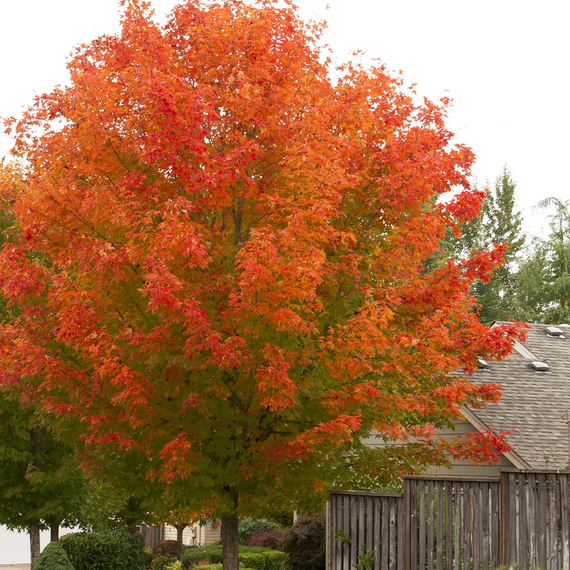
- Brilliant late-season color—reliable orange to deep reddish‑purple foliage, even in warmer regions.
- Handsome shade tree with a dense, rounded crown and glossy green summer leaves.
- Moderate to fast grower to ~40–50 ft. tall × ~30–40 ft. wide; great scale for streets and large yards.
- Adaptable and easy-care: best color in full sun; thrives in slightly acidic, well‑drained soil with regular moisture.
The October Glory Red Maple (Acer rubrum ‘PNI 0268’) is a proven four‑season performer that shines when other trees are winding down—holding foliage later into fall and finishing with a vibrant crescendo of orange to deep, reddish‑purple tones. A dense, rounded canopy provides generous shade in summer, while early spring brings red flowers for subtle, seasonal interest. It’s a dependable, moderate‑to‑fast grower for full sun sites with slightly acidic, well‑drained soil, and a top pick for high‑profile shade in larger residential landscapes.
Plant Description
Deciduous, medium‑to‑large shade tree with a naturally dense, rounded crown. Large, medium‑green leaves in spring and summer transition to rich fall tones; foliage often persists later than many red maple cultivars.
Foliage & Fall Color
Spring/summer: glossy medium‑green leaves. Fall: outstanding, reliable color ranging from bright orange to deep, reddish‑purple—known for vivid displays even in milder climates and for holding color late in the season.
Flowers & Seasonal Interest
Early‑spring red flowers add subtle ornament before leaves fully emerge; supports birds with seasonal resources in wildlife‑friendly plantings.
Sun Requirements
Best in full sun (6+ hours/day) for strongest fall color and a dense, uniform canopy; tolerates light shade.
Watering Needs
Keep soil consistently moist (not soggy) during establishment with deep, regular watering. Once established, prefers regular moisture and can tolerate somewhat drier periods with supplemental irrigation.
Soil Requirements
Performs best in slightly acidic, well‑drained soils; adaptable overall. Apply a balanced fertilizer before spring growth if needed to support vigor.
Growth & Size
Moderate to fast growth; typically reaches about 40–50 ft. tall and 30–40 ft. wide, forming a broad, shade‑casting canopy suitable for large lawns, parkways, and street plantings.
Hardiness
USDA Zones 3–9; cold‑hardy and reliable across a wide climate range.
Special Features
Exceptional fall color; tolerates urban conditions; useful where regular moisture is available (including sites that remain seasonally very wet) while still handling typical landscape soils.
Landscape Uses
Signature shade tree for front lawns and streetscapes; seasonal focal point near patios or picture windows; excellent anchor for mixed native plantings that showcase autumn color.
Care Instructions
Plant at or slightly above grade in well‑drained soil. Water deeply and regularly the first few growing seasons to establish a wide root system; reduce frequency after establishment, maintaining even moisture. Prune during dormancy to elevate canopy or correct structure.
Spacing & Placement
For avenues or privacy rhythm, space 30–40 ft. on center to accommodate mature spread and maintain airflow and light. Site away from overhead lines; allow root and canopy clearance from hardscape.
Design Tips
Pair with conifers (spruce), viburnums, ginkgos, or beeches to frame fall color. Underplant with shade‑tolerant perennials and ornamental grasses for four‑season structure.
Notes
For best color, ensure soil pH trends acidic and keep watering consistent through late summer. Mulch 2–3 in. deep (off the trunk) to moderate soil temperature and conserve moisture.
- Brilliant late-season color—reliable orange to deep reddish‑purple foliage, even in warmer regions.
- Handsome shade tree with a dense, rounded crown and glossy green summer leaves.
- Moderate to fast grower to ~40–50 ft. tall × ~30–40 ft. wide; great scale for streets and large yards.
- Adaptable and easy-care: best color in full sun; thrives in slightly acidic, well‑drained soil with regular moisture.
The October Glory Red Maple (Acer rubrum ‘PNI 0268’) is a proven four‑season performer that shines when other trees are winding down—holding foliage later into fall and finishing with a vibrant crescendo of orange to deep, reddish‑purple tones. A dense, rounded canopy provides generous shade in summer, while early spring brings red flowers for subtle, seasonal interest. It’s a dependable, moderate‑to‑fast grower for full sun sites with slightly acidic, well‑drained soil, and a top pick for high‑profile shade in larger residential landscapes.
Plant Description
Deciduous, medium‑to‑large shade tree with a naturally dense, rounded crown. Large, medium‑green leaves in spring and summer transition to rich fall tones; foliage often persists later than many red maple cultivars.
Foliage & Fall Color
Spring/summer: glossy medium‑green leaves. Fall: outstanding, reliable color ranging from bright orange to deep, reddish‑purple—known for vivid displays even in milder climates and for holding color late in the season.
Flowers & Seasonal Interest
Early‑spring red flowers add subtle ornament before leaves fully emerge; supports birds with seasonal resources in wildlife‑friendly plantings.
Sun Requirements
Best in full sun (6+ hours/day) for strongest fall color and a dense, uniform canopy; tolerates light shade.
Watering Needs
Keep soil consistently moist (not soggy) during establishment with deep, regular watering. Once established, prefers regular moisture and can tolerate somewhat drier periods with supplemental irrigation.
Soil Requirements
Performs best in slightly acidic, well‑drained soils; adaptable overall. Apply a balanced fertilizer before spring growth if needed to support vigor.
Growth & Size
Moderate to fast growth; typically reaches about 40–50 ft. tall and 30–40 ft. wide, forming a broad, shade‑casting canopy suitable for large lawns, parkways, and street plantings.
Hardiness
USDA Zones 3–9; cold‑hardy and reliable across a wide climate range.
Special Features
Exceptional fall color; tolerates urban conditions; useful where regular moisture is available (including sites that remain seasonally very wet) while still handling typical landscape soils.
Landscape Uses
Signature shade tree for front lawns and streetscapes; seasonal focal point near patios or picture windows; excellent anchor for mixed native plantings that showcase autumn color.
Care Instructions
Plant at or slightly above grade in well‑drained soil. Water deeply and regularly the first few growing seasons to establish a wide root system; reduce frequency after establishment, maintaining even moisture. Prune during dormancy to elevate canopy or correct structure.
Spacing & Placement
For avenues or privacy rhythm, space 30–40 ft. on center to accommodate mature spread and maintain airflow and light. Site away from overhead lines; allow root and canopy clearance from hardscape.
Design Tips
Pair with conifers (spruce), viburnums, ginkgos, or beeches to frame fall color. Underplant with shade‑tolerant perennials and ornamental grasses for four‑season structure.
Notes
For best color, ensure soil pH trends acidic and keep watering consistent through late summer. Mulch 2–3 in. deep (off the trunk) to moderate soil temperature and conserve moisture.