

Zoom the image with the mouse
Morning Light Maiden Grass - 1 Gallon
SKU:
1038405
UPC:
014949616611
$16.99
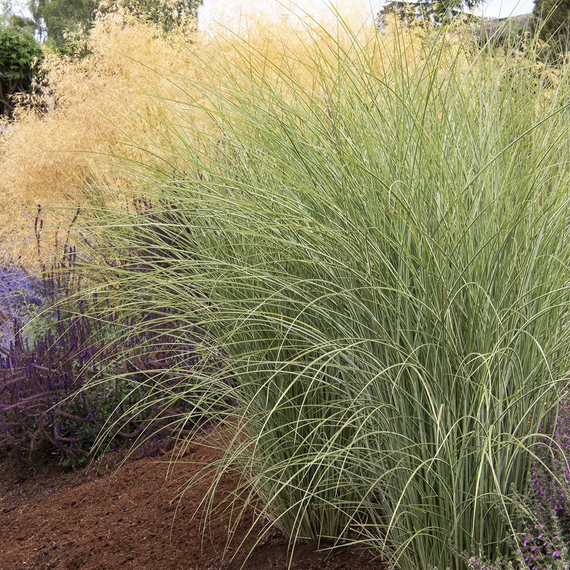
- Fine‑textured, silvery variegated foliage that shimmers in the landscape; superb accent for beds and borders.
- Clumping habit reaches about 5 ft. tall × 3–4 ft. wide; airy plumes rise to ~6 ft. for added height and movement.
- Reddish late‑summer plumes persist into winter, adding structure and seasonal interest for birds and winter gardens.
- Easy‑care and waterwise once established; grows in full sun to partial sun and average, well‑drained soil.
Morning Light Maiden Grass (Miscanthus sinensis ‘Morning Light’) forms graceful, upright fountains of slender green blades lined with creamy‑white margins, reading silvery from a distance. In late summer, reddish inflorescences rise above the clump and hold into winter, delivering texture when most perennials rest. Plant in full sun to partial sun and evenly moist, well‑drained soil; once established, it tolerates moderate dry spells and provides a refined, low‑maintenance statement across borders, patios, and large containers in USDA Zones 5–9.
Botanical Name
Miscanthus sinensis ‘Morning Light’ — commonly called Morning Light Maiden Grass; family Poaceae.
Plant Type & Habit
Warm‑season, herbaceous ornamental grass with a clump‑forming, upright, fountain‑like habit and fine, narrow leaves.
Mature Size
Foliage clump to about 5 ft. tall and 3–4 ft. wide; flower plumes can reach ~6 ft. total height.
Hardiness
USDA Zones 5–9.
Light & Exposure
Full sun to partial sun; best form and flowering in full sun. Provide open exposure for strongest silhouette.
Soil & Water
Grows easily in average, evenly moist, well‑drained, loamy soils. Water deeply and regularly the first season to establish roots; once established, tolerates moderate dry spells. Avoid persistently soggy sites.
Foliage & Texture
Slender green blades edged and mid‑striped in creamy white create a silvery look with fine texture that plays beautifully with breezes.
Flowers & Bloom Season
Late summer to fall reddish plumes age to tan/silvery tones and persist into winter for long‑lasting architectural interest.
Wildlife & Winter Interest
Upright plumes and clumps provide winter cover and visual structure; leave standing through winter, then cut back before spring growth.
Uses & Landscape Ideas
- Accents and back‑of‑border verticals for texture and motion.
- Containers (large, well‑drained) for a refined patio focal point.
- Informal hedging or repeated rhythm along paths and poolside plantings.
Companion Ideas
Combines well with Ninebark (Physocarpus), Juniper, Potentilla, Asters, Geranium (cranesbill), and Nepeta (catmint) for contrasting color and form.
Planting & Spacing
Plant at the same depth as in the nursery container. Space clumps 3–4 ft. apart when massing, allowing room for full arching form and air flow.
Maintenance & Pruning
Leave foliage standing for winter effect; cut back to a few inches above the crown in late winter/very early spring before new shoots emerge. Divide established clumps if needed to refresh vigor.
Toughness & Problem Solving
Deer resistant, useful for erosion control, and tolerant of coastal exposure. Performs reliably in heat; avoid waterlogged soils in winter.
Regional Notes & Stewardship
The species (Miscanthus sinensis) can self‑seed and spread in some regions; choose named, vegetatively propagated selections and monitor for volunteers according to local guidance.
- Fine‑textured, silvery variegated foliage that shimmers in the landscape; superb accent for beds and borders.
- Clumping habit reaches about 5 ft. tall × 3–4 ft. wide; airy plumes rise to ~6 ft. for added height and movement.
- Reddish late‑summer plumes persist into winter, adding structure and seasonal interest for birds and winter gardens.
- Easy‑care and waterwise once established; grows in full sun to partial sun and average, well‑drained soil.
Morning Light Maiden Grass (Miscanthus sinensis ‘Morning Light’) forms graceful, upright fountains of slender green blades lined with creamy‑white margins, reading silvery from a distance. In late summer, reddish inflorescences rise above the clump and hold into winter, delivering texture when most perennials rest. Plant in full sun to partial sun and evenly moist, well‑drained soil; once established, it tolerates moderate dry spells and provides a refined, low‑maintenance statement across borders, patios, and large containers in USDA Zones 5–9.
Botanical Name
Miscanthus sinensis ‘Morning Light’ — commonly called Morning Light Maiden Grass; family Poaceae.
Plant Type & Habit
Warm‑season, herbaceous ornamental grass with a clump‑forming, upright, fountain‑like habit and fine, narrow leaves.
Mature Size
Foliage clump to about 5 ft. tall and 3–4 ft. wide; flower plumes can reach ~6 ft. total height.
Hardiness
USDA Zones 5–9.
Light & Exposure
Full sun to partial sun; best form and flowering in full sun. Provide open exposure for strongest silhouette.
Soil & Water
Grows easily in average, evenly moist, well‑drained, loamy soils. Water deeply and regularly the first season to establish roots; once established, tolerates moderate dry spells. Avoid persistently soggy sites.
Foliage & Texture
Slender green blades edged and mid‑striped in creamy white create a silvery look with fine texture that plays beautifully with breezes.
Flowers & Bloom Season
Late summer to fall reddish plumes age to tan/silvery tones and persist into winter for long‑lasting architectural interest.
Wildlife & Winter Interest
Upright plumes and clumps provide winter cover and visual structure; leave standing through winter, then cut back before spring growth.
Uses & Landscape Ideas
- Accents and back‑of‑border verticals for texture and motion.
- Containers (large, well‑drained) for a refined patio focal point.
- Informal hedging or repeated rhythm along paths and poolside plantings.
Companion Ideas
Combines well with Ninebark (Physocarpus), Juniper, Potentilla, Asters, Geranium (cranesbill), and Nepeta (catmint) for contrasting color and form.
Planting & Spacing
Plant at the same depth as in the nursery container. Space clumps 3–4 ft. apart when massing, allowing room for full arching form and air flow.
Maintenance & Pruning
Leave foliage standing for winter effect; cut back to a few inches above the crown in late winter/very early spring before new shoots emerge. Divide established clumps if needed to refresh vigor.
Toughness & Problem Solving
Deer resistant, useful for erosion control, and tolerant of coastal exposure. Performs reliably in heat; avoid waterlogged soils in winter.
Regional Notes & Stewardship
The species (Miscanthus sinensis) can self‑seed and spread in some regions; choose named, vegetatively propagated selections and monitor for volunteers according to local guidance.